Mova Shakes Up the Indian Smart Home Market with Aggressively Priced E-Series Robot Vacuums
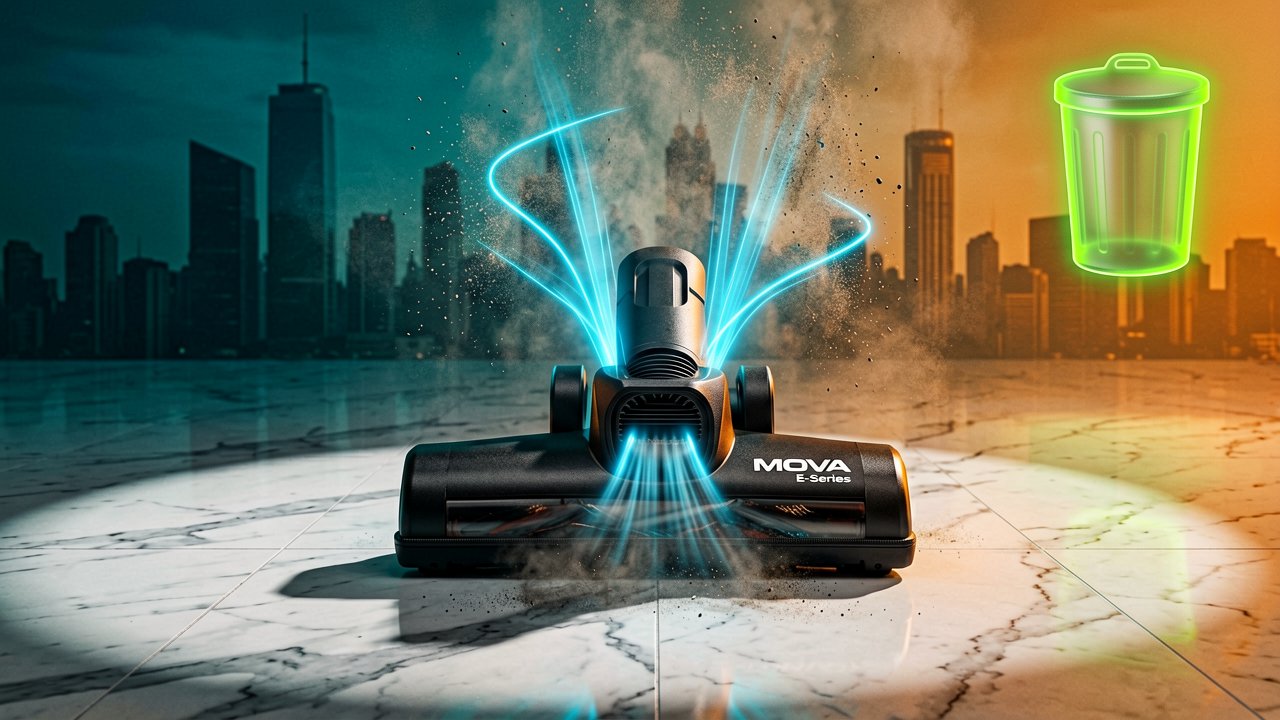
Mova isn't just dipping its toes into the Indian market; it's diving in headfirst with a pricing strategy that should make the established players a little nervous. The brand has just pulled the curtain back on its E-Series lineup, a trio of AI-powered robot vacuum cleaners starting at a remarkably accessible Rs 14,999. It’s a calculated move that targets the sweet spot of Indian households—those looking to ditch the manual broom without spending a fortune on "flagship" tech that often feels like overkill for a standard apartment. By launching the E10, E20s Pro, and E40 simultaneously, Mova is effectively covering the entire spectrum from entry-level curiosity to high-end automation, according to a recent report by Moneycontrol.
What makes this launch particularly interesting is how Mova—a brand incubated by the heavy hitters at Dreame—has tailored these machines for local conditions. We’re talking about a market where fine dust and mixed flooring are the norm, not the exception. The base E10 model, priced at that headline-grabbing Rs 14,999, doesn't skimp on the essentials, packing 4,500Pa of suction power and a 2-in-1 vacuum-and-mop functionality. It’s clearly built for the first-time buyer who wants the convenience of app-based scheduling without the complex mapping sensors that often drive prices into the stratosphere, as detailed by Smartprix.
Stepping Up the Ladder: E20s Pro and the Premium E40
For those willing to spend a bit more for a truly "set it and forget it" experience, the mid-range E20s Pro enters the fray at Rs 24,999. This model is arguably the most compelling of the bunch, introducing auto-empty functionality that can store dust for up to 60 days. In a dusty urban environment like Delhi or Bangalore, not having to manually empty a tiny bin every two days is a massive quality-of-life upgrade. It also bumps the suction to a respectable 13,000Pa and includes LDS laser navigation for more precise obstacle avoidance, a feature set often reserved for much pricier competitors in the Indian market, according to MySmartPrice.
At the top of the pyramid sits the Mova E40, priced at Rs 49,999. This is where Mova flexes its engineering muscles, offering a beastly 19,000Pa of suction and an all-in-one station that handles everything from dust collection to mop washing and hot-air drying. It’s designed to go toe-to-toe with the premium offerings from Roborock and Ecovacs but at a price point that undercuts many of their flagship models. With the Indian smart home sector rapidly maturing, Mova’s decision to flood the gates with options at every price tier suggests they aren't just here to participate—they're here to lead.

Beyond the Spec Sheet: Mova’s Strategic Gambit in the Indian Heartland
The Dreame Pedigree and the Value Play: While Mova might sound like a fresh face to the uninitiated, its DNA is deeply rooted in the R&D labs of Dreame, a global titan in the cleaning tech space. This lineage is the secret sauce behind the E-Series' aggressive pricing. By leveraging the supply chain efficiencies and existing intellectual property of its parent company, Mova is performing a classic "flanking maneuver" in the Indian market. They are delivering high-end suction metrics and sophisticated mapping algorithms—features that were once locked behind a premium paywall—to the middle-class consumer who views a robot vacuum as a necessity rather than a luxury gadget.
Navigating the Indian "Dust Factor": Seasoned tech analysts know that India is one of the most brutal testing grounds for automated cleaners due to the unique combination of fine tropical dust, heavy humidity, and the prevalent use of stone and tile flooring. Mova’s decision to prioritize 19,000Pa suction in the E40 isn't just about winning a numbers game; it’s a direct response to the "deep cleaning" requirement of Indian households. Standard European or American specs often struggle with the fine silt that settles in floor crevices during the dry season, making this high-suction approach a calculated engineering pivot for local reliability.
The Infrastructure of Convenience: What most surface-level reports overlook is the logistical challenge of the "Auto-Empty" and "Self-Cleaning" trend in a market where service networks are still maturing. By introducing the E20s Pro with a 60-day dustbin capacity, Mova is betting on the "hands-off" psychology of the modern Indian professional. This demographic is increasingly willing to pay a premium to eliminate the mundane task of maintenance. However, the true test for Mova will not be the initial sale, but the long-term availability of consumables like HEPA filters and specialized mop pads across Tier 2 and Tier 3 cities.
Market Disruption and the Competitor Response: This launch effectively puts the squeeze on legacy home appliance brands that have been slow to iterate on smart features. When a brand offers a LIDAR-equipped, AI-capable machine for under Rs 15,000, it forces a race to the bottom that benefits the consumer but thins out the margins for everyone else. We are likely to see a significant price correction from competitors in the coming quarters as they scramble to match Mova’s value proposition. Mova isn't just selling vacuums; they are recalibrating the baseline expectations for what a smart home should cost in 2024.
Cultural Integration and User Experience: Beyond the hardware, Mova's success hinges on the localization of its software ecosystem. Integration with local smart home setups and the ability to handle the "Indian household chaos"—think loose rugs, floor-level furniture, and unpredictable obstacles—will define the brand's reputation. The inclusion of hot-air drying for the mops in the E40 model is a particularly savvy addition for the monsoon season, preventing the damp-smell issues that plagued earlier generations of robot mops in high-humidity regions. It shows a level of foresight that suggests Mova did its homework before hitting the "launch" button.
The Hidden Cost of the Suction Arms Race
Reading Between the Lines: While the headline-grabbing 19,000Pa suction power of the flagship E40 looks invincible on a spec sheet, it raises a significant question about the law of diminishing returns in the average Indian apartment. For a household with marble or vitrified tiles—standard across most urban developments—such extreme force is arguably overkill, bordering on a marketing gimmick to justify the jump to a premium price bracket. There is a fine line between effective cleaning and unnecessary battery drain; high-wattage suction often forces the robot into shorter cleaning cycles or more frequent trips to the dock, which can actually decrease the overall efficiency of a single-pass clean in larger homes.
The Software Paradox: Mova’s heavy reliance on AI-driven obstacle avoidance is a double-edged sword that few manufacturers care to discuss. In the controlled environments of a laboratory, these systems navigate around shoes and cables with surgical precision, but the "organized chaos" of a living room during a busy weekday is a different beast entirely. There is a persistent contradiction in the industry where the more "intelligent" a robot becomes, the more prone it is to over-cautious behavior—often treating a stray curtain or a slightly thick rug as an impassable wall. This "software stutter" can result in missed patches and half-finished rooms, making the entry-level E10’s simpler, more aggressive bumping strategy surprisingly more effective for some layouts.
Sustainability and the Consumable Trap: We also need to talk about the environmental and financial footprint of the "Auto-Empty" revolution. By moving toward specialized, disposable dustbags that last 60 days, brands like Mova are successfully decoupling the user from the mess, but they are also locking them into a proprietary ecosystem of plastic-rimmed bags and specific filter sets. For a brand launching at such a disruptive price point, the long-term cost of ownership could eventually eclipse the initial savings if the price of these consumables isn't kept in check. Measured skepticism is required when a product is sold as a "one-time investment" but carries a tail of recurring monthly costs for the next five years.
Serviceability in the Hinterlands: Finally, there is the lingering skepticism regarding post-purchase support for high-tech newcomers. Launching a sophisticated AI product in a market as geographically vast as India is relatively easy compared to maintaining a physical service network that can repair a LiDAR sensor or a clogged water pump in a Tier 2 city. Mova’s aggressive entry puts immense pressure on their technical support infrastructure; without a robust "boots on the ground" strategy, these high-tech machines run the risk of becoming very expensive, very smart paperweights the moment a localized hardware failure occurs outside of a major metropolitan hub.
The modern dream is a robot that cleans the house while you sleep, but the reality is often waking up at 3:00 AM to a frantic smartphone notification because your 19,000Pa vacuum has engaged in a death match with a single rogue charging cable and lost.
Artūras Malašauskas is an AI Systems Integrator with 20+ years of production-grade web engineering experience. He has designed, shipped, and scaled enterprise Python/PHP systems for logistics, SaaS, and public-sector clients. For the past year, he has focused exclusively on AI integrations: deploying open-source LLMs, building generative media pipelines (image, audio, video), and engineering multi-agent workflows for real production environments. His standard: reproducibility, security, cost-efficient inference—no vaporware. He documents and evaluates emerging AI tooling, separating verified capabilities from marketing noise. Technical editor at: muza-ai.eu, ai-verslas.lt, ai-naujinos.lt Connect on LinkedIn
Comments