Google and Samsung’s Android XR Specs Are Finally Stepping Out of the Shadows
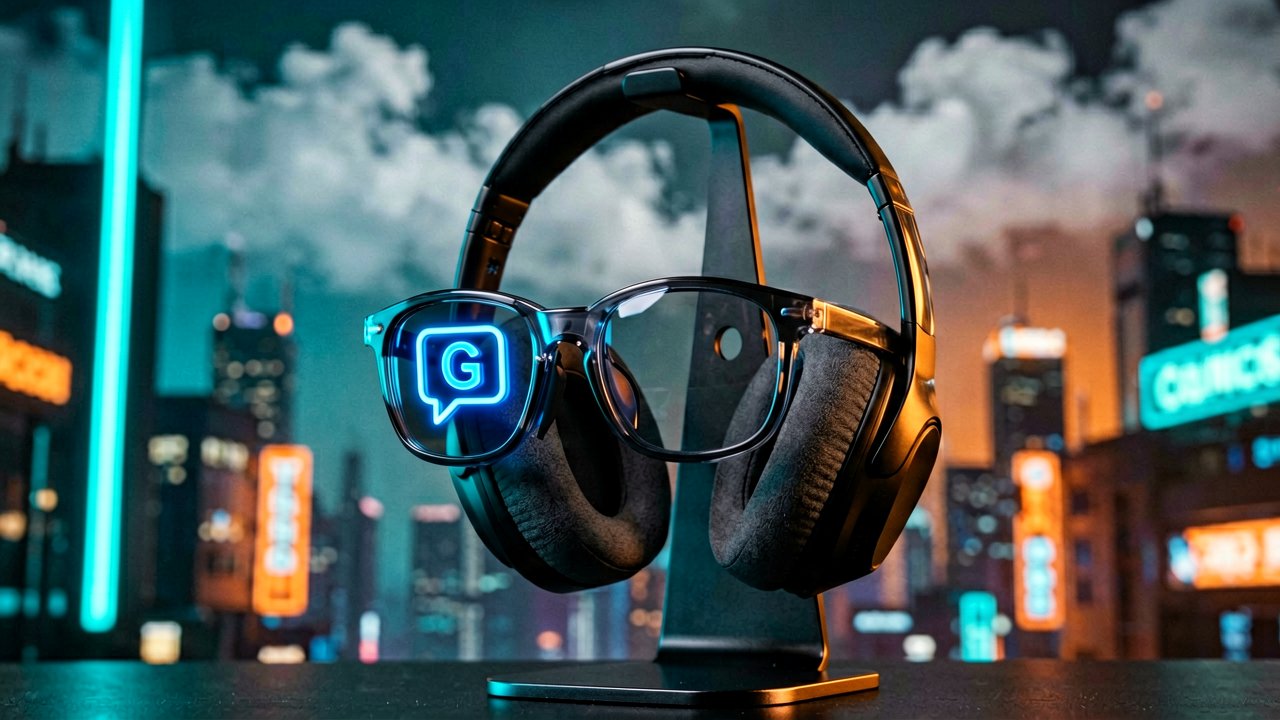
After months of vague teases and "coming soon" placeholders, the long-gestating collaboration between Samsung and Google has finally taken a concrete shape. At Google I/O 2026, the tech giants gave us our first real glimpse at the smart glasses built on the Android XR platform—and they aren't the bulky, tech-heavy visors you might have expected. Instead, they’ve partnered with fashion-forward heavyweights like Google and eyewear designers Warby Parker and Gentle Monster to ensure these things actually look like something you’d want to wear to a coffee shop. It's a calculated move to bridge the gap between "gadget" and "garment," focusing on a form factor that feels more like a pair of classic frames than a piece of high-end lab equipment.
The strategy here is a clever two-pronged approach designed to avoid the "Glasshole" pitfalls of the past. We’re looking at two distinct versions: a streamlined set of audio-only glasses and a more advanced model featuring a heads-up display. The audio frames are slated to arrive first, hitting select markets this fall with a focus on seamless Gemini AI integration for real-time translation, hands-free messaging, and turn-by-turn navigation that whispers directions directly into your ear. As noted by 9to5Google, while the display-equipped models are the ones tech enthusiasts are truly salivating over, the initial rollout emphasizes practical, everyday AI assistance over full-blown holographic immersion.
The Gemini Edge: AI That Actually Sees What You See
What sets these specs apart from the existing crop of smart eyewear is the deep-level integration of Android XR and Google’s Gemini 3.5 Flash. This isn't just about playing music or taking a phone call; the glasses are designed to be a multimodal assistant that lives on your face. Samsung’s hardware expertise brings a 12-megapixel camera and a dedicated Qualcomm AR chipset to the table, allowing the AI to "look" at the world alongside you. Imagine standing in front of a subway map in Tokyo and having Gemini translate the entire board instantly or identifying a historic landmark just by asking a question. According to Android Authority, these features are meant to make the technology "disappear," turning the glasses into a natural extension of your smartphone rather than a redundant accessory.
Style Meets Substance in the XR Arena
Samsung and Google aren't just fighting for your face; they’re fighting for a piece of the ecosystem currently dominated by Meta’s Ray-Ban collaboration. By involving Warby Parker and Gentle Monster early in the design process, they’re signaling that aesthetic variety is just as important as battery life or processor speed. We don't have a final price tag yet, but the focus on "timeless" styles suggests they want these to be a multi-year investment for the average consumer. While the audio glasses will pave the way this autumn, the display versions remain the ultimate goal for the Android XR platform, promising to overlay Uber arrival times and live notifications directly onto your field of vision. It’s a bold step toward a post-smartphone world where the screen isn't in your pocket, but right in front of your eyes.

Behind the Scenes: The High-Stakes Battle for Your Face
The Silicon Power Struggle: While the glossy marketing focuses on stylish frames and seamless AI, the real story lies in the shifting power dynamics between Samsung, Google, and Qualcomm. For years, Samsung has been wary of becoming a mere "hardware shell" for Google’s software ambitions, a tension that has defined the Android smartphone era. However, the rise of the Meta-Ray-Ban alliance has forced a truce. This collaboration represents a desperate need for Google to establish Android XR as the industry standard before Meta’s proprietary OS captures the mass market. By tethering Samsung’s manufacturing prowess to Google’s Gemini intelligence, they are attempting to build an ecosystem that is "open" enough to entice other manufacturers but integrated enough to feel like a premium, bespoke experience.
Industry insiders suggest that the pivot toward lighter, more fashionable glasses over a heavy VR headset was a mid-development "course correction." Early prototypes were reportedly much closer to a traditional goggles-style device, but the runaway success of Meta’s smart glasses proved that consumers prioritize social acceptability over raw computing power. This shift required a radical redesign of the thermal management systems, as cramming a Qualcomm AR processor into a slim plastic arm without it overheating against a user’s temple is a monumental engineering hurdle. The result is a device that offloads much of its heavy processing to a paired Galaxy or Pixel phone, treating the glasses as a sophisticated sensor array rather than a standalone computer.
The involvement of Warby Parker and Gentle Monster is far from a superficial branding exercise; it is a defensive maneuver against the "glasshole" stigma that killed Google Glass over a decade ago. Google’s previous failure was largely attributed to a design that screamed "surveillance tool" rather than "accessory." By allowing established eyewear brands to dictate the physical geometry of the frames, Google is effectively outsourcing the "trust" factor. If the average person can’t tell these are smart glasses from five feet away, the social friction of wearing a camera on one's face begins to evaporate. This "stealth tech" approach is the new playbook for wearable adoption.
From a stakeholder perspective, Samsung is positioning these glasses as the "connective tissue" for their burgeoning SmartThings ecosystem. They envision a world where looking at a Samsung smart oven provides a floating timer or glancing at a Galaxy Watch triggers an expanded health dashboard in the corner of your vision. For Google, the prize is data. These glasses provide a "first-person view" of a user's life that a smartphone in a pocket simply cannot capture, allowing Gemini to understand context—what you are looking at, who you are talking to, and where you are—to a degree that was previously impossible. It is the ultimate data collection tool, rebranded as the ultimate personal assistant.

Historically, this launch mirrors the early days of the smartphone wars, where various operating systems vied for dominance before Android and iOS became the duopoly. We are currently in the "pre-iPhone" era of XR, characterized by experimentation and fragmented standards. If Samsung and Google can successfully convince the public that their faces belong to the Android XR platform, they will have secured the next great computing frontier. However, the hurdle remains the balance between battery life and utility. If the glasses need to be charged every three hours, they remain a novelty; if they last a full day, they become an essential part of the human wardrobe.
Reading Between the Lines: The Friction of Invisible Tech
The Utility Paradox: Despite the polished presentation, there is a glaring contradiction in the push for "minimalist" smart glasses. Google and Samsung are betting that users want a heads-up display, yet they are simultaneously stripping away the hardware bulk required to make that display actually usable in daylight. We are being promised a revolution in augmented reality, but the physical constraints of optics suggest we might actually be getting a pair of very expensive notification tickers. There is a fine line between a helpful digital overlay and a persistent visual distraction, and it remains to be seen if Android XR can manage that balance without making the wearer feel like they are trapped inside a pop-up ad.
Furthermore, the reliance on a paired smartphone reveals a significant hole in the "next-gen platform" narrative. If these glasses are essentially a fancy external monitor for your Galaxy S26, the claim that they represent a post-smartphone era is premature at best. We aren't replacing our handheld devices; we are just adding another battery to charge and another point of failure to troubleshoot. This tethered architecture keeps users firmly locked into specific hardware ecosystems, ensuring that the "open" nature of Android XR is only as open as your willingness to stick with a specific phone brand for the next three years.
There is also the matter of social etiquette, which tech companies consistently underestimate. While Gentle Monster frames might hide the sensors, they don't hide the "tech-stare"—that vacant, slightly glassy look people get when they are reading an invisible email during a conversation. No amount of fashion-forward design can fix the inherent rudeness of being digitally elsewhere while physically present. The industry assumes that because we accepted smartphones, we will naturally accept facial computers, but a screen in the hand is a choice, while a screen on the eye is an obstacle to human connection.
Finally, we have to talk about the "AI hallucination" problem migrating to our line of sight. It’s one thing for a chatbot on a laptop to get a fact wrong; it’s another thing entirely for your glasses to mislabel a street sign or provide incorrect walking directions in a strange city. By positioning Gemini as a real-time visual interpreter, Google is taking on a massive liability. If the AI "sees" the world incorrectly, the friction between digital misinformation and physical reality becomes a literal safety hazard, not just a digital quirk.
The tech industry spent a decade trying to get us to put down our phones for our mental health, only to realize the most efficient way to keep us scrolling was to simply strap the screen to our foreheads and call it 'augmented living.'
Artūras Malašauskas is an AI Systems Integrator with 20+ years of production-grade web engineering experience. He has designed, shipped, and scaled enterprise Python/PHP systems for logistics, SaaS, and public-sector clients. For the past year, he has focused exclusively on AI integrations: deploying open-source LLMs, building generative media pipelines (image, audio, video), and engineering multi-agent workflows for real production environments. His standard: reproducibility, security, cost-efficient inference—no vaporware. He documents and evaluates emerging AI tooling, separating verified capabilities from marketing noise. Technical editor at: muza-ai.eu, ai-verslas.lt, ai-naujinos.lt Connect on LinkedIn
Comments