Alibaba’s Agentic Ambition: The Zhenwu M890 and Qwen3.7-Max One-Two Punch
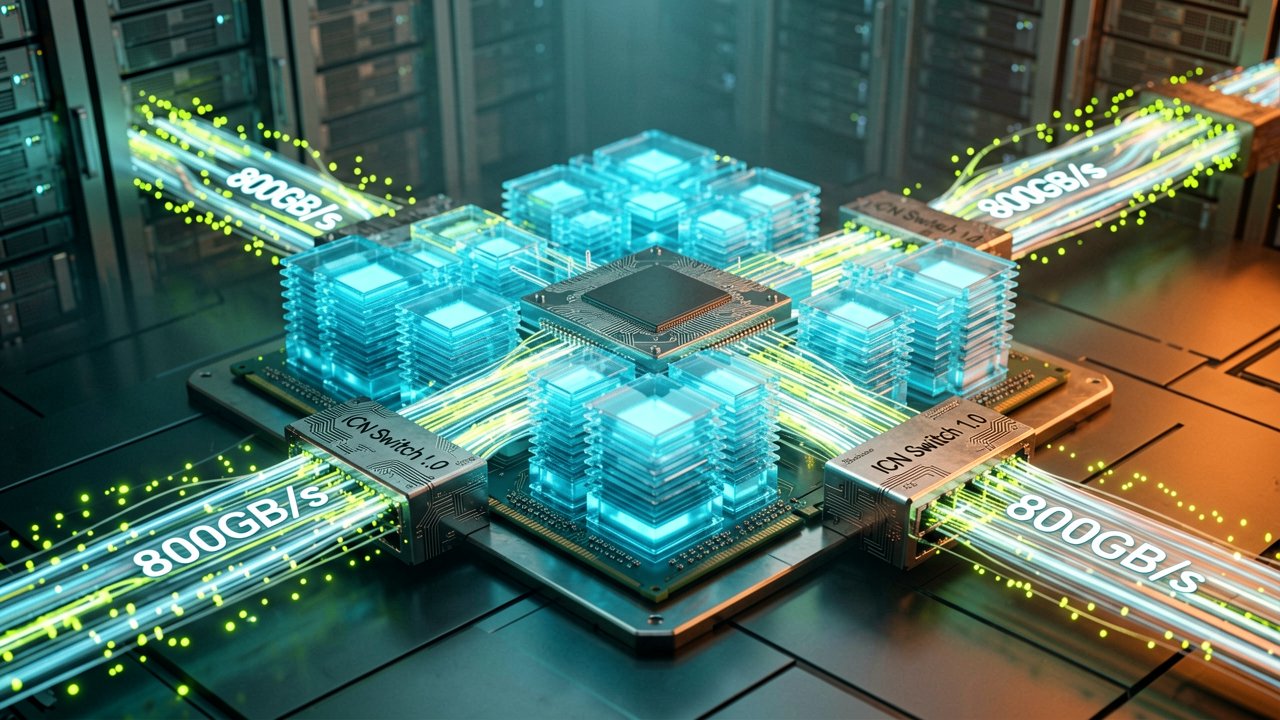
Alibaba Cloud just dropped a massive reminder that the race for AI supremacy isn't just a Silicon Valley internal affair. At their annual Cloud Summit, the Chinese tech titan pulled the curtain back on the Zhenwu M890 chip and its flagship Qwen3.7-Max model, signaling a shift toward what they’re calling the "Agentic Era." It’s a full-stack flex that bridges the gap between raw silicon and sophisticated reasoning, aimed squarely at providing a domestic alternative to Nvidia’s increasingly restricted hardware.
The star of the hardware show, the Zhenwu M890, isn't just a minor iteration. Developed by Alibaba’s Pingtouge semiconductor arm, the chip claims a staggering 3x performance boost over its predecessor, the 810E. With 144GB of high-bandwidth memory and an 800GB/s interconnect, it’s built specifically to handle the "long-horizon" tasks that define modern AI agents. According to The Wall Street Journal, Alibaba expects AI-related products to drive half of its cloud unit’s external revenue within the year, a bold bet on a future powered by homegrown infrastructure.
Silicon for the Agentic Era
What makes the M890 stand out isn't just the raw throughput, but how it plays with others. Alibaba paired it with the new ICN Switch 1.0, enabling a 128-GPU hyperscale node that reduces communication latency to sub-nanosecond levels. This kind of tight integration is critical for running massive concurrent workloads where the bottleneck is often the "chatter" between chips rather than the chips themselves. As noted by Reuters, this aggressive roadmap—which includes a "V900" successor for 2027—is a clear move to stabilize the Chinese supply chain against tightening U.S. export curbs.
Qwen3.7-Max: Brains to Match the Brawn
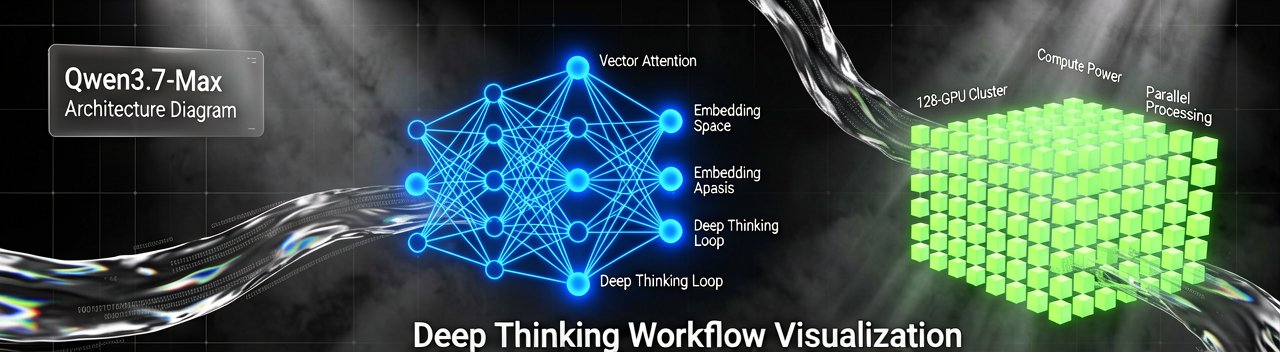
On the software side, Qwen3.7-Max is looking like a heavyweight contender. Early benchmarks from Alibaba’s official technical blog show the model punching in the same weight class as the world's most advanced reasoning systems. It supposedly cracked a top-10 global spot in math and coding evaluations, but its real party trick is "deep thinking" mode. In this state, it can autonomously invoke tools and manage complex, multi-step workflows over hours of operation—exactly the kind of "agentic" behavior the Zhenwu M890 was designed to accelerate. By dominating domestic blind tests, Alibaba is proving that they don't just have the hardware; they have the algorithmic soul to make it sing.
The Architectural Pivot
Behind the Scenes: The launch of the Zhenwu M890 and Qwen3.7-Max isn't just about moving numbers on a spreadsheet; it’s a calculated defensive maneuver designed to insulate Alibaba from the volatility of global supply chains. For years, the industry narrative centered on how Chinese firms would cope with the "Nvidia gap." By tightly coupling their proprietary hardware with a model optimized specifically for that silicon’s memory architecture, Alibaba is effectively building a "walled garden" of efficiency that rivals the vertically integrated stacks of Apple or Google. This isn't just a chip; it's a sovereignty play.
Historical context matters here because the M890 is the culmination of nearly a decade of quiet R&D at Pingtouge. Early iterations were often dismissed as secondary to Western alternatives, but the leap in interconnect speeds seen in this latest generation suggests that Alibaba has solved one of the hardest problems in high-performance computing: the "memory wall." By ensuring that data can move between 128-GPU nodes with sub-nanosecond latency, they’ve cleared a path for Qwen3.7-Max to maintain its "reasoning" state without the catastrophic performance drops that usually plague distributed systems.
Stakeholders within the developer community are watching the "Agentic" branding with a mix of excitement and skepticism. Unlike traditional chatbots that respond to a single prompt, the Qwen3.7-Max is designed to function as a digital colleague that can navigate the web, edit code, and manage databases over long horizons. This shift requires a different kind of compute—one that prioritizes sustained, low-latency inference over raw training throughput. Industry insiders suggest that by focusing on these "agentic" workloads, Alibaba is carving out a niche where they don't need to beat Nvidia at everything; they just need to be the best at keeping agents running 24/7.
From a market perspective, this release is an aggressive bid to retain domestic enterprise clients who are increasingly wary of relying on software-as-a-service from the West. Alibaba’s pitch to these companies is simplicity: a single-vendor solution where the model is already "baked" into the cloud hardware. According to reports from South China Morning Post, this integration allows for a significantly lower total cost of ownership, which is the ultimate deciding factor for local startups trying to scale without burning through venture capital.
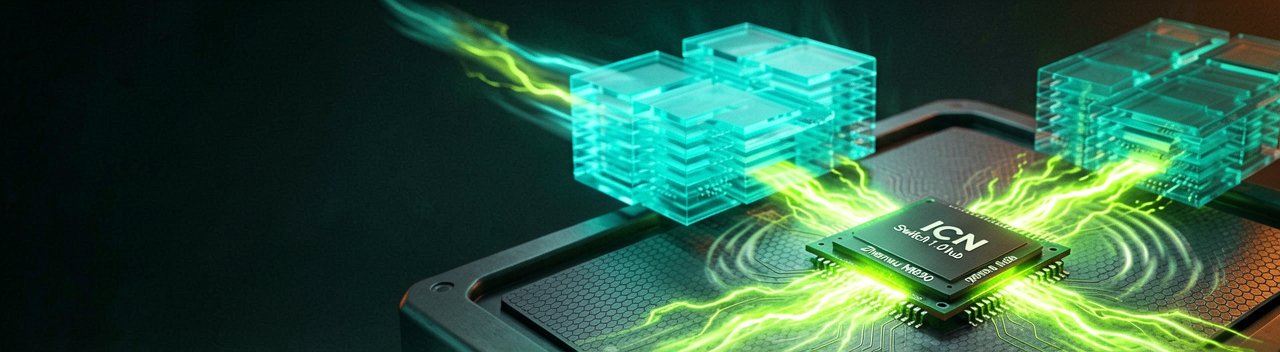
The geopolitical subtext is unavoidable, yet the technical achievement stands on its own merits. The M890 utilizes a specialized ICN Switch 1.0 that essentially treats a massive cluster of GPUs as a single, giant processor. This "system-on-a-cluster" approach is precisely what high-level reasoning models like Qwen3.7-Max require to handle the recursive logic loops of "deep thinking" mode. It represents a shift from "general purpose" AI toward "functional" AI, where the hardware is no longer a passive vessel but an active participant in the reasoning process.
Ultimately, this rollout marks the end of Alibaba’s era of experimentation and the beginning of its era of implementation. By demonstrating that they can produce a top-tier LLM alongside the silicon capable of hosting it at scale, they are signaling to the world that the technical divide is narrowing faster than many analysts predicted. The real test will be in the coming months as these chips move from the demo floor into the noisy, messy reality of global data centers, where they will have to prove their reliability under the constant strain of real-world agentic workflows.
The Reality Check: Sovereignty vs. Scalability
Reading Between the Lines: While the headline-grabbing 3x performance leap of the Zhenwu M890 suggests a clean break from Western dependency, the technical reality is often muddied by the "black box" of proprietary benchmarks. Alibaba’s push for vertical integration is a masterclass in marketing, yet it highlights a glaring contradiction: the more they optimize for their own silicon, the harder it becomes to foster an open-source ecosystem that typically drives AI innovation. By tethering the Qwen3.7-Max so tightly to its own metal, Alibaba risks creating a "gilded cage" that serves domestic security needs but potentially isolates Chinese developers from the broader, cross-platform advancements happening in the global community.
There is also the matter of the "Agentic Era" promise versus the current limitations of reasoning models. Deep thinking modes, like the one touted for Qwen3.7-Max, are notorious for their massive "compute tax"—they require significantly more time and energy to produce a result than standard models. While the M890’s 144GB of high-bandwidth memory is impressive, it remains to be seen if the efficiency gains can actually offset the staggering cost of running thousands of autonomous agents in parallel. The industry is currently high on the potential of agents, but we have yet to see a business model where the cost of the "digital colleague" doesn't eventually outweigh the human labor it aims to replace.
Furthermore, the roadmap leading to a "V900" chip in 2027 assumes a linear progression in a field defined by sudden, disruptive shocks. Projecting three years out in the semiconductor space is an exercise in extreme optimism, especially when the underlying lithography and fabrication access remain the ultimate bottleneck for any Chinese firm. Alibaba is betting that architectural cleverness—like their ICN Switch 1.0—can indefinitely compensate for the inability to access the world’s most advanced nodes. It’s a brilliant stopgap, but it treats the symptom of export controls rather than the underlying disease of manufacturing constraints.
From an investment standpoint, the pivot toward making AI-related products half of the cloud unit's revenue is a high-stakes gamble that ignores the cyclical nature of tech hype. If the "agentic" bubble bursts—as the "metaverse" and "crypto" bubbles did before it—Alibaba will be left with a massively expensive, specialized infrastructure that is over-engineered for standard cloud computing tasks. Skeptics would argue that Alibaba is building a Ferrari to navigate a world that might still only have the budget for a reliable sedan.
Ultimately, the success of this rollout won't be measured by benchmark slides but by the willingness of the global market to trust a hardware-software stack that is increasingly decoupled from international standards. If Alibaba can prove that their "deep thinking" agents can solve real-world industrial problems more cheaply than a human-in-the-loop, the skeptics will be silenced. Until then, we are watching a highly sophisticated rehearsal for a performance that might still be a few years away from its prime-time debut.
Building a chip to survive an export ban is a bit like building a submarine because you’re afraid of rain; it’s an incredible feat of engineering that makes everyone wonder if you’ve forgotten how much easier it is to just buy an umbrella.
Artūras Malašauskas is an AI Systems Integrator with 20+ years of production-grade web engineering experience. He has designed, shipped, and scaled enterprise Python/PHP systems for logistics, SaaS, and public-sector clients. For the past year, he has focused exclusively on AI integrations: deploying open-source LLMs, building generative media pipelines (image, audio, video), and engineering multi-agent workflows for real production environments. His standard: reproducibility, security, cost-efficient inference—no vaporware. He documents and evaluates emerging AI tooling, separating verified capabilities from marketing noise. Technical editor at: muza-ai.eu, ai-verslas.lt, ai-naujinos.lt Connect on LinkedIn
Comments