The Edge Just Got Sharper: Synaptics and Google Unveil the Coralboard at I/O 2026
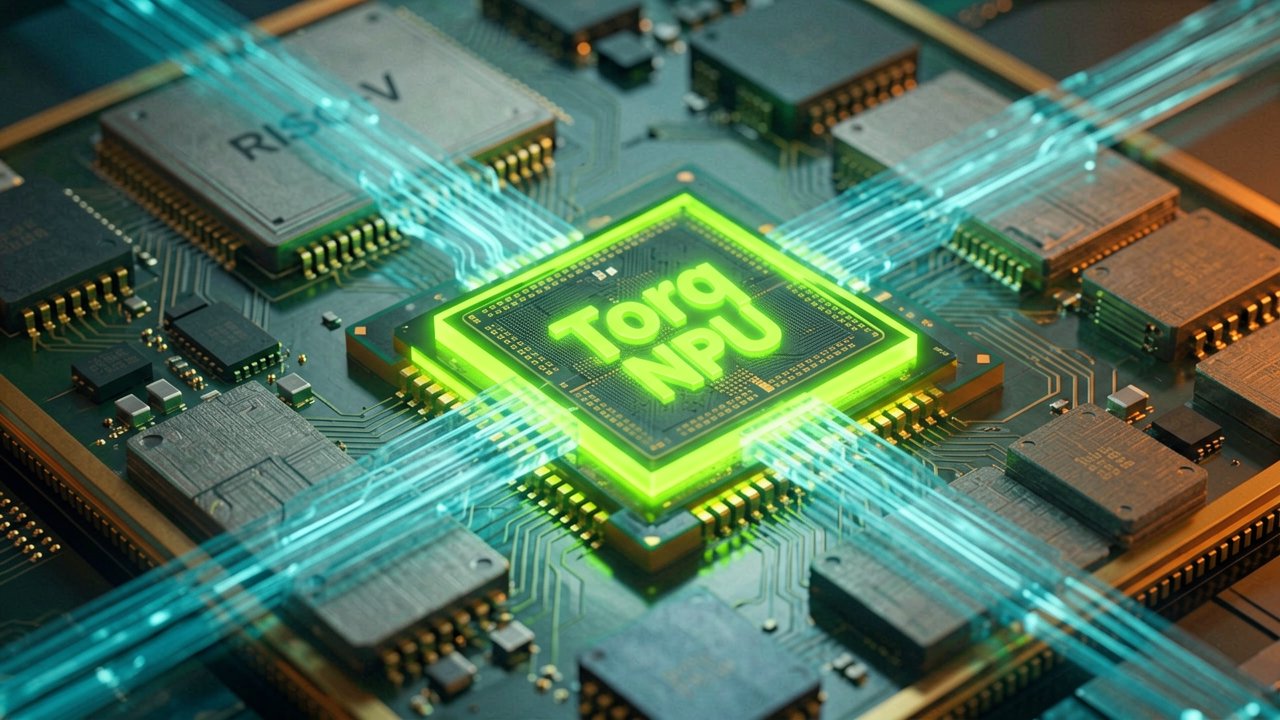
At this year’s Google I/O, the buzz isn't just about giant cloud-based models; it’s about the hardware that can actually run them in your pocket. Synaptics and Google Research have officially pulled the curtain back on the Coralboard, a limited-edition developer platform that’s essentially a playground for the next generation of on-device AI. By wedging Google’s Coral NPU tech into Synaptics' Astra SL2610 processor family, the duo is handing developers a low-power, high-performance ticket to build "always-on" experiences without the typical latency of a round-trip to a data center.
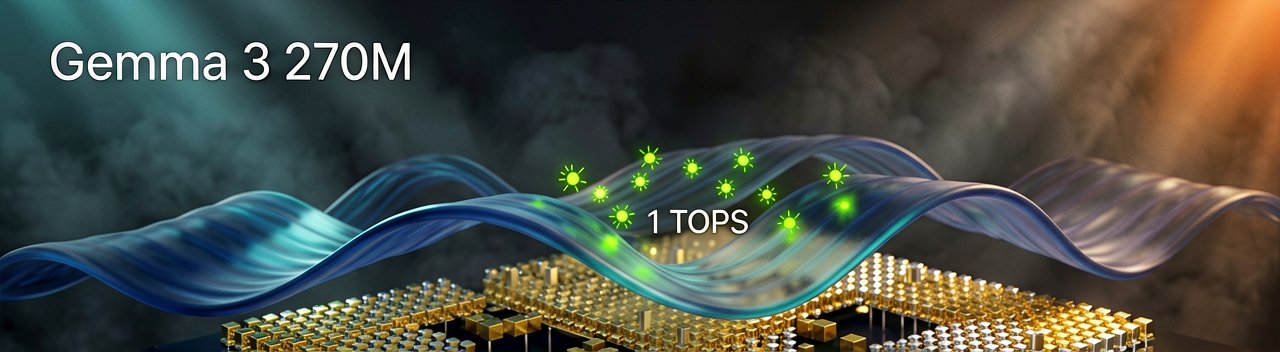
This isn't just another dev kit gathering dust on a shelf. The board comes pre-configured with Google’s Gemma 3 270M model, a lightweight powerhouse designed specifically for edge use cases like multimodal perception and generative AI. Whether it’s real-time object tracking—as seen in their "Jellectronica" music demo—or local speech-to-text, the Synaptics Coralboard is built to prove that "smart" doesn't have to mean "power-hungry." With a 1 TOPS NPU and a dual-core SoC running at 2GHz, it’s a focused strike at the friction that usually keeps AI prototypes from becoming actual products.
What Most Reports Miss: The Architectural Handshake
Behind the Scenes: While the headlines focus on the Google I/O stage lights, the real story is the deep integration of the Torq NPU subsystem. This isn't just a slap-dash pairing of two chips. Synaptics actually worked with Google to create the industry’s first production implementation of the Coral NPU architecture within their own silicon. It uses a tiered processing approach: the Torq NPU handles the heavy lifting for convolutional and transformer models, while a dedicated RISC-V core manages unsupported or custom operations. This clever division of labor ensures that the dual-core Arm host processor doesn't get bogged down with math it wasn't built to do efficiently.
From a developer's perspective, the secret sauce is the software stack. Synaptics and Google didn't just dump hardware on the market; they've aligned on an open-source, MLIR-based toolchain. This means an engineer can optimize a model once and have it run across different tiers of hardware without needing to rewrite their entire codebase. It’s a direct response to the "fragmentation tax" that has plagued the IoT industry for years, where moving a model from a high-end server to a small wearable usually felt like translating poetry through three different languages.
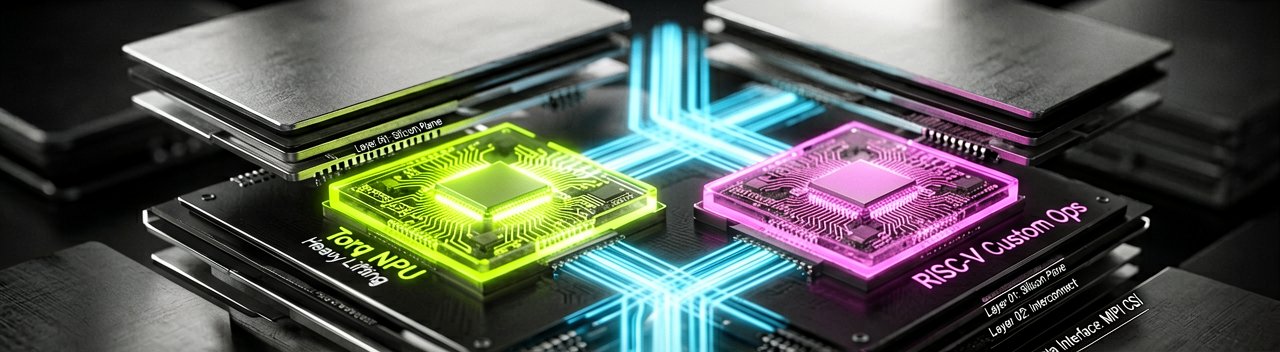
The choice of the Gemma 3 270M model as the "out-of-box" experience is also a calculated move. By shipping the board ready to run a transformer-based language model locally, Synaptics is signaling that the era of "dumb" voice assistants is over. We’re moving toward devices that can actually understand context and intent in real-time, all while running on a battery. For the engineers at Embedded and Google Research, the goal is clear: lower the barrier to entry so far that privacy-first, on-device AI becomes the default, not the exception.
Historically, Google’s Coral line was seen as a niche for hobbyists or specialized industrial researchers. However, this strategic partnership with Synaptics—a company with deep roots in consumer electronics and supply chains—suggests a pivot toward mass-market scalability. The inclusion of industrial-grade interfaces like MIPI CSI, DSI, and M.2 expansion slots confirms that this board is meant to live in production environments, from smart home hubs to warehouse robotics, rather than just staying on a lab bench.
By focusing on "ambient sensing," the Coralboard aims to solve the "all-day AI" problem. Most current AI devices are either too slow because they rely on the cloud or too power-intensive to last a full day on a single charge. By hitting that 1 TOPS sweet spot at ultra-low power, Synaptics is betting that the future of the smart home isn't just about things you talk to, but things that can see, hear, and react to their environment without ever needing to "call home" for instructions.
Ultimately, the Coralboard represents a shift in the power dynamic of the tech industry. It’s a move away from the centralized "AI-as-a-service" model toward a decentralized, local intelligence model. For developers, this isn't just a new tool; it's a new philosophy of building. With the backing of Google’s research and Synaptics' hardware expertise, the path from a clever idea at I/O to a physical product on a retail shelf has never looked quite this short.
At this year’s Google I/O, the buzz isn't just about giant cloud-based models; it’s about the hardware that can actually run them in your pocket. Synaptics and Google Research have officially pulled the curtain back on the Coralboard, a limited-edition developer platform that’s essentially a playground for the next generation of on-device AI. By wedging Google’s Coral NPU tech into Synaptics' Astra SL2610 processor family, the duo is handing developers a low-power, high-performance ticket to build "always-on" experiences without the typical latency of a round-trip to a data center.
This isn't just another dev kit gathering dust on a shelf. The board comes pre-configured with Google’s Gemma 3 270M model, a lightweight powerhouse designed specifically for edge use cases like multimodal perception and generative AI. Whether it’s real-time object tracking—as seen in their "Jellectronica" music demo—or local speech-to-text, the Synaptics Coralboard is built to prove that "smart" doesn't have to mean "power-hungry." With a 1 TOPS NPU and a dual-core SoC running at 2GHz, it’s a focused strike at the friction that usually keeps AI prototypes from becoming actual products.
What Most Reports Miss: The Architectural Handshake
Behind the Scenes: While the headlines focus on the Google I/O stage lights, the real story is the deep integration of the Torq NPU subsystem. This isn't just a slap-dash pairing of two chips. Synaptics actually worked with Google to create the industry’s first production implementation of the Coral NPU architecture within their own silicon. It uses a tiered processing approach: the Torq NPU handles the heavy lifting for convolutional and transformer models, while a dedicated RISC-V core manages unsupported or custom operations. This clever division of labor ensures that the dual-core Arm host processor doesn't get bogged down with math it wasn't built to do efficiently.
From a developer's perspective, the secret sauce is the software stack. Synaptics and Google didn't just dump hardware on the market; they've aligned on an open-source, MLIR-based toolchain. This means an engineer can optimize a model once and have it run across different tiers of hardware without needing to rewrite their entire codebase. It’s a direct response to the "fragmentation tax" that has plagued the IoT industry for years, where moving a model from a high-end server to a small wearable usually felt like translating poetry through three different languages.
The choice of the Gemma 3 270M model as the "out-of-box" experience is also a calculated move. By shipping the board ready to run a transformer-based language model locally, Synaptics is signaling that the era of "dumb" voice assistants is over. We’re moving toward devices that can actually understand context and intent in real-time, all while running on a battery. For the engineers at Embedded and Google Research, the goal is clear: lower the barrier to entry so far that privacy-first, on-device AI becomes the default, not the exception.
Reading Between the Lines: The Reality of Edge Expectations
Reading Between the Lines: The technical promise of the Coralboard is immense, but seasoned observers will notice the persistent tension between "limited-edition developer platform" and mass-market reality. While 1 TOPS of performance is a significant jump for ultra-low-power silicon, it remains a far cry from the massive compute required for the kind of truly uninhibited generative AI users have come to expect from cloud-tethered chatbots. There is a risk here that by marketing "Generative AI at the Edge," the industry is setting a trap for itself where the performance delta between a 270-million parameter model and its multi-billion parameter siblings leads to consumer disappointment rather than delight.
Furthermore, the collaboration highlights a quiet admission from Google: their standalone Coral hardware needed a silicon partner with deeper integration roots to survive. For years, Coral was a USB dongle or a PCIe card—an additive afterthought. By embedding the architecture directly into Synaptics’ Astra family, Google is finally admitting that for the Edge to win, the NPU must be an inseparable part of the nervous system, not a prosthetic limb. Yet, this consolidation creates a new dependency on specific toolchains that could inadvertently lock developers into a Google-Synaptics silo just as the industry is screaming for hardware-agnostic standards.
There is also the "Always-On" paradox to consider. Synaptics emphasizes privacy by keeping data local, yet the very nature of these devices—equipped with MIPI CSI cameras and I2S microphones—requires a level of trust that hardware alone cannot solve. Even if the data never leaves the board, the psychological hurdle of having a "multimodal sensing" device in every room is high. The industry is betting that the convenience of local speed will outweigh the creeping unease of ambient surveillance, but that is a social gamble that no amount of NPU optimization can fully hedge against.
Finally, we have to look at the "Limited Edition" tag. Historically, Google Research projects have a habit of appearing with a flourish and vanishing just as quickly when the next shiny object appears in Mountain View. Synaptics is providing the industrial backbone, but the long-term viability of the Coralboard depends entirely on whether developers actually ship products or just treat it as a high-end curiosity. If the software support wanes after the first wave of I/O hype, these boards will simply become the world’s most sophisticated paperweights for the 2027 fiscal year.
The Coralboard is a masterpiece of engineering that finally brings AI to the edge, ensuring your smart toaster can recognize your face in milliseconds—even if the only thing it actually needs to do is not burn the sourdough.
Artūras Malašauskas is an AI Systems Integrator with 20+ years of production-grade web engineering experience. He has designed, shipped, and scaled enterprise Python/PHP systems for logistics, SaaS, and public-sector clients. For the past year, he has focused exclusively on AI integrations: deploying open-source LLMs, building generative media pipelines (image, audio, video), and engineering multi-agent workflows for real production environments. His standard: reproducibility, security, cost-efficient inference—no vaporware. He documents and evaluates emerging AI tooling, separating verified capabilities from marketing noise. Technical editor at: muza-ai.eu, ai-verslas.lt, ai-naujinos.lt Connect on LinkedIn
Comments