ScioSense Shifts Gears with the UFC23: A Leaner, Meaner Front-End for Smart Metering
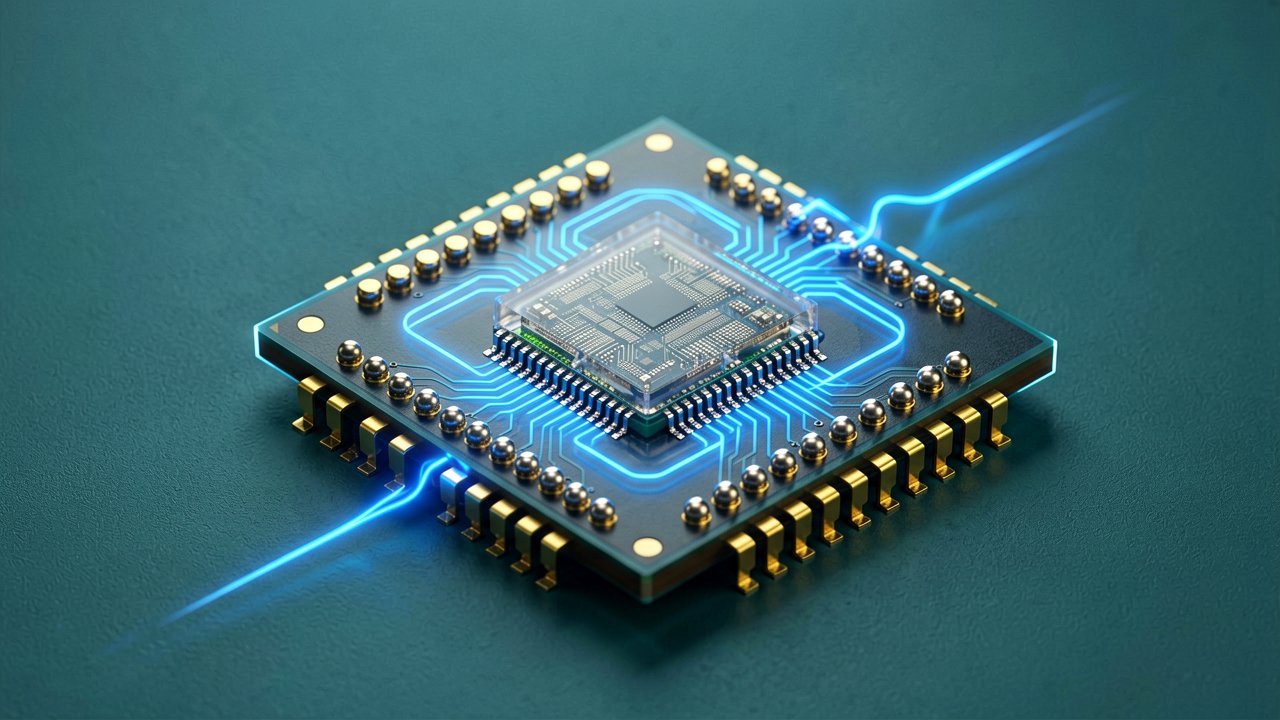
ScioSense has just pulled the curtain back on its fourth-generation ultrasonic flow converter, the UFC23, and it’s a fascinating departure from their previous "all-in-one" SoC philosophy. For years, the industry leaned toward integrated chips that handled everything from raw signal capture to complex flow calculations. But as the market matures, high-end meter manufacturers are increasingly moving those heavy-duty calculations to a central host microcontroller to maintain tighter control over their proprietary algorithms. The UFC23 is a direct response to that shift—a "pure" analog front-end that skips the internal CPU to focus entirely on what ScioSense does best: world-class timing and signal precision.
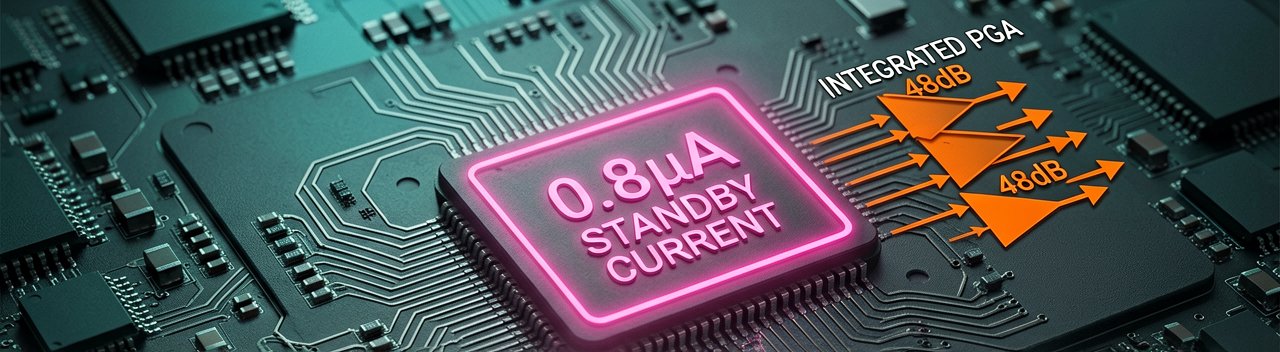
What makes this silicon particularly impressive isn't just the fact that it's smaller or simpler; it's the raw efficiency. We’re looking at a standby current that typically hovers around 0.8µA, with operating currents staying as low as 6.6µA even at an 8Hz sample rate, according to reporting from PR Newswire. In the world of battery-powered water and gas meters meant to live in the field for 15 to 20 years, every nanoampere is a precious resource. By stripping out the internal processor, ScioSense has essentially given designers a high-performance "ear" that listens for ultrasonic pulses without the power overhead of a "brain" that they might not even need.
Precision Meets Flexibility
The technical specs suggest this isn't just a budget version of its predecessors. It features an integrated programmable gain amplifier (PGA) to handle those notoriously weak signals often found in gas metering, alongside a burst generator that operates up to 4.4MHz. There's also a clever "batch mode" that allows the sensor to store up to 12 measurement bundles before waking up the host controller. It's a smart piece of engineering that reflects how modern IoT hardware is evolving—moving away from jack-of-all-trades chips toward specialized, hyper-efficient modules that play well with others.
Market Impact and Availability
By supporting both 3.3V single-ended drives for water and full-bridge drives for gas, the UFC23 allows manufacturers to use a single platform across multiple product lines. This kind of hardware reuse is a godsend for streamlining supply chains. As noted by Embedded Computing Design, the chip is already available for sampling and comes in a compact QFN32 package, making it a viable candidate for everything from industrial heat meters to smart faucets in the home.
The Architectural Pivot: Why Less is More in Smart Infrastructure
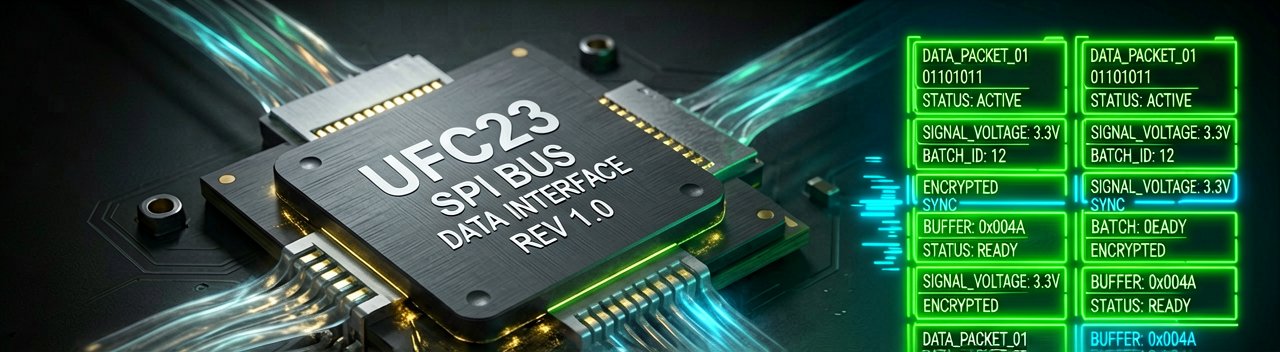
The Strategic Pivot: While the broader semiconductor industry often races toward more integration and "intelligence" on the edge, ScioSense is making a calculated bet on modularity with the UFC23. By excising the integrated CPU found in their previous flagship, the AS6031, they are acknowledging a growing trend among tier-one utility meter manufacturers. These stakeholders aren't looking for a black-box solution; they want granular control. By providing a high-performance analog front-end (AFE) that hands off raw data to a host microcontroller, ScioSense allows engineers to keep their secret sauce—the specific algorithms that distinguish their flow accuracy in turbulent conditions—strictly on their own firmware.
Historically, the transition from mechanical to ultrasonic metering was hampered by the "power wall." Early ultrasonic sensors were notorious energy hogs, requiring bulky battery packs that made them commercially unviable for residential gas meters. The UFC23 effectively shatters this barrier by leveraging a refined Time-to-Digital Converter (TDC) architecture. This isn't just about reducing active power; it’s about the speed of the measurement cycle. The faster a device can ping a signal and return to a deep sleep state, the longer it can survive in a damp basement or buried utility vault without a technician needing to swap a battery.
There is also a significant supply chain narrative at play here. In an era where silicon shortages and long lead times have plagued the industry, a streamlined chip like the UFC23 is inherently more resilient. With a smaller die size and a focus on essential timing functions rather than general-purpose processing, it is easier to manufacture and scale. This reliability is a major selling point for municipal projects where contracts are signed years in advance and "out of stock" is not an acceptable excuse for delaying infrastructure upgrades.
From a technical perspective, the integration of a programmable gain amplifier (PGA) up to 48dB is a massive win for gas meter designers. Measuring gas is inherently more difficult than water because gas is compressible and much less dense, leading to significant signal attenuation. By building this amplification directly into the UFC23, ScioSense eliminates the need for external components that would otherwise increase the noise floor and the bill of materials. It is a "clean" design that solves a messy physical problem.
Finally, we have to look at the "Batch Mode" feature through the lens of system-level efficiency. In a standard setup, a sensor wakes up the main processor every time a measurement is taken, which is incredibly wasteful. By allowing the UFC23 to buffer up to 12 measurement results before triggering an interrupt, the system keeps the power-hungry host processor in a coma-like state for 90% of the time. This synergy between the specialized converter and the general-purpose host represents the current gold standard for long-term IoT deployments.
Industry veterans will recognize this launch as a sign of a maturing market. We are moving past the "experimental" phase of ultrasonic metering and into an era of optimization. ScioSense is no longer just proving that the technology works; they are refining the silicon to fit the exact economic and technical constraints of the global utility market. The UFC23 is less of a revolution and more of a masterclass in high-precision specialization.
The Efficiency Paradox: Optimization or Fragmentation?
The Skeptical Lens: While ScioSense markets the UFC23 as a streamlined masterpiece of "less is more," there is an inherent tension in offloading the computational heavy lifting to an external host. By stripping the internal CPU, ScioSense effectively shifts the energy burden of flow calculation elsewhere. If a manufacturer pairs this ultra-low-power front-end with an inefficient, older-generation microcontroller, the systemic power savings advertised on the UFC23 datasheet may vanish in practice. The "0.8µA standby" figure is a brilliant headline, but the real-world battery life will depend entirely on how much work the host has to do once that "Batch Mode" interrupt finally triggers.
There is also the question of vendor lock-in disguised as flexibility. By moving toward a "pure" analog front-end that requires sophisticated external algorithms, ScioSense is targeting the elite tier of manufacturers who have the R&D budget to write their own DSP code. For smaller players who previously relied on the "all-in-one" simplicity of earlier ScioSense SoCs, this shift toward modularity might actually represent a higher barrier to entry. It creates a divide in the market: those who can afford to build a custom "brain" for the UFC23’s "ears," and those who are left behind by the increasing complexity of discrete system design.
Furthermore, the push for a 20-year lifespan in smart metering feels increasingly optimistic in a rapidly evolving technological landscape. While the hardware might physically survive two decades in a trench, the software protocols and security standards of 2024 will almost certainly be obsolete by 2044. We are building "forever" hardware for a "right now" digital ecosystem. The UFC23 solves the physical measurement problem with surgical precision, but it cannot solve the reality that the most durable part of a smart meter is often the part that becomes a legacy liability the fastest.
Projecting forward, the success of the UFC23 will likely be a bellwether for the "de-integration" trend in IoT. If the industry embraces this return to specialized components, it suggests that the dream of the universal, one-chip-fits-all SoC was perhaps a detour rather than the destination. However, this modularity places a massive premium on the interface; the SPI connection between the UFC23 and the host becomes a critical point of failure and a bottleneck for the very precision ScioSense is trying to protect.
Ultimately, the UFC23 is a gamble that the market values control over convenience. In an industry as conservative as public utilities, where "proven" is always better than "new," convincing engineers to move away from integrated solutions back to a two-chip architecture requires more than just low power specs. It requires a level of trust in the longevity of the ScioSense roadmap that goes beyond the silicon itself. The hardware is undeniably lean, but the system-level complexity it introduces is a debt that developers will have to pay off over the next decade of field deployment.
In the end, designing a meter that lasts twenty years is less about the miracle of silicon and more about the hope that nobody changes the wireless standards or the plumbing before the battery finally gives up the ghost.
Artūras Malašauskas is an AI Systems Integrator with 20+ years of production-grade web engineering experience. He has designed, shipped, and scaled enterprise Python/PHP systems for logistics, SaaS, and public-sector clients. For the past year, he has focused exclusively on AI integrations: deploying open-source LLMs, building generative media pipelines (image, audio, video), and engineering multi-agent workflows for real production environments. His standard: reproducibility, security, cost-efficient inference—no vaporware. He documents and evaluates emerging AI tooling, separating verified capabilities from marketing noise. Technical editor at: muza-ai.eu, ai-verslas.lt, ai-naujinos.lt Connect on LinkedIn
Comments