Google I/O 2026: From AI Agents to Smart Glasses, Here Are the Biggest Announcements
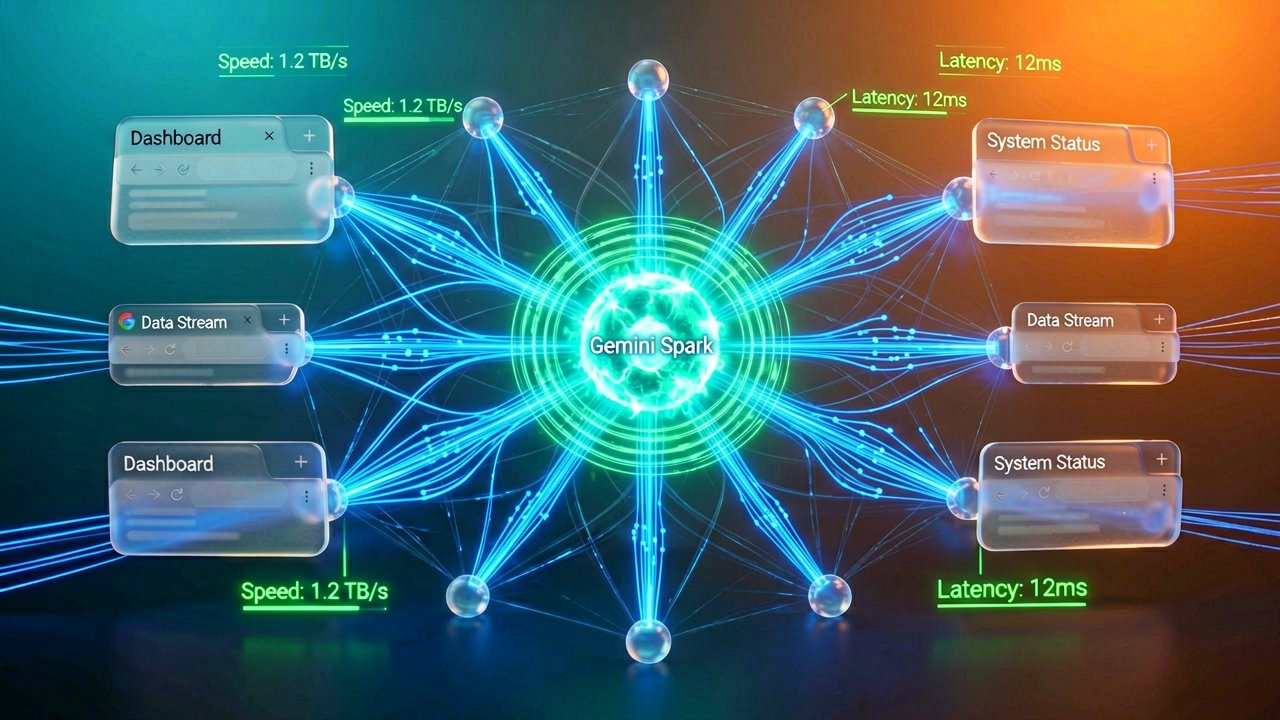
Google I/O has always been a bit of a marathon, but the 2026 keynote felt more like a sprint toward a future we’ve been whispering about for years. This wasn't just another incremental update to your favorite search engine; it was a full-scale pivot toward an "agentic" web. We’re moving past the era of chatbots that just talk and entering one where they actually do the legwork. Between the hardware reveals and the sheer speed of the new models, Google is clearly trying to lock us into an ecosystem where the AI doesn't just answer questions—it lives in our pockets, on our faces, and deep within our digital chores.
The star of the show was undeniably the shift from passive assistance to active execution. Sundar Pichai described this as a period of "hyper progress," and he wasn't exaggerating. We saw Gemini evolve from a tab in your browser to a proactive partner capable of managing complex, "long-horizon" tasks that used to require a human touch. Whether it's the new wearable tech or the background agents running while you sleep, the message from the Shoreline Amphitheatre was loud and clear: if you aren't using an AI agent by the end of this year, you're going to feel like you're still using a rotary phone in a 5G world.
The Rise of the 24/7 AI Agent
The most significant software reveal was Gemini Spark, a personal AI agent designed to run 24/7 in the cloud. Unlike previous versions of Gemini that waited for a prompt, Spark is built to be proactive. According to Tom's Guide, this agent connects directly to your Gmail, Docs, and Calendar to manage information and execute recurring tasks even when your laptop is closed. It’s part of a broader "Neural Expressive" redesign of the Gemini app, aimed at making interactions feel less like a database query and more like a fluid conversation. This is the "agentic AI" Google has been teasing—software that can actually book your parking or plan a full trip across multiple tabs without you clicking a single link.
Android XR and the Return of Smart Glasses
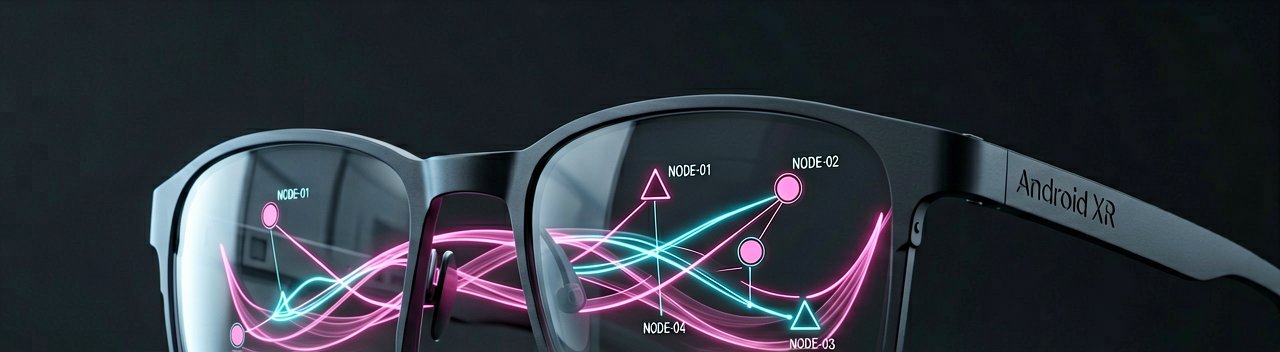
We’ve been hearing the rumors for months, but Google finally put the hardware on the table—or rather, on its face. The company unveiled its Android XR smart glasses platform, featuring consumer-ready frames designed in partnership with Google Blog mainstays like Warby Parker and Gentle Monster. There are two distinct paths here: audio-only glasses for spoken help and display-equipped versions that overlay information directly onto your field of vision. These aren't just bulky tech experiments; they’re stylish accessories powered by "Project Astra," which gives the glasses spatial awareness so they can remember where you left your keys or provide real-time navigation while you walk.
Gemini 3.5: Speed is the New Currency
Underpinning all of this is the new Gemini 3.5 series, starting with Gemini 3.5 Flash. Google claims this model is four times faster than any other frontier model currently on the market, making it the default engine for the Gemini app and Search. As reported by Google Cloud, Gemini 3.5 Flash was engineered from the ground up for "agentic" performance, excelling at the kind of deep reasoning needed for coding and complex task automation. For developers, this means faster, cheaper apps; for users, it means the lag between asking an AI to do something and seeing it happen is finally starting to disappear.
The "Agentic Web" and Chrome's New Life
Even the humble browser got a massive overhaul with "Disco," a new AI-centric browser experience within Chrome. It uses a feature called GenTabs to scan all your open pages and instantly turn them into a single, interactive dashboard. Instead of hunting through twenty different travel sites, Disco consolidates the data into one mini-app. According to Chrome Developers, this extends to "Skills in Chrome," which allows users to save complex multi-tab workflows as one-click tools. It's a fundamental rethink of how we navigate the internet, turning the browser from a viewing window into an automated workspace.
Behind the Scenes: The Invisible Hand of the Agentic Shift
The Real Story Behind the Pivot: While the flashy hardware and speed benchmarks grabbed the headlines, the real narrative unfolding in the hallways of the Shoreline Amphitheatre was one of desperate vertical integration. Google isn't just launching products; it’s attempting to solve the "intent gap" that has plagued Search for a decade. Historically, Google was a librarian, pointing you to a book. With Gemini Spark and the agentic push, Google wants to be the person who reads the book, summarizes the plot, and books the movie tickets for you. This shift represents a massive risk to the traditional ad-supported web, as "agent-to-agent" transactions could bypass the very websites that provide the data Google relies on.
Internal stakeholders at Mountain View have reportedly been divided on how quickly to roll out these "execution-style" agents. Sources close to the Gemini 3.5 development team suggest that the primary hurdle wasn't the LLM’s intelligence, but its reliability in the real world. A chatbot hallucinating a fact is a PR headache; an AI agent accidentally booking a non-refundable $3,000 flight is a legal nightmare. The "Project Astra" integration into the smart glasses is the first real-world test of these guardrails, moving AI out of the sandbox of a chat window and into the unpredictable chaos of physical space. It’s a high-stakes gamble that Google is betting its hardware future on.

The historical context here is impossible to ignore. This isn't Google’s first rodeo with wearable tech, but the 2026 Android XR launch feels significantly more humble than the "Glass Explorer" era of 2013. By partnering with established fashion brands, Google is admitting that tech specs alone don't sell wearables—aesthetics and utility do. The integration of Gemini Flash into these frames solves the latency issue that killed previous iterations of "smart" vision. In 2013, the cloud was too slow; in 2026, the edge-computing capabilities of these glasses mean the AI responds faster than a human assistant could, finally bridging the gap between science fiction and consumer reality.
From a developer's perspective, the "Skills in Chrome" API is perhaps the most disruptive announcement for the long-term health of the open web. By allowing users to automate workflows across disparate domains, Google is essentially creating a new operating layer on top of the internet. We are seeing the birth of a "headless" web where the visual design of a website becomes secondary to how easily its data can be scraped and acted upon by a Gemini agent. Industry analysts are already predicting a "SEO 2.0" crisis, where companies will have to optimize their sites not for human eyeballs, but for the digital agents that will be doing the browsing on our behalf.
Ultimately, the 2026 keynote signaled the end of the "AI as a feature" era and the beginning of "AI as the architecture." The seamless handoff between a voice command on the smart glasses to a background task executed by Gemini Spark in the cloud demonstrates a level of ecosystem lock-in that even Apple might envy. Google has spent twenty years organizing the world’s information; now, they are intent on automating the world’s actions. The success of this transition won't be measured in quarterly earnings or hardware units sold, but in how quickly we stop noticing the agents working behind the scenes to manage our digital lives.
Reading Between the Lines: The Friction of a Frictionless Future
The Paradox of Agency: For all the talk of "liberating" the user from digital drudgery, Google’s 2026 roadmap introduces a fundamental contradiction in the concept of user autonomy. By positioning Gemini Spark as a proactive agent that operates while we sleep, Google is effectively asking for a blank check of trust. The marketing suggests we are regaining our time, but the reality is that we are outsourcing our decision-making to a black box. There is a fine line between a helpful assistant and an algorithmic shadow that narrows our choices before we even realize we have them. If the agent pre-selects our flights, filters our emails, and summarizes our news, the serendipity of the "open web" isn't just being streamlined—it’s being strangled.
There is also the glaring issue of the "Agentic Tax." While Google Cloud touts the efficiency of Gemini 3.5 Flash, the sheer computational cost of running millions of autonomous, 24/7 agents is a physical reality that marketing keynotes conveniently ignore. We are seeing a shift where the cost of "free" services is no longer just our data, but the environmental and infrastructure toll of maintaining a persistent AI presence for every user. Skeptics are rightly pointing out that the speed of "Flash" might be a necessity born of desperation rather than pure innovation—a way to keep the lights on in a data center footprint that is expanding faster than the renewable energy grids meant to power it.
Furthermore, the smart glasses initiative relies on a social contract that remains incredibly fragile. Google may have swapped the geeky aesthetic of the original Glass for Warby Parker frames, but the underlying privacy tension remains unresolved. Project Astra’s "spatial awareness" means these devices are constantly indexing the private environments of everyone the wearer encounters. Google is essentially asking the public to accept a world of ubiquitous, invisible surveillance in exchange for the convenience of never losing their keys again. It is a lopsided trade-off that assumes the "cool factor" of AI will outweigh the collective discomfort of being recorded by a stranger's fashion accessory.
The "headless web" heralded by Chrome’s new "Disco" experience also creates a looming economic crisis for content creators. If a Gemini agent can extract the utility of a website without a human ever seeing an ad or clicking a "Subscribe" button, the incentive to produce high-quality, human-centric content evaporates. Google is effectively building a parasitic layer on top of the internet that risks killing the very host it feeds on. We are projecting a future where the internet becomes a sterile repository of data optimized for machine consumption, leaving human users as mere spectators in an ecosystem built for agents, by agents.
Ultimately, the 2026 announcements reveal a company that is no longer content with being the portal to the internet; it wants to be the internet itself. By moving the interface from a screen to our glasses and the execution from our fingers to their cloud, Google is attempting to eliminate the "friction" of the physical world. However, friction is often where human intentionality lives. In our rush to automate every mundane task, we may find that we have also automated away the small, deliberate choices that define our daily lives, leaving us as passengers in a world curated by a "Flash" model that knows what we want before we do.
“We were promised a world where AI would do our laundry so we could write poetry; instead, we’ve got AI writing the poetry so we can spend more time managing our AI’s calendar.”
Artūras Malašauskas is an AI Systems Integrator with 20+ years of production-grade web engineering experience. He has designed, shipped, and scaled enterprise Python/PHP systems for logistics, SaaS, and public-sector clients. For the past year, he has focused exclusively on AI integrations: deploying open-source LLMs, building generative media pipelines (image, audio, video), and engineering multi-agent workflows for real production environments. His standard: reproducibility, security, cost-efficient inference—no vaporware. He documents and evaluates emerging AI tooling, separating verified capabilities from marketing noise. Technical editor at: muza-ai.eu, ai-verslas.lt, ai-naujinos.lt Connect on LinkedIn
Comments