Google and Samsung’s Android XR Spectacles Are Finally Real, But We’re Still Playing the Guessing Game on Cost
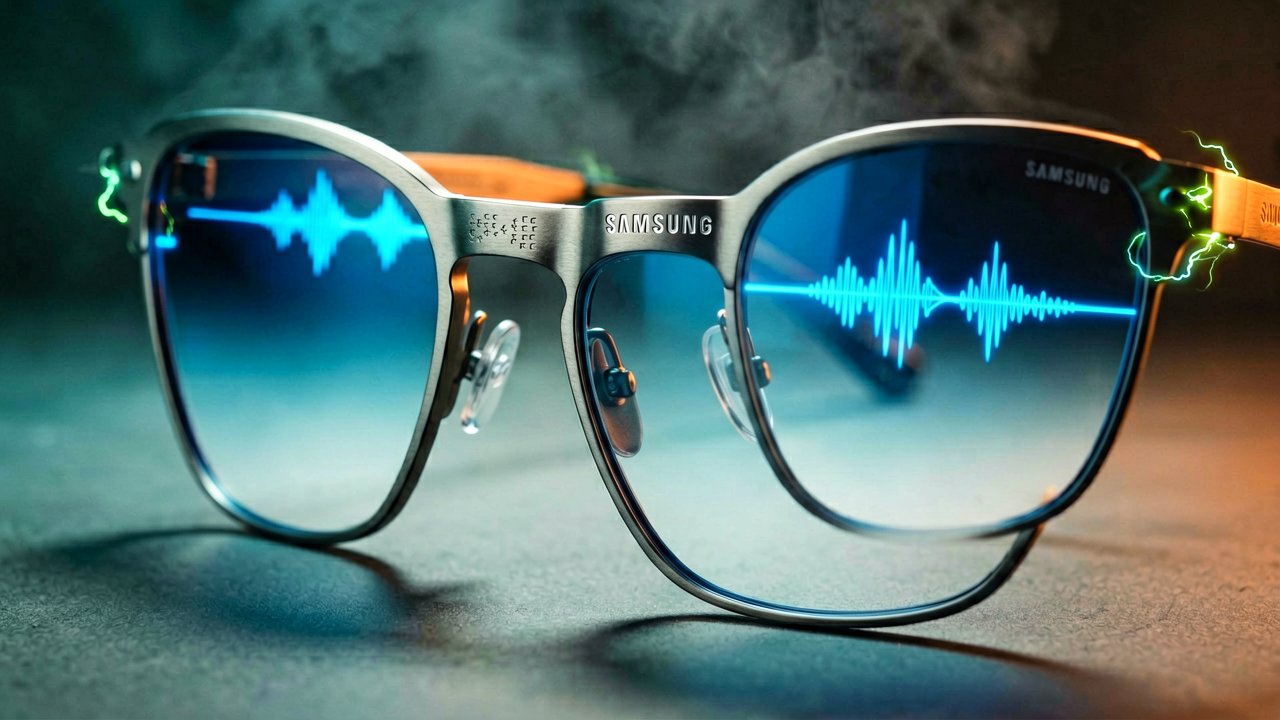
After years of rumors that felt more like tech-industry folklore, Google and Samsung finally pulled back the curtain at I/O 2026 to reveal the first "Intelligent Eyewear" running on the Android XR platform. It’s a moment that’s been a decade in the making—a redemptive arc for the team that once brought us Google Glass—but in classic fashion, the announcement left us with a few massive question marks. We saw the hardware, we saw the sleek brand collaborations, but when it came to the actual name and the hit to our wallets, the tech giants decided to keep us in suspense. As reported by Mashable, these specs are designed to bridge the gap between niche headsets and the everyday eyewear you’d actually wear to a coffee shop without being "that guy."
The strategy here is clearly about style first, which is why the partnership with eyewear heavyweights Samsung and brands like Warby Parker and Gentle Monster is so pivotal. This isn't a bulky visor you strap on for an hour of gaming; it's a companion device meant to live on your face all day. Under the hood, the Android XR OS—the same software powering the Galaxy XR headset—is doing the heavy lifting, primarily through deep integration with Gemini. The goal is to move the smartphone's "intelligence layer" directly into your field of vision, or at least your field of hearing, depending on which model you snag first.
Style Meets Silicon: The Two-Pronged Approach
Google and Samsung aren't just launching one set of glasses; they’re splitting the roadmap. The first wave, arriving this fall, focuses on audio-centric experiences. Think of these as a more stylish, Android-native rival to the Ray-Ban Meta glasses. They’ll feature cameras and speakers to let Gemini "see" what you’re seeing and whisper directions or translations in your ear. According to Android Authority, these audio glasses are the "true" first entry into the eyewear-style XR market for Google, prioritizing all-day comfort over heavy visual overlays.
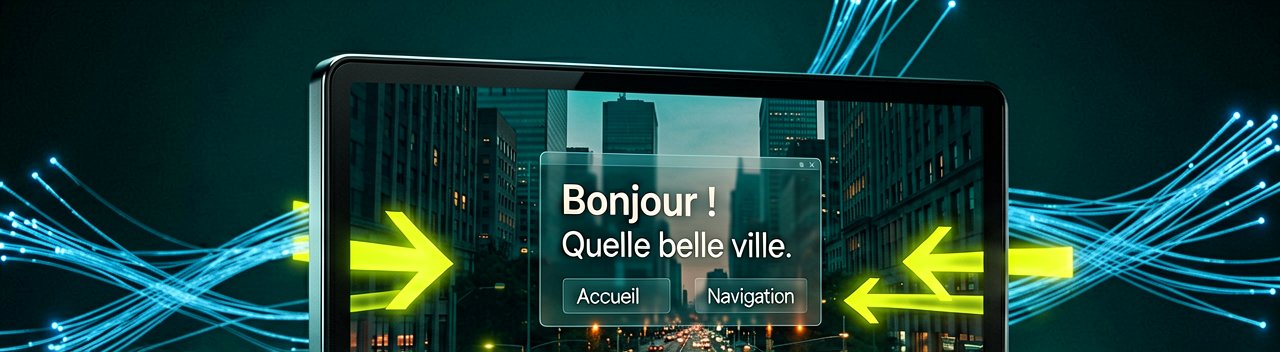
The second tier is where things get truly futuristic. Samsung and Google teased a version with built-in displays—monocular lenses that can project navigation arrows or real-time text translations directly onto the glass. This version will likely use a 12-megapixel camera with autofocus and a custom Qualcomm AR chipset to keep the frames slim. While the audio-only versions are locked for a "Fall 2026" release, the display-equipped models are still a bit of a ghost, likely waiting for more "additional details" to be revealed during the next Galaxy Unpacked event.
The Gemini Edge: Why This Time Is Different
If you’re wondering why this won't end up in the graveyard alongside Google Cardboard, the answer is Gemini. These glasses are designed to be "agentic," meaning they don't just wait for you to ask a question; they understand the context of your surroundings. Whether it’s summarizing a notification from your phone or identifying a landmark as you walk past, the Google Blog highlights that this is about "intelligent eyewear" that helps without being a distraction. By offloading the heavy processing to your phone, they’ve managed to keep the 155mAh battery and slim frames from looking like a science project.
Despite the lack of a MSRP or a catchy brand name (we’re still stuck calling them "Android XR glasses"), the competitive pressure is real. With Meta already dominating the low-profile smart glass market and Apple hovering in the high-end spatial computing space, Samsung and Google are betting that the familiarity of the Android ecosystem will be the deciding factor. We’ll just have to wait until July—and possibly the launch of the Fold 8—to see if the price tag is as stylish as the frames.
The Strategy Under the Surface
Beyond the Press Release: The real story here isn’t just about the hardware specs or the sleek aesthetics; it’s a high-stakes defensive play against the walled gardens of Apple and Meta. Google and Samsung are essentially trying to build the "Windows" of the spatial computing era before the cement dries. By positioning Android XR as an open platform, they’re enticing eyewear manufacturers who don't want to build their own operating systems from scratch. It’s a classic Google move—commoditize the hardware to own the software layer that sits between your eyes and the world.
Samsung’s involvement is equally tactical. After the lukewarm reception of ultra-premium headsets that cost as much as a used car, the pivot to "Intelligent Eyewear" suggests a hard-learned lesson in consumer psychology. People don't want to live in a virtual world; they want their real world to be slightly more useful. Samsung is leveraging its world-class supply chain to solve the thermal challenges of stuffing a 12-megapixel autofocus camera and a Qualcomm AR1 Gen 2 chip into frames that don't burn the wearer’s temples. This isn't just a gadget; it’s a test of whether Samsung can out-engineer Meta in the miniaturization race.
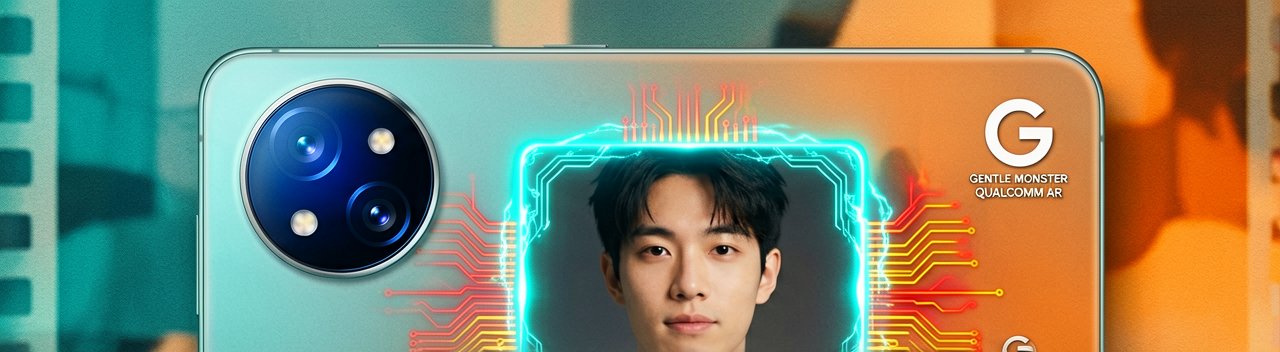
Historically, Google’s foray into face-worn tech was marred by "Glassholes"—the social stigma that killed Google Glass before it could reach the masses. This time, the stakeholder strategy involves fashion icons like Gentle Monster to mask the technology entirely. By making the tech invisible, they hope to bypass the social friction that doomed previous efforts. The absence of a "Google" brand on the frames is a deliberate choice, letting the fashion brand take the lead while Google quietly manages the data and the Gemini-driven AI interactions in the background.
The "Android XR" branding itself signals a unification of fragmented efforts. Previously, Google’s AR and VR teams seemed to be in a constant state of internal competition, but this unified platform suggests a stable roadmap for developers. For the first time, a developer can build an app that scales from a simple audio-only interaction on a pair of Warby Parkers to a full 3D overlay on a Samsung headset. This scalability is what attracted early partners, as it promises a much larger install base than the current fragmented XR market can offer.
Finally, we have to look at the "intelligence" aspect as the true product. In these glasses, Gemini isn't just a chatbot; it’s a situational awareness engine. Industry insiders suggest that the real revenue model isn't the hardware sales, but the data generated by "looking" at the world alongside the user. If these glasses can identify the shoes you’re looking at or the restaurant you’re standing in front of, the advertising potential becomes exponentially more targeted than anything a smartphone screen can provide. It is a bold, albeit privacy-straining, vision of the future that explains why both companies are willing to wait for the perfect moment to reveal the price.
The Hidden Cost of Ambiguity
Reading Between the Lines: The decision to withhold a price tag and a name isn't just a marketing tease; it’s a calculated hedge against a market that remains notoriously fickle. By launching without a price, Google and Samsung are essentially beta-testing consumer appetite before committing to a number that could either alienate the masses or undercut their own margins. It suggests that while the hardware is ready, the business model is still in flux. There is a glaring contradiction in touting a "unified" Android XR platform while simultaneously splitting the hardware into audio-only and display-equipped tiers, potentially fragmenting the developer ecosystem before it even leaves the starting gate.
There is also the matter of the "Gemini-first" interface, which assumes that users actually want an AI assistant constantly whispering in their ear. While the tech industry is currently intoxicated by the promise of agentic AI, the average consumer’s relationship with voice assistants has historically been one of utility rather than companionship. Projecting a future where we navigate our world through a Gemini-filtered lens ignores the very real "uncanny valley" of augmented reality. If the software lags by even a millisecond, or if the AI misidentifies a social cue, the experience shifts from futuristic to frustrating, turning a high-end fashion accessory into an expensive piece of digital clutter.
Furthermore, the heavy reliance on a tethered smartphone experience highlights the limitations of current battery technology. Despite the marketing talk of "all-day wear," a 155mAh battery is remarkably small for a device expected to run a 12-megapixel camera and constant Bluetooth streaming. We are seeing a projection of a "post-smartphone" future that is still entirely dependent on the smartphone in your pocket to do the heavy lifting. This creates a bottleneck where the glasses are only as smart—and as long-lived—as the phone they are paired with, making the "independence" of the Android XR platform feel more like a branding exercise than a technical reality.
The privacy elephant in the room also remains largely unaddressed by the "intelligent eyewear" label. By embedding cameras into everyday frames from brands like Warby Parker, Google and Samsung are betting that the public’s desire for convenience will outweigh the inevitable backlash against "surveillance chic." There is a cynical irony in trying to make the camera "invisible" to avoid the stigma of previous failures; it doesn't solve the privacy problem, it simply makes it harder to spot. If these glasses become ubiquitous, the social contract of public spaces will be rewritten without a single vote being cast, all in the name of seeing a navigation arrow on a sidewalk.
Ultimately, the measured skepticism here stems from the fact that we have seen this movie before. From the original Google Glass to the North Focals, the road to the "smart glass revolution" is littered with the carcasses of devices that promised to replace our screens but ended up forgotten in desk drawers. Google and Samsung have the manufacturing muscle and the software stack to succeed, but they are fighting against the gravity of human habit. Until we see a "killer app" that justifies the social and financial cost of wearing a computer on one's face, these glasses remain a sophisticated solution in search of a problem.
It’s a bold new world where your glasses can translate French in real-time and identify your neighbor's dog, yet we still haven't figured out how to make them last longer than a lunch break or cost less than a mid-range laptop. At least when the battery dies, you’ll still have a very expensive pair of tinted windows for your face.
Artūras Malašauskas is an AI Systems Integrator with 20+ years of production-grade web engineering experience. He has designed, shipped, and scaled enterprise Python/PHP systems for logistics, SaaS, and public-sector clients. For the past year, he has focused exclusively on AI integrations: deploying open-source LLMs, building generative media pipelines (image, audio, video), and engineering multi-agent workflows for real production environments. His standard: reproducibility, security, cost-efficient inference—no vaporware. He documents and evaluates emerging AI tooling, separating verified capabilities from marketing noise. Technical editor at: muza-ai.eu, ai-verslas.lt, ai-naujinos.lt Connect on LinkedIn
Comments