Google’s Everything-Everywhere AI Pitch Fails to Move the Needle on Wall Street
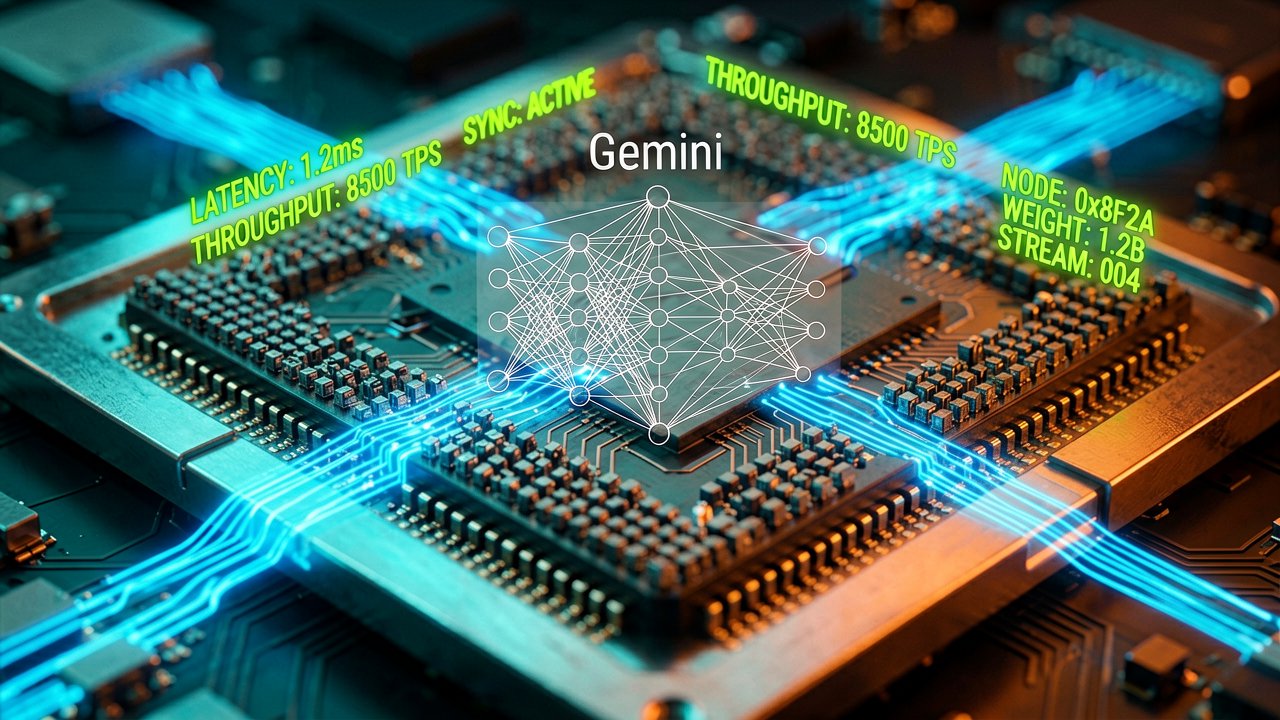
Google just threw everything at the wall during its latest I/O keynote—new Gemini models, futuristic "Project Astra" smart glasses, and agentic AI that promises to handle your life’s admin—but investors aren't exactly reaching for their checkbooks. Despite a flurry of demos designed to show that Mountain View hasn't lost its groove to OpenAI or Anthropic, the market response was a collective shrug. Alphabet shares dipped as the event wrapped up, with Barron's noting that the stock slipped roughly 2% as the reality of Google’s long-term "early days" timeline set in.
The skepticism isn't necessarily about the tech itself, which looks impressive on paper. We saw "Project Astra," a multimodal AI agent capable of identifying objects through a camera lens in real-time, and a tease of AR glasses that look remarkably like, well, glasses. But for a market obsessed with immediate monetization and "shipping" rather than "showing," the heavy emphasis on prototypes felt like a déjà vu of previous years. While CNBC detailed the rollout of Gemini 1.5 Pro and a faster "Flash" version, the underlying sentiment remains focused on whether these tools will actually protect Google's search margins or just increase its capital expenditure.
The Agent Ambition vs. Reality
Sundar Pichai’s vision for "AI Agents" is grand: software that can return your shoes, plan your vacation, and basically function as a personal assistant with a PhD. However, the fine print is that these agents are still experimental. The disconnect between the flashy "Astra" demo—where the AI remembers where you left your glasses—and the actual products in users' hands is where the investor fatigue sets in. It's a classic case of the "vision gap" that has plagued the company since the first iteration of Google Glass.
A Crowded AI Arms Race
Google is no longer the only giant in the room, and its aggressive pivot to "Gemini everywhere" is a defensive posture as much as an offensive one. By introducing features like AI Overviews in Search, the company is fundamentally rewriting its own rulebook. Critics argue that while Google is busy integrating AI into its existing legacy stack, rivals are building from the ground up without the baggage of an aging ad-based search model. Even as Investor's Business Daily highlights Google's muscle-flexing in AI model pricing, the market is waiting for a "killer app" that proves this massive infrastructure spend will pay off in the next fiscal year, not the next decade.

The High-Stakes Balancing Act: Behind the glossy stagecraft of Mountain View lies a company caught in a profound "innovator’s dilemma." While Sundar Pichai’s team showcased a future where AI handles everything from research to logistics, the real story is the tension between Google’s massive R&D engine and its protective instinct over the search ads gold mine. For years, Google sat on world-changing tech like the Transformer architecture—the very foundation of the current AI boom—only to watch more nimble startups like OpenAI commercialize it first. This latest presentation was an attempt to prove that the sleeping giant is finally awake and ready to cannibalize its own products before someone else does.
Veteran observers noted that the emphasis on "Project Astra" and the revival of smart glasses wasn't just about utility; it was about reclaiming the hardware narrative. Google has spent the better part of a decade trying to move beyond the phone, yet its most ambitious projects often end up in the "Google Graveyard." By demonstrating AI that can "see" and "hear" through wearable frames, the company is betting that the next interface won't be a screen you tap, but a lens you look through. This shift represents a massive technical hurdle, requiring a level of low-latency processing that even the fastest 5G networks and edge computing setups are currently struggling to maintain consistently.
From the perspective of institutional investors, the "wow" factor of a digital assistant that can find your lost keys is overshadowed by the staggering cost of the infrastructure required to run it. Every AI-generated summary at the top of a search result costs significantly more in compute power than a traditional list of blue links. According to analysis from Reuters, the capital expenditure required to keep pace with the Gemini rollout is ballooning, leading to concerns that profit margins will be squeezed even if Google maintains its market share. The market is effectively demanding that Google prove it can be both a pioneer in generative tech and a disciplined steward of its bottom line.
Historically, Google has succeeded by being the world’s librarian, but the new "agentic" model requires it to become the world's concierge. This is a far riskier role that involves actual decision-making and liability. If an AI agent books the wrong flight or provides a hallucinated medical recommendation, the brand damage is far more direct than a simple bad search result. This explains the cautious, often "experimental" labels attached to the most exciting features. Google is walking a tightrope, trying to satisfy the tech enthusiasts who want "Astra" today and the risk-averse legal and financial teams who prefer a slower, more controlled release schedule.

Ultimately, the lukewarm reaction from Wall Street reflects a fundamental disagreement over timing. Google is playing a ten-year game, investing in the silicon, the data centers, and the foundational models to own the "AI Operating System" of the future. Conversely, investors operate on a quarterly cadence, looking for immediate evidence that AI will drive ad clicks or Cloud subscriptions. Until the company can show a direct line between a Gemini-powered "agent" and a significant uptick in revenue, the brilliance of the engineering will likely continue to be met with a spreadsheet-driven skepticism.
The Infrastructure War and the Margin Squeeze
The transition to an AI-first company isn't just a software update; it’s a total overhaul of the physical world. Google’s custom-built TPUs (Tensor Processing Units) are now in their sixth generation, providing a home-field advantage that few competitors can match. Yet, the energy demands and the sheer volume of chips needed to power billions of AI queries a day are unprecedented. The company is essentially rebuilding its entire stack from the sand up, a move that requires billions in upfront investment before the first dollar of "agent-driven" profit is ever realized. This long-tail ROI is exactly what makes the current stock price so volatile following these major technical reveals.
The Illusion of Progress: For all the talk of "innovation," there is a nagging sense that Google is merely running faster to stay in the same place. The pivot to AI Overviews—now aggressively pushed to millions of users—is a direct contradiction of the company's historical mission to organize the world's information and provide a gateway to the open web. By attempting to keep users within its own ecosystem through AI-generated summaries, Google is effectively starving the very publishers and creators that provide the data its models ingest. This parasitic relationship is a ticking time bomb; if the "open web" collapses because search traffic disappears, the high-quality training data for future iterations of Gemini will vanish along with it.
Moreover, the technological "moat" that Google claims to be building with Project Astra and agentic AI may be shallower than advertised. In the software world, first-mover advantage is often a myth—just ask the creators of AltaVista or MySpace. While Google spends billions on its "everything-everywhere" AI strategy, open-source models are rapidly closing the performance gap at a fraction of the cost. The skepticism from investors isn't just about current profit margins; it’s a fear that Google is over-engineering a solution to a problem that nimble, specialized startups are already solving with more focus and less bureaucratic bloat.
There is also the matter of the "Google Effect" on product trust. The company has a storied history of unveiling breathtaking demos that never quite materialize as polished, reliable consumer products. Project Astra’s real-time vision looks like a miracle today, but if it launches with the same glitchy, privacy-invading friction that killed Google Glass, it will be nothing more than an expensive footnote. Investors have learned to discount Mountain View’s theatricality, recognizing that a "wow" moment on stage is a poor substitute for a sustainable business model in the age of generative interference.
The contradiction at the heart of Google’s AI strategy is its reliance on "hallucination-prone" technology to maintain a reputation built on factual accuracy. When a search engine is "mostly right," it’s a failure; when a chatbot is "mostly right," it’s a breakthrough. By merging the two, Google is diluting its most valuable asset: the user's trust that the top result is the definitive answer. As long as Gemini continues to suggest putting glue on pizza or eating rocks—however rare those edge cases may be—the company is trading its hard-won authority for a piece of the generative trend.
We are witnessing the transformation of a data company into a "vibe" company, where the speed of the animation and the friendliness of the AI’s voice are meant to distract from the lack of a clear fiscal roadmap. If the future of computing is truly "agentic," then Google has to prove it can do more than just build a better toy. It has to prove it can build a product that people will pay for, either through their attention or their wallets, without destroying the very information ecosystem it spent twenty years curating.
The Sustainability Paradox
The final implication of this AI arms race is the sheer environmental and logistical absurdity of it all. Google is effectively burning a small forest's worth of energy to save a user three seconds of scrolling. While the tech industry loves to talk about efficiency, the move toward "multimodal" everything is fundamentally inefficient. Until the cost-per-query for an AI agent drops to match the cost of a standard indexed search, Google is essentially subsidizing a luxury user experience with a dwindling pool of legacy ad revenue, a strategy that even the most patient shareholders will eventually find unsustainable.
"Google is basically trying to sell us a self-driving car while their primary business remains selling maps to people who still prefer walking; it’s a brilliant vision of the future, provided you don't mind that the car currently stops for ghosts and the driver is asking for a trillion-dollar gas card."
Artūras Malašauskas is an AI Systems Integrator with 20+ years of production-grade web engineering experience. He has designed, shipped, and scaled enterprise Python/PHP systems for logistics, SaaS, and public-sector clients. For the past year, he has focused exclusively on AI integrations: deploying open-source LLMs, building generative media pipelines (image, audio, video), and engineering multi-agent workflows for real production environments. His standard: reproducibility, security, cost-efficient inference—no vaporware. He documents and evaluates emerging AI tooling, separating verified capabilities from marketing noise. Technical editor at: muza-ai.eu, ai-verslas.lt, ai-naujinos.lt Connect on LinkedIn
Comments