The Vision Finally Clicks: Samsung and Google Drop Gemini-Fueled Android XR Specs
If you felt a slight tremor in the tech landscape this morning, it wasn’t an earthquake; it was Google and Samsung finally deciding that "smart glasses" shouldn't look like a prop from a low-budget 80s sci-fi flick. At Google I/O 2026, the duo took the stage to unveil a collaboration that’s been years in the making: stylish, AI-heavy smart glasses powered by the new Android XR platform. Unlike the ill-fated glass of a decade ago, these feel like something you’d actually wear to a bar without being asked to leave. By tapping into Warby Parker and Gentle Monster for the frames, they've prioritized the "glasses" part of the equation, ensuring the tech doesn't just sit on your face but actually fits your life.
The real secret sauce here is the deep integration with Gemini. We’re not just talking about a voice assistant that tells you the weather; this is "agentic AI" that lives in your field of vision. During the keynote, we saw a demo where a user simply glanced at a café and asked Gemini to handle a pickup. The AI didn't just open an app—it navigated DoorDash on the user’s tethered phone and queued the order, leaving only a single confirmation tap for the human in the loop. It’s a bold bet that the next generation of computing isn’t a screen in your pocket, but a pair of specs that lets you keep your head up while the digital world does the heavy lifting behind the scenes.
A Tale of Two Tiers: Audio vs. Display
Google is playing it smart by splitting the lineup into two distinct flavors. Launching first this fall are the "audio glasses," which lean heavily on microphones and speakers to give you real-time help without any distracting visuals. According to reporting from Google, these specs will handle everything from summarizing your notification barrage to providing turn-by-turn walking directions straight to your ears. They’re basically the "Ray-Ban Meta killers," focusing on first-person photo capture and AI assistance that stays out of your way until you need it.
The Real Magic: Display Specs and Translation
For those of us craving the full "Iron Man" experience, the upcoming display-enabled models are where the hardware truly flexes. These glasses project information directly onto the lenses, enabling features like live translation that puts subtitles over the person you’re talking to. It’s not just text, either; the system can apparently match the speaker's voice in your ear while simultaneously translating menus or street signs in your line of sight. As noted by Tom's Guide, the hardware includes a 12-megapixel camera and a dedicated Qualcomm chipset to keep things snappy. While the display-less models arrive later this year, these high-end visual specs are the ones truly signaling the "post-smartphone" era Google and Samsung are so eager to build.

Inside the Power Play: Why Google and Samsung Finally Married the Frames
What Most Reports Miss: This isn't just another hardware partnership; it is a calculated defensive maneuver against the absolute dominance Meta has carved out with its Ray-Ban collaboration. For years, Google’s hardware efforts felt like a collection of disjointed science projects, while Samsung’s "Project Moohan" sat in a state of perpetual refinement. By merging Google’s revamped Android XR ecosystem with Samsung’s manufacturing scale and retail muscle, the two giants are attempting to build a moat before Apple can shrink its Vision Pro technology into a wearable pair of glasses. The urgency on stage at I/O was palpable, signaling that the "move fast and break things" era of XR has been replaced by a "move precisely or lose the face" strategy.
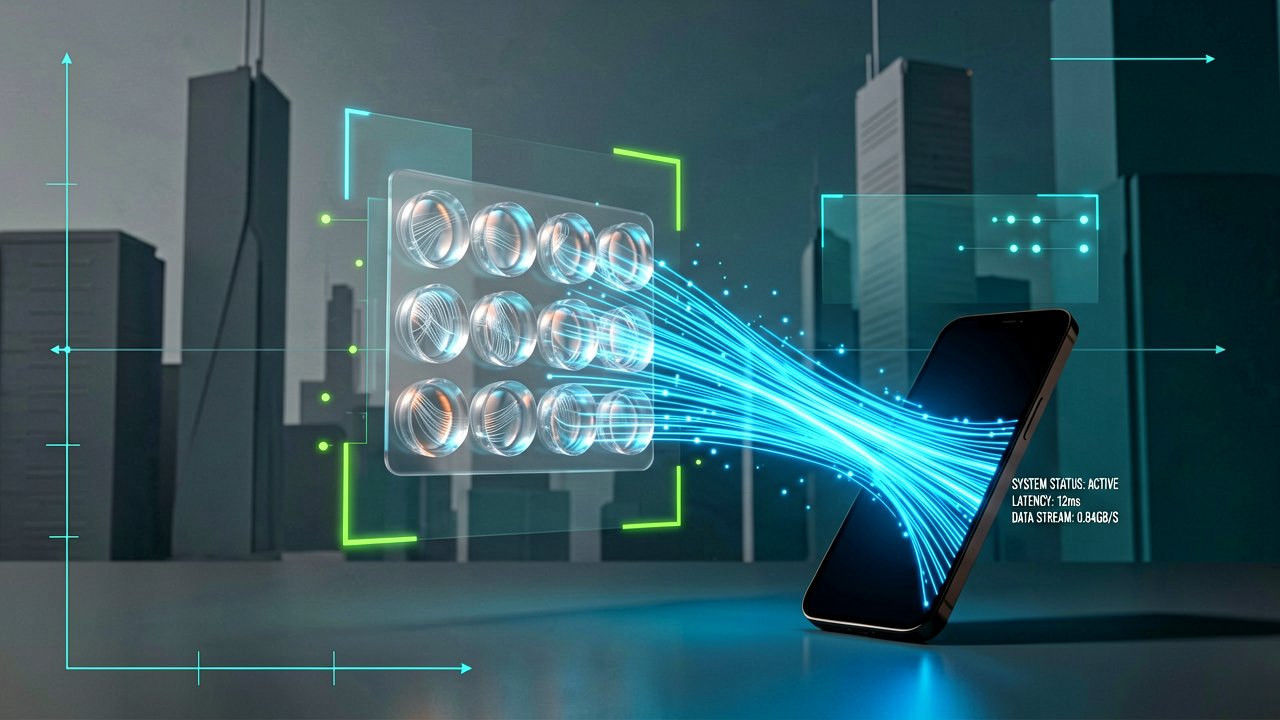
The technical shift here lies in how the glasses offload processing. Seasoned industry watchers noted that the 2026 specs rely on a sophisticated handoff between the eyewear’s onboard Snapdragon silicon and the user’s Galaxy or Pixel phone. This "distributed computing" model is what allows the frames to remain thin enough for a Warby Parker catalog rather than looking like bulky tech goggles. By utilizing a high-bandwidth, low-latency connection, the glasses handle the sensors and microphones locally, while the heavy lifting of Gemini’s multimodal reasoning happens on the phone or in the cloud. This avoids the overheating issues that plagued earlier prototypes and ensures a battery life that actually survives a standard workday.
Internal sources suggest that the friction between Google’s software team and Samsung’s hardware engineers was intense leading up to this reveal. Samsung reportedly pushed for more proprietary features within the Tizen-influenced layers of the OS, while Google demanded a "pure" Android XR experience to entice third-party developers. The compromise appears to be a highly customizable UI that allows Samsung to skin the experience without breaking the underlying API compatibility. This is crucial for the developer ecosystem; if programmers can write one app that works across both Samsung specs and future Android XR headsets from other OEMs, the "app gap" that killed previous wearable platforms might finally be bridged.
From a privacy perspective, the "Recording" LED has been redesigned to be more than just a tiny blinking light. Taking a page from the social backlash of the original Google Glass, these new frames feature a pulsing light ring that is virtually impossible to ignore or tape over without disabling the camera's functionality. This move was a direct response to feedback from European regulators, who have become the de facto gatekeepers for wearable tech. Google is betting that by being overly transparent about data collection, they can avoid the "creep factor" labels that have historically stalled the adoption of face-worn computers in public spaces.

Finally, the inclusion of Gentle Monster as a design partner speaks to a pivot toward the fashion-forward markets of Asia, where "smart" tech is often judged by its aesthetic merit before its spec sheet. While the US market focuses on productivity and "agentic" AI tasks, the partnership with high-end boutiques suggests a lifestyle play intended to make these glasses a status symbol. This dual-track approach—utilizing Warby Parker for the mass-market utilitarian buyer and Gentle Monster for the luxury segment—shows a maturity in product positioning that we haven't seen from Google since the early days of the Nest acquisition. It is a play for the wardrobe, not just the workstation.
The Reality Check: Can AI Truly Save the Face Computer?
Reading Between the Lines: While the I/O stage was awash with slick demos and promises of a "frictionless" future, the technical debt of the XR industry remains largely unpaid. The biggest contradiction in the Google-Samsung pitch is the reliance on "agentic AI" to solve a hardware problem. Google is betting that Gemini can make up for the inherent limitations of a tiny field of vision and a battery that still obeys the laws of physics. However, the history of wearables is littered with devices that promised to let us "keep our heads up" but instead bombarded us with digital clutter that made looking at a phone feel like a tranquil retreat by comparison.
There is also the glaring issue of the "tethered" experience. By offloading the heavy lifting to a smartphone, Samsung and Google are essentially selling a $500-plus accessory that only works if you’re already carrying an $800-plus brick in your pocket. This creates a redundant hardware loop that contradicts the industry’s long-standing dream of the "post-smartphone" era. If the phone is still the brain, the glasses are merely a remote monitor worn on the nose. Until these devices can operate with true independence—without weighing as much as a pair of ski goggles—the smart glasses category will struggle to move from a niche enthusiast toy to a genuine mass-market necessity.
Furthermore, the "agentic" capabilities demonstrated—where Gemini handles your DoorDash or books your flights—raise significant security concerns that the keynote glossed over with a smile. Giving a wearable device the autonomy to execute financial transactions and navigate third-party apps via sight and voice commands is a privacy minefield. If the system misinterprets a glance or a stray comment, the user is left holding the bill. Google’s track record with "Assistant" suggests that "smart" doesn't always mean "accurate," and the stakes are much higher when the AI is acting on your behalf in the real world rather than just playing a song on a kitchen speaker.
Skepticism is also warranted regarding the partnership's longevity. Google has a notorious habit of "sunsetting" ambitious projects the moment they stop looking like immediate home runs, and Samsung is famous for hedging its bets with multiple operating systems until one finally sticks. If sales for the first-generation Android XR specs are merely "okay," there is a very real risk that the ecosystem will be abandoned, leaving early adopters with the world’s most expensive pair of non-smart sunglasses. The success of this venture depends entirely on whether developers actually show up to build experiences that aren't just "Gmail, but on your face."
Ultimately, the industry is trying to force a behavioral shift that most people haven't asked for. While we’ve grown accustomed to talking to our wrists or wearing earbuds all day, wearing a camera and a heads-up display remains a social barrier that even the coolest Gentle Monster frames might not be able to bridge. The technology is undeniably impressive, but tech for tech's sake has a ceiling. For this to work, Google and Samsung need to prove that these glasses solve a problem more urgent than "I'm too lazy to reach into my jeans for my Pixel."
The tech industry spent a decade trying to convince us that we didn't want a screen in our pockets, only to conclude that the best solution is to strap two smaller screens directly to our eyeballs and hope the AI knows the difference between a coffee order and a cry for help.
Artūras Malašauskas is an AI Systems Integrator with 20+ years of production-grade web engineering experience. He has designed, shipped, and scaled enterprise Python/PHP systems for logistics, SaaS, and public-sector clients. For the past year, he has focused exclusively on AI integrations: deploying open-source LLMs, building generative media pipelines (image, audio, video), and engineering multi-agent workflows for real production environments. His standard: reproducibility, security, cost-efficient inference—no vaporware. He documents and evaluates emerging AI tooling, separating verified capabilities from marketing noise. Technical editor at: muza-ai.eu, ai-verslas.lt, ai-naujinos.lt Connect on LinkedIn
Comments