The Stack Strikes Back: How Google I/O 2026 Rewrote the Silicon Soul of the Internet
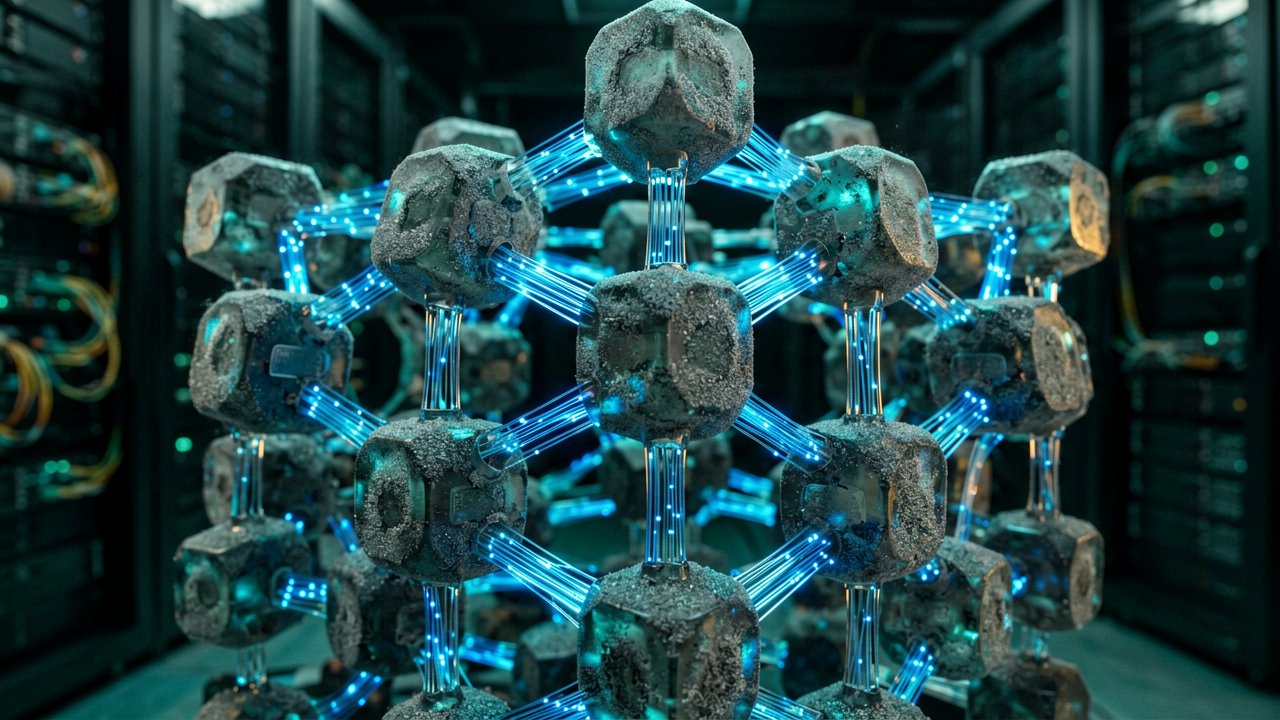
If you walked into Shoreline Amphitheatre expecting a few shiny new gadgets, you probably walked out feeling like you’d just watched a masterclass in full-stack vertical integration. Google I/O 2026 wasn’t just a developer conference; it was a declaration that AI is no longer a "feature" bolted onto an old search engine. It's the load-bearing infrastructure for everything from the chips in the data centers to the glasses on your face. Sundar Pichai dropped a bombshell of a stat to set the mood: Google is now processing a staggering 3.2 quadrillion tokens per month across its services, a 7x jump from last year. That’s not just growth; that’s a wholesale migration of human digital interaction onto a foundation of large language models.
The real star of the show wasn't a chatbot, but the silicon that feeds it. Google’s eighth-generation TPUs—specifically the TPU 8t for training and the TPU 8i for inference—represent a fundamental shift in how the company builds for the "agentic era." By splitting the hardware into specialized roles, they’ve managed to triple compute performance, turning what used to be months of model training into mere weeks. It’s a "closed-loop flywheel" strategy: better chips build better models like Gemini 3.5 Flash, which in turn power more efficient agents that generate more token volume, ultimately justifying the next massive capital expenditure for TPU 9. This isn't just tech for tech's sake; it’s about making the cost of intelligence drop fast enough to actually run a 24/7 personal agent for millions of people without the servers melting down.
The Rise of the Agentic Browser and "Vibe Coding"
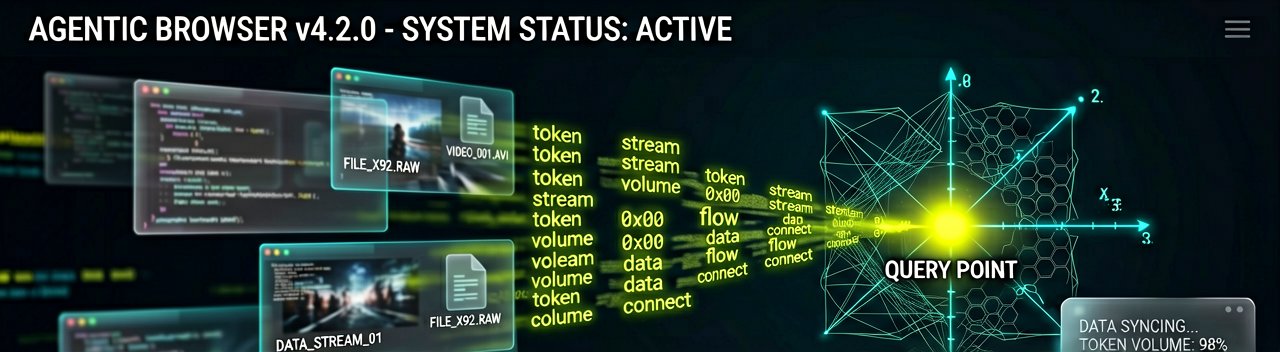
Google’s vision for the web has officially moved past the "ten blue links" era. The new "intelligent search box"—the biggest redesign in 25 years—now expands to accept video, files, and entire browser tabs as inputs. But the real magic happens in the background with Gemini Spark, an always-on agent that lives in the cloud and keeps working while your phone is locked. Whether it’s scouring your credit card statements for hidden fees or organizing a cross-platform travel itinerary, Spark is meant to be the "digital connective tissue" we've been promised for a decade. As reported by Google Blog, the company is betting that these agentic experiences will turn Search into a personalized dashboard rather than just an index.
For the developers in the crowd, the buzzword of the week was "vibe coding." With the upgraded Antigravity platform and new tools in Google AI Studio, the barrier to entry for building complex apps has plummeted. You can essentially describe an app’s "vibe" and functional requirements in plain English, and the AI handles the heavy lifting of generating production-quality code and deploying it to the Play Store. This shift toward high-level intent over low-level syntax is a massive win for productivity, even if it leaves some veteran engineers feeling a bit nostalgic for the days of manual debugging. It’s clear that in 2026, the real skill isn’t just writing the code—it’s knowing how to direct the agents that do.
Hardware with a Side of Holograms
While the focus was heavily on the "stack," we did get a glimpse of the future you can actually touch. The collaboration with Samsung and Qualcomm finally bore fruit in the form of Android XR smart glasses. These aren't the bulky headsets of years past; they look remarkably like standard eyewear from brands like Warby Parker but come packed with "Android Halo," a new UI space that shows live updates from your background agents. Imagine walking down the street and having your Field of View subtly nudge you about a meeting change or a translation of a menu, all handled by the same Gemini 3.5 infrastructure running in a data center halfway across the world. It’s a compelling look at how Google plans to maintain its dominance as we move from the smartphone in our pockets to the ambient intelligence surrounding us.
Deep Dive: The Quiet War for the "Token Pipeline"
What Most Reports Miss: While the flashy demos of AI glasses and "vibe coding" captured the headlines, the real story of I/O 2026 lies in Google’s ruthless optimization of its proprietary token pipeline. For years, the industry focused on model size, but the narrative has shifted toward unit economics. By vertically integrating the TPU 8 architecture directly into the Gemini 3.5 kernel, Google has effectively built a "private lane" on the information superhighway. This isn't just about speed; it's about the fundamental cost of compute. Insiders suggest that by owning the hardware, the software, and the data center cooling tech, Google is producing "intelligence" at a fraction of the cost of competitors who are still paying the "Nvidia tax."
This structural advantage allows Google to do something its rivals currently find terrifying: offering "infinite context" as a standard feature. During the developer deep dives, it became clear that the 10-million-token window isn't just a limit—it's a new way of thinking about memory. Historically, computers forgot everything the moment you closed a program. Now, with the tight coupling of the new Vertex AI infrastructure and the TPU 8i inference chips, Google is moving toward a world where your entire digital history is a live, queryable database. It represents a pivot from "Search" as a retrieval tool to "Search" as a cognitive prosthesis that never purges a single byte of your intent.
However, this consolidation of power isn't sitting well with everyone in the ecosystem. Open-source advocates and several European regulators are already raising eyebrows at the "Black Box" nature of the TPU-Gemini synergy. The concern is that Google is creating a closed loop where third-party developers must use Google hardware to get the best performance out of Google models, effectively sidelining the open web. During a post-keynote Q&A, several developers expressed anxiety that "vibe coding" might eventually turn them into glorified prompt engineers, stripped of the granular control they once had over their own tech stacks.
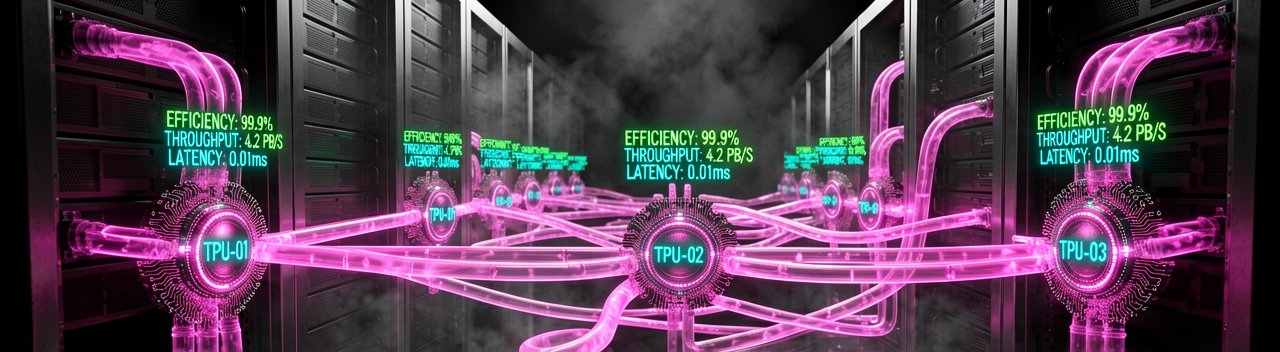
From a historical perspective, we are seeing a repeat of the early 2000s "Wintel" era, but on a much more aggressive scale. Back then, Windows and Intel dominated the PC market through mutual optimization; today, it’s the Gemini-TPU stack. The difference is the speed of iteration. In the 20th century, hardware cycles took years. Today, Google is pushing firmware updates to its data centers that can increase inference efficiency by 15% overnight. This "live-wire" infrastructure means the Google of 2026 is no longer just a software company, but a utility provider for the very air the digital economy breathes.
Finally, we have to look at the "Energy Wall." Silicon Valley is running out of power, and Google’s move to the TPU 8 series is as much about survival as it is about performance. The 8i chips are reportedly 40% more power-efficient than the previous generation, a necessity given the staggering electricity demands of agentic AI. As The Verge has noted in recent climate-tech reporting, the winner of the AI race won't just be the one with the smartest model, but the one who can keep the lights on. Google is betting that its custom silicon will be the heat sink that saves its bottom line from the rising costs of the global energy grid.
The Friction of Seamlessness: Silicon Hubris vs. Reality
Reading Between the Lines: The "agentic era" Google describes is predicated on a level of trust and technical perfection that the company has historically struggled to maintain. While the vision of a 3.2 quadrillion token-per-month pipeline is impressive on paper, it glosses over the "hallucination tax" that still plagues even the most advanced models. Google is essentially asking users to hand over the keys to their digital lives—financial statements, travel plans, and real-time vision via Android XR—to a system that still occasionally struggles with the nuance of human sarcasm or the reliability of a flight cancellation email. There is a palpable contradiction between the marketing of "invisible AI" and the reality of a system that requires constant, vigilant oversight to ensure it doesn't confidently mismanage your life.
Furthermore, the pivot to "vibe coding" carries a hidden cost for the broader technical ecosystem. By abstracting away the "how" of software development, Google is effectively creating a generation of developers who are dependent on a proprietary black box. If the AI handles the architecture and the TPU-optimized kernels, the underlying skill set of the global workforce shifts from engineering to curation. This move might democratize app creation, but it also creates a massive single point of failure. If the Gemini API or the Vertex infrastructure experiences a localized "intelligence dip" or a significant outage, the "vibe" shifts from productive to paralyzed in an instant, leaving creators with no manual override for their own products.
There is also the matter of the "Agentic Deadlock." As more companies deploy these 24/7 personal agents, we are rapidly approaching a future where AI bots are simply talking to other AI bots. Your Google agent will spend its day haggling with a customer service bot from an airline, which is itself powered by a different LLM. This creates a feedback loop of synthetic data and automated negotiation where the human at the center is increasingly sidelined. Google’s infrastructure is built to scale this interaction to a terrifying degree, but it remains to be seen if this actually saves human time or just fills the digital void with a new, high-velocity layer of automated bureaucracy.
Finally, we must address the regulatory paradox. Google claims that its vertical integration is necessary for efficiency and power management, yet this same integration makes it nearly impossible for a competitor to offer a viable alternative. By weaving Gemini into the very silicon of the data center, Google isn't just winning the AI race; it is effectively changing the rules of the track. Measured skepticism suggests that the "openness" Google touts is increasingly a one-way street, where the only way to play in the new agentic economy is to buy into the entire Mountain View stack from the chip up.
"We’ve spent forty years teaching humans how to speak to computers in code, only to spend the next forty teaching computers to guess what humans mean by 'make it look more professional.' At this rate, by 2030, our most valuable technical skill will be the ability to describe a sandwich with enough clarity that the AI doesn't accidentally order us a yacht."
Artūras Malašauskas is an AI Systems Integrator with 20+ years of production-grade web engineering experience. He has designed, shipped, and scaled enterprise Python/PHP systems for logistics, SaaS, and public-sector clients. For the past year, he has focused exclusively on AI integrations: deploying open-source LLMs, building generative media pipelines (image, audio, video), and engineering multi-agent workflows for real production environments. His standard: reproducibility, security, cost-efficient inference—no vaporware. He documents and evaluates emerging AI tooling, separating verified capabilities from marketing noise. Technical editor at: muza-ai.eu, ai-verslas.lt, ai-naujinos.lt Connect on LinkedIn
Comments