Xreal’s Project Aura Just Made Android XR Feel Real
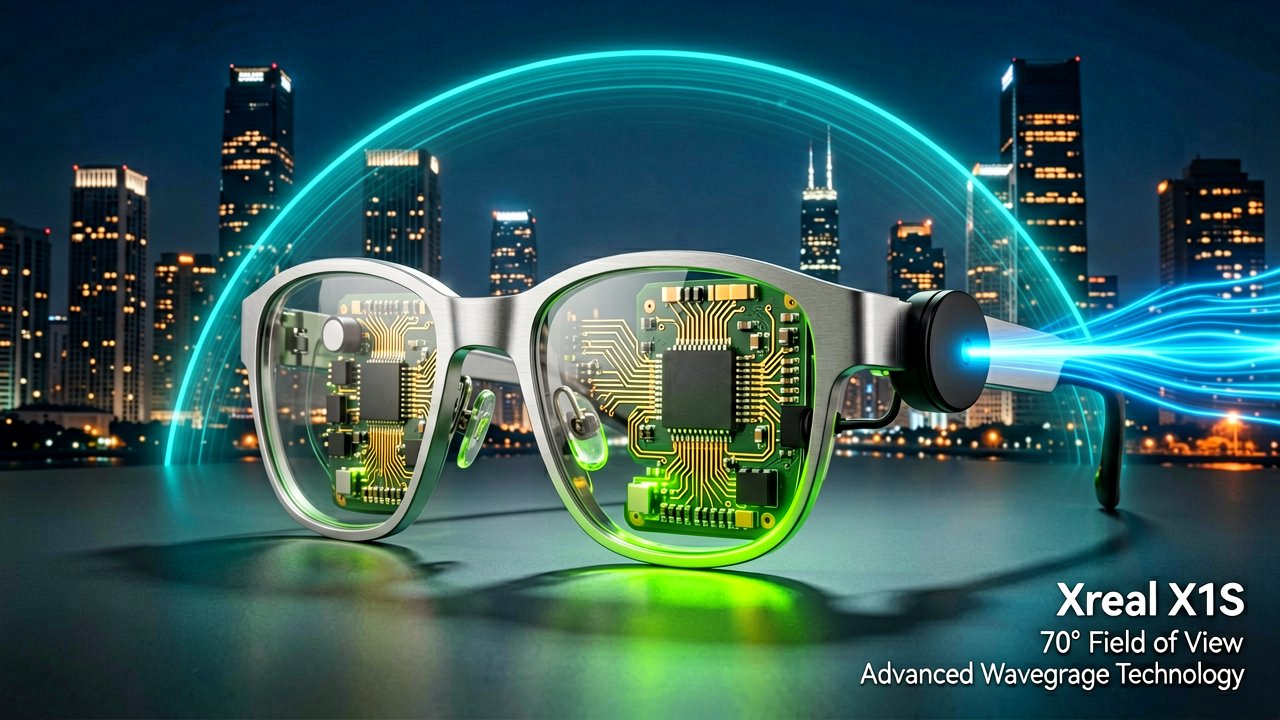
Google I/O is usually a whirlwind of software promises, but this year, Xreal stole a bit of the spotlight by showing us exactly what the future of "spatial computing" looks like when it isn’t strapped to a bulky headset. Project Aura, the company’s latest foray into the Android XR ecosystem, isn't just another prototype—it's a tethered, lightweight pair of glasses designed to bring Google’s new OS to life. By moving the heavy lifting to a "puck" that doubles as a trackpad and battery, Xreal has managed to keep the glasses sleek enough to actually wear while delivering a massive 70-degree field of view that makes typical AR specs look like you're peeking through a mail slot.
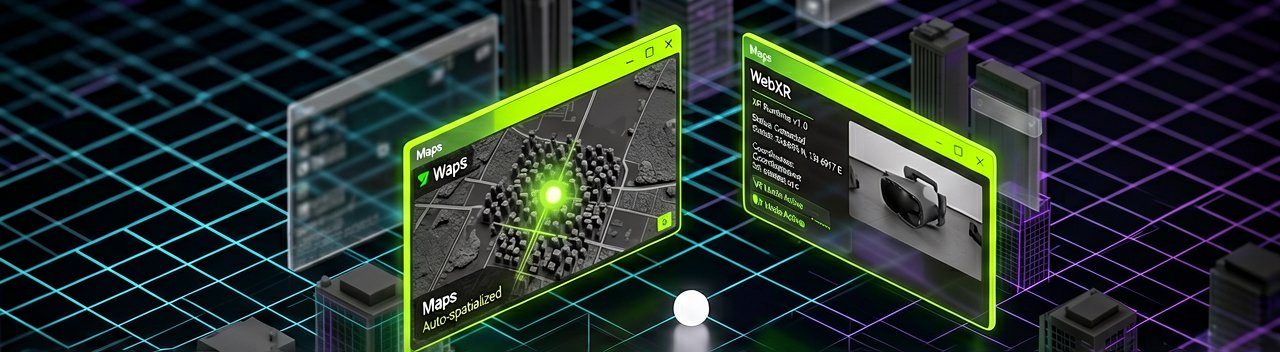
What’s truly impressive here isn’t just the hardware; it’s how deeply Gemini and Android XR are woven into the experience. During the showcase, we saw everything from immersive Google Maps that let you "walk" through cities spatially to a WebXR painting app that was literally "vibe coded" with Gemini. It’s clear that Xreal is positioning this as a serious productivity and entertainment tool, evidenced by a laptop demo where the glasses extended a traditional screen into a multi-window AR workspace with auto-spatialization. It feels less like a gadget and more like a primary interface that happens to live on your face, as detailed by XREAL.
For those of us itching to get our hands on a retail unit, there’s a bit of a wait ahead. Xreal confirmed a global launch for 2026, though developers can get a head start through the newly minted Android XR Developer Catalyst Program. This initiative, backed by Google and Qualcomm, aims to flood the platform with apps before the hardware hits shelves. While we’re still missing a final price tag and exact battery specs, the early demos—including 3D YouTube playback and hand-tracked gaming—suggest that Xreal might finally have the "Goldilocks" device that bridges the gap between basic smart glasses and heavy-duty VR, according to reports from PhoneArena and Ubergizmo.
The Hardware: Lightweight Glass, Heavyweight Specs
The secret sauce in Project Aura is the split-compute design. By offloading the Qualcomm Snapdragon processor and the battery to a wired puck, the glasses avoid the thermal and weight issues that plague standalone devices. Inside, Xreal’s X1S chip manages the spatial processing, ensuring that those multiple Android app windows stay anchored to your physical space without jitter. It’s an "optical see-through" approach, meaning you’re looking at the real world through glass rather than a camera feed, which significantly cuts down on the isolation factor often felt in VR headsets.
A Developing Ecosystem
Google and Xreal aren't just tossing hardware over the fence and hoping for the best. The Android XR Developer Catalyst Program is a deliberate push to ensure that when Project Aura launches, it has a library of experiences that justify its existence. From reimagined Google Play apps to specialized XR tools, the goal is to make Android XR the "Windows" of the spatial era. Developers interested in getting one of the 1,000 initial dev kits can already apply, signaling that the road to 2026 is going to be paved with plenty of software experimentation, as noted by Android Developers.
Beyond the Hype: The High-Stakes Gamble for Android XR
What Most Reports Miss: While the flashy demos of painting with Gemini capture the headlines, the real story lies in the calculated shift away from the "all-in-one" headset philosophy that has dominated the industry since the original Quest. Xreal’s decision to stick with a wired compute puck isn't just a technical limitation; it’s a philosophical stance. By separating the battery and processor from the frames, Xreal is betting that users prioritize social acceptability and weight over the total freedom of a wireless, but bulky, standalone unit. This approach challenges the "spatial computer" definition popularized by Apple, suggesting that the most successful AR device might actually be an accessory to our smartphones rather than a replacement for them.
The collaboration with Google and Qualcomm represents a significant pivot in the industry's power dynamics. For years, Xreal operated on its own proprietary software stack, but the integration with the Android XR SDK signals a surrender to the necessity of a unified ecosystem. Stakeholders within Google are clearly eager to avoid a repeat of the fragmented Daydream VR era. By seeding 1,000 developer kits through the Catalyst Program, they are effectively crowdsourcing the "killer app" that has eluded AR for a decade. This move creates a standardized playground where developers don't have to choose between hardware platforms, potentially making Project Aura the default reference design for the entire Android ecosystem.
Historical context tells us that hardware without a software "moat" usually fails, which explains the heavy emphasis on Google Play integration. Early testers have noted that the auto-spatialization feature—which takes flat 2D Android apps and "pops" them into 3D space—is more than a gimmick. It solves the "cold start" problem that plagues new hardware by giving users access to millions of existing apps on day one. This strategy mirrors how the early iPad succeeded by running iPhone apps, providing immediate utility while developers worked on bespoke experiences. Xreal is essentially leveraging Google’s decade of mobile dominance to bypass the typical growing pains of a new hardware category.
From a manufacturing perspective, the inclusion of the X1S spatial processing chip is a massive leap forward for Xreal. This dedicated silicon handles the asynchronous timewarp and 6DOF tracking that keep virtual objects pinned to the real world with sub-millisecond latency. Previous iterations relied more heavily on the host device's GPU, which often led to overheating and "floaty" visuals. The X1S allows the glasses to maintain a 120Hz refresh rate even when the compute puck is under heavy load from multitasking. This focus on "visual stability" is a direct response to user feedback regarding motion sickness in earlier AR glasses, as detailed in the technical breakdown by XREAL.
Finally, the 2026 launch window serves as a tactical pause. Many industry veterans see this as a way to let the components, particularly the waveguide optics, mature further to reach the 70-degree field of view target without sacrificing brightness. High-brightness Micro-OLED displays are notoriously difficult to yield at scale, and by pushing the release date, Xreal and Google are buying time to stabilize the supply chain. This patience suggests that Project Aura isn't a "flash in the pan" release meant to chase a trend, but a foundational product intended to stay on the market for several years as the primary face of Android XR, a sentiment echoed by analysis at PhoneArena.
The Friction Between Ambition and Reality
Reading Between the Lines: The sleek marketing of Project Aura masks a fundamental tension in the AR industry: the persistent "cord" problem. While Xreal touts the tethered puck as a feature that enables a lightweight design, it remains a significant aesthetic and ergonomic hurdle for the mainstream consumer. History is littered with "wearable" tech that failed because users grew tired of being physically tethered to an external brick in their pocket. Xreal is betting that the leap in processing power and the 70-degree field of view will outweigh the annoyance of a dangling cable, but this assumes users are willing to trade the seamlessness of their current mobile experience for a superior, yet physically restrictive, visual one.
There is also a notable contradiction in the Android XR "open ecosystem" narrative. While Google and Xreal champion a platform that invites all developers, the reality of spatial computing often demands a tightly controlled "walled garden" to ensure consistent performance. Running legacy 2D Android apps in a 3D space is a clever bridge, but it is rarely a compelling reason to buy expensive hardware. The danger here is that Project Aura could launch as a "jack of all trades" device—competent at multitasking but lacking a singular, transformative experience that makes the glasses an essential daily carry. Transitioning from a smartphone-centric life to a face-worn interface requires a level of friction-free utility that neither Google nor Xreal has yet fully proven.
Furthermore, the 2026 launch date is a double-edged sword. In the hyper-accelerated world of silicon and AI, two years is an eternity. By the time Project Aura hits retail shelves, the current "vibe coding" demos and Gemini integrations may feel like relics of a previous era. Xreal is essentially showing its hand early to lure developers away from Meta and Apple, but in doing so, it risks being leapfrogged by competitors who can iterate faster on hardware without the public burden of a multi-year "project" phase. The pressure on the Developer Catalyst Program to produce something truly revolutionary by then is immense, as noted in the broader context of the PhoneArena analysis.
Finally, we have to address the "spatial" elephant in the room: privacy and social etiquette. Project Aura aims to be the glass you wear everywhere, yet the industry has still not solved the fundamental unease people feel when being looked at by someone wearing cameras. Moving the compute to a puck doesn't solve the optics of surveillance. For Xreal to succeed where others have stalled, they must convince the public that the benefits of an "always-on" AI assistant and a spatial Google Maps are worth the potential social friction. The technological specs are impressive, but the social engineering required for Project Aura to move beyond the enthusiast niche remains its steepest climb, a challenge reflected in the latest Ubergizmo reports.
Project Aura is the most advanced piece of technology I’ve ever seen that still looks like I’m one accidental snag of a pocket cable away from a very expensive trip to the optometrist.
Artūras Malašauskas is an AI Systems Integrator with 20+ years of production-grade web engineering experience. He has designed, shipped, and scaled enterprise Python/PHP systems for logistics, SaaS, and public-sector clients. For the past year, he has focused exclusively on AI integrations: deploying open-source LLMs, building generative media pipelines (image, audio, video), and engineering multi-agent workflows for real production environments. His standard: reproducibility, security, cost-efficient inference—no vaporware. He documents and evaluates emerging AI tooling, separating verified capabilities from marketing noise. Technical editor at: muza-ai.eu, ai-verslas.lt, ai-naujinos.lt Connect on LinkedIn
Comments