Insta360 Mic Pro Review: A Wireless Powerhouse That Wants to Be Seen
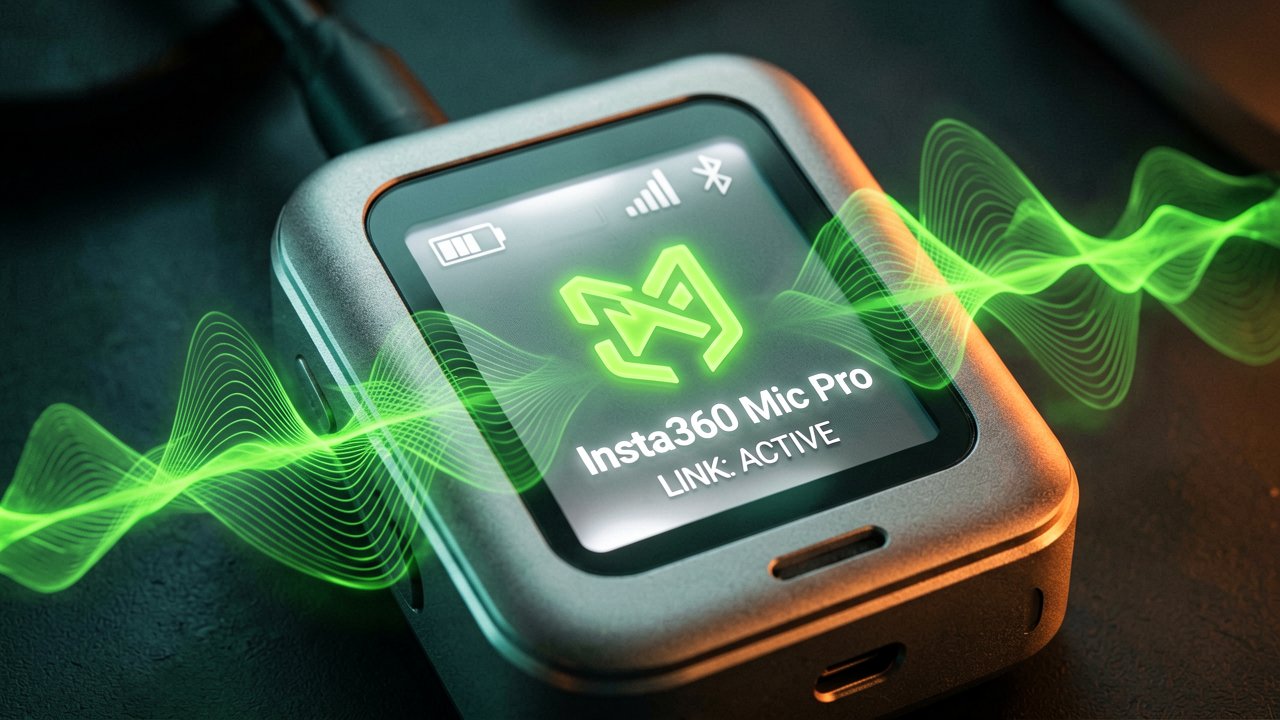
Insta360 has spent years making us rethink how we capture video, and now they’re coming for our audio. The newly launched Insta360 Mic Pro isn't just another plastic box to clip onto your lapel; it’s a full-on flagship system designed to take the headache out of professional sound. Between the industry-first E-Ink display and the beefy internal specs, it’s clear the company isn't just dipping its toes into the market—it's trying to drown out the competition. You can grab the full 2 TX + 1 RX kit for Forbes reports is a starting price of $329.99.
The most striking "why didn't they think of this sooner?" feature is the customizable 1.22-inch color E-Ink screen on each transmitter. In a world where every creator is wearing the same generic black rectangle, Insta360 lets you slap your own logo, channel art, or talent name right on the mic. Because it’s E-Ink, the image stays there even when the power is off, and it won't wash out under the midday sun like a traditional OLED. It’s a brilliant branding play that doubles as a practical tool for identifying which mic belongs to whom on a crowded set.
Pro Audio Without the Panic
Under the hood, the Mic Pro is packing serious heat with 32-bit float internal recording. For the uninitiated, this is basically the "undo" button for audio; it captures such a massive dynamic range that you can recover clipped or quiet audio in post-production with zero loss in quality. According to technical deep-dives from DPReview, each transmitter also features a three-mic array that allows for selectable pickup patterns, including cardioid and figure-8. It effectively turns a clip-on mic into a versatile tool that can mimic a directional shotgun or an interview-ready ambient recorder depending on your needs.
Built for the Long Haul
The system is rounded out by a suite of "peace of mind" features that filmmakers will actually use. We’re talking 32GB of onboard storage for up to 44 hours of backup audio, timecode sync for effortless multi-camera alignment, and a battery that lasts 10 hours on a single charge. If you’re already in the Insta360 ecosystem, the Mic Pro offers "Direct Connect," allowing it to pair via Bluetooth to cameras like the X5 or Ace Pro 2 without needing the receiver at all. It’s a clean, efficient, and surprisingly stylish solution for anyone tired of "good enough" audio.

Insta360 has spent years making us rethink how we capture video, and now they’re coming for our audio. The newly launched Insta360 Mic Pro isn't just another plastic box to clip onto your lapel; it’s a full-on flagship system designed to take the headache out of professional sound. Between the industry-first E-Ink display and the beefy internal specs, it’s clear the company isn't just dipping its toes into the market—it's trying to drown out the competition. You can grab the full 2 TX + 1 RX kit for what Forbes reports is a starting price of $329.99.
The most striking "why didn't they think of this sooner?" feature is the customizable 1.22-inch color E-Ink screen on each transmitter. In a world where every creator is wearing the same generic black rectangle, Insta360 lets you slap your own logo, channel art, or talent name right on the mic. Because it’s E-Ink, the image stays there even when the power is off, and it won't wash out under the midday sun like a traditional OLED. It’s a brilliant branding play that doubles as a practical tool for identifying which mic belongs to whom on a crowded set.
Pro Audio Without the Panic
Under the hood, the Mic Pro is packing serious heat with 32-bit float internal recording. For the uninitiated, this is basically the "undo" button for audio; it captures such a massive dynamic range that you can recover clipped or quiet audio in post-production with zero loss in quality. According to technical deep-dives from DPReview, each transmitter also features a three-mic array that allows for selectable pickup patterns, including cardioid and figure-8. It effectively turns a clip-on mic into a versatile tool that can mimic a directional shotgun or an interview-ready ambient recorder depending on your needs.
Built for the Long Haul
The system is rounded out by a suite of "peace of mind" features that filmmakers will actually use. We’re talking 32GB of onboard storage for up to 44 hours of backup audio, timecode sync for effortless multi-camera alignment, and a battery that lasts 10 hours on a single charge. If you’re already in the Insta360 ecosystem, the Mic Pro offers "Direct Connect," allowing it to pair via Bluetooth to cameras like the X5 or Ace Pro 2 without needing the receiver at all. It’s a clean, efficient, and surprisingly stylish solution for anyone tired of "good enough" audio.
Beyond the Spec Sheet: Why the Mic Pro Changes the Game
What Most Reports Miss: The Insta360 Mic Pro isn't just about capturing sound; it’s about solving the "anxiety of the edit." For years, creators have lived in fear of the digital clip—that moment where a sudden laugh or a shouted line of dialogue destroys a recording beyond repair. By integrating 32-bit float internal recording directly into the transmitter, Insta360 has effectively shifted the mic from a simple capture device to a high-fidelity insurance policy. This technology allows filmmakers to recover detail from the quietest whispers or the loudest screams, a luxury previously reserved for bulky field recorders.
Historically, the wireless mic market was a duopoly held by Rode and DJI, both of whom prioritized compact form factors over deep customization. Insta360’s decision to include a customizable E-Ink display is a calculated move to appeal to the "personal brand" era of media. From a production coordinator's perspective, this is a logistical dream. Being able to glance at a talent's chest and see their name or a specific channel logo on the mic eliminates the guesswork in multi-mic setups, especially when monitoring dozen-plus audio tracks in a fast-paced environment.
The three-mic array inside each transmitter also hints at a shift in how we think about lapel mics. Most traditional systems use a single omnidirectional capsule, which is great for consistency but terrible for noisy environments. The Mic Pro’s ability to switch to a cardioid pattern essentially turns a lavalier into a miniature shotgun mic. This nuanced control means a solo shooter can isolate their voice in a crowded trade show without needing a dedicated boom op, a detail that seasoned filmmakers will recognize as a massive leap in portability versus performance.
Integration is the secret sauce here, and it’s where Insta360’s ecosystem play becomes clear. While the system works flawlessly with mirrorless cameras via the 3.5mm jack or USB-C, the "Direct Connect" feature for the Ace Pro 2 and X5 series suggests a future where the "receiver" becomes obsolete for mobile creators. By bypassing the receiver, users reduce the number of batteries they need to manage and the amount of weight hanging off their gimbal, streamlining the physical footprint of a high-end vlog setup to almost nothing.
Finally, we have to look at the storage and timecode capabilities. Offering 32GB of internal storage per transmitter is an aggressive move, providing a staggering 44 hours of backup. When paired with the timecode sync—a feature that was once an expensive add-on in the professional world—this system bridges the gap between prosumer gear and Hollywood standards. It allows for frame-accurate alignment in post-production, saving hours of manual syncing and making the Mic Pro a legitimate contender for multi-cam documentary work where every second of alignment costs money.
Reading Between the Lines: The Hidden Cost of Innovation
The Reality Check: While the tech community is currently swooning over the E-Ink display, a more cynical eye must look at the ergonomics of branding. The Mic Pro effectively asks the user to become a walking billboard for their own channel, but this assumes the talent wants a high-contrast screen sitting squarely on their collar. In professional narrative filmmaking, the goal is usually to hide the mic, not spotlight it. By making the transmitter a centerpiece of visual design, Insta360 is leaning hard into the "creator" aesthetic, potentially alienating the traditional documentary filmmakers who prefer their gear to be invisible and utilitarian.
There is also the inevitable friction of the "ecosystem trap." The seamless Bluetooth "Direct Connect" feature is a masterstroke for Ace Pro 2 owners, but it highlights a growing trend of hardware fragmentation. If you aren't shooting on an Insta360 camera, you are essentially paying a premium for a proprietary wireless protocol that you can't fully exploit. It raises a legitimate concern about the longevity of the investment; in three years, will this mic still talk to the next generation of non-Insta360 devices with the same low latency, or will users find themselves forced to upgrade their entire kit just to keep their audio in sync.
Furthermore, the inclusion of 32-bit float recording is often marketed as a "set it and forget it" solution for gain staging, which can lead to lazy production habits. There is a danger that the next generation of filmmakers will stop monitoring their levels entirely, relying on the safety net of the bit-depth to fix poor placement or excessive wind noise in post. While the technical headroom is massive, it doesn't change the physics of a poorly placed capsule. A clipped signal might be "recoverable," but it won't necessarily sound natural if the hardware preamp was pushed past its physical limits before the digital conversion even took place.
The three-mic array also introduces a layer of complexity that could backfire in the field. Switching between cardioid and figure-8 patterns on a device this small requires a level of menu diving or app reliance that can be frustrating during a high-stakes shoot. In the heat of the moment, most operators stick to what is safe—omnidirectional—meaning the "pro" features that justify the $329 price tag might go largely unused by the average buyer. It’s a classic case of feature creep where the spec sheet looks incredible in a press release but might feel over-engineered in the muddy reality of a location shoot.
Finally, we have to consider the long-term durability of that E-Ink screen. While E-Ink is famously low-power, it is also notoriously slow to refresh and can be fragile under impact. A lapel mic is a high-impact accessory; it gets dropped, sat on, and shoved into pockets. Whether a glass-covered display can survive a year of "run and gun" filmmaking without cracking or suffering from ghosting remains to be seen. Insta360 has built a beautiful piece of jewelry for the tech-savvy, but the ruggedness of a simple, ruggedized plastic housing like the industry-standard Sennheiser G4 still holds a certain logical charm for those who treat their gear like tools rather than trophies.
The Insta360 Mic Pro is the first microphone that lets you put your logo on your chest like a superhero, which is perfect for anyone who believes that a 32-bit float safety net is a valid substitute for actually checking your levels once in a while.
Artūras Malašauskas is an AI Systems Integrator with 20+ years of production-grade web engineering experience. He has designed, shipped, and scaled enterprise Python/PHP systems for logistics, SaaS, and public-sector clients. For the past year, he has focused exclusively on AI integrations: deploying open-source LLMs, building generative media pipelines (image, audio, video), and engineering multi-agent workflows for real production environments. His standard: reproducibility, security, cost-efficient inference—no vaporware. He documents and evaluates emerging AI tooling, separating verified capabilities from marketing noise. Technical editor at: muza-ai.eu, ai-verslas.lt, ai-naujinos.lt Connect on LinkedIn
Comments