Beyond the Voice Command: How AI is Quietly Rebuilding the Modern Home
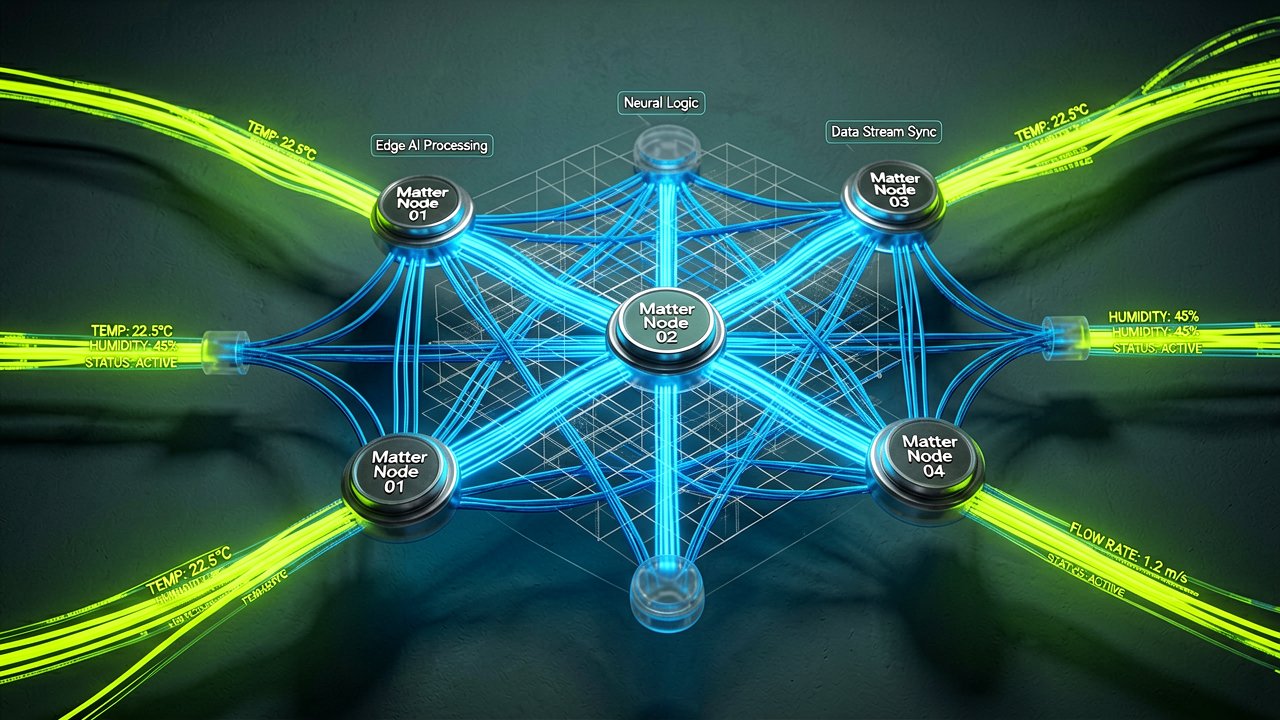
For years, the "smart home" felt like a collection of expensive party tricks—clapping to dim the lights or asking a plastic cylinder for the weather while it struggled to understand your accent. But we’ve hit a turning point. Artificial intelligence has graduated from being a reactive voice assistant to an invisible, proactive layer of the house itself. It’s no longer just about following orders; it’s about the home finally learning how you actually live. We’re seeing a shift where devices aren’t just connected to the internet—they’re connected to your habits, your schedule, and even your biological rhythm.
The real magic isn't happening in the cloud anymore; it's happening at the "edge." By processing data locally, modern systems are getting faster and significantly more private. According to insights from Mashable, today’s smart homes are leveraging computer vision and machine learning to distinguish between a neighbor’s kid and a legitimate intruder, or even suggesting better bedtime routines based on your activity levels. This isn't just about convenience—it's about a residence that acts as a silent partner in your daily management.
The Death of the Manual Routine
We used to spend hours configuring "If This, Then That" (IFTTT) recipes that inevitably broke when the Wi-Fi blinked. Now, generative AI is stepping in to build those automations on the fly. Instead of you telling the house to shut the blinds at 6:00 PM, the system observes that you usually close them when the sun hits your TV screen and simply takes over the task. This transition from static programming to dynamic learning means the "smart" part of the home is finally earning its title by reducing the cognitive load on the person living in it.
Energy Efficiency with an Actual Brain
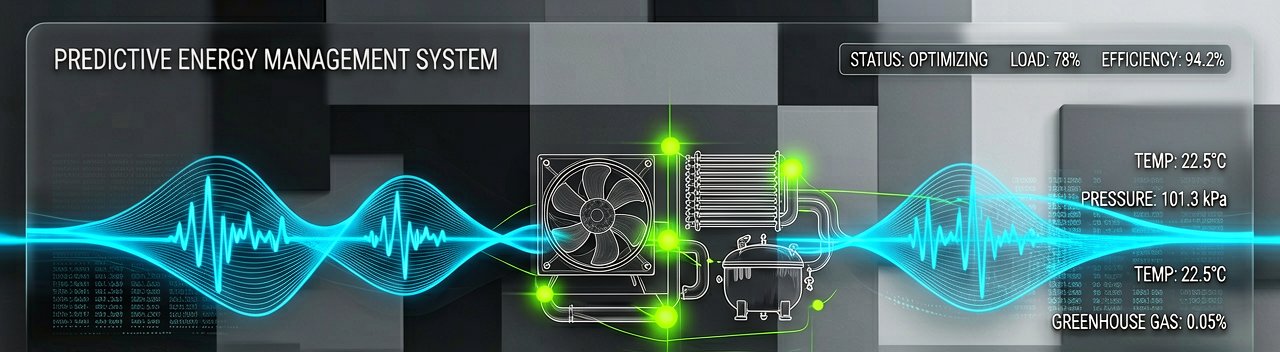
Utility bills are the ultimate proof of AI's utility. Smart thermostats were the first wave, but the latest tech goes much further by integrating with local power grids and weather forecasts to pre-cool or heat a home during off-peak hours. These systems don't just react to the current temperature; they predict demand. For instance, a home can now proactively adjust window shades and HVAC settings based on real-time solar gain, ensuring you aren't paying to cool a room that’s being baked by the afternoon sun. It’s a level of micro-management that humans simply don't have the patience for, yet it's becoming a standard expectation for sustainable living.

Security That Understands Context
Traditional security was binary—either the sensor was tripped or it wasn't. Modern AI-driven security is contextual. It knows that a dog running through the backyard at 3:00 PM is normal, but a person loitering near the side gate for ten minutes is a red flag. By filtering out the noise of wind, shadows, and pets, these systems have largely solved the "false alarm" problem that plagued early adopters. We're moving into an era where your home doesn't just watch for trouble; it recognizes the patterns of your life well enough to know when something is truly out of place.
The Architectural Shift Toward Contextual Intelligence
The Hidden Evolution: While the public focuses on flashy voice interfaces, the real tectonic shift is happening in the underlying logic of home networking. For the better part of a decade, smart homes functioned as a series of "silos"—your lights didn't talk to your security camera, and your thermostat didn't care if the oven was on. A seasoned observer will tell you that the arrival of the Matter standard, combined with localized AI processing, is finally tearing down these walls. This interoperability allows the home to develop a holistic "situational awareness" that was previously impossible without a rack of servers in the basement.
Industry stakeholders are now moving away from the "cloud-first" model that defined the early 2010s. Privacy advocates and engineers alike have pushed for "edge AI," where the heavy lifting of data analysis happens on the device itself rather than a remote server. This transition is a direct response to the "latency lag" and privacy scandals that cooled consumer enthusiasm in previous years. By keeping data within the four walls of the house, manufacturers are finally addressing the trust gap that has long hindered mass adoption of more invasive sensors like indoor cameras and microphones.
Historically, the dream of the automated home was rooted in the 1950s concept of "labor-saving devices," but the modern reality is about "cognitive-saving." We are seeing a move toward predictive maintenance where AI monitors the electrical signatures of appliances. An expert reporter looks at this and sees the end of the "catastrophic failure" era; your dishwasher can now signal a motor strain weeks before it actually floods your kitchen. This shift from reactive repair to proactive maintenance is where the ROI of a smart home finally starts to make sense for the average homeowner.
There is also a fascinating demographic push influencing this tech: the "aging in place" movement. Developers are increasingly using AI-driven ambient sensing—using Wi-Fi radio waves to detect movement or falls—to allow seniors to live independently longer without the need for wearable pendants or cameras. This application of AI moves the technology out of the realm of "luxury gadgetry" and into the space of essential healthcare infrastructure. It represents a pivot from the smart home as a plaything for tech enthusiasts to a vital tool for societal management.
The friction point remains the "uncanny valley" of automation. Human behavior is notoriously erratic, and a home that is too aggressive with its logic can quickly become a nuisance. The most sophisticated systems are now being designed with "human-in-the-loop" feedback, where the AI suggests an automation and waits for a few manual confirmations before making it a permanent rule. This humble approach to machine learning acknowledges that while an algorithm can track your patterns, it doesn't always understand your intentions on a rainy Tuesday when you just want to break your routine.
Looking ahead, the integration of Large Language Models (LLMs) into the home OS will replace rigid command structures with natural dialogue. Instead of memorizing specific phrases, users can give vague instructions like "make it cozy for a movie" and the AI will infer the rest based on past preferences and time of day. This is the final stage of the smart home's maturation: the technology becoming so intuitive that it effectively disappears, leaving behind a living space that feels less like a computer and more like a responsive environment.
The Paradox of the Frictionless Home
Reading Between the Lines: The industry’s relentless pursuit of "frictionless living" assumes that every manual interaction with our environment is a burden to be automated away. However, there is a burgeoning contradiction in the idea that a home becomes more livable as it becomes more autonomous. By outsourcing our domestic agency to algorithms, we risk creating environments that are technically perfect but psychologically sterile. The seasoned tech critic observes that when a house predicts every move, it effectively locks the inhabitant into a loop of past behaviors, potentially stifling the spontaneous human whims that make a house feel like a home rather than a programmed set piece.
We must also confront the "subscription trap" that currently shadows the AI revolution. While manufacturers promise that AI will save us money through energy efficiency, they are simultaneously pivoting toward "Smart-Home-as-a-Service" models. The skepticism here is well-founded: the hardware you purchase today may become a paperweight tomorrow if you stop paying a monthly fee for the "intelligence" that makes it work. This creates a precarious ownership dynamic where you don't truly own your sanctuary; you merely lease its convenience from a corporation whose terms of service can change on a whim.
Furthermore, the promise of total interoperability remains more of a marketing slogan than a technical reality. Despite the fanfare surrounding the Matter protocol, the "walled garden" mentality persists among the tech giants. Each company wants to be the primary "brain" of your house, leading to a fragmented ecosystem where a lightbulb might talk to your phone but refuse to acknowledge your smart blinds because they belong to a rival platform. This geopolitical struggle for the living room floor plan suggests that the "seamless" future we are sold is still being held hostage by corporate protectionism.
The security implications of an AI-managed home are often discussed in terms of hackers, but the more subtle threat is "data exhaust." Even if your data is processed locally, the metadata—when you wake up, how long you shower, which rooms you occupy most—is an incredibly valuable commodity. As homes become more perceptive, they become more extractive. We are essentially inviting a sophisticated data-collection agency to live in our walls under the guise of a more efficient HVAC system, and we have yet to see a truly robust legal framework that protects the sanctity of domestic data as a human right.
Ultimately, the projection for the AI smart home is one of increasing complexity masquerading as simplicity. To maintain a truly intelligent home, the user may eventually need to be part technician and part data ethicist. The risk is that instead of the home serving the person, the person becomes the primary troubleshooter for a sprawling network of temperamental sensors. The irony is palpable: the more we automate our lives to "save time," the more time we spend managing the very tools designed to save it.
The ultimate irony of the modern smart home is that we have spent billions of dollars and decades of engineering just to reach a point where we can finally sit in the dark and argue with a lightbulb about whether we actually intended to turn it on.
Artūras Malašauskas is an AI Systems Integrator with 20+ years of production-grade web engineering experience. He has designed, shipped, and scaled enterprise Python/PHP systems for logistics, SaaS, and public-sector clients. For the past year, he has focused exclusively on AI integrations: deploying open-source LLMs, building generative media pipelines (image, audio, video), and engineering multi-agent workflows for real production environments. His standard: reproducibility, security, cost-efficient inference—no vaporware. He documents and evaluates emerging AI tooling, separating verified capabilities from marketing noise. Technical editor at: muza-ai.eu, ai-verslas.lt, ai-naujinos.lt Connect on LinkedIn
Comments