The Agentic Shift: 13 Massive Announcements from Google I/O 2026

Walking into the Shoreline Amphitheatre this year felt different. We've spent a decade hearing about "AI-first," but I/O 2026 is where that promise finally stopped being a tagline and started being a tool. Google is no longer just answering your questions; it's trying to cross off your to-do list. The shift toward "agentic AI" was the inescapable pulse of the keynote, with CEO Sundar Pichai making it clear that we’ve entered a period of "hyper progress" where Gemini doesn't just talk—it acts.
According to the deep dive by Google Blog, the company is now focused on the part of the cycle where users demand real-world value. From smart glasses that actually look like glasses to a search engine that does your shopping for you, the sheer volume of updates was enough to make even the most cynical tech vet lean in. Here’s the breakdown of the 13 biggest reveals that actually matter.
1. Gemini Spark: Your 24/7 Digital Shadow
The star of the show was undoubtedly Gemini Spark. It’s pitched as a personal AI agent that lives across your entire Google ecosystem. Unlike the chatbots of 2024, Spark can navigate apps on your behalf—think scheduling a dentist appointment by checking your calendar and actually calling the office, or organizing a group trip in a single prompt.
2. Android XR Smart Glasses (with Samsung)
We’ve been waiting for the "Apple Vision Pro killer" from the Google-Samsung-Qualcomm triad, and we finally got a look. These "Intelligent Eyewear" glasses, as reported by Tom's Guide, are slated for a fall release. They look surprisingly like normal frames but pack enough punch to handle real-time Gemini overlays and object recognition.
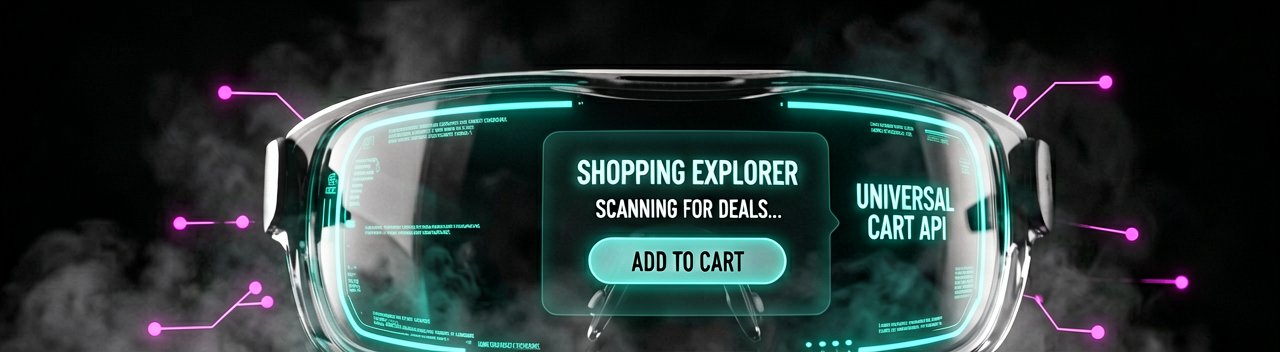
3. The Universal Cart
Google Search just became a personal shopper. The new Universal Cart uses AI to track deals across the web, manage your rewards programs, and handle the checkout process across different retailers without you ever leaving the Search interface.
4. Gemini 3.5 Flash
Speed is the new frontier. Gemini 3.5 Flash was unveiled as the lightning-fast middle child of the Gemini family, designed for near-instant latency. It’s what will power the real-time interactions on the new smart glasses and Android 17’s system-level features.
5. Googlebook: Android Goes Desktop
In a move that’s been years in the making, Google announced "Googlebook," a new category of premium laptops running a specialized, desktop-focused version of Android. Partners like Acer and ASUS are already on board for a fall launch, aiming to bridge the gap between mobile flexibility and workstation power.
6. Ask YouTube
YouTube is moving beyond the search bar. "Ask YouTube" allows you to treat the entire platform like a library of knowledge; you can ask a question, and Gemini will find the exact timestamp in a video that answers it, or summarize the consensus of several different reviews for you.

7. The $100 AI Ultra Plan
Google is doubling down on power users with a new tier for Gemini. The AI Ultra plan offers expanded context windows and priority "compute-used" access, ensuring that heavy-duty agents don't get throttled during peak hours.
8. Android 17’s Security Overhaul
Android 17 was given its time in the sun, specifically highlighting new "Find Hub" features and a more aggressive security stance. As noted by The Verge, Google is also expanding SynthID watermarking to Chrome and Search to help users instantly identify AI-generated or altered images.
9. Gemini Intelligence for Android Auto
Commuting is getting a brain transplant. Android Auto now supports Gemini Intelligence, which lets drivers issue multi-step, natural language commands like "Find a coffee shop on the way that has outdoor seating and send the ETA to my next meeting."
10. Project Beam: Meet Sophie
The 3D video calling tech formerly known as Starline is now "Google Beam." The big update here is Sophie, a lifelike AI agent that can join your calls, read documents you hold up to the camera, and even provide restaurant recommendations in real-time during a meeting.
11. Material 3 Expressive
Design nerds, rejoice. Android’s design language is evolving into "Material 3 Expressive." It brings even more fluidity to the UI, including AI-powered widget creation that builds custom dashboards based on how you actually use your phone throughout the day.
12. Gboard’s Rambler Mode
We’ve all sent voice-to-text messages that look like word salad. Gboard’s new "Rambler" mode uses Gemini to instantly clean up messy, dictated messages, fixing the grammar and structure while keeping your "voice" intact before you hit send.
13. Screen Reactions
Finally, Google is bringing "Screen Reactions" to Android. This creator-focused tool allows users to record their reactions to content on their screen—whether it's a social post or a news article—and instantly format it for sharing on social platforms, starting with Pixel devices this summer.
The Hidden Architecture of the Agentic Future
Behind the Scenes: The shift from conversational AI to agentic action wasn't just a marketing pivot; it was a total architectural overhaul of Google’s stack that had engineers working overtime long before the first guest arrived at Shoreline. For years, the industry treated LLMs as smart encyclopedias, but the "Gemini Spark" reveal confirms that Google has solved the critical "hand-off" problem. This is the moment where the AI moves from suggesting a restaurant to actually authenticating with your OpenTable account and securing the reservation, a feat that requires a level of security and cross-app permissions that the Android team has been quietly building since the Android 15 beta.
Inside the Mountain View campus, the sentiment is one of cautious triumph mixed with the pressure of high stakes. Stakeholders from the Android XR division whispered about the intense pressure to deliver a wearable that didn't feel like a face-mounted computer. By leaning on Gemini 3.5 Flash, Google managed to offload the heavy cognitive lifting to the cloud without the jarring lag that killed previous iterations of "smart" eyewear. This isn't just about cool hardware; it's about the data play of "World Understanding," where Google finally maps the physical world in real-time through the lenses of its users.
Historical context is key to understanding why this matters now. We saw similar excitement during the launch of Google Assistant in 2016, but that era was limited by rigid "if-this-then-that" logic. Today’s agentic shift relies on "reasoning loops," where the AI can self-correct if it hits a digital wall. Industry analysts point out that this move is also a defensive masterstroke against rising "AI-native" hardware startups. By embedding these agents directly into the Android OS, Google is leveraging its massive install base to ensure that the AI revolution doesn't happen on a third-party device.
The push for the "Universal Cart" and the $100 AI Ultra plan also signals a massive change in Google’s monetization strategy. As traditional search revenue faces headwinds from AI-summarized answers, Google is pivoting toward becoming the ultimate transaction layer of the internet. They aren't just helping you find information anymore; they are positioning themselves as the middleman for every purchase, booking, and digital interaction you make. It’s a bold bet that users will trade their behavioral data for the sheer convenience of never having to fill out a checkout form again.
Finally, the "Material 3 Expressive" design isn't just aesthetic fluff. It’s a necessary evolution for an OS that is becoming increasingly automated. In a world where the AI is doing more work in the background, the UI needs to be more transparent about what is happening on your behalf. The new fluid dashboards are designed to show "Agent Logs," giving users a sense of agency even as they delegate more of their lives to the software. This transparency is the olive branch Google is extending to a public that remains rightfully skeptical about the privacy implications of a 24/7 digital shadow.
The Reality Check: Friction and the Illusion of Autonomy
Reading Between the Lines: While the keynote’s polish suggests a frictionless glide into an automated life, the technical debt of such a massive transition remains largely unaddressed. Google’s "agentic shift" assumes a web that is ready to be crawled and manipulated by bots, yet we are currently seeing a digital landscape that is more siloed than ever. High-walled gardens like Amazon, Meta, and various banking portals are not exactly rolling out the red carpet for Google’s agents to navigate their proprietary interfaces. The "Universal Cart" may work beautifully in a controlled demo, but the reality of fragmented APIs and anti-bot security measures means users might find their "seamless" shopping experience frequently interrupted by CAPTCHAs and broken hand-offs.
There is also a glaring contradiction in Google’s privacy narrative. On one hand, we are promised "on-device processing" for maximum security; on the other, the most impressive features of Gemini Spark require a constant, high-bandwidth tether to the cloud to perform the "reasoning loops" Pichai touted. You cannot have a 24/7 digital shadow that knows your dentist’s phone number, your credit card details, and your preferred coffee temperature without creating the single most attractive target for data breaches in history. Google is essentially asking users to trade the last vestiges of their digital privacy for the luxury of not having to tap a screen three times.
Furthermore, the introduction of the $100 AI Ultra plan effectively creates a "competence gap" in the Android ecosystem. By gatekeeping the most capable reasoning models behind a premium subscription, Google is moving away from its roots as a universal, egalitarian tool. If the AI that manages your life is only as smart as your monthly payment, we risk a future where digital efficiency becomes a luxury good rather than a standard utility. This tiered intelligence could lead to a fragmented user experience where the "standard" Android user is left with a glorified chatbot while the "Ultra" user enjoys a genuine personal assistant.
The historical irony of "Googlebook" also shouldn't be ignored. After a decade of insisting that ChromeOS was the future of the desktop, Google is now pivoting back to a "premium Android" laptop experience. This feels less like a natural evolution and more like a desperate attempt to capture the pro-sumer market that has largely ignored Chromebooks in favor of iPads and MacBooks. Merging mobile agility with desktop power is a siren song we’ve heard since the early days of Motorola Atrix, and Google has yet to prove that Android’s app ecosystem can actually handle the rigors of a true workstation without feeling like a stretched-out smartphone.
Ultimately, the "Material 3 Expressive" UI serves as a beautiful distraction from the underlying complexity. By focusing on "Agent Logs" and fluid animations, Google is attempting to gamify the act of surveillance. We are being trained to enjoy watching our data work for us, which neatly bypasses the uncomfortable conversation about how much control we are actually ceding to an algorithm. As the line between user intent and machine execution blurs, the question isn't whether the tech works, but whether we will recognize the version of ourselves that emerges from the other side of this hyper-automated mirror.
We’ve finally reached the pinnacle of human innovation: spending billions of dollars and millions of engineering hours just so we never have to talk to another human being to order a medium pepperoni pizza or cancel a gym membership.
Artūras Malašauskas is an AI Systems Integrator with 20+ years of production-grade web engineering experience. He has designed, shipped, and scaled enterprise Python/PHP systems for logistics, SaaS, and public-sector clients. For the past year, he has focused exclusively on AI integrations: deploying open-source LLMs, building generative media pipelines (image, audio, video), and engineering multi-agent workflows for real production environments. His standard: reproducibility, security, cost-efficient inference—no vaporware. He documents and evaluates emerging AI tooling, separating verified capabilities from marketing noise. Technical editor at: muza-ai.eu, ai-verslas.lt, ai-naujinos.lt Connect on LinkedIn
Comments