Google and Samsung Finally Show Their Hand in the Smart Glasses War
After years of rumors and enough "Project Iris" pivots to make your head spin, Google and Samsung have finally taken the stage at I/O 2026 to reveal their first joint venture into the world of intelligent eyewear. It’s a classic tech titan team-up: Samsung is handling the sophisticated hardware engineering, while Google provides the brains via its new Android XR operating system and a heavy dose of Gemini AI. We’re looking at two distinct flavors of wearables—an audio-first model and a more advanced display-equipped version—designed to keep you "heads up" and away from your phone screen. They’ve even roped in fashion heavyweights Gentle Monster and Warby Parker to ensure you don’t look like a walking circuit board, as noted by 9to5Google.
The feature set is exactly what you’d expect from an "agentic AI" platform. We’re talking real-time language translation that can match a speaker's voice, turn-by-turn navigation overlays, and summarized notifications that filter out the noise of your group chats. According to reporting from Android Authority, these glasses are meant to be the ultimate smartphone companion, letting you snap photos, manage your calendar, or even order a coffee just by asking. While the "audio glasses" are slated for a Fall 2026 release, the display models are still a bit of a mystery regarding their exact arrival.
Despite the polished stage demos and the high-fashion partnerships, the two companies are playing it remarkably close to the vest on the details that actually matter to our wallets. We still don't have an official product name—though "Galaxy Glasses" is the obvious frontrunner—and the price tag remains a total wildcard. As The Verge points out, previous leaks suggested a premium tier could land somewhere between $600 and $900, but for now, Google and Samsung are content to let the hype simmer until the "select market" launch later this year.
The AI Agent in Your Ear
The core of this experience isn't just about seeing digital icons; it’s about Gemini Intelligence living inside the frames. Unlike the clunky voice assistants of the past, this system is designed to understand context across your apps. It can find a class syllabus in your Gmail and automatically add the required textbooks to a shopping cart or remind you of a meeting as you walk past the conference room. This deep integration is Google’s clear answer to Apple’s AI ambitions, moving Gemini from a simple chatbot to an invisible layer that runs underneath the entire Android ecosystem.
A Stylized Counter-Attack to Meta
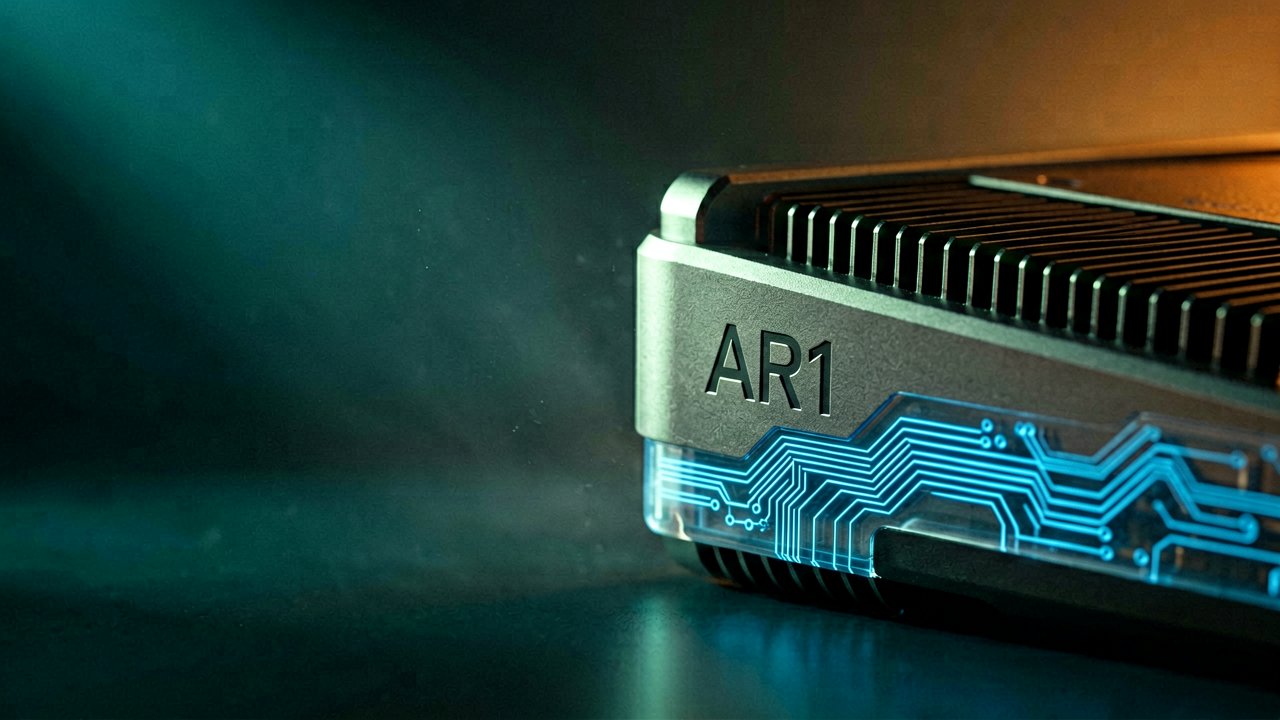
It’s no secret that Meta and Ray-Ban have been eating Google’s lunch in the smart glasses category lately. By partnering with Warby Parker and Gentle Monster, Samsung is leaning hard into "disruptive yet refined" aesthetics to bridge the gap between geek and chic. The hardware itself reportedly packs a Qualcomm Snapdragon AR1 processor and a 12-megapixel camera, aimed squarely at matching the specs of the current market leaders. It’s a high-stakes gamble to see if the Android XR platform can provide enough utility to make people actually want to wear a computer on their face every single day.
Behind the Scenes: The High-Stakes Pivot to Android XR
The Strategy Shift: While the headlines focus on the shiny frames, the real story is the internal pressure at Google to salvage years of fragmented AR development. For over a decade, Google’s hardware ambitions have been a graveyard of abandoned projects, from the original Glass Explorer Edition to the more recent shuttering of Project Iris. This partnership with Samsung isn't just a product launch; it is a defensive maneuver to prevent Meta from establishing a monopoly on the "face-worn" operating system. By licensing Android XR as a standardized platform, Google is betting that they can recreate the smartphone era’s success by providing the software brains for an entire industry of hardware manufacturers.
Samsung’s involvement brings a level of manufacturing discipline that Google has historically lacked. The South Korean giant is notoriously efficient at iterating on hardware designs, and they’ve spent the last two years refining the miniaturization of the battery and thermal management systems required for these glasses. Insiders suggest that the biggest technical hurdle wasn't the display optics, but managing the heat generated by the Qualcomm AR1 Gen 2 chipset. Nobody wants a wearable that gets uncomfortably warm against their temple after five minutes of navigation, so Samsung’s engineering team has reportedly implemented a custom heat-dissipation skin within the frame arms.
The choice of fashion partners like Gentle Monster and Warby Parker reveals a hard-learned lesson from the "Glasshole" era: if it isn't stylish, it won't sell. Meta and Ray-Ban proved that consumers are willing to embrace smart eyewear if it looks indistinguishable from classic frames. Google and Samsung are leaning heavily into this "stealth tech" philosophy. By offering various frame shapes and lens tints at launch, they are moving away from the "one-size-fits-all" gadget approach. This move is designed to appease fashion-conscious users who have previously viewed smart glasses as clunky, social-pariah devices rather than legitimate accessories.

From a developer perspective, the launch of the Android XR SDK is the most critical component for long-term survival. Google is banking on the fact that developers already comfortable with the Android ecosystem will find it trivial to port their apps to a spatial environment. The goal is to avoid the "empty store" problem that has plagued other VR and AR headsets. If a user can immediately access their existing Spotify playlists, Google Maps saved places, and WhatsApp threads through their glasses on day one, the friction of adoption drops significantly. This ecosystem "stickiness" is what Google hopes will keep users from drifting toward proprietary alternatives.
Historically, this collaboration echoes the original "Nexus" program, where Google partnered with a lead manufacturer to set the gold standard for a new category. However, the stakes are much higher this time around. If this joint venture fails to gain traction by the end of 2026, it may signal the end of Google’s interest in consumer AR hardware for the foreseeable future. Samsung, meanwhile, views this as a crucial step in diversifying its portfolio away from the plateauing smartphone market, seeking to capture the "post-mobile" era before Apple’s more expensive Vision Pro technology eventually trickles down into a lighter, cheaper form factor.
Ultimately, the success of these glasses hinges on the "utility-to-clutter" ratio. The tech journalism community remains skeptical about whether a display-equipped pair of glasses can offer enough daily value to justify the inevitable battery anxiety and privacy concerns. Google’s play is to make the AI assistant so proactive and "invisible" that the user forgets they are wearing a computer. Whether Gemini can actually predict what a user needs before they ask, without being intrusive or creepy, is the fine line these two companies are walking as they prepare for a wide-scale retail rollout.
Reading Between the Lines: The Friction of the "Post-Phone" Future
The Hidden Conflict: Despite the unified front presented on stage, a palpable tension exists between Google’s vision of an open Android XR ecosystem and Samsung’s desire for "Galaxy" exclusivity. Google needs this software to run on everything from cheap knock-offs to high-end luxury frames to secure its data-harvesting future, but Samsung has little incentive to build the hardware if their competitors can simply skin the same OS. This fundamental contradiction often leads to a "least common denominator" user experience where features are restricted to specific hardware pairings, potentially alienating the very cross-platform audience Google needs to reach scale.
There is also the nagging issue of the "display gap" in consumer expectations. While the demos show vibrant, high-fidelity overlays, the reality of current wave-guide technology often involves narrow fields of view and significant tinting that can make the world look like it's being viewed through a 1990s camcorder. By refusing to show actual through-the-lens footage during the keynote, Google and Samsung are courting the same "over-promise, under-deliver" cycle that crippled the original Magic Leap and HoloLens. If the digital navigation arrows jitter or the text remains illegible in direct sunlight, the fashion-forward frames won't be enough to save the device from the bottom of a desk drawer.
Privacy remains the elephant in the room that both companies addressed with the usual platitudes about "on-device processing" and "indicator lights." However, the integration of agentic AI—which essentially requires the glasses to "see" and "hear" everything the wearer does to be useful—creates a metadata goldmine that is far more invasive than a smartphone. In an era where consumers are increasingly wary of "always-on" microphones, asking them to wear "always-seeing" cameras is a massive social ask. The industry is betting that convenience will eventually trump creepiness, but that transition has historically been much slower and more litigious than Silicon Valley likes to admit.
Furthermore, the reliance on a tethered smartphone connection for the most intensive processing tasks suggests that these glasses are less of a "phone killer" and more of a very expensive secondary monitor for your pocket. If the glasses still require a $1,000 Galaxy S26 to function, the "all-in" price for this ecosystem becomes a barrier to entry that limits the audience to early adopters and tech executives. This dependency contradicts the narrative of a liberated, heads-up society; in reality, we are just moving the tether from our hands to our faces, adding another device to our nightly charging routine in the process.
We must also consider the rapid pace of AI iteration versus the slow cycle of hardware manufacturing. By the time these glasses hit shelves in late 2026, the Gemini models showcased today will likely be three generations old. Unlike a web browser that can be updated instantly, hardware sensors and optical engines are static. There is a very real risk that the Android XR hardware will be obsolete before the software it was designed to run even reaches its full potential, leaving early adopters with a premium accessory that can't keep up with the latest cloud-based intelligence.
Ultimately, the success of this venture will be measured not by initial sales, but by the "social friction" of the first six months. If the AI-enabled features like real-time translation and facial recognition feel like superpowers, people will tolerate the awkwardness. But if the glasses become just another way to receive more intrusive advertisements directly on your retina, the project will follow the trajectory of its predecessors. The tech giants are gambling that they can make the digital world more human by putting it in front of our eyes, yet they have yet to prove that the digital world is something we actually want to see more of.
It’s a bold new era for the "glass half full" crowd, provided that the glass is a proprietary wave-guide display and the half-full part refers to the battery life you'll have left by your lunch break.
Artūras Malašauskas is an AI Systems Integrator with 20+ years of production-grade web engineering experience. He has designed, shipped, and scaled enterprise Python/PHP systems for logistics, SaaS, and public-sector clients. For the past year, he has focused exclusively on AI integrations: deploying open-source LLMs, building generative media pipelines (image, audio, video), and engineering multi-agent workflows for real production environments. His standard: reproducibility, security, cost-efficient inference—no vaporware. He documents and evaluates emerging AI tooling, separating verified capabilities from marketing noise. Technical editor at: muza-ai.eu, ai-verslas.lt, ai-naujinos.lt Connect on LinkedIn
Comments