Google I/O 2026: Gemini Becomes the OS and the Reality is Finally Augmented

If you walked into the Shoreline Amphitheatre this week expecting a standard laundry list of software tweaks, you clearly haven't been paying attention to Google's pivot toward an "AI-first" everything. This year's Google I/O wasn't just a developer conference; it was a manifesto for a world where Gemini isn't just an app you open, but the very air your devices breathe. Between the "agentic" takeover of Android 17 and the long-awaited arrival of "Intelligent Eyewear," Google is finally stitching its fragmented ecosystem into a singular, proactive intelligence that actually feels helpful rather than just intrusive.
The star of the show was undoubtedly Gemini 3.5 Flash and the new Gemini Omni, which Google is positioning as a multimodal world model capable of understanding and generating video with startling fluidness. We saw demos of "Gemini Spark," a personal AI agent that lives on your device to handle the digital chores we all hate—tracking deals across apps, managing a "Universal Cart," and even calling up restaurants to snag a reservation without you lifting a finger. It's a bold play that shifts the smartphone from a tool we use to a partner that acts on our behalf.
Android 17: The Under-the-Hood Revolution
While the AI flashy bits got the cheers, the real work is happening in the guts of Android 17. Google is finally addressing the "all or nothing" frustration of mobile audio with a native Audio Mixer, allowing users to slide volumes for individual apps independently. There’s also a major focus on "Quantum-Ready Protection" and a centralized "Storage Command Center" to kill off the phantom 10GB of trash that usually hides in various app-specific bins. According to Android Developers Blog, the new system architecture includes a lock-free MessageQueue to ensure that even as these heavy AI agents run in the background, the UI stays buttery smooth.
Wearables and the "Googlebook" Pivot
The hardware surprise didn't come in a phone box this year. Instead, Google leaned into its partnership with Samsung to launch "Intelligent Eyewear" glasses, slated for a fall release. These aren't the dorky Glass units of a decade ago; they're sleek, AI-driven frames designed to bring "Gemini Intelligence" directly into your field of vision. Meanwhile, the rebranding of Chromebooks as "Googlebooks" signals a tighter integration with Android, featuring an "AI-enabled cursor" that acts as a multimodal portal for dragging and combining images via "Nano Banana" visualization. It’s clear that The Verge and other critics are keeping a close eye on whether these agents can truly handle the complexity of our personal data while maintaining the trust Google so desperately needs to keep.
The Agentic Shift: Why Google is Risking the "Search" Crown
Beyond the Keynote Glitz: What most surface-level reports miss is the sheer audacity of Google’s willingness to cannibalize its own primary revenue stream—Search—in favor of an agent-driven economy. For twenty years, the Google business model has relied on the friction of the "ten blue links," where users browse, click, and view ads. By pivoting to Gemini Omni, Google is effectively telling users they never need to visit a website again. This is a high-stakes gamble on a "Post-Click Web" where the value shifts from traffic to the specific data points that feed the model’s reasoning engine.
Historically, Google has been criticized for being "the slow giant," hesitant to release products until they were perfectly sanitized. But the 2026 showing suggests a cultural shift toward the Silicon Valley ethos of "ship first, patch later." Insider murmurs from the Shoreline hallways suggest that the integration of the "Universal Cart" was a direct response to pressure from Amazon and TikTok Shop, both of which have been eating into Google’s product discovery dominance. By making the AI the buyer, Google isn't just a search engine anymore; it's attempting to become the world’s digital concierge.
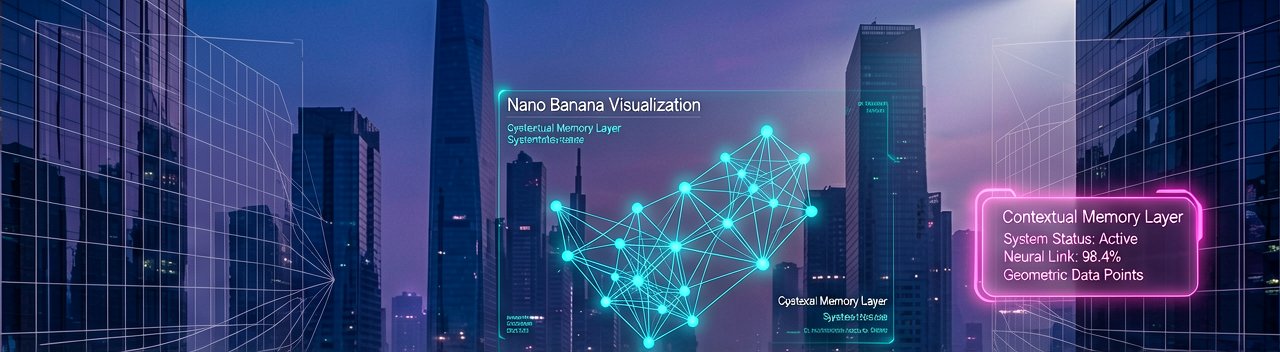
The technical challenge of this "Agentic OS" cannot be overstated. According to technical deep-dives on the Google Blog, the new "Contextual Memory Layer" allows Gemini to remember user preferences across different sessions without storing raw, identifiable text. This is a direct play to appease European regulators who have been breathing down the neck of Big Tech regarding the AI Act. It’s a delicate dance between providing hyper-personalized service and maintaining the "privacy-first" facade that is now a market requirement.
Stakeholders from the developer community are expressing a mix of awe and anxiety. While the "Nano Banana" visualization tools and the lock-free MessageQueue in Android 17 offer developers more power than ever, there is a lingering fear that Google is building a "walled garden of one." If the AI agent does all the work, the developer's role shifts from creating engaging user interfaces to simply providing clean APIs for Gemini to scrape. This transition marks the end of the "app era" as we know it, replaced by a "capability era" where the software is invisible.
Finally, we have to look at the hardware play with "Intelligent Eyewear." This isn't just about fashion; it’s about data collection. For an agent to be truly proactive, it needs to see what you see. By moving Gemini from the pocket to the face, Google is securing the highest-fidelity training data possible: real-world human intent in real-time. This is the ultimate defensive moat against competitors like OpenAI or Apple, as it tethers the digital intelligence to the physical reality of the user’s day-to-day life.
The Paradox of Proactive Intelligence
Reading Between the Lines: For all the talk of "helpfulness" and "seamlessness," there is a glaring contradiction in Google’s vision of an agentic future. We are being asked to believe that an AI can be a neutral, objective assistant while being owned by a company whose bottom line is driven by commercial persuasion. When Gemini "recommends" a restaurant or "selects" a product for your Universal Cart, the line between helpful curation and algorithmic bias becomes dangerously thin. The assumption that users want to surrender their decision-making agency for the sake of efficiency ignores the subtle satisfaction of discovery that defined the early internet.
Furthermore, the pivot to "Intelligent Eyewear" feels like a recycled dream that still lacks a clear solution to the "social friction" problem. We have seen this movie before with Google Glass, and the sequel—no matter how many Gemini-powered bells and whistles are attached—still faces the same hurdle: human vanity. While The Verge notes that the hardware is sleeker this time around, the fundamental discomfort of interacting with someone wearing a camera on their face remains unaddressed. Google is betting that the utility of real-time AI will finally outweigh the social stigma, but history suggests that tech-social etiquette evolves much slower than silicon.
The technical "smoothness" promised by Android 17 also invites a healthy dose of skepticism regarding battery life and thermal management. Running multimodal world models locally—or even semi-locally—is an intensive process that defies the current laws of lithium-ion physics. If these agents are constantly "seeing" and "listening" to provide proactive help, the trade-off will likely be a device that runs hot and dies by noon. Google’s reliance on cloud-processing to bridge this gap creates a permanent tether to high-speed connectivity, making the "agent" a luxury tool that only functions optimally in the well-mapped, high-bandwidth pockets of the developed world.
Ultimately, we are witnessing the transformation of the user from a navigator into a passenger. If the AI handles the chores, the scheduling, and the shopping, the human element of the digital experience is reduced to a series of confirmations. This "frictionless" existence sounds ideal in a keynote demo, but in practice, it risks creating a feedback loop where we only see what the model predicts we want to see. By optimizing for the "average" user experience, Google may inadvertently be stripping away the serendipity that makes the digital world worth exploring in the first place.
"We’ve finally reached the era where our phones are smarter than we are, which is great news for anyone who has ever spent forty minutes trying to remember their third-grade teacher's name, but slightly terrifying for those of us who still can't get a smart lightbulb to stay connected to the Wi-Fi for more than a week."
Artūras Malašauskas is an AI Systems Integrator with 20+ years of production-grade web engineering experience. He has designed, shipped, and scaled enterprise Python/PHP systems for logistics, SaaS, and public-sector clients. For the past year, he has focused exclusively on AI integrations: deploying open-source LLMs, building generative media pipelines (image, audio, video), and engineering multi-agent workflows for real production environments. His standard: reproducibility, security, cost-efficient inference—no vaporware. He documents and evaluates emerging AI tooling, separating verified capabilities from marketing noise. Technical editor at: muza-ai.eu, ai-verslas.lt, ai-naujinos.lt Connect on LinkedIn
Comments