Google I/O 2026: The Year the AI "Ghost in the Machine" Finally Got a Job
If last year’s Google I/O was about proving that AI could talk, 2026 is the year Google proved it can actually do the dishes—figuratively speaking. Sundar Pichai took the stage at the Shoreline Amphitheatre today with a swagger that suggested the "experimental" labels are finally being peeled off. The headline isn't just a faster chatbot; it’s the transition to what Google calls "agentic AI." We’re moving away from the era of prompting a box and toward a world where your phone anticipates the chaos of your life. According to the team at Google Blog, the new Gemini 3.5 Flash isn't just a speed bump; it’s the backbone for "Gemini Intelligence," a layer that sits beneath Android rather than on top of it.
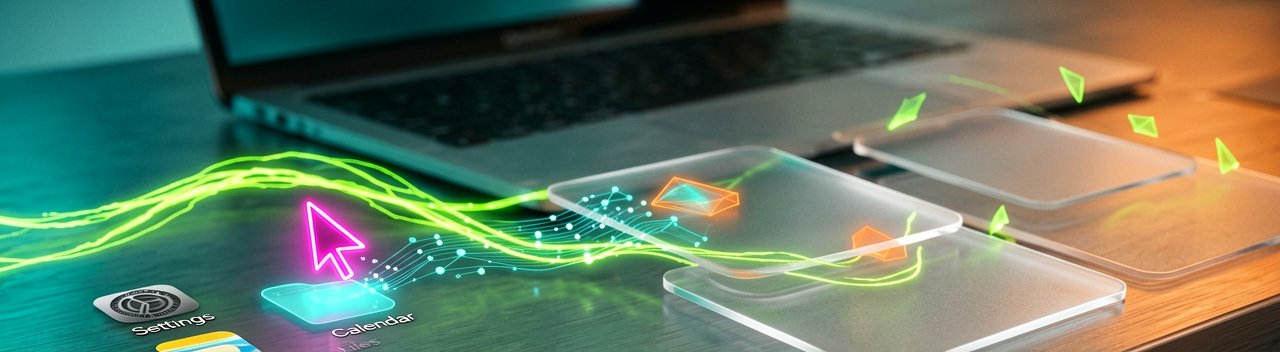
The vibe in the crowd was electric, mostly because we’re finally seeing the "unification" tech nerds have been dreaming about for a decade. The biggest shocker wasn't a phone at all—it was the quiet death of the Chromebook as we know it, replaced by "Googlebooks" running a sleek, desktop-optimized version of Android 17 called Aluminium OS. It’s a bold play to finally take on the MacBook, leveraging a "Magic Pointer" cursor that doubles as an AI agent. This isn't just a rebrand; it’s a total architectural shift that signals Google is done playing second fiddle in the productivity space.
Android 17: More Than Just a Pretty Face
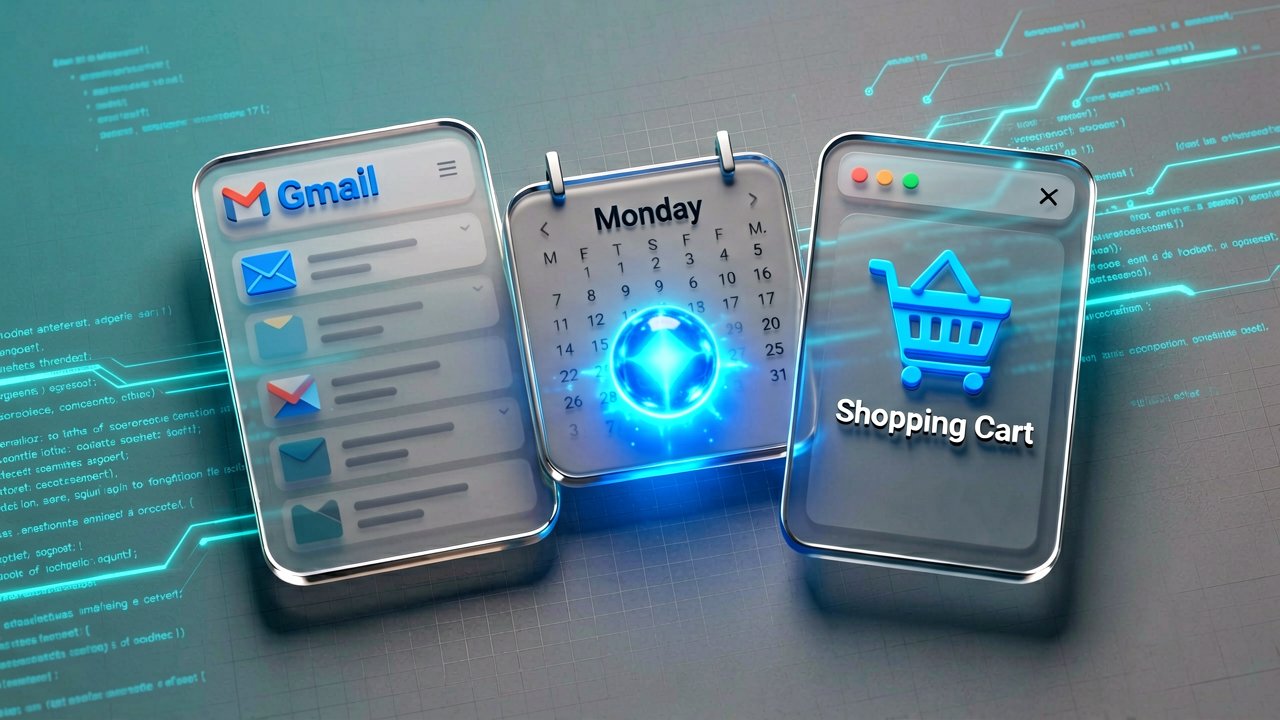
Android 17 is shaping up to be the most substantial overhaul in years. Beyond the usual Material You tweaks, Google is introducing "Gemini Spark," an always-on assistant that actually understands what’s happening on your screen. During the demo, the system managed to scrape a class syllabus from a messy PDF in Gmail, cross-reference it with a calendar, and autonomously add required textbooks to a shopping cart. As noted by The Next Web, this kind of cross-app autonomy is a direct shot across Apple's bow, aiming to make Siri look like a calculator by comparison.
The Hardware Curveball: Smart Glasses and Quantum Leaps
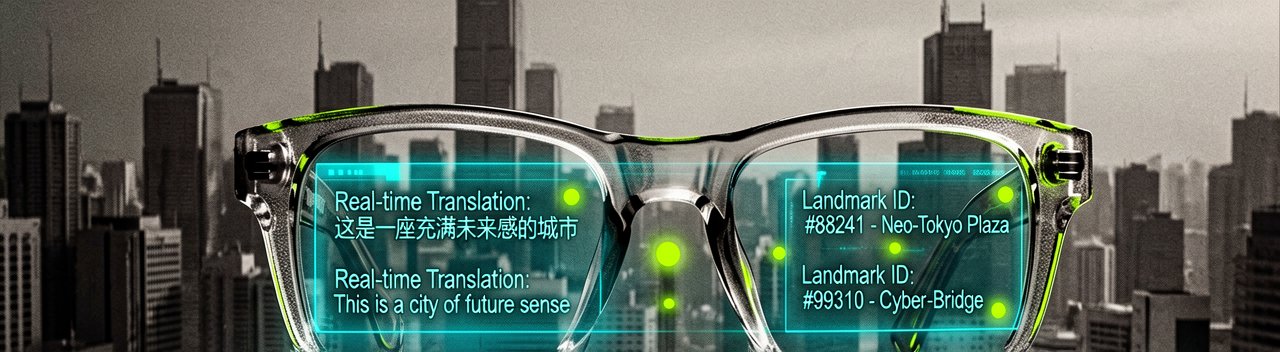
We finally got a look at the "Intelligent Eyewear" project, Google’s long-rumored collaboration for consumer XR glasses. They look suspiciously like regular frames, but they’re packed with multimodal Gemini capabilities that can translate signs in real-time or identify landmarks without you ever touching your phone. It’s clear that Google’s strategy is no longer about tethering you to a screen, but rather embedding its intelligence into the very air around you. Between the new "agentic" Search and the quantum-ready security features in Android 17, Google is betting the house on a future where the OS is invisible and the AI is omnipresent.
The Agentic Shift: Why "Doing" is the New "Searching"
What Most Reports Miss: The pivot to "agentic AI" isn’t just a UI facelift; it’s an admission that the classic search box is becoming a legacy product. For two decades, Google’s business model relied on us clicking links and browsing results, but the Gemini Intelligence seen at I/O 2026 seeks to bypass the middleman entirely. By shifting from a retrieval engine to an execution engine, Google is cannibalizing its own ad-driven real estate to ensure it doesn't lose the "utility war" to smaller, more nimble AI startups. It’s a high-stakes gamble that prioritizes user retention over immediate click-through rates.
Inside the Googleplex, the internal tension between the Search and Android teams has reportedly reached a fever pitch. According to insights from The Verge, the development of "Gemini Spark" required a fundamental rewrite of the Android kernel to allow the AI to "see" and "act" across third-party apps without compromising security sandboxes. This isn't just about reading your screen; it’s about Google establishing a new protocol for how software talks to software, effectively positioning Android 17 as a universal translator for the digital world.
The hardware transition to Aluminium OS is equally telling of a shift in corporate philosophy. For years, the "Chrome" and "Android" departments operated as rival fiefdoms, often shipping redundant features. The unification we’re seeing now suggests a streamlined leadership under the AI-first mandate. By merging these ecosystems, Google is finally addressing the "tablet problem" that has plagued them for a decade, creating a seamless handoff between mobile and desktop that mirrors Apple’s Continuity, but with a significantly more proactive AI backbone.
From a stakeholder perspective, the move toward "Intelligent Eyewear" is a desperate play to own the next gateway to the internet. If the smartphone era was defined by the glass in our pockets, Google is betting that the 2030s will be defined by the glass on our faces. The partnership with traditional frame manufacturers is a strategic retreat from the "tech-heavy" aesthetic of Google Glass, leaning instead into "invisible tech" that disappears until it’s needed. It’s a play for social acceptance as much as it is for technical dominance.
Historians of the valley will likely look back at this I/O as the moment Google stopped being a data company and started being a services company. The focus on quantum-ready security and agentic autonomy shows a pivot toward reliability and action. They are no longer content with just knowing where the information is; they want to be the ones who act upon it for you. This transition reflects a broader industry trend where the value of information is plummeting, while the value of executed labor—even digital labor—is skyrocketing.
The Privacy Paradox of an All-Seeing OS
Reading Between the Lines: While Google’s vision of a proactive assistant is undeniably slick, it rests on a foundation of total surveillance that would have been unthinkable five years ago. For "Gemini Spark" to anticipate your needs, it must effectively record and interpret every pixel that crosses your display, from banking passwords to private medical chats. Google insists that this processing happens "on-device," yet the historical reality of cloud-synced metadata suggests that the wall between your private life and Google’s training sets may be thinner than the marketing suggests. The trade-off for this convenience is a digital panopticon where the "off" switch feels increasingly like a relic of the past.
There is also a glaring contradiction in the "Aluminium OS" narrative. Google champions the unification of Android and Chrome to challenge the MacBook, yet they continue to push the web as the primary platform for developers. By forcing AI agents to mediate between local apps and the open web, Google is creating a bottleneck where they are the sole gatekeeper. If every action must be interpreted and executed by a proprietary model, the "openness" that once defined the Android ecosystem becomes a secondary concern to the dominance of the Gemini runtime. We are moving from a world of interoperable software to one of closed AI ecosystems.
Furthermore, the "agentic" economy poses a significant threat to the very creators Google claims to support. If an AI agent can scrape a recipe, summarize a news report, or book a flight without the user ever visiting a source website, the economic incentive for the open web essentially vanishes. According to industry analysis from TechCrunch, this "zero-click" future could lead to a catastrophic collapse of the ad-supported content model that Google itself helped build. It’s a classic case of a company disrupting its own foundation to prevent anyone else from doing it first.
The skepticism in the room was most palpable during the XR glasses demo. While the hardware looks impressively "normal," the social friction of walking around with a camera that constantly feeds a multimodal model remains unaddressed. Google’s play for the face is less about augmenting our reality and more about ensuring they don't lose the data stream that smartphones currently provide. As we transition to a post-screen era, the definition of "personal" data is being expanded to include everything we see and hear, handled by a company whose primary fiduciary duty is to monetize attention.
Google has finally perfected the art of making us feel like we’re living in the future, mostly by ensuring we’re too busy letting our phones schedule our lives to notice we’ve traded our last shred of digital solitude for a slightly more efficient way to order a burrito.
Artūras Malašauskas is an AI Systems Integrator with 20+ years of production-grade web engineering experience. He has designed, shipped, and scaled enterprise Python/PHP systems for logistics, SaaS, and public-sector clients. For the past year, he has focused exclusively on AI integrations: deploying open-source LLMs, building generative media pipelines (image, audio, video), and engineering multi-agent workflows for real production environments. His standard: reproducibility, security, cost-efficient inference—no vaporware. He documents and evaluates emerging AI tooling, separating verified capabilities from marketing noise. Technical editor at: muza-ai.eu, ai-verslas.lt, ai-naujinos.lt Connect on LinkedIn
Comments