Forza Horizon 6 Is Available Now With DLSS & Luna Abyss Launches May 21st
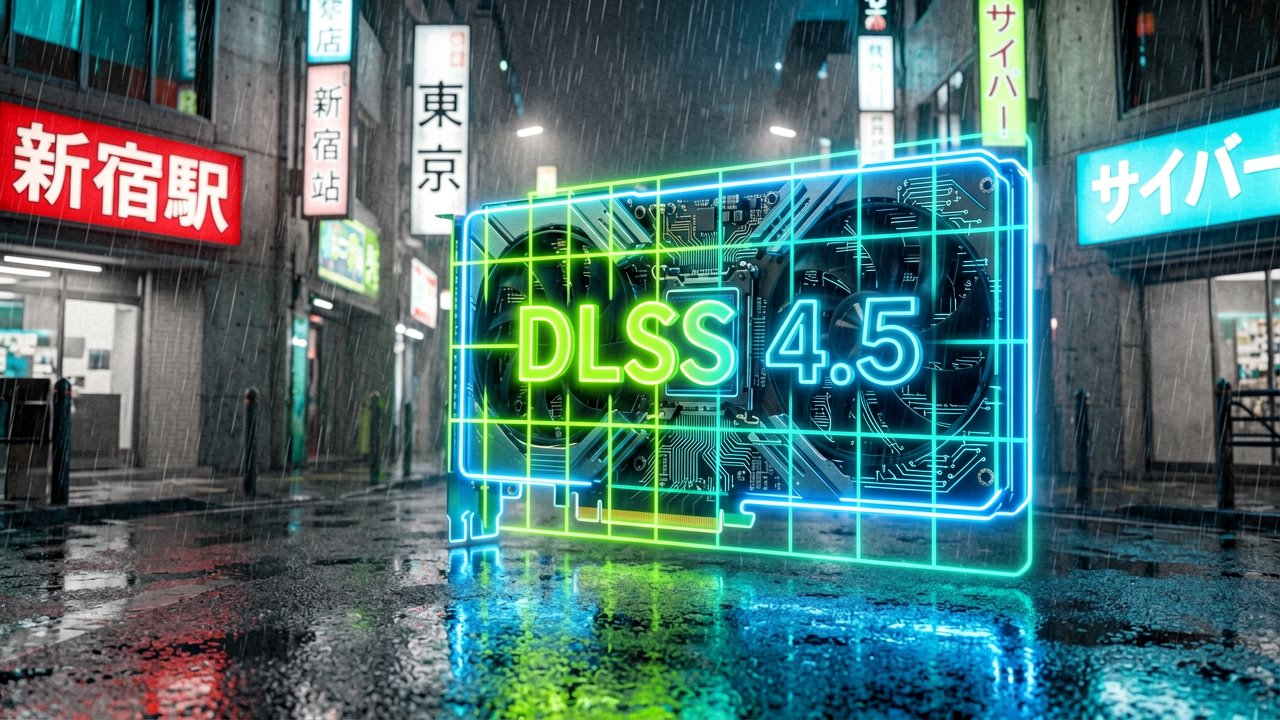
Playground Games has officially opened the gates to the Horizon Festival in Japan, as Forza Horizon 6 slides onto PC and Xbox today. It’s the move fans have been clamoring for since the series began, ditching the open plains of Mexico for the neon-drenched streets of Tokyo and the winding mountain touge of the Japanese countryside. If you’ve got a GeForce RTX card, you're in for a treat; the game launched with day-one support for NVIDIA DLSS 4.5, which essentially acts as an "automatic transmission" for your GPU to keep those frame rates silky smooth even when the ray-traced puddles start reflecting Tokyo's massive LED billboards.
While the petrolheads are busy drifting through cherry blossoms, sci-fi fans won't have to wait much longer for their own brand of chaos. Kwalee’s Luna Abyss is locked and loaded for a May 21st debut on PlayStation 5, Xbox Series X|S, and PC. This isn’t your typical shooter; it’s a narrative-driven "bullet hell" experience set inside a derelict megastructure beneath the surface of a mimic moon. It’s moody, brutalist, and according to early reports from Wccftech, it feels like a fever-dream mashup of Returnal and BioShock.
The Technical Edge: DLSS 4.5 and Beyond
What Most Reports Miss: While everyone is talking about the 550+ car list in Forza Horizon 6, the real story for PC enthusiasts is the sheer efficiency of the new DLSS 4.5 Dynamic Multi Frame Generation. This isn't just about raw speed; it’s about stability. On the new RTX 50 Series GPUs, the tech can "upshift" its frame generation multiplier during heavy GPU loads—like a 60-car street race in a thunderstorm—to maintain a locked refresh rate, then downshift when you're just cruising the suburbs to save power and reduce latency. It’s a sophisticated layer of optimization that makes the game’s 160GB install feel worth every gigabyte of high-res texture data.
Behind the scenes, Playground Games has also integrated Microsoft’s "Advanced Shader Delivery" system. This is a bit of a game-changer for the PC port, as it effectively kills the "shader stutter" that has plagued recent big-budget releases. By delivering pre-compiled shaders tailored to specific hardware during the initial download, players are seeing a claimed 95% reduction in loading times. It means you spend less time looking at a spinning wheel and more time customizing your Valley Estate or tinkering with the new window-painting tools in the livery editor.
The contrast between these two releases highlights a fascinating split in modern game design. On one hand, you have Forza Horizon 6, a masterclass in technological maximalism and broad-market appeal, hitting Game Pass on day one and already teasing a PlayStation 5 port for later this year. On the other, you have Luna Abyss, an indie project that leans into niche genre-blending and a striking "Junji Ito-inspired" art style. The developers at Kwalee Labs have been vocal about wanting to move away from the "aim-down-sights" focus of traditional FPS games, instead prioritizing movement and evasion in a way that mirrors the high-stakes dance of a classic bullet hell arcade game.
Industry insiders are keeping a close eye on Luna Abyss as a potential "indie crown" contender for 2026. The game’s setting—a megastructure called the Abyss that sprawls deep within an artificial moon—is designed with a Soviet constructivist and brutalist aesthetic that feels genuinely alien. Early previews suggest that the narrative, which follows a prisoner named Fawkes and their snarky AI warden, manages to keep the pacing tight without getting lost in its own cosmic horror lore. It’s a bold swing for a publisher like Kwalee, but in a year dominated by massive sequels, these specialized experiences often end up being the real sleepers.
For those diving into Japan today, remember that the "Horizon Invitational" is your ticket to Legend Island, an exclusive endgame space reserved for those who climb the festival ranks. Meanwhile, if you’re planning to head into the Abyss on Thursday, make sure your reflexes are sharp; the game’s shield mechanics and color-coded weapon requirements turn combat into a high-speed logic puzzle. Whether you're chasing a lap time or a cryptic prophecy, it’s a massive week for digital exploration.
Playground Games has officially opened the gates to the Horizon Festival in Japan, as Forza Horizon 6 slides onto PC and Xbox today. It’s the move fans have been clamoring for since the series began, ditching the open plains of Mexico for the neon-drenched streets of Tokyo and the winding mountain touge of the Japanese countryside. If you’ve got a GeForce RTX card, you're in for a treat; the game launched with day-one support for NVIDIA DLSS 4.5, which essentially acts as an "automatic transmission" for your GPU to keep those frame rates silky smooth even when the ray-traced puddles start reflecting Tokyo's massive LED billboards.
While the petrolheads are busy drifting through cherry blossoms, sci-fi fans won't have to wait much longer for their own brand of chaos. Kwalee’s Luna Abyss is locked and loaded for a May 21st debut on PlayStation 5, Xbox Series X|S, and PC. This isn’t your typical shooter; it’s a narrative-driven "bullet hell" experience set inside a derelict megastructure beneath the surface of a mimic moon. It’s moody, brutalist, and according to early reports from Wccftech, it feels like a fever-dream mashup of Returnal and BioShock.
The Technical Edge: DLSS 4.5 and Beyond
What Most Reports Miss: While everyone is talking about the 550+ car list in Forza Horizon 6, the real story for PC enthusiasts is the sheer efficiency of the new DLSS 4.5 Dynamic Multi Frame Generation. This isn't just about raw speed; it’s about stability. On the new RTX 50 Series GPUs, the tech can "upshift" its frame generation multiplier during heavy GPU loads—like a 60-car street race in a thunderstorm—to maintain a locked refresh rate, then downshift when you're just cruising the suburbs to save power and reduce latency. It’s a sophisticated layer of optimization that makes the game’s 160GB install feel worth every gigabyte of high-res texture data.
Behind the scenes, Playground Games has also integrated Microsoft’s "Advanced Shader Delivery" system. This is a bit of a game-changer for the PC port, as it effectively kills the "shader stutter" that has plagued recent big-budget releases. By delivering pre-compiled shaders tailored to specific hardware during the initial download, players are seeing a claimed 95% reduction in loading times. It means you spend less time looking at a spinning wheel and more time customizing your Valley Estate or tinkering with the new window-painting tools in the livery editor.
The contrast between these two releases highlights a fascinating split in modern game design. On one hand, you have Forza Horizon 6, a masterclass in technological maximalism and broad-market appeal, hitting Game Pass on day one and already teasing a PlayStation 5 port for later this year. On the other, you have Luna Abyss, an indie project that leans into niche genre-blending and a striking "Junji Ito-inspired" art style. The developers at Kwalee Labs have been vocal about wanting to move away from the "aim-down-sights" focus of traditional FPS games, instead prioritizing movement and evasion in a way that mirrors the high-stakes dance of a classic bullet hell arcade game.
Industry insiders are keeping a close eye on Luna Abyss as a potential "indie crown" contender for 2026. The game’s setting—a megastructure called the Abyss that sprawls deep within an artificial moon—is designed with a Soviet constructivist and brutalist aesthetic that feels genuinely alien. Early previews suggest that the narrative, which follows a prisoner named Fawkes and their snarky AI warden, manages to keep the pacing tight without getting lost in its own cosmic horror lore. It’s a bold swing for a publisher like Kwalee, but in a year dominated by massive sequels, these specialized experiences often end up being the real sleepers.
For those diving into Japan today, remember that the "Horizon Invitational" is your ticket to Legend Island, an exclusive endgame space reserved for those who climb the festival ranks. Meanwhile, if you’re planning to head into the Abyss on Thursday, make sure your reflexes are sharp; the game’s shield mechanics and color-coded weapon requirements turn combat into a high-speed logic puzzle. Whether you're chasing a lap time or a cryptic prophecy, it’s a massive week for digital exploration.
The Price of Performance: An Analytical Critique
Reading Between the Lines: The arrival of DLSS 4.5 in Forza Horizon 6 serves as a double-edged sword for the average consumer. While it showcases the dizzying heights of modern rendering, it also tacitly acknowledges that native 4K performance is becoming a relic of the past for hardware that isn't priced like a used sedan. We are entering an era where software-based "reconstruction" isn't an optional perk but a mandatory crutch for playable frame rates, creating a widening gulf between those with top-tier silicon and the millions still clinging to mid-range cards that were "future-proof" just three years ago.
There is a glaring contradiction in the industry’s current trajectory: we are seeing games like Luna Abyss push for artistic innovation and specialized mechanics, yet they must survive in a market increasingly dominated by "live service" behemoths like Forza. Microsoft's aggressive push to bring its flagship racer to PlayStation—despite the Xbox lineage—suggests that the massive development costs of these hyper-realistic simulators have finally outpaced the growth of a single console's ecosystem. It’s a pragmatic surrender that prioritizes software sales over hardware loyalty, signaling the slow death of the traditional console war.
The tech journalist's cynicism naturally extends to the launch of Luna Abyss. While its bullet-hell-meets-brutalism hook is refreshing, launching in the shadow of a genre titan like Forza is a risky gamble for a narrative-driven indie. The reliance on atmospheric "vibes" often masks a lack of mechanical depth in the late-game loop, a trap many "soulslike" and "bullet hell" shooters fall into once the initial novelty of the art style wears off. We have seen too many atmospheric shooters deliver a stellar first two hours only to devolve into a repetitive grind through gray corridors.
Ultimately, the juxtaposition of these two titles illustrates the "optimization trap." We celebrate Forza for its technological wizardry, but we are effectively subsidizing a future where developers might favor AI-generated frames over fundamental engine polish. If Luna Abyss succeeds, it will be because it prioritizes human-designed challenges over procedural fluff, proving that even in a world of DLSS 4.5, a well-timed dash through a wall of projectiles still feels more rewarding than a hundred ray-traced reflections.
In today’s gaming landscape, we’ve reached a point where your computer needs more artificial intelligence to run a racing simulator than you do to drive an actual car, proving once and for all that while we can simulate the physics of a 200mph drift, we still haven’t figured out how to optimize a download bar.
Artūras Malašauskas is an AI Systems Integrator with 20+ years of production-grade web engineering experience. He has designed, shipped, and scaled enterprise Python/PHP systems for logistics, SaaS, and public-sector clients. For the past year, he has focused exclusively on AI integrations: deploying open-source LLMs, building generative media pipelines (image, audio, video), and engineering multi-agent workflows for real production environments. His standard: reproducibility, security, cost-efficient inference—no vaporware. He documents and evaluates emerging AI tooling, separating verified capabilities from marketing noise. Technical editor at: muza-ai.eu, ai-verslas.lt, ai-naujinos.lt Connect on LinkedIn
Comments