Silicon and Salt: Inside the RTX 5080-Powered 2026 CS Asia Championship
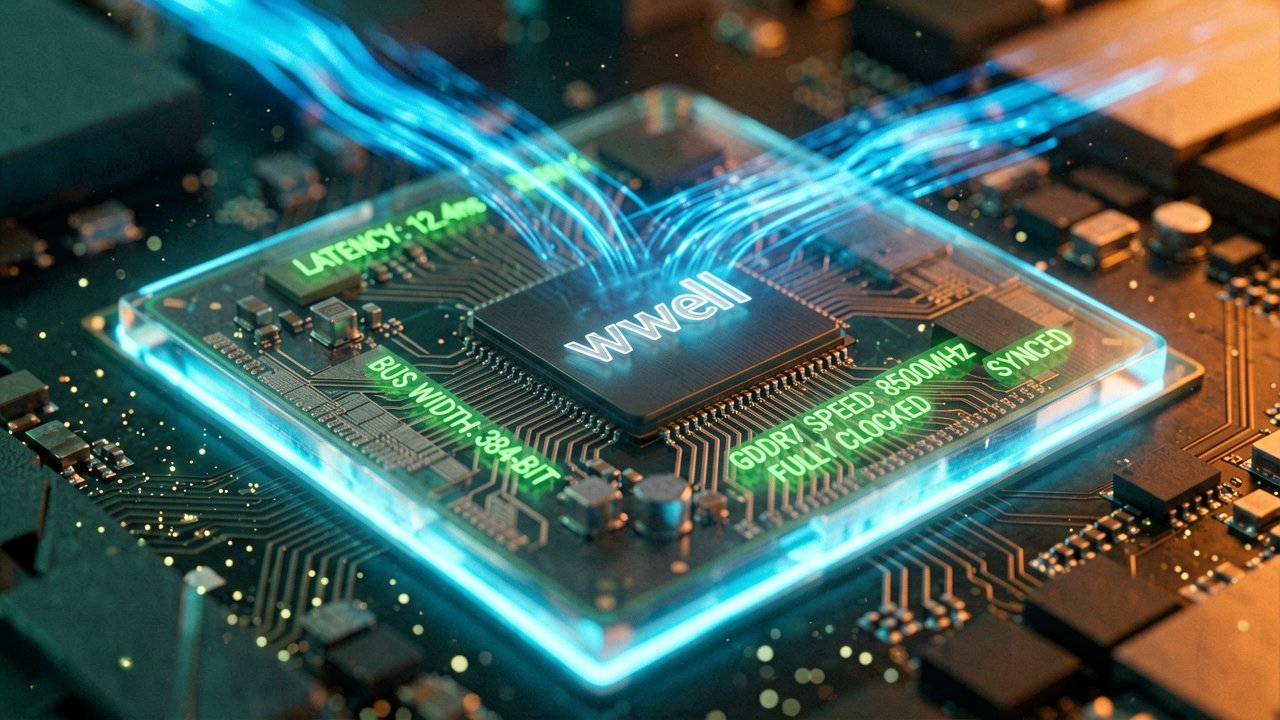
There’s a specific kind of hum you only hear at a top-tier LAN, a mix of industrial cooling and the collective nervous energy of a thousand fans. Here in Shanghai, that hum is a little sharper. We’re at the 2026 CS Asia Championship (CAC), and while the $1,000,000 prize pool is enough to make anyone’s hands shake, the real story is sitting under the desks. This year, Perfect World has gone all-in on hardware, outfitting every tournament station with the NVIDIA GeForce RTX 5080. It’s not just a sponsorship flex; it’s a fundamental shift in how Counter-Strike 2 feels at the absolute limit of human reaction time.
Walking through the practice pits, you don't see players complaining about sub-tick inconsistencies or frame drops. The Blackwell-based RTX 5080, which debuted earlier in 2025, has effectively turned the game’s "Source 2" engine into a playground of fluid motion. Paired with NVIDIA Reflex, the end-to-end system latency is hitting numbers that frankly make the old 40-series rigs look like they were running through molasses. When you’re watching a player like donk or m0NESY hold a pixel-perfect angle, that extra millisecond shaved off by the hardware isn’t just a stat on a sheet—it’s the difference between a trophy and a flight home.
The Blackwell Advantage in Shanghai
The tech specs for the CAC 2026 setups are a hardware enthusiast’s dream. According to TechPowerUp, the RTX 5080 brings 10,752 CUDA cores and GDDR7 memory to the table, pushing the kind of frame rates that finally saturate the latest 540Hz esports monitors without breaking a sweat. In a game where visual clarity through smoke and fire is paramount, the fifth-generation Tensor cores are doing heavy lifting that most spectators won't even notice. It’s a clean, clinical environment where the only variable left is the players' own nerves.
Closing the Gap with NVIDIA Reflex
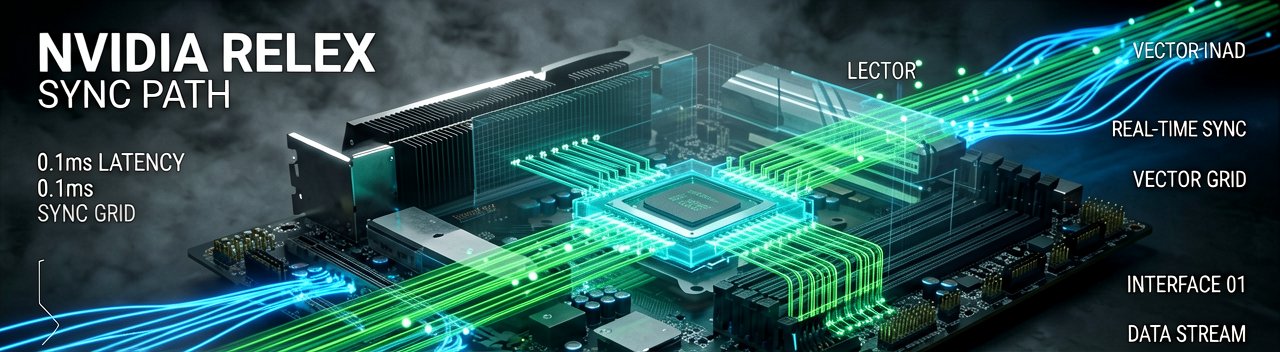
NVIDIA Reflex remains the unsung hero of this tournament’s technical backbone. By dynamically synchronizing the GPU and CPU, it ensures the "click-to-pixel" delay is virtually non-existent, a necessity for a high-stakes S-Tier event. As noted by HLTV, the 16 teams competing in Shanghai, including heavyweights like MOUZ and The MongolZ, are playing on what is effectively the most responsive CS2 environment ever built. It’s a far cry from the early days of the Asia Championships, proving that the region isn't just a growing market—it's now the gold standard for esports infrastructure.
What Most Reports Miss: The Architectural Synergy of CAC 2026
Beyond the Spec Sheet: While the marketing collateral focuses on the raw horsepower of the RTX 5080, the real breakthrough at the 2026 CS Asia Championship is the elimination of the "Source 2 stutter" that plagued early CS2 majors. The transition to the Blackwell architecture and its ultra-fast GDDR7 memory hasn't just boosted average frame rates; it has fundamentally stabilized the frametime pacing. In the high-pressure environment of a Shanghai semifinal, a single micro-stutter during an execute can throw off a professional’s muscle memory. By providing a massive buffer of memory bandwidth, the 50-series cards ensure that the heavy particle effects of multiple volumetric smokes and Molotovs no longer cause the erratic performance dips that even the 4090 occasionally struggled to mask.
Stakeholders behind the scenes, from Perfect World’s technical directors to NVIDIA’s on-site engineers, have spent months optimizing the Reflex integration for this specific hardware stack. Historical context is important here: for years, Asian LANs were often criticized by Western pros for having inconsistent hardware parity compared to European events. By standardizing the 2026 circuit on the RTX 5080, the organizers are making a loud statement about competitive integrity. It’s no longer about just having "good enough" PCs; it’s about providing a "zero-latency" baseline where the hardware becomes invisible, allowing the raw skill of players from teams like G2 or FaZe to be the sole deciding factor.
The perspective of the players themselves has shifted from skepticism to reliance. Early in the 2025 season, there was a quiet debate in the pro Discord servers about whether the move to 540Hz monitors and Blackwell GPUs was diminishing the "tactical" nature of the game in favor of "reflex" play. However, as we see the tactical depth of CS2 evolve in 2026, it's clear that the hardware is actually enabling more complex strategies. With NVIDIA Reflex minimizing the delay between a player’s brain and the server’s sub-tick response, the margin for error in "utility-heavy" executes has narrowed. This has forced coaches to rethink their playbooks, knowing that an opponent’s reaction time is now limited only by human biology, not by the silicon under the table.
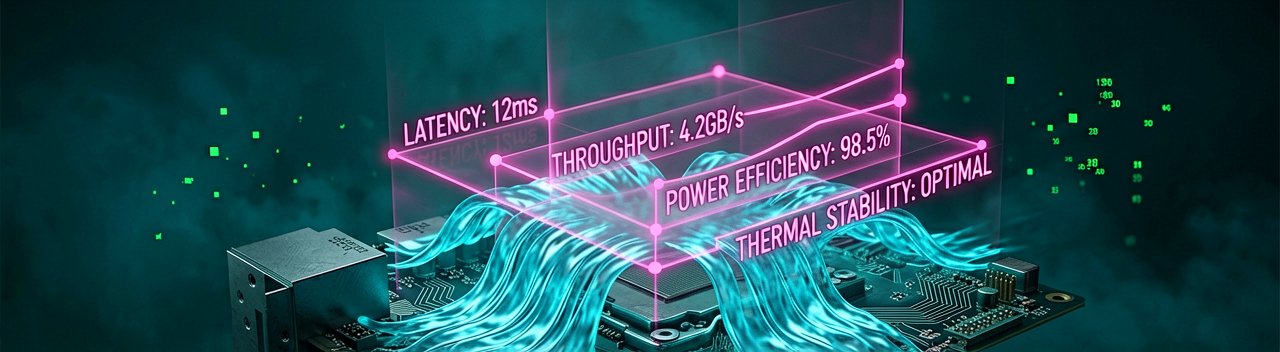
Furthermore, the 2026 CS Asia Championship serves as a massive stress test for the Blackwell architecture’s power efficiency in a high-density LAN environment. Managing the thermal output of nearly a hundred RTX 5080s running simultaneously in a broadcast arena is a logistical nightmare that previous generations of power-hungry cards exacerbated. The improved performance-per-watt of the 5080 has allowed the CAC production team to maintain a more stable ambient temperature on stage, which indirectly benefits the players’ comfort and focus. It is this intersection of thermal management, architectural stability, and pure throughput that defines the modern era of Counter-Strike in Asia.
Finally, we have to look at the broader impact on the regional scene. By bringing this level of tech to Shanghai, NVIDIA and Perfect World are effectively upskilling the local infrastructure. The technical knowledge gained by local observers and IT staff in managing these Blackwell-Reflex ecosystems will trickle down to the massive net-cafe culture in China, ensuring that the next generation of Asian talent is practicing on the same playing field as the world’s elite. This isn't just a one-off tournament; it’s a hardware-driven manifesto for the future of global Counter-Strike.
Reading Between the Lines: The Luxury of Low Latency
The Diminishing Returns of Perfection: While the marketing machine behind the 2026 CS Asia Championship paints the RTX 5080 as a mandatory evolution, an analytical look at the telemetry suggests we are approaching the "human ceiling" of perception. We are currently obsessed with shaving microseconds off a system's response time, yet the players themselves are still battling the same 150-millisecond biological delay they were in the era of CRT monitors. There is a palpable irony in deploying Blackwell’s cutting-edge GDDR7 throughput to solve "sub-tick" inconsistencies that many top-tier pros still struggle to define beyond a vague feeling of "clunkiness." We’ve reached a point where the silicon is arguably faster than the neurons firing in the players' own heads.
There is also the glaring contradiction of "competitive parity" in an era of escalating hardware costs. While the CAC 2026 stage is a pristine environment of NVIDIA-backed excellence, the barrier to entry for the next generation of talent is quietly skyrocketing. If a player needs a $700+ GPU and a 540Hz panel to accurately replicate the "feel" of a professional match, we are inadvertently creating a tiered class system within the Counter-Strike community. The tactical depth that once thrived on mid-range hardware is being replaced by a technical arms race where "holding an angle" is increasingly dependent on the depth of your pockets rather than the sharpness of your crosshair placement.
Projecting into the late 2026 season, the reliance on NVIDIA Reflex and high-polling rate peripherals may actually mask deeper issues within the Source 2 engine itself. By throwing raw Blackwell power at the game’s optimization hurdles, Valve and tournament organizers are treating the symptoms rather than the disease. We see frames being pushed to the moon, yet the community still reports bizarre collision physics and "dying behind walls" on high-tick servers. The risk here is that the tech industry's push for more power becomes a convenient excuse for software developers to deprioritize efficient code, assuming the next GeForce card will simply brute-force its way through any performance regressions.
Furthermore, the move to Blackwell in the Asian market specifically carries heavy geopolitical and logistical weight. In a region where supply chains are often at the mercy of shifting trade policies, anchoring a major championship to the latest Western-designed silicon is a bold, perhaps even risky, move for Perfect World. If the availability of the RTX 5080 fluctuates before the next Major, the "standardized" experience we see in Shanghai could become a fleeting luxury rather than a sustainable benchmark. It serves as a reminder that the world of esports is no longer just about the game—it’s a high-stakes display of technological soft power.
Ultimately, the 2026 CS Asia Championship is a brilliant showcase of what is possible when money is no object and the hardware is bleeding-edge. However, the true test of this era won't be found on the main stage under the bright lights of Shanghai. It will be found in the months following the event, when we see if this "zero-latency" dream actually raises the level of play across the board, or if it simply results in the same three teams winning because they’re the only ones who can afford the electricity bill for a Blackwell-powered bootcamp.
"We’ve finally reached the pinnacle of esports engineering: we have $1,000 graphics cards that allow a nineteen-year-old to miss a shot in 540Hz, ensuring that his failure is rendered with more clarity and less delay than ever before in human history."
Artūras Malašauskas is an AI Systems Integrator with 20+ years of production-grade web engineering experience. He has designed, shipped, and scaled enterprise Python/PHP systems for logistics, SaaS, and public-sector clients. For the past year, he has focused exclusively on AI integrations: deploying open-source LLMs, building generative media pipelines (image, audio, video), and engineering multi-agent workflows for real production environments. His standard: reproducibility, security, cost-efficient inference—no vaporware. He documents and evaluates emerging AI tooling, separating verified capabilities from marketing noise. Technical editor at: muza-ai.eu, ai-verslas.lt, ai-naujinos.lt Connect on LinkedIn
Comments