Space Startups Just Got a Major Boost: Inside the 2026 Orbital Edge Accelerator
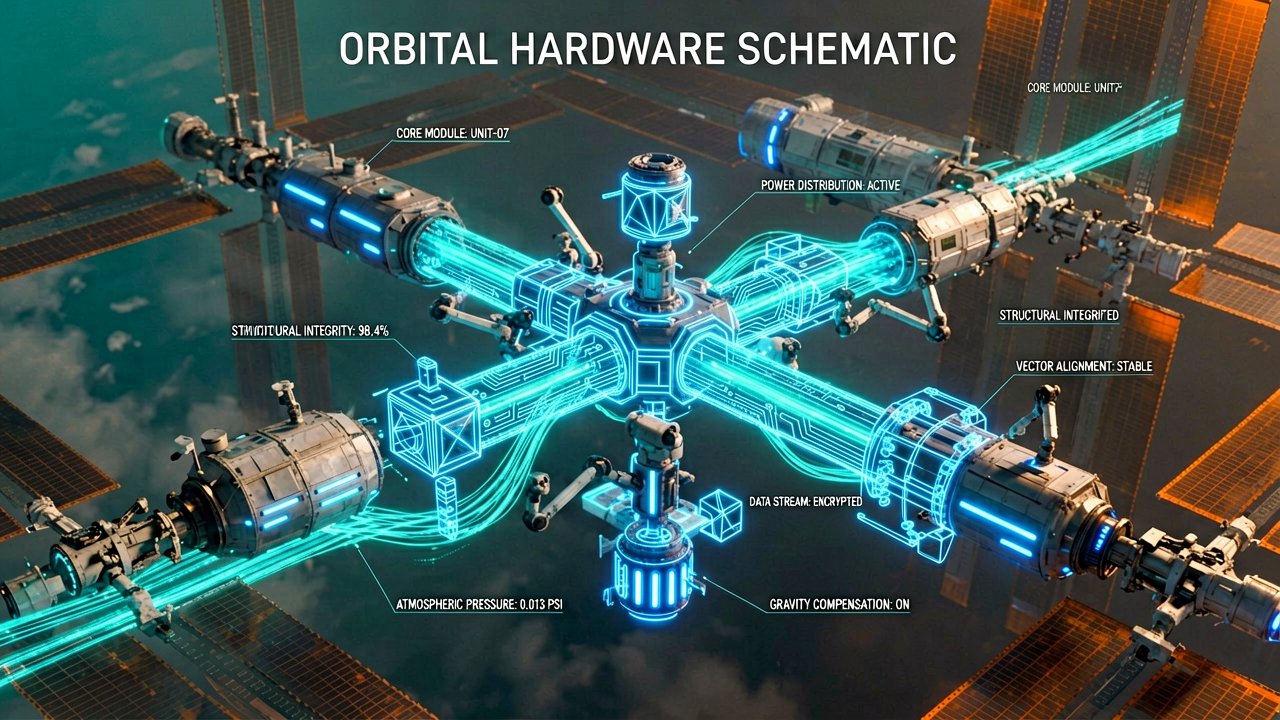
The barrier to entry for the final frontier just got a whole lot lower. The ISS National Lab has officially kicked off its 2026 Orbital Edge Accelerator, a program that’s less about "reaching for the stars" and more about building a sustainable business model among them. Now in its second year, this initiative isn't just handing out participation trophies; it’s offering early-stage startups a serious injection of capital—anywhere from $500,000 to $750,000—paired with that rarest of commodities: actual flight access to the International Space Station. It's a calculated move to turn "space-adjacent" ideas into scalable, terrestrial-market winners by leveraging the unique environment of low Earth orbit (LEO).
This year's cohort is split into two distinct paths, reflecting the dual nature of the modern space economy. The "Sentinel" track is hunting for the next big thing in dual-use tech and orbital hardware, while the "Disrupt" track leans into the burgeoning field of in-space manufacturing and biotech. According to the ISS National Laboratory, the program has doubled down on its partnership network, bringing in heavy-hitting investors like Draper Associates and Stellar Ventures to ensure these startups have the financial runway to survive the transition from the lab to the launchpad. It’s a high-stakes play, but for founders who can prove their tech thrives in microgravity, the potential for a "million-dollar launchpad" is finally within reach.
The Investment Edge and Industry Impact
Beyond the raw cash, there’s a strategic layer here that shouldn't be ignored. Startups aren’t just getting funding; they’re getting a ticket to compete for the Boeing-sponsored Technology in Space Prize, which adds another $100,000 in non-dilutive grant money to the pot. As noted by SatNews, the ultimate goal is to integrate LEO into the standard R&D pipeline for industries that, historically, never looked past the stratosphere. Whether it’s perfecting semiconductors or growing high-purity protein crystals for drug discovery, the ISS National Lab is betting that the future of Earth-bound industry is actually written in the stars.
The deadline for this year’s applications is May 26, 2026, and the competition is expected to be fierce. For the six startups eventually selected, the journey involves more than just a check; it includes seven months of intensive mentorship designed to bridge the notorious "valley of death" that claims so many deep-tech ventures. By providing the capital, the hardware, and the literal orbital coordinates, the Orbital Edge Accelerator is positioning itself as the premier gatekeeper for the next generation of the space economy.

The Microgravity Gold Rush: Beyond the Press Release
The Strategic Pivot: What most reports miss is the calculated shift in how the ISS National Lab views its role as an economic catalyst. In the early days of commercial space, the focus was almost entirely on "getting there," but the Orbital Edge Accelerator signals a maturation of the market where the "why" finally outweighs the "how." By dangling $750,000 in front of founders, the program is effectively de-risking the most expensive R&D environment in existence. For a deep-tech startup, the cost of space-hardening a payload can be a death sentence; here, that friction is lubricated by institutional support and non-dilutive capital that traditional VCs are often too risk-averse to provide alone.
The involvement of names like Draper Associates and Stellar Ventures isn't just about the money—it’s about validation. When a legendary investor like Tim Draper puts his weight behind an orbital accelerator, it sends a signal to the broader financial markets that LEO is no longer a playground for governments, but a viable factory floor. This public-private synergy is designed to solve the "last mile" problem of space research. Historically, brilliant experiments would return from the ISS and languish in academic journals. The 2026 program is built to ensure those results end up in a pitch deck or a manufacturing manifest instead.
Stakeholders within the ISS National Lab have long whispered about the "valley of death" specific to space startups: the period between a successful microgravity proof-of-concept and a scalable commercial product. The Orbital Edge Accelerator addresses this by pairing flight access with the Boeing-sponsored Technology in Space Prize. This creates a tiered incentive structure that rewards not just the novelty of the science, but the viability of the business model. It’s a rigorous filter that forces founders to think about supply chains and unit economics before their hardware even leaves the atmosphere.
From a historical perspective, we are seeing the blueprint for the post-ISS era. With the International Space Station scheduled for decommissioning in the early 2030s, programs like Orbital Edge are essential for seeding the ecosystem that will inhabit future commercial destinations like Axiom Station or Orbital Reef. The Lab is essentially training a generation of entrepreneurs to operate in an environment where gravity is a variable, not a constant. This expertise will be the primary currency of the orbital economy long after the current station is de-orbited.
Finally, the "Sentinel" and "Disrupt" tracks represent a sophisticated understanding of dual-use technology. By seeking hardware that serves both national security and commercial interests, the accelerator taps into a broader pool of federal and private funding. This dual-path approach ensures that even if a purely commercial manufacturing play takes longer to materialize, the underlying technology has a high-value application in orbital debris mitigation or satellite servicing. It is a pragmatic, multi-layered strategy designed to ensure that the 2026 cohort doesn't just launch, but thrives in a competitive global landscape.
The Orbital Reality Check: Ambition vs. Atmospheric Drag
Reading Between the Lines: While the headline figures of $750,000 and "guaranteed flight access" paint a rosy picture of a frictionless path to orbit, the reality for an early-stage startup is often far more bureaucratic and physically punishing. There is a persistent contradiction in the "fail fast" culture of Silicon Valley when it meets the "zero-failure" culture of aerospace engineering. The Orbital Edge Accelerator attempts to bridge this gap, but the rigorous safety requirements and launch integration timelines of the ISS National Lab can turn a nimble startup’s pivot into a multi-year slog. Capital is finite, but the technical debt of space-rating a piece of consumer-grade tech is often underestimated by even the most seasoned founders.
There is also a quiet skepticism regarding the "scalability" of in-space manufacturing. While it is scientifically fascinating that we can grow more uniform protein crystals or pull higher-quality fiber optic cables in microgravity, the logistics of doing so at a scale that impacts global markets remains a massive hurdle. The "Disrupt" track is betting on high-margin, low-mass products, yet the cost per kilogram to bring those finished goods back to Earth remains a significant line item that can evaporate a startup’s margins. We are essentially building a high-tech factory where the elevator ride costs more than the machinery inside, necessitating a level of product value that few industries outside of pharmaceuticals can currently justify.
Furthermore, the reliance on the Boeing-sponsored Technology in Space Prize introduces an interesting irony given the aerospace giant's recent high-profile struggles with its own orbital platforms. It highlights a broader industry tension: the established titans of the "Old Space" era are funding the very "New Space" disruptors that seek to render their legacy models obsolete. This creates a complex ecosystem where startups must navigate the mentorship of incumbents while simultaneously trying to out-innovate them. Whether these startups can maintain their agility while tethered to the slow-moving procurement and safety standards of the ISS National Lab is the ultimate test of the program.
Finally, we must consider the ticking clock of the International Space Station itself. With the platform’s retirement looming on the horizon, these 2026 startups are essentially the "late-night diners" of the ISS. They are rushing to perfect their recipes just as the lights are starting to flicker. The true measure of the Orbital Edge Accelerator’s success won't be found in the successful launches of 2027, but in whether these companies can successfully migrate their operations to the commercial stations of the 2030s without the safety net of government-subsidized R&D access.
Space remains the only place where you can spend three-quarters of a million dollars just to find out that your revolutionary hardware is effectively a very expensive paperweight once it hits 17,500 miles per hour, though at least the view from the office window is significantly better than anything you'll find in Palo Alto.
Artūras Malašauskas is an AI Systems Integrator with 20+ years of production-grade web engineering experience. He has designed, shipped, and scaled enterprise Python/PHP systems for logistics, SaaS, and public-sector clients. For the past year, he has focused exclusively on AI integrations: deploying open-source LLMs, building generative media pipelines (image, audio, video), and engineering multi-agent workflows for real production environments. His standard: reproducibility, security, cost-efficient inference—no vaporware. He documents and evaluates emerging AI tooling, separating verified capabilities from marketing noise. Technical editor at: muza-ai.eu, ai-verslas.lt, ai-naujinos.lt Connect on LinkedIn
Comments