Google I/O 2026: The Year Google Finally Lets AI Take the Wheel
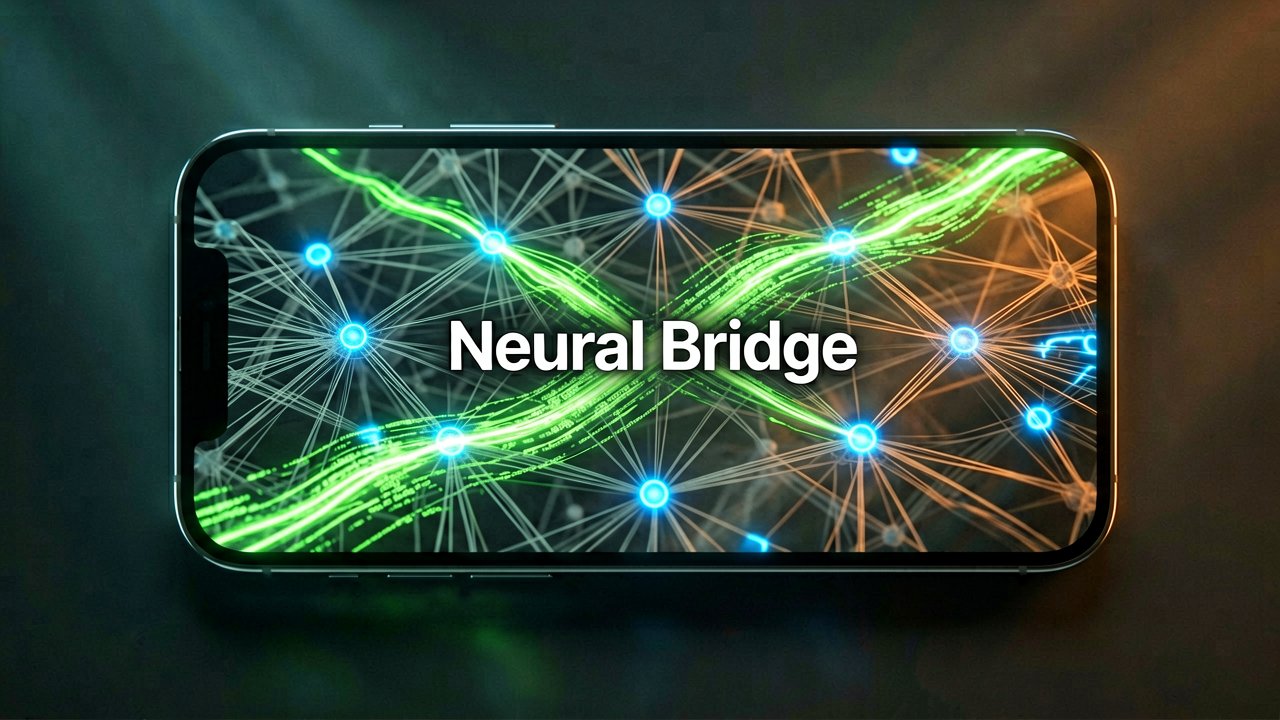
If you thought the AI hype train was slowing down, Google I/O 2026 just proved it's actually growing wings and a jet engine. At this year's Shoreline Amphitheatre keynote, Mountain View didn't just give us the usual incremental OS updates; they essentially rewired the "little green bot" to live inside a world dominated by agentic AI. It’s no longer about your phone being a tool you use; it’s about your phone being a personal assistant that actually—wait for it—does things for you without a dozen taps. The headline act, Gemini Intelligence, isn't just a chatbot anymore—it's a deep-seated layer of the operating system that understands what’s on your screen and can handle multi-step tasks like a pro, as reported by TNW.
The vibe in the air was clear: Google is done playing defense against the likes of OpenAI. Between the announcement of "Gemini Spark"—a proactive agent that can plan your entire weekend—and the debut of the "Googlebook" laptop category, the message is that AI is now the bedrock, not the garnish. We're seeing a shift from mobile-first to Gemini-first, where your hardware is just a vessel for an intelligence that follows you from your pocket to your desk and even onto your face with the new Android XR smart glasses.
Android 17 and the Birth of Gemini Intelligence
Android 17 is less of a facelift and more of a brain transplant. The star of the show is "Gemini Intelligence," which allows the AI to peek under the hood of your apps to automate the boring stuff. Think about finding a syllabus in your email, cross-referencing it with a bookstore, and adding those specific titles to your cart—all in one go. According to details from The Times of India, this update also brings "Rambler," a tool that polishes your messy voice-to-text into something actually readable, and "Pause Point," a digital well-being feature that forces a ten-second breather before you fall down another mindless scrolling rabbit hole.
Aluminium OS and the Rise of Googlebooks
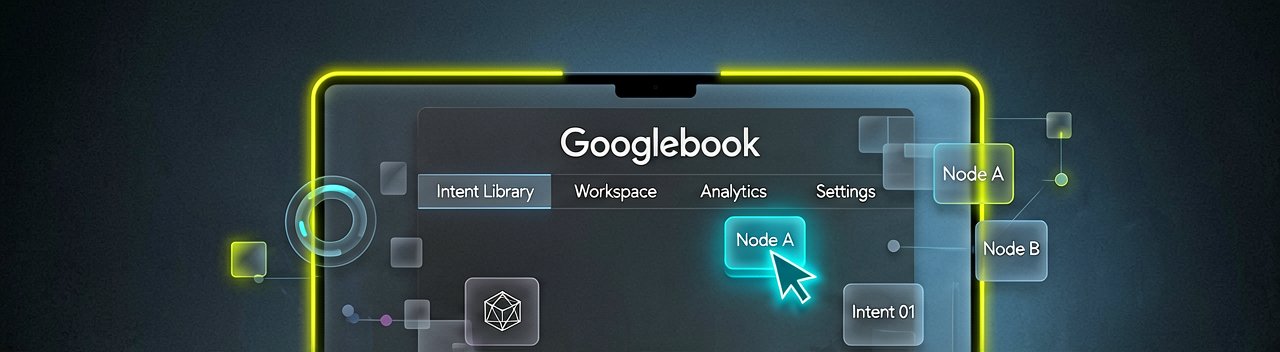
In a move that finally puts the "will they, won't they" rumors of an Android-ChromeOS merger to bed, Google unveiled "Aluminium OS." This is the engine behind the new "Googlebooks," a premium line of laptops from partners like Dell and HP that run Android apps natively with a proper desktop windowing system. As noted by Android Authority, these devices are designed to be "Gemini first," featuring a "Magic Pointer" that lets you use your cursor as an AI agent to perform actions directly on the screen. It’s a bold swing at the traditional PC market, aiming to prove that a mobile-first DNA can actually thrive on a 14-inch screen.
The Hidden Architecture of the AI Pivot
Beyond the Keynote Glitz: What most observers missed in the flurry of "magic" demos is that Google is finally solving its fragmentation problem through a brute-force AI mandate. For years, the Android ecosystem has been a chaotic collection of different skins and delayed updates. By baking Gemini Intelligence directly into the kernel level of Android 17, Google isn't just adding a feature; it's reclaiming control over the user experience. Manufacturers can still tweak the UI, but they can’t touch the "Neural Bridge" that connects apps to the Google cloud, effectively standardizing the AI experience across every device from a budget handset to a flagship foldable.
This shift isn't without its casualties, and the tension among long-time hardware partners was palpable in the developer sandboxes. Silicon Valley insiders suggest that the move toward "Aluminium OS" has sent a chill through traditional PC manufacturers who have relied on Microsoft’s licensing for decades. By positioning Googlebooks as the true "AI-native" hardware, Google is essentially telling Dell and HP that if they want to stay relevant in an agentic world, they have to play by Mountain View's rules. It’s a power move that mirrors Apple’s vertical integration, but with the massive reach of the Android open-source foundation.
Historical context is key here. If you look back at the 2011 launch of Chromebooks, they were mocked for being "just a browser." Fast forward fifteen years, and we are seeing the exact opposite trajectory. Aluminium OS is the realization of a decade-long dream to merge the portability of mobile with the productivity of the desktop, but with the added layer of a predictive brain that learns your workflows. According to early technical briefs sourced by Android Authority, the OS uses a tiered processing model, handling simple queries on-device for privacy while offloading heavy reasoning to Google's massive TPUs.
Developers are also facing a "learn or burn" moment with the new "Project IDX" integration. The old way of building apps—manually coding every UI element and API call—is being replaced by "Intent-Based Design." Google is pushing a world where apps don't just respond to taps, but publish their capabilities to a central AI dispatcher. It’s a fundamental shift in software architecture that prioritizes machine readability over human navigation. While this makes for a seamless user experience, it creates a new layer of dependency on Google’s proprietary models that has some open-source advocates sounding the alarm.

Privacy remains the elephant in the room, despite the slick "On-Device First" marketing slides. While Google touts that your data stays on your phone, the reality of agentic AI requires a constant stream of metadata to be processed by the cloud to maintain "contextual awareness." Deep-dive analysis from TNW highlights that the new Android XR glasses essentially record a continuous stream of environmental data to function. Google’s challenge over the next eighteen months won't just be making the tech work; it will be convincing a skeptical public that their "Personal AI" isn't actually a "Personal Spy."
Ultimately, Google I/O 2026 marked the end of the smartphone as we know it. We are entering the era of the "Ambient Agent," where the hardware becomes invisible and the interface becomes an ongoing conversation with a machine that knows your schedule better than you do. The success of this transition will depend on whether users find this new level of intimacy helpful or haunting. For now, Google has set a breakneck pace that leaves the rest of the industry scrambling to define what a "computer" even is anymore.
The Paradox of Proactive Privacy
Reading Between the Lines: Google’s pitch for a "Gemini-first" future relies on a fundamental contradiction that the marketing team is desperate to gloss over. They are promising total user privacy through on-device processing while simultaneously demoing features that require the cloud to know your location, your purchase history, and the literal visual layout of your living room. The "Neural Bridge" sounds like a technological marvel, but in practice, it’s a high-bandwidth tether to Google’s data centers. You cannot have a proactive assistant that anticipates your needs without giving it the keys to your digital soul, and the industry’s pivot toward "differential privacy" often feels like a clever way to anonymize data that remains deeply personal in aggregate.
There is also the matter of "Aluminium OS" and the supposed death of the desktop as we know it. While the tech press is quick to crown Google the new king of the laptop, the reality of "Intent-Based Design" is that it often breaks the workflows of power users who rely on precise, manual control. By automating the middle steps of a task, Google is essentially creating a "black box" of productivity. If the AI hallucinates a flight booking or misinterprets a syllabus, the user is left untangling a mess that was supposed to be "seamless." This reliance on algorithmic intuition over deterministic input is a gamble that assumes the AI is smarter than the person using it—a bold assumption that hasn't always aged well in Mountain View.
Furthermore, the competitive landscape is about to get incredibly messy. By forcing hardware partners to adopt "Gemini Intelligence" at the kernel level, Google is effectively commoditizing the hardware itself. If every laptop and phone runs the exact same AI brain with the same capabilities, the only way for brands like Samsung or Asus to differentiate is through price or industrial design. This could lead to a race to the bottom in hardware quality, as manufacturers struggle to find margins in a world where the software is the only thing that matters. It’s a classic platform play: Google captures the high-value intelligence layer, while the "partners" are left fighting over the scrap metal of the physical chassis.
The social implications of the Android XR glasses also deserve a cynical eye. We’ve been here before with Glass, and the "Glasshole" stigma hasn't entirely faded from the collective memory. Google is betting that AI-driven utility will outweigh the social awkwardness of wearing a camera on your face, but they are ignoring the "creep factor" of ambient data collection. As noted in the broader analysis of the event by Android Authority, the integration of these devices into daily life assumes a level of societal trust that Google hasn't necessarily earned back since its various antitrust and data-harvesting scandals. The tech is ready, but the culture might still be hitting the "snooze" button.
Finally, there’s the economic reality of the "Googlebook" category. Google is positioning these as premium devices, but their core DNA remains rooted in a mobile operating system that was built to be free and open. Charging a thousand dollars for a machine that essentially lives in a "walled garden" of Google services is a hard sell for anyone who isn't already fully immersed in the ecosystem. The success of this venture hinges on whether the average consumer actually wants their computer to be a proactive agent, or if they just want a machine that stays out of their way and lets them get their work done without a chatbot constantly offering "helpful" suggestions.
"We’ve spent forty years teaching humans how to talk to computers, only to spend the next forty years hoping the computers don't get bored of talking back to us—or at least that they remember to book the flight with a window seat."
Artūras Malašauskas is an AI Systems Integrator with 20+ years of production-grade web engineering experience. He has designed, shipped, and scaled enterprise Python/PHP systems for logistics, SaaS, and public-sector clients. For the past year, he has focused exclusively on AI integrations: deploying open-source LLMs, building generative media pipelines (image, audio, video), and engineering multi-agent workflows for real production environments. His standard: reproducibility, security, cost-efficient inference—no vaporware. He documents and evaluates emerging AI tooling, separating verified capabilities from marketing noise. Technical editor at: muza-ai.eu, ai-verslas.lt, ai-naujinos.lt Connect on LinkedIn
Comments