JBL Turns 80 with an AI Twist: The EasySing Mic Mini and Duo Take the Stage
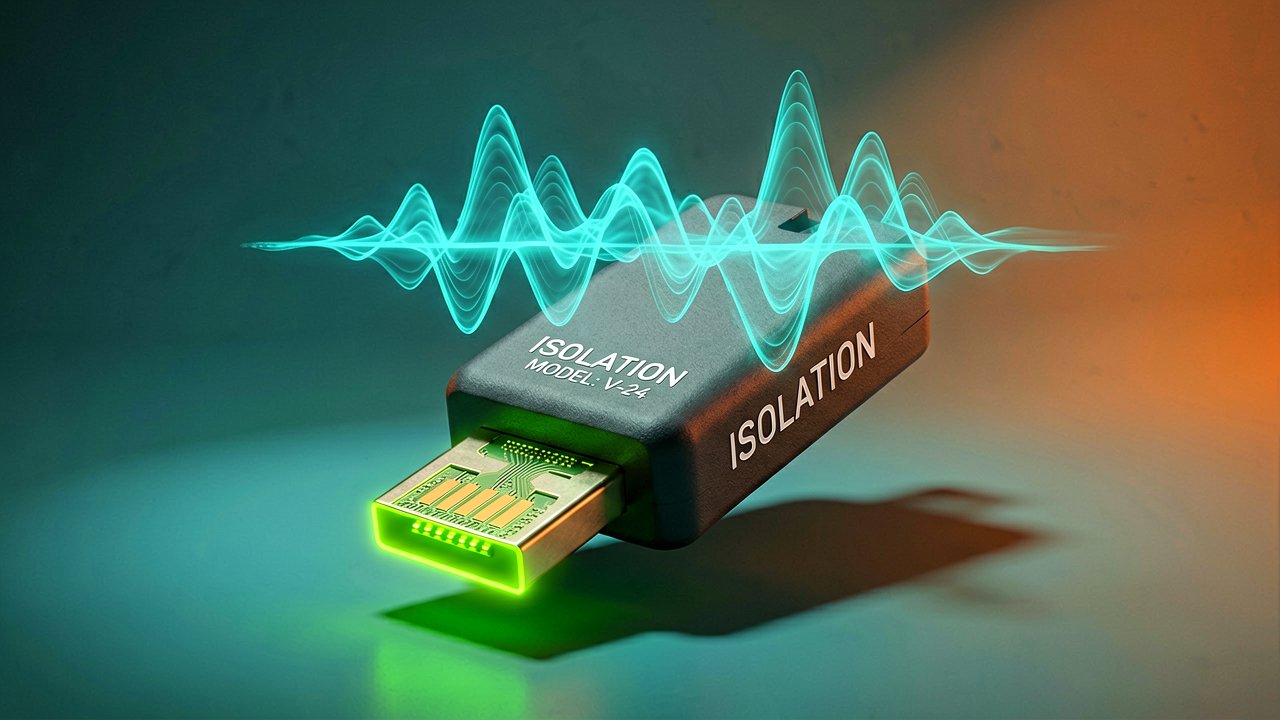
JBL isn't just blowing out candles for its 80th anniversary; it's practically rebuilding the karaoke machine from the ground up with AI. At its massive 2026 celebration, the audio giant pulled the curtain back on a fleet of new gear, but the real showstoppers are the JBL EasySing Mic Mini and its tag-team sibling, the EasySing Mic Mini Duo. These aren't your typical plastic toy mics. Instead, JBL is leaning hard into "powering voices" by stuffing real-time AI vocal removal and pitch support into pocket-sized hardware that feels more like a tech enthusiast’s tool than a party favor.
The headline act here is the AI-powered vocal removal. Whether you’re using the solo Mic Mini or the Duo set, a simple button press lets you strip out 25%, 50%, or 100% of the original vocals from any track in real-time. It’s a clever bit of software wizardry that effectively turns any song on your phone or laptop into a custom backing track. According to details shared by Harman News, these devices are designed to pair seamlessly with the next generation of JBL portables, like the Boombox 4 and Xtreme 5, via a stable 2.4GHz wireless dongle.
Small Hardware, Big AI Ambitions
The Mic Mini series is clearly aimed at the "creator" crowd as much as the Saturday night karaoke enthusiast. Weighing in at just 37 grams, the mic can be clipped onto a shirt with a magnetic attachment or held by a ring handle. It’s got a 6-hour battery life—plenty for a livestream or a serious sing-off—and charges right inside its pocketable case. If you need more staying power or a more traditional feel, the larger EasySing Mics offer up to 10 hours of playtime and additional "natural reverb" effects to mask those inevitable flat notes. JBL’s official product pages confirm that the setup is managed through the JBL One app, allowing users to fine-tune EQ presets and check connections on the fly.
The 80-Year Legacy Continues
Beyond the mics, JBL used the anniversary to refresh its heavy hitters. The PartyBox On-The-Go 2 Plus made its debut, pumping out 100W of power and coming bundled with an EasySing Mic to get the party started immediately. It’s a move that shows JBL isn't resting on its laurels. By integrating features like Auracast for multi-speaker pairing and using post-consumer recycled plastics, they're modernizing their "Legendary Pro Sound" for a more connected, eco-conscious audience. Prices for the new lineup are competitive for the tech on offer, with the Mic Mini hitting shelves at $179.95, while the dual EasySing Mic pair is priced at $199.95, per reports from TechPowerUp.
The Engineering Pivot: Why AI is JBL’s New North Star
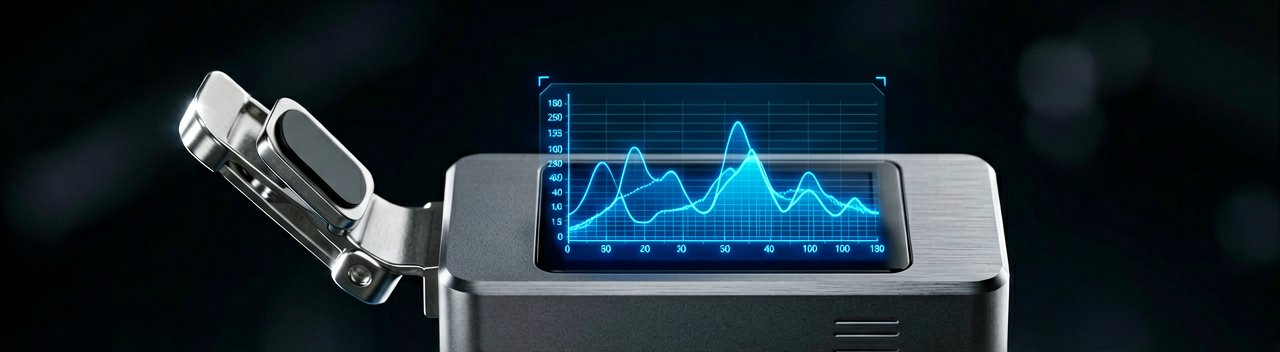
Beyond the Spec Sheet: What most surface-level reports miss is that the EasySing Mic Mini represents a fundamental shift in how JBL views the relationship between hardware and the listener. For eight decades, the brand focused on "reproduction"—taking a recorded signal and making it sound as massive as possible. With the integration of the "Powering Voices" AI, they are moving into the realm of active "deconstruction." This isn't just a simple frequency filter; the proprietary algorithms are trained to isolate human vocal timbres from complex instrumental arrangements in real-time, a feat that usually requires significant post-processing power on a desktop workstation.
Historically, JBL has always been the "loud" brand, synonymous with Woodstock and massive stadium arrays. However, the 80th-anniversary lineup signals an aggressive play for the creator economy. By making the Mic Mini magnetic and ultra-lightweight at 37 grams, they are directly challenging the dominance of traditional lapel mics used by vloggers. The inclusion of a 2.4GHz wireless dongle instead of relying solely on standard Bluetooth is a nod to professionals who demand the ultra-low latency required for live performance—a detail that hobbyists might overlook but one that seasoned tech journalists recognize as essential for synchronization.
Stakeholders at Harman have hinted that this AI-driven approach is part of a broader "Sound of the Future" initiative. The goal is to make professional-grade audio manipulation accessible to the average consumer without a steep learning curve. By embedding the vocal removal controls directly onto the hardware, JBL is removing the friction of app-heavy ecosystems. It allows a user to transform a standard streaming track into a personalized performance piece in seconds, effectively turning every smartphone into a portable recording studio.
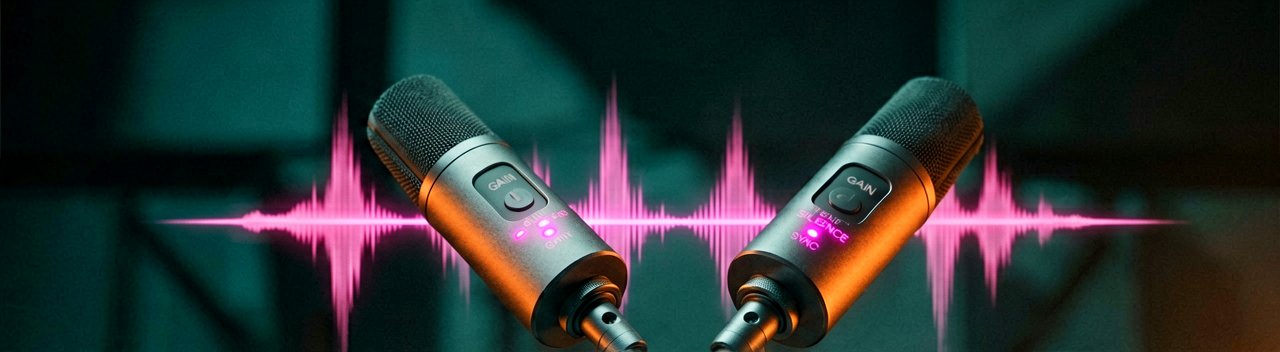
The "Duo" variant of the Mic Mini also speaks to a growing trend in social audio: the resurgence of shared experiences. In an era where most audio tech is becoming increasingly personal and isolated—think noise-canceling earbuds—JBL is doubling down on communal sound. The ability to sync two mics to a single dongle with independent gain control is a sophisticated touch. It reflects a deep understanding of how people actually use these devices, whether for impromptu street interviews or backyard karaoke sessions where the social interaction is the primary product.
From a historical perspective, seeing JBL utilize post-consumer recycled plastics in these high-tech units marks a significant cultural turn for the company. It’s no longer enough to be the loudest or the most durable; the brand is now under pressure to be the most responsible. This transition from "heavy metal" durability to "smart and sustainable" tech illustrates how a legacy giant survives 80 years in a volatile market. They aren't just selling a microphone; they are selling a piece of a refined ecosystem that prioritizes software intelligence as much as acoustic pressure.
Ultimately, the EasySing series is a gamble that consumers want more than just a speaker. They want a tool that interacts with their music. By giving users the literal "voice" to alter their favorite tracks, JBL is betting that the next decade of audio will be defined by participation rather than just passive consumption. This hardware rollout is the opening salvo in a campaign to prove that even after 80 years, a legacy brand can still out-innovate the Silicon Valley newcomers in the smart-audio space.
The Analytical Edge: Can Software Save the Karaoke Star?
Reading Between the Lines: While JBL’s marketing team paints a picture of seamless AI-driven vocal nirvana, the technical reality of real-time audio separation is rarely so clean-cut. There is an inherent contradiction in promising "studio-quality" vocal removal in a $179 consumer peripheral. Even with advanced neural networks, stripping a lead vocal from a densely layered pop track often leaves behind "spectral ghosts"—those watery, digital artifacts that remind you you’re listening to an algorithm’s best guess rather than a master instrumental track. For the casual backyard singer, this is a miracle; for the audiophile, it’s a compromise that JBL is betting you won’t notice over the thumping bass of a PartyBox.
The pivot toward 2.4GHz wireless connectivity is equally telling. By opting for a dedicated dongle over standard Bluetooth, JBL is quietly admitting that the current state of universal Bluetooth audio is still too sluggish for serious vocal performance. This creates a friction point that modern tech usually tries to avoid: the "dongle life." While it guarantees the low latency needed to keep your voice in sync with the beat, it also limits the mic’s spontaneity. You can’t just hand the mic to a friend with a different phone and expect instant results without swapping hardware bits, which feels like a slight step backward in an increasingly wireless world.
Furthermore, the long-term implication of this "creator-first" hardware is the potential for a copyright quagmire. By making it trivial to strip vocals and re-record over existing tracks, JBL is handing a high-powered tool to a generation of TikTokers who may not respect the fine print of music licensing. It’s a bold move for a brand owned by Harman, a subsidiary of Samsung, to facilitate the deconstruction of copyrighted material so efficiently. It suggests that JBL is prioritizing hardware sales and cultural relevance over the traditional industry concerns of their professional-tier partners.
There is also the question of hardware longevity in the face of rapid AI evolution. By baking these vocal removal features into the hardware ecosystem, JBL risks creating "disposable" tech. If a significantly better vocal-stripping algorithm emerges in eighteen months—which, given the current pace of AI development, is almost a certainty—users might find their EasySing Mic Mini feeling obsolete long before the physical battery gives out. JBL is essentially asking consumers to buy into a snapshot of 2026 AI capability, tied to a physical device that doesn't have the processing overhead of a smartphone to handle future "heavy" updates.
Looking ahead, this 80-year milestone feels less like a celebration of the past and more like a defensive crouch against the encroachment of software-only solutions. When apps can increasingly handle vocal isolation on the fly, JBL has to prove that a physical, 37-gram plastic clip adds enough tactile value to justify the triple-digit price tag. They are betting that the "legendary sound" brand equity can carry them through a transition where they are no longer just a speaker company, but a software-as-a-service provider wrapped in a neon-lit shell.
JBL has spent eight decades teaching us how to listen to music, and now they’re giving us the tools to surgically remove the parts we don’t like—proving that after eighty years of expertise, they finally understand that the only thing humans love more than a perfect song is the sound of their own voice over it.
Artūras Malašauskas is an AI Systems Integrator with 20+ years of production-grade web engineering experience. He has designed, shipped, and scaled enterprise Python/PHP systems for logistics, SaaS, and public-sector clients. For the past year, he has focused exclusively on AI integrations: deploying open-source LLMs, building generative media pipelines (image, audio, video), and engineering multi-agent workflows for real production environments. His standard: reproducibility, security, cost-efficient inference—no vaporware. He documents and evaluates emerging AI tooling, separating verified capabilities from marketing noise. Technical editor at: muza-ai.eu, ai-verslas.lt, ai-naujinos.lt Connect on LinkedIn
Comments