The Frame Rate Arms Race Just Hit Mach 1: LG’s UltraGear 25G590B Reaches 1000Hz
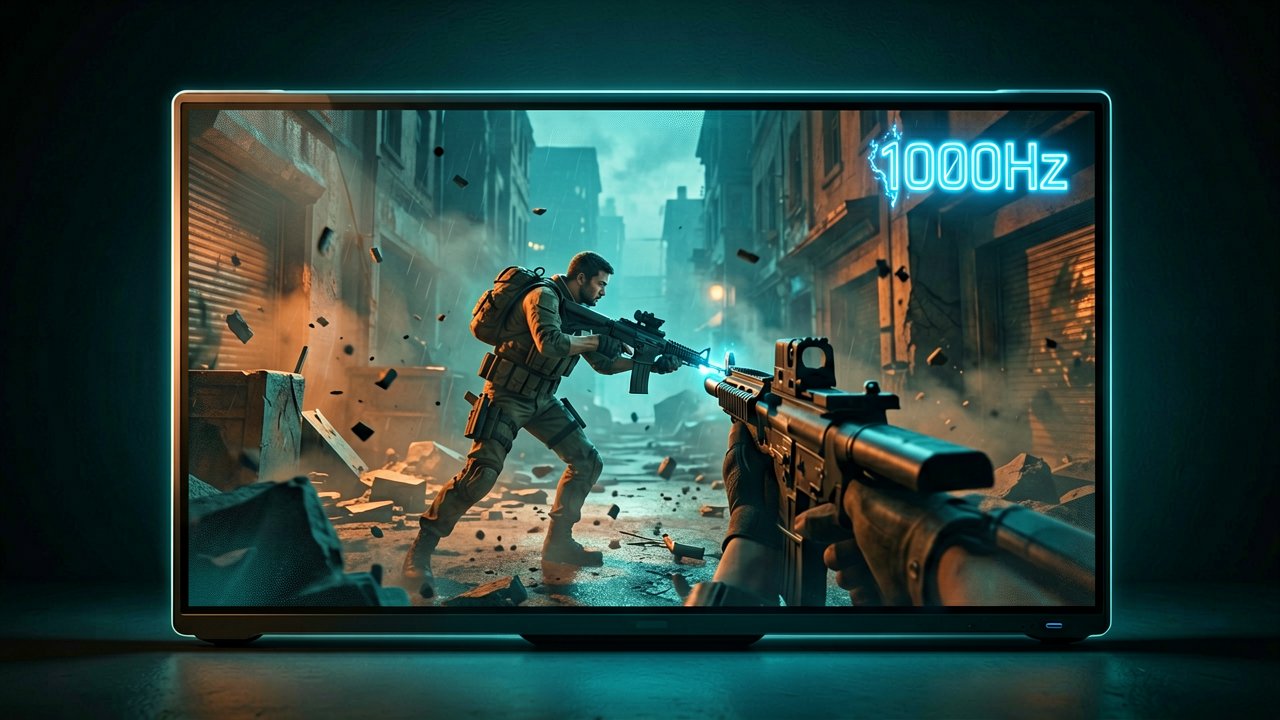
For years, the display industry has been inching toward a mythical four-digit milestone, and LG finally decided to kick the door down. The newly unveiled UltraGear 25G590B isn’t just another incremental bump in speed; it’s a 24.5-inch 1080p IPS powerhouse that maintains a native 1000Hz refresh rate. While we’ve seen prototypes and "dual-mode" displays flirt with these speeds by dropping resolution to a blurry 720p, LG’s latest flagship keeps the pixel density intact at Full HD, effectively setting a new high-water mark for what serious esports hardware can do.
This monitor is clearly laser-targeted at the professional FPS circuit, where every millisecond is a lifetime. To keep that blistering refresh rate from becoming a smeared mess, LG has baked in its Motion Blur Reduction Pro technology. The goal here is simple: eliminate the visual "ghosting" that traditionally plagues LCD panels at extreme speeds. Combined with an IPS panel that avoids the washed-out colors of older TN tech, it looks like LG is trying to prove that you don’t have to sacrifice a vibrant picture just to get the lowest possible input lag according to reports from Tom's Hardware.
What Most Reports Miss: The Logistical Nightmare of 1000 FPS
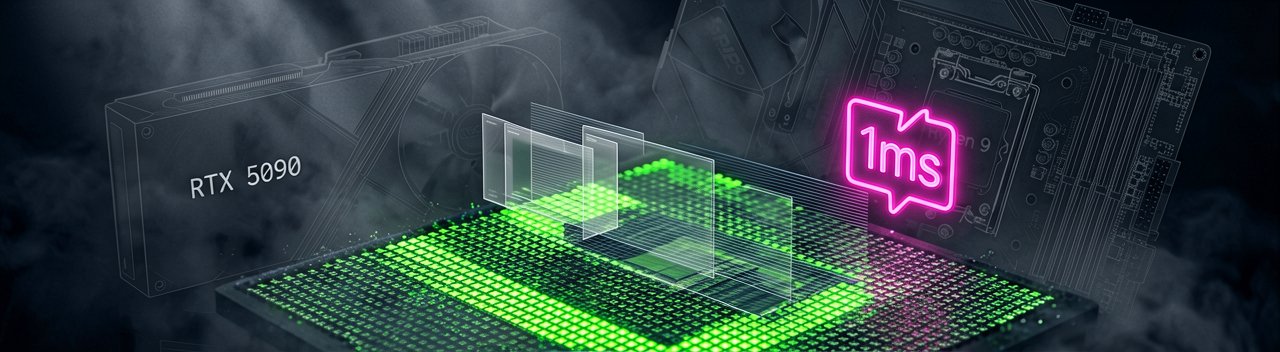
Behind the Scenes: The hardware required to actually saturate a 1000Hz panel is, frankly, terrifying. While the monitor can technically refresh its screen a thousand times every second, your PC still has to generate those frames. Even with a top-tier rig featuring an RTX 5090 and a Ryzen 9 9850X3D, most modern titles struggle to consistently hit those numbers. We’re essentially looking at a display that has outpaced current silicon, meaning its real value today lies more in its future-proofing and its ability to provide nearly perfect motion clarity in lightweight titles like Counter-Strike 2 or Valorant.
Historically, the jump from 144Hz to 240Hz was massive, but the diminishing returns beyond 500Hz have been a point of contention among enthusiasts. Industry veterans often point out that while the human eye might not "see" 1000 individual frames, the reduction in persistence blur and the near-instantaneous sync between mouse movement and on-screen action are tangible benefits for elite players. LG is leaning heavily into this "feel" factor, moving beyond simple specs to focus on the psychological edge of zero-perceived-latency gameplay as noted by VideoCardz.
There is also a subtle shift in panel strategy happening here. By opting for IPS rather than the lightning-fast TN panels favored by Zowie or the deep-contrast WOLEDs in LG's own lineup, the 25G590B positions itself as a specialized tool. It doesn't have the infinite contrast of an OLED, but it also doesn't suffer from the potential "burn-in" risks that static HUD elements in esports titles can cause over thousands of hours. It’s a pragmatic choice for the professional grind, prioritizing longevity and consistent color reproduction across tournament environments.
Looking at the broader market, LG’s move effectively forces competitors like ASUS and BenQ to respond. We’ve entered an era where 360Hz is the new "budget" high-refresh standard, and 1000Hz is the new elite frontier. However, the lack of an official price tag or a firm release date beyond "the second half of 2026" suggests that LG is still fine-tuning the manufacturing yield for these ultra-high-speed IPS panels. Until this hits the desks of professional testers, it remains a tantalizing glimpse into a future where display lag is effectively a solved problem according to The Verge.
The Reality Check: Chasing Diminishing Returns
Reading Between the Lines: There is a curious irony in launching a 1000Hz monitor during an era where the industry is obsessed with 4K and OLED eye candy. By doubling down on a 1080p resolution, LG is implicitly admitting that the "retina" experience and the "reflex" experience are on two completely different developmental tracks. We are reaching a point where the monitor’s refresh cycle is actually faster than the time it takes for a typical gaming mouse to poll its own sensor, creating a bottleneck that hardware manufacturers haven't fully addressed.
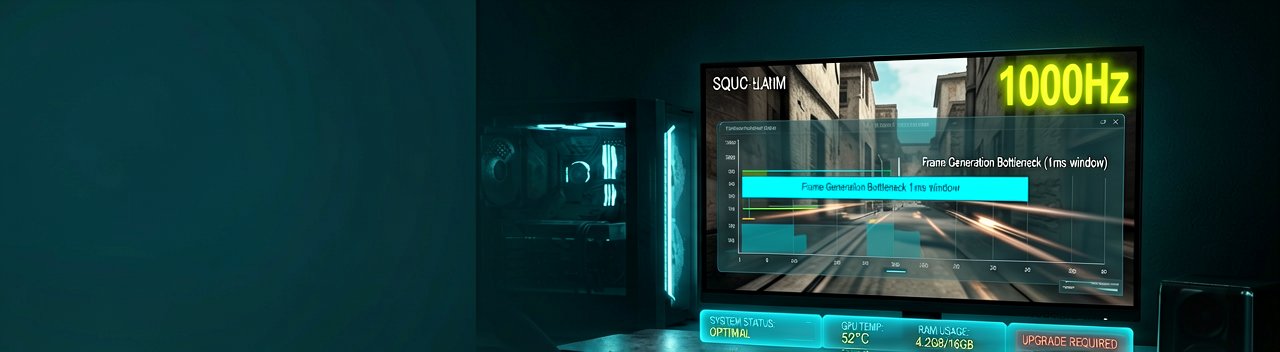
Moreover, the marketing push for 1000Hz conveniently ignores the "frame time" reality. At 1000Hz, a new frame needs to be ready every 1 millisecond. Most modern game engines, even those optimized for esports, have internal latencies and CPU overhead that make such consistency nearly impossible to maintain. We run the risk of seeing "micro-stutter" become even more apparent because the display is now fast enough to expose the tiny inconsistencies in how a PC delivers data to the screen.
There is also the question of the IPS panel's actual response time. While "1ms GtG" is a common marketing claim, achieving a true 1ms transition across all color shifts is notoriously difficult for IPS technology. If the liquid crystals can’t flip fast enough to keep up with the 1000Hz backlight strobe, the result won’t be clarity—it will be a mess of overdrive artifacts and "corona" ghosting. LG’s engineers are essentially fighting the laws of physics to ensure the panel doesn't trip over its own feet.
Ultimately, this monitor serves as a prestige project that signals dominance rather than immediate mass-market utility. It’s a halo product designed to make their 360Hz and 540Hz models look like sensible, "standard" purchases by comparison. For the average gamer, the jump to 1000Hz will likely be less about seeing more frames and more about the marketing-driven desire to own the absolute ceiling of performance, even if their own reaction times remain stubbornly stuck in the triple digits.
It’s a magnificent piece of engineering that ensures your monitor will finally be faster than your brain, your GPU, and your internet connection combined—perfect for losing a match in 1,000 frames per second instead of just 144.
For years, the display industry has been inching toward a mythical four-digit milestone, and LG finally decided to kick the door down. The newly unveiled UltraGear 25G590B isn’t just another incremental bump in speed; it’s a 24.5-inch 1080p IPS powerhouse that maintains a native 1000Hz refresh rate. While we’ve seen prototypes and "dual-mode" displays flirt with these speeds by dropping resolution to a blurry 720p, LG’s latest flagship keeps the pixel density intact at Full HD, effectively setting a new high-water mark for what serious esports hardware can do.
This monitor is clearly laser-targeted at the professional FPS circuit, where every millisecond is a lifetime. To keep that blistering refresh rate from becoming a smeared mess, LG has baked in its Motion Blur Reduction Pro technology. The goal here is simple: eliminate the visual "ghosting" that traditionally plagues LCD panels at extreme speeds. Combined with an IPS panel that avoids the washed-out colors of older TN tech, it looks like LG is trying to prove that you don’t have to sacrifice a vibrant picture just to get the lowest possible input lag according to reports from Tom's Hardware.
What Most Reports Miss: The Logistical Nightmare of 1000 FPS
Behind the Scenes: The hardware required to actually saturate a 1000Hz panel is, frankly, terrifying. While the monitor can technically refresh its screen a thousand times every second, your PC still has to generate those frames. Even with a top-tier rig featuring an RTX 5090 and a Ryzen 9 9850X3D, most modern titles struggle to consistently hit those numbers. We’re essentially looking at a display that has outpaced current silicon, meaning its real value today lies more in its future-proofing and its ability to provide nearly perfect motion clarity in lightweight titles like Counter-Strike 2 or Valorant.
Historically, the jump from 144Hz to 240Hz was massive, but the diminishing returns beyond 500Hz have been a point of contention among enthusiasts. Industry veterans often point out that while the human eye might not "see" 1000 individual frames, the reduction in persistence blur and the near-instantaneous sync between mouse movement and on-screen action are tangible benefits for elite players. LG is leaning heavily into this "feel" factor, moving beyond simple specs to focus on the psychological edge of zero-perceived-latency gameplay as noted by VideoCardz.
There is also a subtle shift in panel strategy happening here. By opting for IPS rather than the lightning-fast TN panels favored by Zowie or the deep-contrast WOLEDs in LG's own lineup, the 25G590B positions itself as a specialized tool. It doesn't have the infinite contrast of an OLED, but it also doesn't suffer from the potential "burn-in" risks that static HUD elements in esports titles can cause over thousands of hours. It’s a pragmatic choice for the professional grind, prioritizing longevity and consistent color reproduction across tournament environments.
Looking at the broader market, LG’s move effectively forces competitors like ASUS and BenQ to respond. We’ve entered an era where 360Hz is the new "budget" high-refresh standard, and 1000Hz is the new elite frontier. However, the lack of an official price tag or a firm release date beyond "the second half of 2026" suggests that LG is still fine-tuning the manufacturing yield for these ultra-high-speed IPS panels. Until this hits the desks of professional testers, it remains a tantalizing glimpse into a future where display lag is effectively a solved problem according to The Verge.
The Reality Check: Chasing Diminishing Returns
Reading Between the Lines: There is a curious irony in launching a 1000Hz monitor during an era where the industry is obsessed with 4K and OLED eye candy. By doubling down on a 1080p resolution, LG is implicitly admitting that the "retina" experience and the "reflex" experience are on two completely different developmental tracks. We are reaching a point where the monitor’s refresh cycle is actually faster than the time it takes for a typical gaming mouse to poll its own sensor, creating a bottleneck that hardware manufacturers haven't fully addressed.
Moreover, the marketing push for 1000Hz conveniently ignores the "frame time" reality. At 1000Hz, a new frame needs to be ready every 1 millisecond. Most modern game engines, even those optimized for esports, have internal latencies and CPU overhead that make such consistency nearly impossible to maintain. We run the risk of seeing "micro-stutter" become even more apparent because the display is now fast enough to expose the tiny inconsistencies in how a PC delivers data to the screen.
There is also the question of the IPS panel's actual response time. While "1ms GtG" is a common marketing claim, achieving a true 1ms transition across all color shifts is notoriously difficult for IPS technology. If the liquid crystals can’t flip fast enough to keep up with the 1000Hz backlight strobe, the result won’t be clarity—it will be a mess of overdrive artifacts and "corona" ghosting. LG’s engineers are essentially fighting the laws of physics to ensure the panel doesn't trip over its own feet.
Ultimately, this monitor serves as a prestige project that signals dominance rather than immediate mass-market utility. It’s a halo product designed to make their 360Hz and 540Hz models look like sensible, "standard" purchases by comparison. For the average gamer, the jump to 1000Hz will likely be less about seeing more frames and more about the marketing-driven desire to own the absolute ceiling of performance, even if their own reaction times remain stubbornly stuck in the triple digits.
It’s a magnificent piece of engineering that ensures your monitor will finally be faster than your brain, your GPU, and your internet connection combined—perfect for losing a match in 1,000 frames per second instead of just 144.
Artūras Malašauskas is an AI Systems Integrator with 20+ years of production-grade web engineering experience. He has designed, shipped, and scaled enterprise Python/PHP systems for logistics, SaaS, and public-sector clients. For the past year, he has focused exclusively on AI integrations: deploying open-source LLMs, building generative media pipelines (image, audio, video), and engineering multi-agent workflows for real production environments. His standard: reproducibility, security, cost-efficient inference—no vaporware. He documents and evaluates emerging AI tooling, separating verified capabilities from marketing noise. Technical editor at: muza-ai.eu, ai-verslas.lt, ai-naujinos.lt Connect on LinkedIn
Comments