Alexa, Play Me Something New: Amazon’s AI Podcast Gambit Is Here
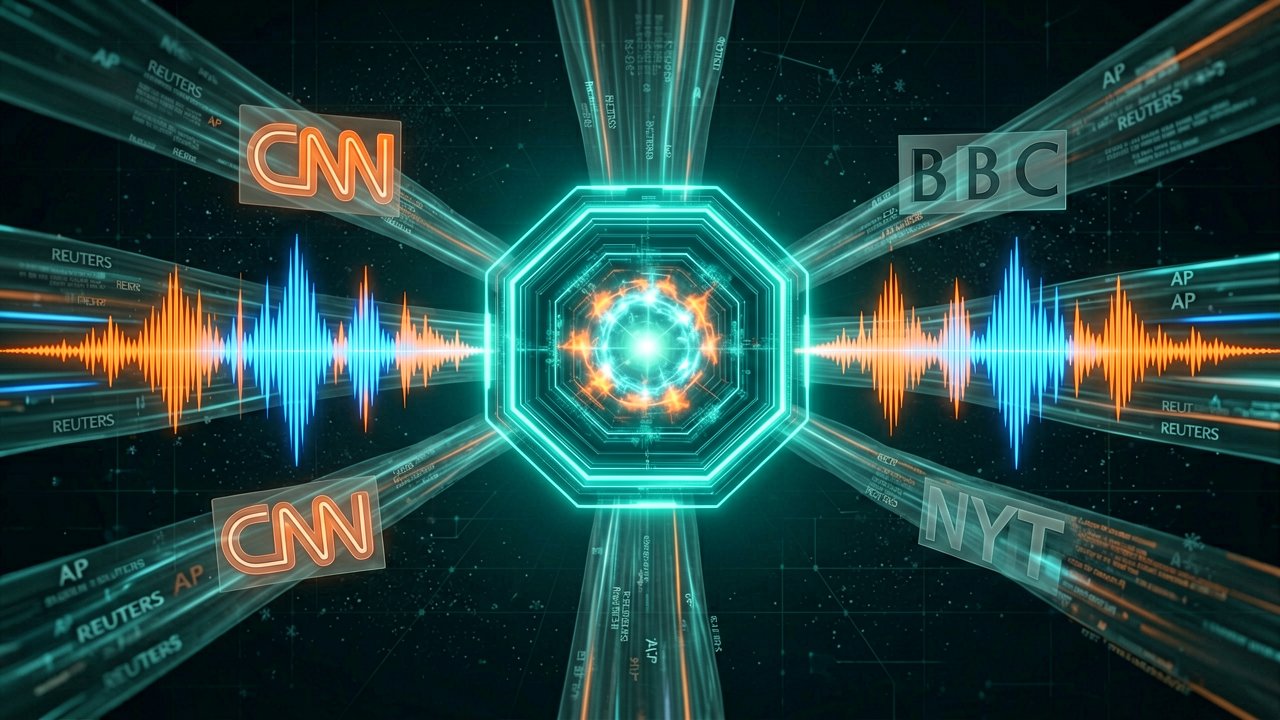
Amazon’s pivot toward making Alexa a bit more talkative has reached a strange, synthetic milestone. The tech giant just rolled out "Alexa Podcasts," a feature for its high-end Alexa+ assistant that lets users conjure up entirely AI-generated audio episodes on demand. Whether you’re curious about the Roman Empire or need a crash course on sourdough baking, you simply ask, and a pair of synthetic "co-hosts" will start yapping away in your kitchen or car within minutes. It’s an ambitious play to turn the smart speaker from a simple task-doer into a personalized media house that never runs out of things to say.
What’s particularly interesting here isn’t just the technology—Google’s NotebookLM has been doing the "AI podcast" thing for a bit—but the sheer scale of the source material. Amazon isn't just letting the AI hallucinate freely; it's feeding the machine data from over 200 news partners, including heavyweights like the Associated Press, Reuters, and The Washington Post. This move seems specifically designed to dodge the "AI slop" label that critics often hurl at generative content. By tethering its synthetic voices to established newsrooms, Amazon is trying to build a bridge between the convenience of automation and the reliability of traditional journalism.
The Customization Factor
Unlike a standard podcast where you’re stuck with whatever the creator recorded, Alexa’s version is surprisingly malleable. Before the audio actually generates, the assistant gives you a verbal overview of the planned script. If you want it shorter, more technical, or focused on a specific niche detail, you can just tell Alexa to pivot. This level of granular control is effectively a middle ground between reading a Wikipedia page and listening to a radio show. It’s currently available to Alexa+ subscribers in the U.S., bundled for Prime members or available as a standalone monthly subscription for everyone else.
Disruption or Just Background Noise?
There’s an obvious tension here for human creators. While these AI episodes are great for quick utility—think personalized travel briefings or career deep dives during a commute—they lack the soul and lived experience that makes the best podcasts worth a weekly listen. Amazon is betting that for a huge chunk of "informational" listening, we won't mind the lack of a pulse as long as the facts are straight and the delivery is smooth. It’s a bold gamble on the future of the "infinite feed," where the barrier to entry for content isn't a studio or a script, but just a voice command.

Inside the Machine: The Nuances of the Synthetic Studio
The Real Cost of Convenience: What most early reports miss is the underlying architecture shift that makes these "instant" podcasts possible. Amazon isn't just running a basic text-to-speech script; they are utilizing a low-latency version of their proprietary large language models specifically tuned for conversational flow. This means the AI isn't just reading a script—it's simulating the "ums," "ahs," and rhythmic pauses that define human rapport. For the seasoned tech reporter, this signals a major investment in emotive compute, moving away from the robotic monotone that has defined the smart speaker era since 2014.
Stakeholders within the podcasting industry are watching this rollout with a mix of fascination and dread. While Spotify and Apple have focused on being the best "pipes" for human-made content, Amazon is now competing as a creator itself. This creates a vertical monopoly where the platform owner also controls the "talent." Industry insiders suggest this could devalue the mid-tier "explainer" podcast market, where creators once spent hours researching and recording topics that an Alexa+ algorithm can now synthesize in roughly thirty seconds. The concern isn't just about jobs, but about the homogenization of information.
From a historical perspective, this move follows the trajectory of Amazon’s "Audible" evolution. The company has spent decades understanding how people consume spoken-word content, slowly moving from physical CDs to digital downloads, then to original programming, and now to generative audio. By leveraging the trust built through the Audible brand, Amazon is betting that listeners are already primed to accept non-human voices as long as the production value feels premium. This isn't a pivot as much as it is the logical conclusion of their long-term audio strategy.
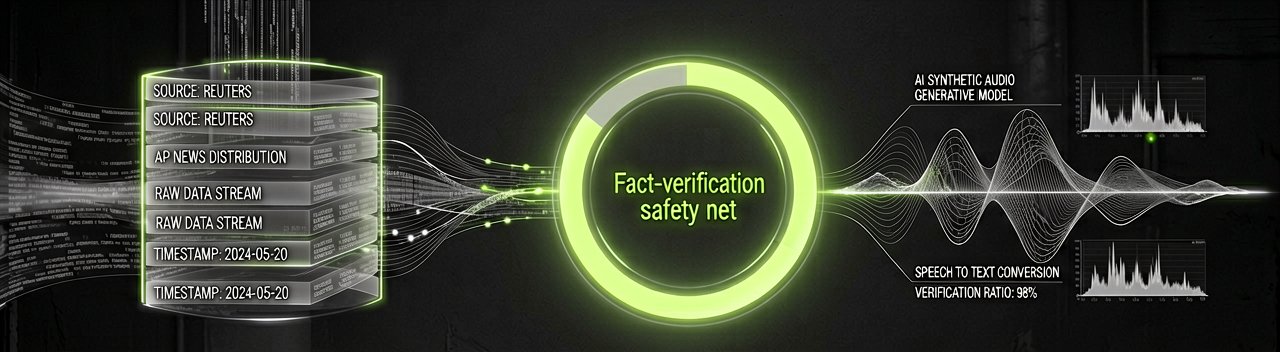
There is also the technical hurdle of "hallucination" in a medium where listeners are often multitasking and less likely to fact-check. To combat this, Amazon has reportedly implemented a secondary "fact-verification" layer that cross-references the generated script against the licensed news data from the Reuters and AP feeds before the audio starts. This double-check system is a critical safety net, as the reputational damage of an AI assistant confidently stating falsehoods through a high-fidelity voice would be catastrophic for the Alexa+ brand.
The monetization angle also deserves a closer look. By locking this feature behind a subscription wall, Amazon is testing the price elasticity of its most loyal users. They aren't just selling a smart speaker anymore; they are selling a personalized, 24/7 newsroom. This subscription model provides a steady revenue stream that offsets the massive GPU costs required to generate high-quality audio on the fly. It effectively turns every Echo device into a recurring revenue generator rather than a one-time hardware sale.
Ultimately, this launch represents a fundamental change in how we interact with the web. We are moving from "pulling" information via search queries to having information "composed" for us. While the tech is impressive, it places a massive amount of editorial power in the hands of a few engineers and their training data. As the novelty wears off, the focus will inevitably shift from how impressive the synthetic voices sound to how much we can actually trust the curated reality they are presenting in our living rooms.
The Illusion of Infinite Knowledge
Reading Between the Lines: The tech industry’s obsession with "frictionless" content often masks a deeper erosion of critical thinking. While Amazon pitches Alexa Podcasts as a breakthrough in accessibility, it simultaneously creates a feedback loop where the user is no longer an explorer of information, but a passive recipient of a pre-digested narrative. The danger isn't just that the AI might get a date wrong; it’s that the very act of "summarizing" the world into a chummy, ten-minute audio clip strips away the nuance and conflicting perspectives that make journalism vital.
There is a glaring contradiction in Amazon’s reliance on traditional newsrooms to prop up its synthetic hosts. By feeding the works of the Associated Press and Reuters into an AI that generates "free" content for subscribers, Amazon is effectively cannibalizing the very institutions it claims to support. If a user can get a perfectly curated news briefing from their Echo, the incentive to click through to a publisher's site or support a local journalist vanishes. It is a parasitic relationship dressed up as a technological partnership, one that may eventually starve the source of the very data it needs to function.
Furthermore, the push for "personalized" audio risks creating the ultimate echo chamber. In a traditional podcast or radio show, you are often exposed to the host’s specific worldview or unexpected tangents that challenge your own. With Alexa, you are the producer. By allowing users to dictate the focus and tone of the episode, Amazon is enabling a world where we only hear what we already want to believe, delivered in a voice designed to sound exactly like a friend. This isn't just a feature; it’s a sophisticated tool for self-reinforcement.
Projecting forward, the long-term viability of this model remains suspect. The energy costs of running generative AI at scale are notorious, and as the novelty of "AI banter" fades, users may find that they miss the actual human connection that defines the medium. A machine can mimic the cadence of a joke or the gravity of a news report, but it cannot share a genuine moment of surprise or a lived experience. Amazon is betting that we won't notice the difference, or worse, that we simply won't care as long as the content is convenient.
There’s also the question of "audio fatigue." We are already drowning in a sea of content, and the solution being offered is a machine that can create even more of it, faster than we could ever consume it. This "quantity over quality" approach treats information as a utility—like water or electricity—rather than a craft. When everything is a podcast, nothing is a podcast, and the value of a well-told story risks being buried under a mountain of algorithmically generated filler.
In the end, we’ve finally achieved the ultimate tech dream: a world where you never have to be alone with your own thoughts, provided you’re willing to pay $10 a month to have two robots explain the fall of Rome while you’re trying to remember where you put the car keys.
Artūras Malašauskas is an AI Systems Integrator with 20+ years of production-grade web engineering experience. He has designed, shipped, and scaled enterprise Python/PHP systems for logistics, SaaS, and public-sector clients. For the past year, he has focused exclusively on AI integrations: deploying open-source LLMs, building generative media pipelines (image, audio, video), and engineering multi-agent workflows for real production environments. His standard: reproducibility, security, cost-efficient inference—no vaporware. He documents and evaluates emerging AI tooling, separating verified capabilities from marketing noise. Technical editor at: muza-ai.eu, ai-verslas.lt, ai-naujinos.lt Connect on LinkedIn
Comments