Enabot Rolls Out EBO Mini and Mini Sport: The Next Generation of Rolling Home Guardians
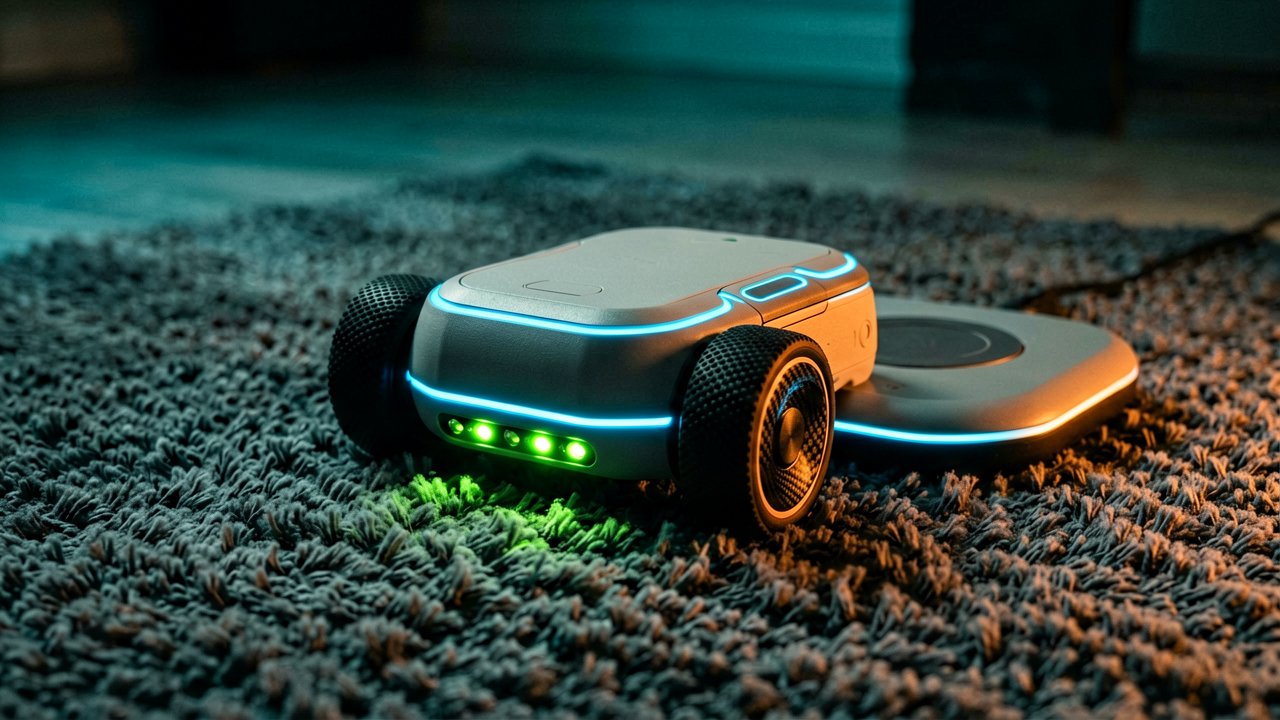
Enabot has officially pulled the curtain back on its latest compact companions, the EBO Mini and EBO Mini Sport. Positioned as the "little siblings" to the more robust EBO X, these palm-sized rolling droids aim to bridge the gap between static home security and interactive family companionship. While their predecessors carved out a niche as high-tech pet toys, the new Mini series shifts the focus toward comprehensive home awareness, offering remote family interaction and smart mobility in a form factor that won't dominate your living room floor.
The hardware lineup offers a clear tiered approach for curious consumers. The base EBO Mini provides the core experience—2K QHD resolution, two-way audio, and infrared night vision—packaged in the brand's signature self-righting, "tumble-friendly" design. For those looking for a bit more "brain" in their bot, the Mini Sport steps up with a whisper-quiet brushless motor and advanced AI recognition capable of distinguishing between humans and pets. These aren't just roaming cameras; they're designed to be autonomous patrol units that can return to their magnetic charging docks when the juice runs low, ensuring they're ready for the next scheduled cruise.
Early adopters can currently snag these bots at introductory rates on the Enabot official site, with the Mini starting at $169.99 and the Sport variant at $209.99. As the consumer robotics market shifts from novelty toys to functional household tools, Enabot’s move to refine their smaller models suggests they’re betting big on the idea that "family bots" don’t need to be humanoid or massive—they just need to be mobile, reliable, and maybe a little bit cute.
What Most Reports Miss: The Evolution of the "Roly-Poly" Niche
Behind the Scenes: While headlines often focus on the flashy AI specs or the 2K camera resolution, the real story here is how Enabot is doubling down on a specific engineering quirk—the self-righting tumbler design. In the early days of consumer robotics, mobile cameras frequently became expensive paperweights the moment they encountered a stray sock or a curious golden retriever’s paw. By sticking with the rounded, low-center-of-gravity chassis seen in their previous models like the EBO Air, Enabot is addressing the single biggest pain point in home robotics: reliability in "cluttered" environments.

Seasoned tech watchers will notice that the Mini Sport’s transition to a brushless motor isn't just about stealth; it's about longevity. Most entry-level bots use brushed motors that eventually wear out or produce a high-pitched whine that sends cats into a frenzy. The Sport's quieter, more efficient drive system reflects a growing industry trend toward hardware that feels less like a toy and more like an appliance. It’s a subtle nod to the fact that for a robot to truly feel like a "family member," it needs to be seen and not heard—unless, of course, you're using the two-way audio to tell your dog to get off the sofa.
Historically, Enabot has walked a fine line between "pet tech" and "home security." With the Mini family, they are clearly pivoting toward the latter without losing the playfulness. The addition of starlight night vision and 24-hour fixed-point recording (when docked) puts these little rollers in direct competition with fixed cameras from brands like Ring or Arlo. However, unlike a wall-mounted camera, the EBO Mini can move to where the action is, solving the "blind spot" problem that has plagued stationary security systems for years.
There’s also a clear demographic play happening here. By marketing these as "FamilyBots" rather than just pet cameras, Enabot is eyeing the growing elder care market. The "one-touch call" feature and the ability for multiple users to log in simultaneously suggest these bots are intended to be a lifeline for families checking in on aging parents who might not want a stationary camera "watching" them all day but appreciate a friendly-looking bot that rolls by for a chat.
Privacy, however, remains the elephant in the room for any roaming camera. Enabot has addressed this by ensuring all local recording happens on an encrypted microSD card rather than solely in the cloud. It’s a necessary move to win over skeptical consumers who are increasingly wary of "eyes" that can follow them from room to room. As these bots become more autonomous, the success of the Mini series will likely depend as much on the robustness of their privacy safeguards as it does on their ability to dodge the living room rug.

Looking at the broader landscape, the EBO Mini arrives at a time when the household robot market is projected to explode into a multi-billion dollar industry by the end of the decade. By offering a refined, affordable entry point, Enabot is positioning itself as a leader in the "accessible robotics" space. They aren't trying to build a robot that can do your laundry—not yet, anyway—but they are proving that a rolling, glowing eye on wheels can provide a surprising amount of peace of mind for the average modern household.
Enabot has officially pulled the curtain back on its latest compact companions, the EBO Mini and EBO Mini Sport. Positioned as the "little siblings" to the more robust EBO X, these palm-sized rolling droids aim to bridge the gap between static home security and interactive family companionship. While their predecessors carved out a niche as high-tech pet toys, the new Mini series shifts the focus toward comprehensive home awareness, offering remote family interaction and smart mobility in a form factor that won't dominate your living room floor.
The hardware lineup offers a clear tiered approach for curious consumers. The base EBO Mini provides the core experience—2K QHD resolution, two-way audio, and infrared night vision—packaged in the brand's signature self-righting, "tumble-friendly" design. For those looking for a bit more "brain" in their bot, the Mini Sport steps up with a whisper-quiet brushless motor and advanced AI recognition capable of distinguishing between humans and pets. These aren't just roaming cameras; they're designed to be autonomous patrol units that can return to their magnetic charging docks when the juice runs low, ensuring they're ready for the next scheduled cruise.
Early adopters can currently snag these bots at introductory rates on the Enabot official site, with the Mini starting at $169.99 and the Sport variant at $209.99. As the consumer robotics market shifts from novelty toys to functional household tools, Enabot’s move to refine their smaller models suggests they’re betting big on the idea that "family bots" don’t need to be humanoid or massive—they just need to be mobile, reliable, and maybe a little bit cute.
The Real-World Friction of Mobile Monitoring
Reading Between the Lines: The promise of a roaming security guard in a chassis the size of a grapefruit is undeniably attractive, but it ignores the fundamental chaos of the average family home. While Enabot’s "tumble-friendly" design is an engineering win, the reality of high-pile carpets, discarded children’s toys, and transition strips between rooms remains the natural enemy of small-wheeled robotics. There is an inherent contradiction in marketing a "patrol" bot that may still find itself defeated by a stray power cable or a particularly fluffy bath mat, necessitating a human intervention that defeats the purpose of remote monitoring.
Furthermore, the pivot from "pet toy" to "security device" introduces a higher bar for reliability that the Mini series must meet to be taken seriously. A pet toy failing to connect is a minor annoyance; a security device that loses its Wi-Fi handshake while you are halfway across the globe is a critical failure. By packing 2K video and AI processing into such a small, battery-dependent frame, Enabot is pushing the thermal and power limits of compact hardware. The skepticism here lies in whether the Mini Sport can actually sustain its AI "human detection" during a full patrol without draining its battery before it can crawl back to its dock.
The long-term implication of these "FamilyBots" is a subtle shift in the domestic privacy landscape. While static cameras are predictable, a mobile camera that can follow a family member from the kitchen to the bedroom changes the social contract of the home. Even with local SD card encryption, the psychological presence of a rolling eye creates a surveillance "creep" that most manufacturers haven't fully addressed. We are moving toward a world where home privacy is no longer defined by walls, but by the line of sight of a robot that may or may not be under our direct control at any given moment.
It’s a bold new era for home security when the most effective intruder deterrent isn't a loud siren, but the high-probability risk of a burglar tripping over a 4-inch robot in the dark and falling headlong into the coat rack.
Enabot has officially pulled the curtain back on its latest compact companions, the EBO Mini and EBO Mini Sport. Positioned as the "little siblings" to the more robust EBO X, these palm-sized rolling droids aim to bridge the gap between static home security and interactive family companionship. While their predecessors carved out a niche as high-tech pet toys, the new Mini series shifts the focus toward comprehensive home awareness, offering remote family interaction and smart mobility in a form factor that won't dominate your living room floor.
The hardware lineup offers a clear tiered approach for curious consumers. The base EBO Mini provides the core experience—2K QHD resolution, two-way audio, and infrared night vision—packaged in the brand's signature self-righting, "tumble-friendly" design. For those looking for a bit more "brain" in their bot, the Mini Sport steps up with a whisper-quiet brushless motor and advanced AI recognition capable of distinguishing between humans and pets. These aren't just roaming cameras; they're designed to be autonomous patrol units that can return to their magnetic charging docks when the juice runs low, ensuring they're ready for the next scheduled cruise.
Early adopters can currently snag these bots at introductory rates on the Enabot official site, with the Mini starting at $169.99 and the Sport variant at $209.99. As the consumer robotics market shifts from novelty toys to functional household tools, Enabot’s move to refine their smaller models suggests they’re betting big on the idea that "family bots" don’t need to be humanoid or massive—they just need to be mobile, reliable, and maybe a little bit cute.
What Most Reports Miss: The Evolution of the "Roly-Poly" Niche
Behind the Scenes: While headlines often focus on the flashy AI specs or the 2K camera resolution, the real story here is how Enabot is doubling down on a specific engineering quirk—the self-righting tumbler design. In the early days of consumer robotics, mobile cameras frequently became expensive paperweights the moment they encountered a stray sock or a curious golden retriever’s paw. By sticking with the rounded, low-center-of-gravity chassis seen in their previous models like the EBO Air, Enabot is addressing the single biggest pain point in home robotics: reliability in "cluttered" environments.
Seasoned tech watchers will notice that the Mini Sport’s transition to a brushless motor isn't just about stealth; it's about longevity. Most entry-level bots use brushed motors that eventually wear out or produce a high-pitched whine that sends cats into a frenzy. The Sport's quieter, more efficient drive system reflects a growing industry trend toward hardware that feels less like a toy and more like an appliance. It’s a subtle nod to the fact that for a robot to truly feel like a "family member," it needs to be seen and not heard—unless, of course, you're using the two-way audio to tell your dog to get off the sofa.
Historically, Enabot has walked a fine line between "pet tech" and "home security." With the Mini family, they are clearly pivoting toward the latter without losing the playfulness. The addition of starlight night vision and 24-hour fixed-point recording (when docked) puts these little rollers in direct competition with fixed cameras from brands like Ring or Arlo. However, unlike a wall-mounted camera, the EBO Mini can move to where the action is, solving the "blind spot" problem that has plagued stationary security systems for years.
There’s also a clear demographic play happening here. By marketing these as "FamilyBots" rather than just pet cameras, Enabot is eyeing the growing elder care market. The "one-touch call" feature and the ability for multiple users to log in simultaneously suggest these bots are intended to be a lifeline for families checking in on aging parents who might not want a stationary camera "watching" them all day but appreciate a friendly-looking bot that rolls by for a chat.
Privacy, however, remains the elephant in the room for any roaming camera. Enabot has addressed this by ensuring all local recording happens on an encrypted microSD card rather than solely in the cloud. It’s a necessary move to win over skeptical consumers who are increasingly wary of "eyes" that can follow them from room to room. As these bots become more autonomous, the success of the Mini series will likely depend as much on the robustness of their privacy safeguards as it does on their ability to dodge the living room rug.
Looking at the broader landscape, the EBO Mini arrives at a time when the household robot market is projected to explode into a multi-billion dollar industry by the end of the decade. By offering a refined, affordable entry point, Enabot is positioning itself as a leader in the "accessible robotics" space. They aren't trying to build a robot that can do your laundry—not yet, anyway—but they are proving that a rolling, glowing eye on wheels can provide a surprising amount of peace of mind for the average modern household.
The Real-World Friction of Mobile Monitoring
Reading Between the Lines: The promise of a roaming security guard in a chassis the size of a grapefruit is undeniably attractive, but it ignores the fundamental chaos of the average family home. While Enabot’s "tumble-friendly" design is an engineering win, the reality of high-pile carpets, discarded children’s toys, and transition strips between rooms remains the natural enemy of small-wheeled robotics. There is an inherent contradiction in marketing a "patrol" bot that may still find itself defeated by a stray power cable or a particularly fluffy bath mat, necessitating a human intervention that defeats the purpose of remote monitoring.
Furthermore, the pivot from "pet toy" to "security device" introduces a higher bar for reliability that the Mini series must meet to be taken seriously. A pet toy failing to connect is a minor annoyance; a security device that loses its Wi-Fi handshake while you are halfway across the globe is a critical failure. By packing 2K video and AI processing into such a small, battery-dependent frame, Enabot is pushing the thermal and power limits of compact hardware. The skepticism here lies in whether the Mini Sport can actually sustain its AI "human detection" during a full patrol without draining its battery before it can crawl back to its dock.
The long-term implication of these "FamilyBots" is a subtle shift in the domestic privacy landscape. While static cameras are predictable, a mobile camera that can follow a family member from the kitchen to the bedroom changes the social contract of the home. Even with local SD card encryption, the psychological presence of a rolling eye creates a surveillance "creep" that most manufacturers haven't fully addressed. We are moving toward a world where home privacy is no longer defined by walls, but by the line of sight of a robot that may or may not be under our direct control at any given moment.
It’s a bold new era for home security when the most effective intruder deterrent isn't a loud siren, but the high-probability risk of a burglar tripping over a 4-inch robot in the dark and falling headlong into the coat rack.
Artūras Malašauskas is an AI Systems Integrator with 20+ years of production-grade web engineering experience. He has designed, shipped, and scaled enterprise Python/PHP systems for logistics, SaaS, and public-sector clients. For the past year, he has focused exclusively on AI integrations: deploying open-source LLMs, building generative media pipelines (image, audio, video), and engineering multi-agent workflows for real production environments. His standard: reproducibility, security, cost-efficient inference—no vaporware. He documents and evaluates emerging AI tooling, separating verified capabilities from marketing noise. Technical editor at: muza-ai.eu, ai-verslas.lt, ai-naujinos.lt Connect on LinkedIn
Comments