Silicon Shadows and AI Agents: The Digital Landscape Shifts at Google I/O 2026
If you thought we’d reached peak AI fatigue, Google’s latest showcase at Shoreline Amphitheater just threw a bucket of cold, agentic water on that theory. It’s May 19, 2026, and the tech giant has officially pivoted from "chatbots that answer questions" to "agents that do your chores." The star of the show isn't just a smarter Gemini; it’s the unveiling of proactive, autonomous systems—rumored to be codenamed "Remy"—designed to handle your inbox and calendar without you ever lifting a finger. While the convenience is undeniable, the sheer scale of data access required to make these agents functional is enough to make any privacy advocate’s head spin.
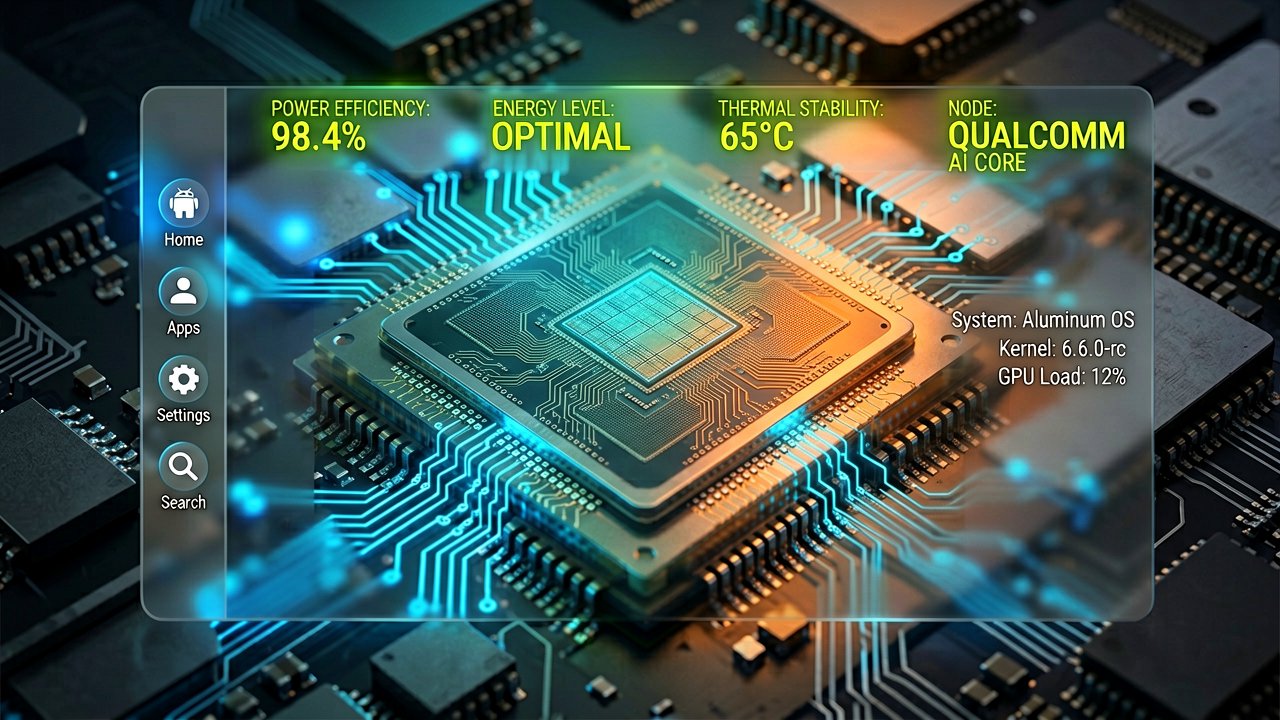
Beyond the software, Google is finally putting its cards on the table regarding the "Googlebook" era. We’re seeing the official rollout of Aluminum OS, a unified stack that effectively swallows ChromeOS into a desktop-hardened version of Android. According to reports from PCMag, this move is intended to create a "Gemini-first" hardware ecosystem, optimized by new partnerships with Qualcomm to ensure these devices aren't just thin clients, but local AI powerhouses. It’s a clear shot across the bow of both Windows and macOS, aiming for a future where your OS doesn't just run apps, but anticipates your next workflow.
The Wearable Race and Apple’s Quiet Counter-Move
While Mountain View is busy merging operating systems, the battle for our faces is heating up. Google and its partners, including Samsung and Xreal, are teasing the first consumer-ready Android XR glasses, aiming to beat Apple’s rumored Vision Pro "Air" to the punch. Not to be outdone on its own turf, Apple chose this same week to drop a massive suite of AI-driven accessibility features. As detailed by Apple Newsroom, the company is integrating "Apple Intelligence" directly into VoiceOver and Magnifier, using on-device models to describe the world in real-time for the visually impaired. It’s a classic Apple move: while Google talks about the broad future of computing, Apple is shipping practical, deeply integrated utility that reinforces its "human-centric" branding.
The Undercurrents: Foundries and Fragile Infrastructure
Away from the glitzy keynotes, the silicon foundations of this AI revolution are showing some cracks. Intel is currently touting a "major breakthrough" with its 14A manufacturing process, claiming it can finally go toe-to-toe with TSMC. Intel CEO Lip-Bu Tan hasn't been shy about the company's ambition to claw back advanced chip production from Asia, as noted by the Times of India. However, this optimism is tempered by the reality of systemic fragility; new research from Cisco and Splunk suggests that global downtime costs have surged to $600 billion annually. It’s a sobering reminder that as we build increasingly complex AI agents and unified operating systems, the digital scaffolding we’re leaning on is under more strain than ever before.

The Hidden Cost of Autonomy: A Deep Dive
Behind the Silicon Curtain: The shift toward "agentic" AI represents a fundamental gamble on the part of Google and its contemporaries, moving away from the predictable world of query-and-response into the murky waters of probabilistic execution. While the stage demos of "Remy" show a seamless transition from a user's intent to a finished task, the reality for developers is far messier. The industry is currently grappling with the "hallucination of action," where an agent doesn't just get a fact wrong, but mistakenly executes a non-reversible command, such as deleting a cloud directory or sending a premature wire transfer. For the seasoned tech observer, this is the most significant architectural hurdle since the dawn of the mobile internet, requiring a total rethink of safety sandboxes.
From a stakeholder perspective, the tension between Google and its hardware partners has reached a boiling point. The introduction of Aluminum OS is seen by many as a move to reclaim the "vertical integration" advantage that Apple has wielded like a club for decades. By merging the desktop-class capabilities of ChromeOS with the massive app ecosystem of Android, Google is effectively telling OEMs like Dell and HP that the days of skinning a generic OS are over. The power dynamic is shifting; Google now demands tighter control over NPU (Neural Processing Unit) specifications to ensure their AI agents run locally, a demand that has left some manufacturers scrambling to justify their existing hardware pipelines.
Historical context suggests this isn't Google’s first attempt at a unified front—recall the short-lived Andromeda project or the initial "laptop-mode" for tablets. However, the 2026 landscape is different because of the raw compute power now available at the edge. The collaboration with Qualcomm isn't just about speed; it’s about power efficiency. If Google can prove that a Gemini-powered laptop can outlast a MacBook Air while handling complex background automation, they might finally break the "Chromebooks are for classrooms" stigma that has dogged the platform since its inception in 2011.
On the other side of the fence, Apple’s recent accessibility-focused AI drops serve as a masterclass in risk mitigation. While Google is building a "God-mode" assistant that touches everything, Apple is applying the same generative tech to discrete, highly defensible use cases. By focusing on VoiceOver and real-time environment description, Apple avoids the massive liability of autonomous agents while training its models on high-quality, real-world visual data. It is a slow-burn strategy that prioritizes user trust over the shock-and-awe of full automation, betting that users would rather have a tool that helps them see the world than a ghost that manages their life.

The geopolitical undercurrents of the Intel 14A announcement further complicate this picture. As Intel pushes for domestic manufacturing dominance, the "AI PC" becomes more than a consumer trend; it becomes a matter of national security and supply chain resilience. If the $600 billion annual downtime reported by Cisco is to be mitigated, the industry must move away from its reliance on fragile, centralized cloud clusters. Localized, agentic operating systems like Aluminum OS are the proposed solution, but they require a level of hardware reliability that Intel has struggled to deliver in recent cycles. The success of this digital shift depends entirely on whether the silicon can finally match the ambition of the software.
The Paradox of Proactive Computing
Reading Between the Lines: The tech industry’s pivot toward "agentic" autonomy is less a natural evolution of computing and more an act of desperate redirection. We are being sold a dream of frictionless existence, yet the fine print reveals a parasitic relationship between convenience and transparency. Google’s "Remy" and the Aluminum OS architecture rely on a level of ambient surveillance that would have been unthinkable five years ago. To "anticipate" a workflow, the system must ingest everything from your tone in a Slack message to the latency of your mouse clicks. We are essentially trading the last vestiges of digital privacy for the hope that an AI might save us twenty minutes of scheduling labor per week.
There is also a glaring contradiction in the narrative of local AI versus global reliability. Intel and Qualcomm are touting on-device processing as a panacea for the $600 billion downtime crisis, yet the very complexity of these agentic systems introduces new, unpredictable failure points. A local model that hallucinates an "optimization" of your local file system is far more dangerous than a cloud service that simply goes offline. The industry is effectively moving from a "fail-stop" model, where things just stop working, to a "fail-active" model, where a system continues to operate incorrectly under the guise of autonomy. This shift places an immense, unacknowledged burden on the end-user to audit the "help" they are receiving.
Furthermore, the "unified stack" strategy heralded by Aluminum OS suggests a return to the walled gardens of the late nineties, albeit with better aesthetics. By tightly coupling the OS to specific NPU requirements and proprietary AI agents, Google is narrowing the hardware playing field. This isn't just about performance; it’s about making the barrier to entry for third-party software developers so high that the only viable "solutions" are those born within the Google ecosystem. It creates a monoculture where innovation is dictated by a single roadmap, stifling the very variety that once made the Android ecosystem a vibrant alternative to Apple’s rigidity.
The skepticism deepens when we look at the economic viability of these agents. The energy costs of maintaining a "proactive" AI that is constantly scanning, indexing, and predicting are astronomical. While Apple’s targeted approach with accessibility features seems modest, it is arguably more sustainable than Google’s "everything, everywhere, all at once" philosophy. If the silicon foundries cannot keep up with the exponential demand for power-efficient AI chips, we may find ourselves in a position where only the wealthiest tier of users can afford a computer that actually "thinks" for them, creating a new digital divide based on agentic capability.
Ultimately, the industry is betting that users are so overwhelmed by the modern digital deluge that they will abdicate their agency to the first algorithm that promises relief. But history shows that every "time-saving" technology in the office environment has merely increased the baseline expectation for productivity. If an AI agent manages your inbox, your boss will simply expect you to handle five times the volume of correspondence. We aren't being liberated from our chores; we are being upgraded into faster processors for the corporate machine, all while being told it’s a lifestyle upgrade.
We’ve spent forty years teaching humans how to talk to computers, only to decide the solution was to build computers that talk to themselves behind our backs and hope they don't accidentally fire us in the process.
Artūras Malašauskas is an AI Systems Integrator with 20+ years of production-grade web engineering experience. He has designed, shipped, and scaled enterprise Python/PHP systems for logistics, SaaS, and public-sector clients. For the past year, he has focused exclusively on AI integrations: deploying open-source LLMs, building generative media pipelines (image, audio, video), and engineering multi-agent workflows for real production environments. His standard: reproducibility, security, cost-efficient inference—no vaporware. He documents and evaluates emerging AI tooling, separating verified capabilities from marketing noise. Technical editor at: muza-ai.eu, ai-verslas.lt, ai-naujinos.lt Connect on LinkedIn
Comments