The Data Border: Chris Thomas on Crafting Government-Grade Sovereign AI
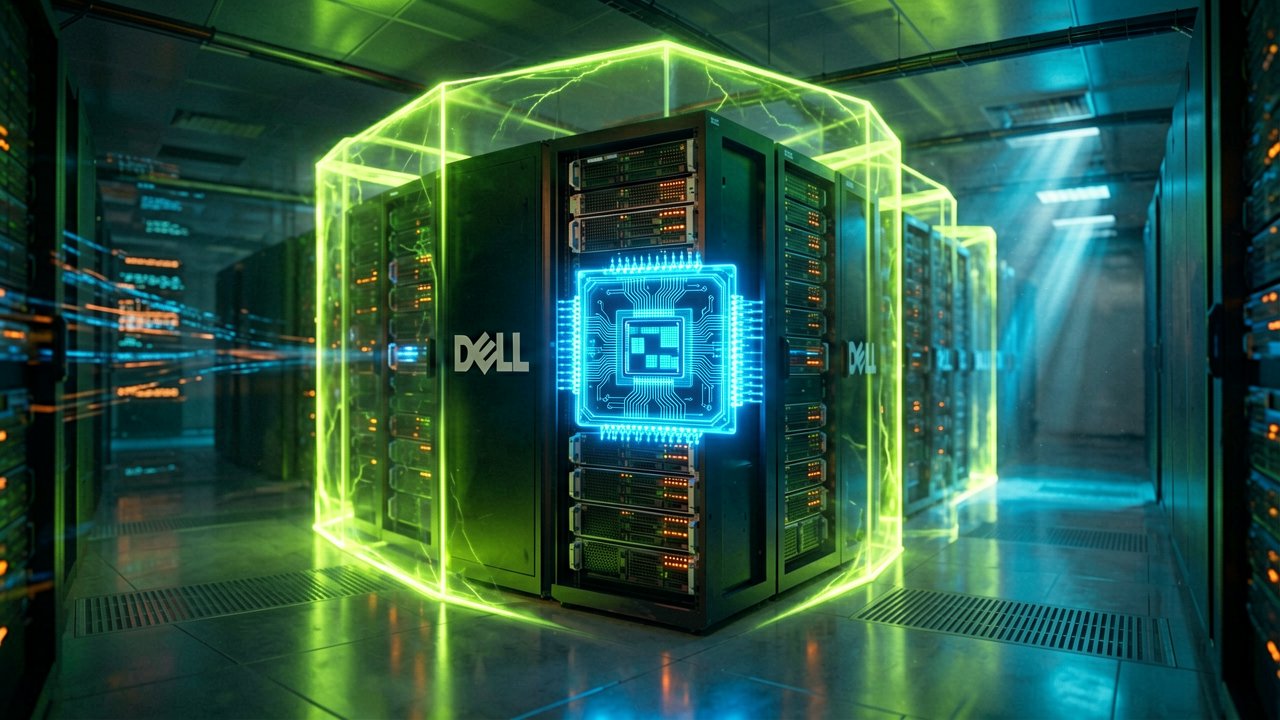
In the high-stakes world of federal technology, "sovereign AI" has rapidly shifted from a buzzword in policy whitepapers to the bedrock of national security. According to Chris Thomas, Technical Director at Dell Technologies, the goal isn't just about localized compute; it’s about ensuring that government missions aren't held hostage by external dependencies or opaque data pipelines. As agencies move past the "science project" phase of artificial intelligence, the focus is squarely on building environments where data residency and operational control are non-negotiable requirements for deployment.
The urgency stems from a simple reality: the government operates in environments—from the tactical edge to high-security enclaves—that don't always have the luxury of a 24/7 connection to a public cloud. Thomas argues that sovereign AI provides the necessary architecture to maintain resiliency, allowing agencies to train and run models on their own terms. By leveraging a "federal enclave" approach that remains physically and logically separate from standard IT infrastructure, organizations can meet the most stringent regulatory hurdles while still tapping into the massive productivity gains promised by generative models.
The Architecture of Independence
What Most Reports Miss: While many industry analysts fixate on the "what" of AI—the latest LLM or the flashiest chatbot—Chris Thomas and the engineering teams at Dell are obsessing over the "where" and "how." In a landscape where data is increasingly viewed as a strategic asset, the traditional model of shipping government data to a third-party cloud for processing is becoming a non-starter. Instead, the strategy has flipped: the compute must move to the data. This shift isn't just a technical preference; it’s a defensive posture designed to mitigate geopolitical risks and supply chain vulnerabilities that could compromise a mission before it even begins.
Thomas emphasizes that true sovereignty requires a multilayered defense, starting at the silicon level. By integrating Zero Trust principles directly into the hardware and application layers, agencies can create a "secure sandbox" for experimentation that mirrors the security profile of their final production environment. This consistency is vital for scaling. Without it, a successful pilot program can easily die in the transition to the field because it lacks the necessary security attestation to handle real-world, classified datasets. It’s this gap between "can it work?" and "is it safe?" that sovereign infrastructure is designed to bridge.

Furthermore, the rise of agentic AI—systems capable of autonomous decision-making—adds a new layer of complexity to the sovereignty debate. When an AI system is authorized to act on behalf of an agency, the auditability of its logic becomes as important as the security of the data it consumes. Thomas highlights that a sovereign stack ensures the government retains full control over the algorithmic lifecycle, preventing "model drift" or unauthorized updates from external providers. This level of oversight is particularly critical for "mission-edge" applications, where low latency and high reliability are the difference between success and catastrophic failure.
Ultimately, Dell’s vision, as articulated by Thomas in insights shared via GovCon Wire, is about choice rather than isolation. Sovereign AI doesn't mean building a digital fortress with no exits; it means having the agency to decide which workloads require a "national cloud" and which can safely reside in a hybrid environment. By partnering with a broad ecosystem of software vendors and leveraging platforms like the Dell AI Factory, the public sector can finally build a digital foundation that is as robust and autonomous as the missions it supports.
Next Steps: Would you like to explore the hardware specifications of Dell’s federal AI enclaves or look into the policy frameworks currently shaping sovereign data laws in the U.S. and Europe?
In the high-stakes world of federal technology, "sovereign AI" has rapidly shifted from a buzzword in policy whitepapers to the bedrock of national security. According to Chris Thomas, Technical Director at Dell Technologies, the goal isn't just about localized compute; it’s about ensuring that government missions aren't held hostage by external dependencies or opaque data pipelines. As agencies move past the "science project" phase of artificial intelligence, the focus is squarely on building environments where data residency and operational control are non-negotiable requirements for deployment.

The urgency stems from a simple reality: the government operates in environments—from the tactical edge to high-security enclaves—that don't always have the luxury of a 24/7 connection to a public cloud. Thomas argues that sovereign AI provides the necessary architecture to maintain resiliency, allowing agencies to train and run models on their own terms. By leveraging a "federal enclave" approach that remains physically and logically separate from standard IT infrastructure, organizations can meet the most stringent regulatory hurdles while still tapping into the massive productivity gains promised by generative models.
The Architecture of Independence
What Most Reports Miss: While many industry analysts fixate on the "what" of AI—the latest LLM or the flashiest chatbot—Chris Thomas and the engineering teams at Dell are obsessing over the "where" and "how." In a landscape where data is increasingly viewed as a strategic asset, the traditional model of shipping government data to a third-party cloud for processing is becoming a non-starter. Instead, the strategy has flipped: the compute must move to the data. This shift isn't just a technical preference; it’s a defensive posture designed to mitigate geopolitical risks and supply chain vulnerabilities that could compromise a mission before it even begins.
Thomas emphasizes that true sovereignty requires a multilayered defense, starting at the silicon level. By integrating Zero Trust principles directly into the hardware and application layers, agencies can create a "secure sandbox" for experimentation that mirrors the security profile of their final production environment. This consistency is vital for scaling. Without it, a successful pilot program can easily die in the transition to the field because it lacks the necessary security attestation to handle real-world, classified datasets. It’s this gap between "can it work?" and "is it safe?" that sovereign infrastructure is designed to bridge.
Furthermore, the rise of agentic AI—systems capable of autonomous decision-making—adds a new layer of complexity to the sovereignty debate. When an AI system is authorized to act on behalf of an agency, the auditability of its logic becomes as important as the security of the data it consumes. Thomas highlights that a sovereign stack ensures the government retains full control over the algorithmic lifecycle, preventing "model drift" or unauthorized updates from external providers. This level of oversight is particularly critical for "mission-edge" applications, where low latency and high reliability are the difference between success and catastrophic failure.
Ultimately, Dell’s vision, as articulated by Thomas in insights shared via GovCon Wire, is about choice rather than isolation. Sovereign AI doesn't mean building a digital fortress with no exits; it means having the agency to decide which workloads require a "national cloud" and which can safely reside in a hybrid environment. By partnering with a broad ecosystem of software vendors and leveraging platforms like the Dell AI Factory, the public sector can finally build a digital foundation that is as robust and autonomous as the missions it supports.
Sovereignty or Solipsism?
Reading Between the Lines: The push for sovereign AI is often framed as a triumphant return to national autonomy, but it risks creating a fragmented landscape of "digital islands" that struggle to talk to one another. While Thomas rightly emphasizes the need for control, there is a lingering tension between the desire for a closed, secure enclave and the inherent nature of AI, which thrives on massive, diverse datasets often found in the global commons. The danger is that in building a fortress around their data, agencies might inadvertently starve their models of the very variety needed to keep them accurate and unbiased.
There is also the matter of the "sovereignty tax." Building and maintaining bespoke, on-premises AI factories is an expensive, talent-heavy endeavor that contradicts a decade of government directives to move toward the cost-efficiency of the public cloud. Skeptics might argue that "sovereignty" is a convenient marketing umbrella for hardware providers to push high-margin server stacks back into government data centers. If the government isn't careful, it could end up owning the infrastructure but lacking the specialized workforce required to tune and iterate the models at the same speed as the commercial sector.
Furthermore, the definition of sovereignty itself remains slippery. Even if the servers are in a government basement and the data never crosses a border, the weights of the models and the compilers used to run them often originate from a handful of global tech giants. True independence is an illusion if the foundational intellectual property remains proprietary and external. For sovereign AI to be more than a defensive crouch, agencies must move toward open-source transparency and standardized interoperability, ensuring that a "sovereign" system doesn't simply mean being locked into a different kind of proprietary cage.
Building a sovereign AI enclave is a bit like home-schooling your genius child: you gain total control over the curriculum and keep out the bad influences, but eventually, you have to pray they actually know how to talk to the rest of the world without breaking everything.
Artūras Malašauskas is an AI Systems Integrator with 20+ years of production-grade web engineering experience. He has designed, shipped, and scaled enterprise Python/PHP systems for logistics, SaaS, and public-sector clients. For the past year, he has focused exclusively on AI integrations: deploying open-source LLMs, building generative media pipelines (image, audio, video), and engineering multi-agent workflows for real production environments. His standard: reproducibility, security, cost-efficient inference—no vaporware. He documents and evaluates emerging AI tooling, separating verified capabilities from marketing noise. Technical editor at: muza-ai.eu, ai-verslas.lt, ai-naujinos.lt Connect on LinkedIn
Comments