Dell’s New PowerRack and Nvidia Updates Aim to Stop the AI Pilot Stall
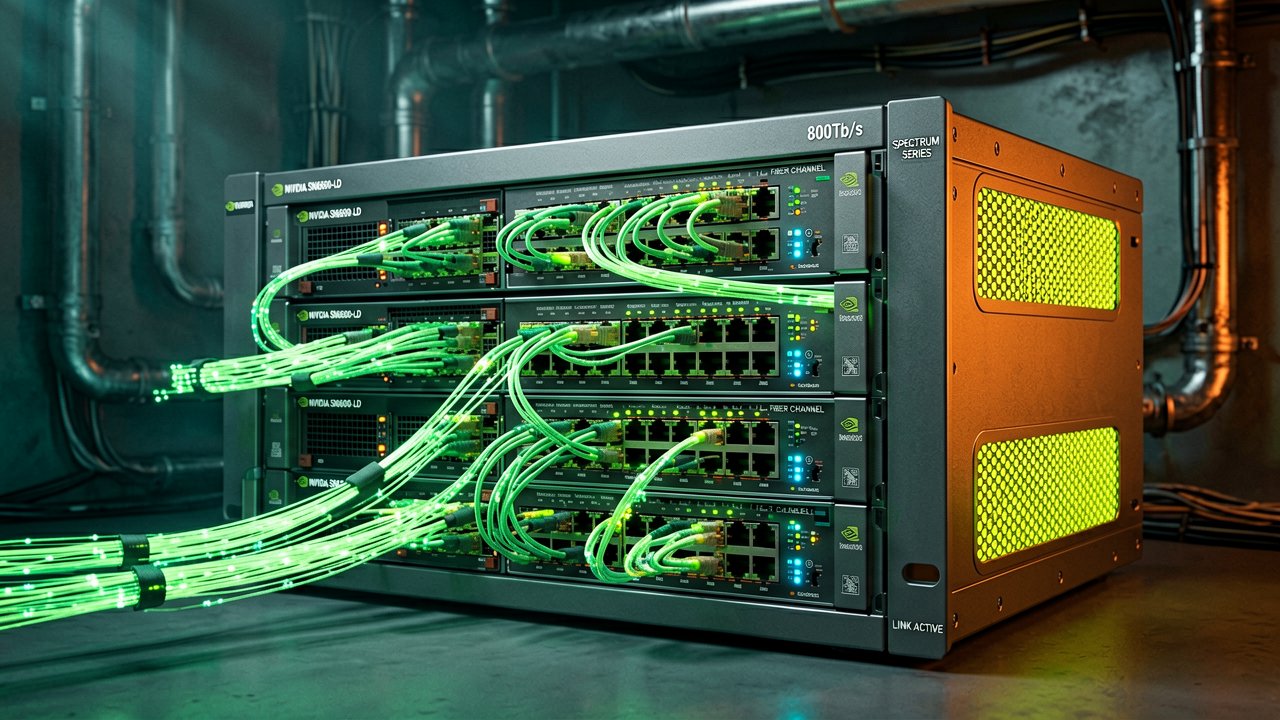
If there's one thing clear from the floor at Dell Technologies World in Las Vegas, it's that the industry is tired of hearing about "potential." Organizations have spent the last two years tinkering with AI models, but moving those experiments into a stable, production-ready environment remains a massive headache. Dell’s answer, unveiled this week, is the PowerRack—a turnkey, rack-scale system that essentially acts as a "data center in a box" for AI. Instead of forcing IT teams to spend weeks piece-mealing compute, storage, and networking components together, Dell is shipping a pre-validated unit that they claim can go from the loading dock to running live workloads in about six-and-a-half hours.
The PowerRack isn't just a physical bundle; it’s a tightly engineered stack designed to handle the brutal thermal and power demands of modern GPUs. According to reports from ITPro, the networking configuration alone boasts a staggering 800 Tb/sec of switching capacity. This is critical because AI models don't just sit on one chip—they need massive, low-latency "east-west" traffic to talk across dozens of nodes. By integrating its SN6600-LD switches (a custom-branded version of Nvidia’s Spectrum hardware), Dell is betting that a unified management layer will solve the complexity that usually kills AI projects before they scale.
Supercharging the Nvidia AI Factory
While the PowerRack provides the heavy lifting on the floor, the real intelligence lives in the software updates to the Dell AI Factory with Nvidia. The headline act here is a pivot toward "Agentic AI." Most current AI tools are reactive—you ask a question, it gives an answer. Agents, however, can actually execute tasks across different enterprise systems. To facilitate this locally, Dell is rolling out "Deskside Agentic AI" solutions. As noted by CRN, these configurations allow developers to run autonomous agents on local Precision workstations using Nvidia NemoClaw software, potentially saving companies up to 87% compared to the spiraling costs of public cloud tokens.
Liquid Cooling and the Rubin Era
We’re also seeing a massive shift in how these racks stay cool. As power draw for a single rack of Nvidia’s latest Rubin GPUs climbs toward 130 kilowatts, traditional air conditioning just doesn't cut it anymore. Dell introduced the PowerCool CDU C7000, a rack-mounted cooling distribution unit capable of handling 220 kilowatts of heat. It's a pragmatic move; Dell knows that if you can't cool the hardware, you can't run the model. By supporting warmer facility water temperatures up to 40°C, this system helps curb the energy costs that have become a major barrier for even the wealthiest enterprises.

The Hidden Engineering Debt of the AI Boom
The Real Bottleneck: While it’s easy to get swept up in the eye-watering teraflops of Nvidia’s latest chips, the conversation inside the data center is shifting from "how fast is the chip" to "how stable is the plumbing." For years, enterprise IT has been built on modularity—the ability to swap a Cisco switch for a Juniper one or mix and match storage vendors. But AI has fundamentally broken that model. The sheer volume of data moving between nodes means that even a minor firmware mismatch between a NIC and a leaf switch can cause a "straggled" packet, which effectively pauses a training run worth thousands of dollars an hour.
Dell’s PowerRack strategy is essentially an admission that the "best-of-breed" DIY approach is currently a liability for most Fortune 500 companies. By locking the hardware into a rigid, pre-validated configuration, Dell is acting as an outsourced systems integrator. This isn't just about convenience; it's about shifting the risk. If a rack fails to hit its performance benchmarks, the customer has one throat to choke. This transition back toward vertical integration mirrors the early days of the mainframe, where performance was so precarious that the vendor had to control every inch of the stack to ensure it didn't collapse under its own weight.
Stakeholders at the C-suite level are increasingly wary of "AI Fatigue," a phenomenon where pilot projects fail to scale because the underlying infrastructure is too brittle. Industry veterans recall the early days of OpenStack or Hadoop, where many companies spent more on the "plumbing" than on the actual data insights. Dell is leveraging this historical anxiety by positioning the AI Factory as a safe harbor. By embedding Nvidia’s software directly into their management consoles, they are removing the manual tuning that previously required a small army of Ph.D. infrastructure engineers—a talent pool that is currently both scarce and expensive.
There is also a significant geopolitical and supply chain layer to this rollout. As lead times for individual components fluctuate, a "turnkey" solution allows Dell to prioritize complete rack shipments over individual part orders. This gives them a tactical advantage in the market. Large enterprises are no longer willing to wait 52 weeks for a specialized switch if they can get a fully populated rack in 12 weeks. The PowerRack represents Dell’s attempt to weaponize its massive supply chain, turning logistical prowess into a competitive feature of the AI hardware itself.
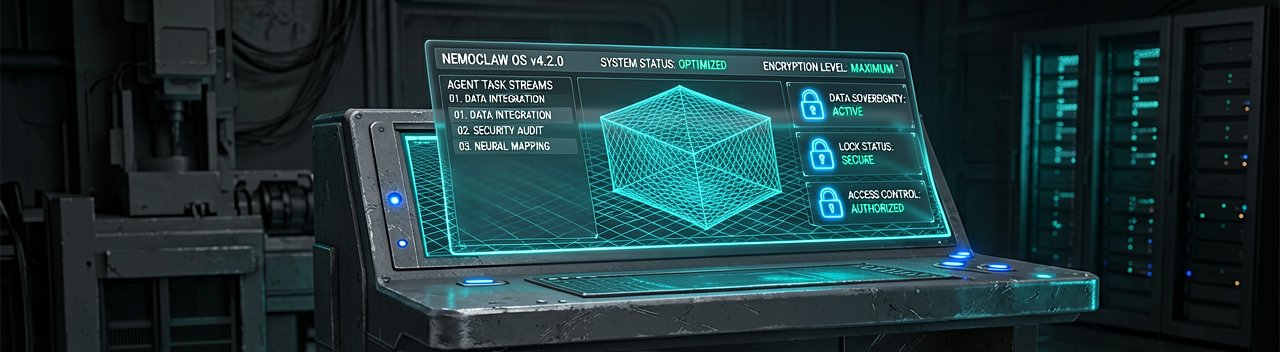
Finally, the push into "Agentic AI" at the edge signals a move away from the massive, centralized LLMs that have dominated the news cycle. The reality is that most businesses don't need a model that knows everything about the world; they need a model that knows their specific ERP system and can process an invoice without human intervention. By providing the hardware to run these agents locally on Precision workstations, Dell is addressing the growing concern over data sovereignty. Keeping the "brains" of the operation on-premises avoids the legal and security minefields of sending proprietary corporate logic into a third-party cloud.
Ultimately, the success of these systems will be measured not by peak performance numbers, but by their uptime and thermal efficiency. As power grids in data center hubs like Northern Virginia and Dublin reach their limits, the ability to pack more compute into a smaller, more efficiently cooled footprint is the only way forward. Dell’s focus on the "CDU" and liquid cooling isn't an elective upgrade—it’s the new baseline for survival in a world where the power bill is just as important as the model's accuracy.
The Paradox of Turnkey Autonomy
Reading Between the Lines: There is a glaring contradiction in the marketing of "turnkey" AI infrastructure. Dell and Nvidia are pitching a future of simplified, democratized AI, yet the sheer physical requirements of these systems—consuming enough power to fuel a small neighborhood—suggest that AI is becoming more exclusive, not less. While the PowerRack is designed to be "plug-and-play," it requires a facility capable of supporting liquid cooling and extreme power densities that the average corporate data center simply wasn't built to handle. We are seeing a shift where the barrier to entry isn't just the cost of the silicon, but the architectural debt of the building it sits in.
The move toward "Agentic AI" also introduces a significant management irony. The industry is effectively selling automation to manage the complexity of previous automation. Dell’s emphasis on autonomous agents suggests that even with a pre-validated stack, the human overhead of monitoring these models is becoming unsustainable. By pushing "Deskside Agentic AI," Dell is essentially admitting that the centralized cloud model is hitting a wall of latency and cost. However, scattering high-performance AI workstations across an organization creates a "shadow AI" risk that could mirror the security nightmares of the early BYOD era.
Furthermore, the reliance on a single-vendor "Factory" model raises the specter of the ultimate lock-in. When the compute, storage, networking, and software orchestration are all part of a singular, validated ecosystem, the cost of switching becomes astronomical. The efficiency gains promised by the Dell-Nvidia partnership are real, but they come at the price of architectural sovereignty. For the enterprise, this is a calculated gamble: trading long-term flexibility for the immediate ability to ship a product before the current AI hype cycle loses its momentum.
There is also a measured skepticism to be had regarding the "green" narrative of liquid cooling. While systems like the PowerCool CDU C7000 are technically more efficient at moving heat, they don't actually reduce the total amount of energy consumed; they simply allow us to pack more power-hungry chips into a tighter space. We aren't necessarily solving the environmental crisis of AI; we are just engineering our way around the physical limits of air cooling so we can burn more electricity, faster.
In the end, we’ve reached a point where "moving to the cloud" was too expensive, so we brought the cloud back to the basement, only to realize the basement needs its own dedicated power plant and a professional-grade plumbing license just to keep the lights on.
Artūras Malašauskas is an AI Systems Integrator with 20+ years of production-grade web engineering experience. He has designed, shipped, and scaled enterprise Python/PHP systems for logistics, SaaS, and public-sector clients. For the past year, he has focused exclusively on AI integrations: deploying open-source LLMs, building generative media pipelines (image, audio, video), and engineering multi-agent workflows for real production environments. His standard: reproducibility, security, cost-efficient inference—no vaporware. He documents and evaluates emerging AI tooling, separating verified capabilities from marketing noise. Technical editor at: muza-ai.eu, ai-verslas.lt, ai-naujinos.lt Connect on LinkedIn
Comments