Baidu’s Silicon Ambition: New Kunlun Chips and Ernie 5.0 Take Aim at the Global Frontier
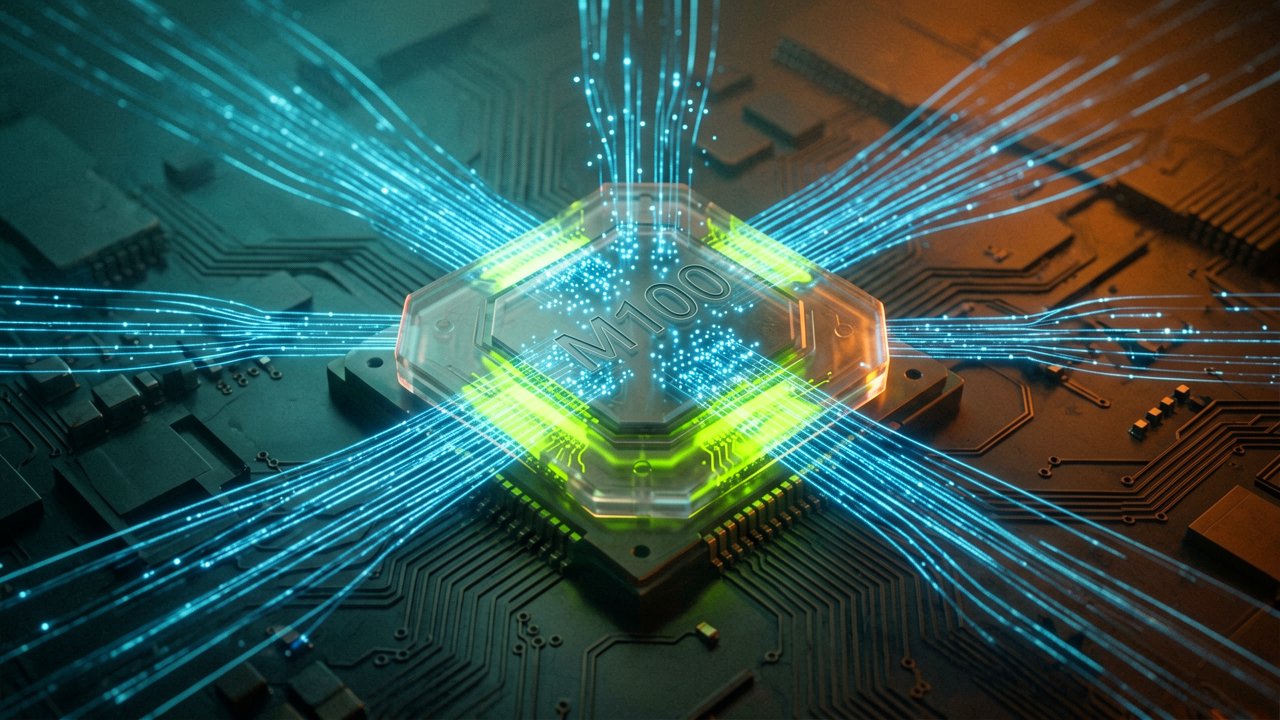
Baidu is doubling down on its "chip-to-model" vertical integration, unveiling two new proprietary AI processors alongside the latest iteration of its flagship large language model, Ernie 5.0. At its recent developer summit, the Chinese tech giant showcased the M100 and M300 chips, designed to insulate its AI roadmap from the tightening grip of international export restrictions. While the M100 is tailored specifically for high-efficiency inference, its beefier sibling, the M300, is built to handle the heavy lifting of ultra-large-scale multimodal training. As reported by China Daily, the M100 is slated for an early 2026 debut, while the M300 will follow a year later to anchor Baidu’s next generation of data centers.
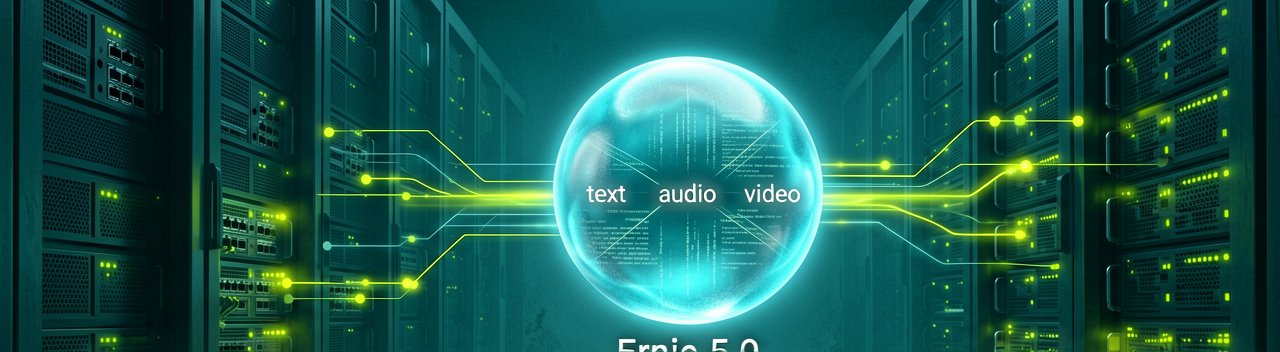
The hardware isn't just a defensive play; it’s the engine for Ernie 5.0, a model Baidu claims can finally trade blows with the world’s most advanced systems. According to China Economic Review, this 2.4-trillion-parameter behemoth is "natively omni-modal," meaning it was trained from day one to process text, images, audio, and video simultaneously rather than stitching them together as an afterthought. It's a significant architectural shift that helps explain how the model reportedly rivals Western heavyweights like GPT-5 in complex reasoning and multimodal perception tasks.
Solving the Sovereignty Puzzle
Baidu’s pivot toward self-reliance is a direct response to a geopolitical environment where high-end GPUs from the likes of Nvidia are becoming increasingly scarce in the domestic market. By moving the Kunlun M100 and M300 into the production pipeline, the company is attempting to prove it can maintain a competitive edge without relying on the global supply chain's traditional gatekeepers. This isn't just about survival; it's a strategic move to lower the massive compute costs associated with running frontier-grade AI. Early performance data suggests these chips could provide the "performance per watt" needed to scale AI agents across China’s industrial and consumer sectors without breaking the bank.
Redefining Success in the Agent Era
Beyond the silicon and the parameters, Baidu is also trying to change how the industry measures value. CEO Robin Li has begun championing "Daily Active Agents" (DAA) as the primary metric for the new era, arguing that simple token counts or user numbers don't tell the full story of AI’s economic impact. As noted by Investing.com, the company's integrated approach—spanning from its own chips to the Ernie 5.0 model and the Baidu AI Cloud—is designed to turn raw intelligence into a measurable, productive utility. Whether these new processors can truly fill the Nvidia-sized hole in China's tech ecosystem remains the trillion-dollar question, but Baidu is clearly through with waiting for external solutions.
Inside the Silicon Fortress: Baidu’s High-Stakes Pivot
Behind the Scenes: The launch of the M100 and M300 processors isn't just another product cycle; it represents a desperate, yet calculated, sprint toward technological sovereignty. For years, the narrative surrounding Chinese AI has been one of "catch up," with firms relying on stockpiled H800s and A800s to bridge the gap. Baidu’s pivot to the Kunlun architecture signals that the era of the stockpile is ending, and the era of indigenous vertically-integrated stacks has begun. This shift moves Baidu from being a software company that happens to use chips to a full-stack infrastructure provider that controls the very atoms of its intelligence.
Industry insiders suggest that the real challenge for Baidu isn't the design of the silicon, but the software ecosystem surrounding it. While Nvidia’s CUDA platform is the industry standard, Baidu is betting heavily on its PaddlePaddle framework to act as the glue for its new hardware. This historical context is vital: Baidu is essentially trying to replicate Nvidia’s software moat within the Chinese market. If they can convince enough developers that the Ernie-Kunlun pipeline is seamless, they effectively insulate themselves from any future tightening of global export controls that might target AI software libraries or cloud services.
From a stakeholder perspective, the pressure is immense. Shareholders are looking for a return on the massive R&D expenditures that have historically squeezed Baidu's margins. By bringing chip production in-house, the company aims to eventually lower the cost of inference—the process of actually running the AI—which remains the single largest expense for any LLM provider. If the M100 can deliver even 80% of the efficiency of its Western counterparts at a fraction of the procurement cost, Baidu transforms from a high-cost innovator into a high-margin utility provider for the Chinese enterprise sector.
There is also a broader geopolitical subtext that seasoned tech observers are tracking. By naming Ernie 5.0 as "natively omni-modal," Baidu is positioning itself as a direct peer to OpenAI and Google, rather than a regional alternative. This isn't just marketing fluff; it’s a signal to domestic state-owned enterprises and private giants that Baidu’s cloud is a safe, high-performance harbor. The integration of the M300 for training suggests Baidu is confident it can iterate on Ernie 6.0 and beyond without needing to look toward the West for the next generation of compute.
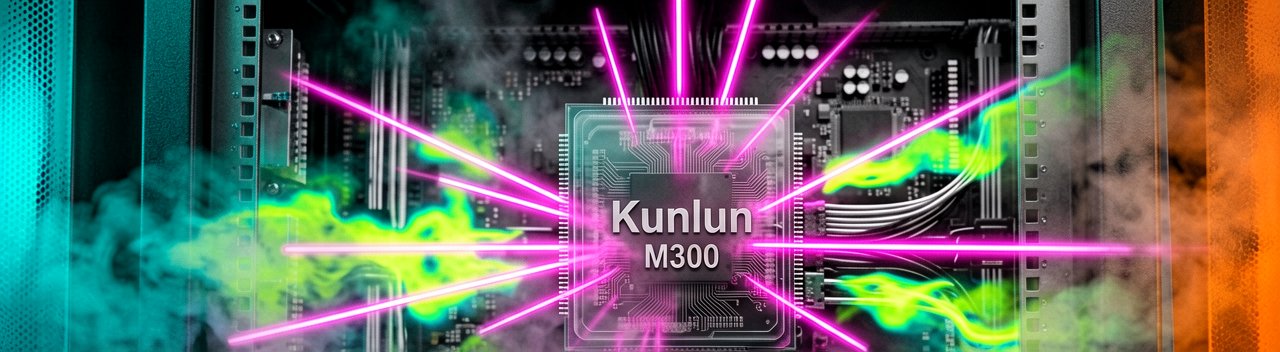
Finally, the focus on "Daily Active Agents" serves as a strategic pivot away from the "chatbot" wars. Baidu understands that the future isn't about people talking to a box, but about autonomous agents performing tasks like supply chain optimization or real-time coding. By optimizing their new silicon specifically for these agentic workflows, Baidu is attempting to leapfrog the current generation of LLM applications entirely. They are building a factory for digital workers, where the Kunlun chips provide the floor space and Ernie 5.0 provides the brainpower.
The success of this roadmap will ultimately hinge on manufacturing yields and the ability to secure advanced lithography services in a restricted market. While the designs for the M100 and M300 are world-class, the leap from the drawing board to the data center is fraught with supply chain hurdles. Baidu’s leadership seems to believe that by controlling the model and the chip simultaneously, they can find efficiencies in software optimization that bypass the need for the absolute latest 3nm or 2nm fabrication processes.
The Reality Check: Silicon Paper and Production Walls
Reading Between the Lines: There is a persistent temptation to take Baidu’s hardware specs at face value, but the gap between a press release and a racked data center is often measured in years of yield failures and driver instabilities. While the M100 and M300 look formidable on a slide deck, the elephant in the room remains the fabrication bottleneck. Baidu designs the architecture, but it doesn't own the foundries. In an era of escalating lithography restrictions, claiming a "2026 debut" for high-end silicon is less of a timeline and more of a wager against the tightening of international sanctions that could leave these designs as nothing more than sophisticated blueprints.
There is also a palpable contradiction in the "omni-modal" narrative of Ernie 5.0. Baidu is pushing the idea of seamless integration at a time when the sheer energy cost of 2.4-trillion-parameter models is becoming a liability rather than a flex. By prioritizing massive scale over the growing industry trend of "Small Language Models" (SLMs), Baidu risks building a digital skyscraper in a market that might actually need more efficient, portable homes. If the M300 cannot deliver a generational leap in performance-per-watt, Ernie 5.0 might find itself a victim of its own ambition—a model too expensive for the very "Daily Active Agents" it was built to support.
Skepticism is also warranted regarding the "sovereign stack" branding. While the M100 is touted as a domestic savior, the complexity of modern AI development usually involves a global web of open-source libraries and hardware standards. Baidu’s attempt to create a closed-loop ecosystem—Kunlun chips, PaddlePaddle framework, Ernie model—is a high-wire act. If they lean too far into isolation, they risk losing the collaborative velocity of the global AI community. If they lean too far out, they remain vulnerable to the next round of export controls. It’s a delicate balance that assumes domestic demand will be sufficient to sustain a parallel tech universe.
Furthermore, the pivot toward "Daily Active Agents" feels like a convenient repositioning of the goalposts. When user growth in standard LLM interfaces hits a plateau, tech giants historically switch the metric to "engagement" or "ecosystem activity" to keep the stock price buoyant. Baidu’s emphasis on agentic workflows is technically sound, but it presupposes that enterprises are ready to hand over the keys to their operations to a model that, for all its parameters, still struggles with the "hallucination" problems endemic to the transformer architecture. The hardware can be as fast as lightning, but if the reasoning remains brittle, the agents will remain toys rather than tools.
Ultimately, Baidu is playing a game of defensive offense. They are building a fortress not because they want to leave the world stage, but because they are being forced to prepare for a scenario where they have no other choice. The coming years will reveal whether the M-series is the foundation of a new silicon empire or a costly monument to a decoupling that neither side truly wanted. For now, the technical specs serve as a signal to the market that Baidu hasn't run out of ideas—even if the path to actually manufacturing those ideas is riddled with geopolitical landmines.
Designing a trillion-parameter model is a feat of engineering, but convincing a silicon foundry to print it in a trade war is a feat of magic; apparently, Baidu’s most important "omni-modal" feature is its ability to hope for the best while preparing for the inevitable.
Artūras Malašauskas is an AI Systems Integrator with 20+ years of production-grade web engineering experience. He has designed, shipped, and scaled enterprise Python/PHP systems for logistics, SaaS, and public-sector clients. For the past year, he has focused exclusively on AI integrations: deploying open-source LLMs, building generative media pipelines (image, audio, video), and engineering multi-agent workflows for real production environments. His standard: reproducibility, security, cost-efficient inference—no vaporware. He documents and evaluates emerging AI tooling, separating verified capabilities from marketing noise. Technical editor at: muza-ai.eu, ai-verslas.lt, ai-naujinos.lt Connect on LinkedIn
Comments