The Hardware Horizon: Why Power and Steel Rule the AI Conversation at TechEx
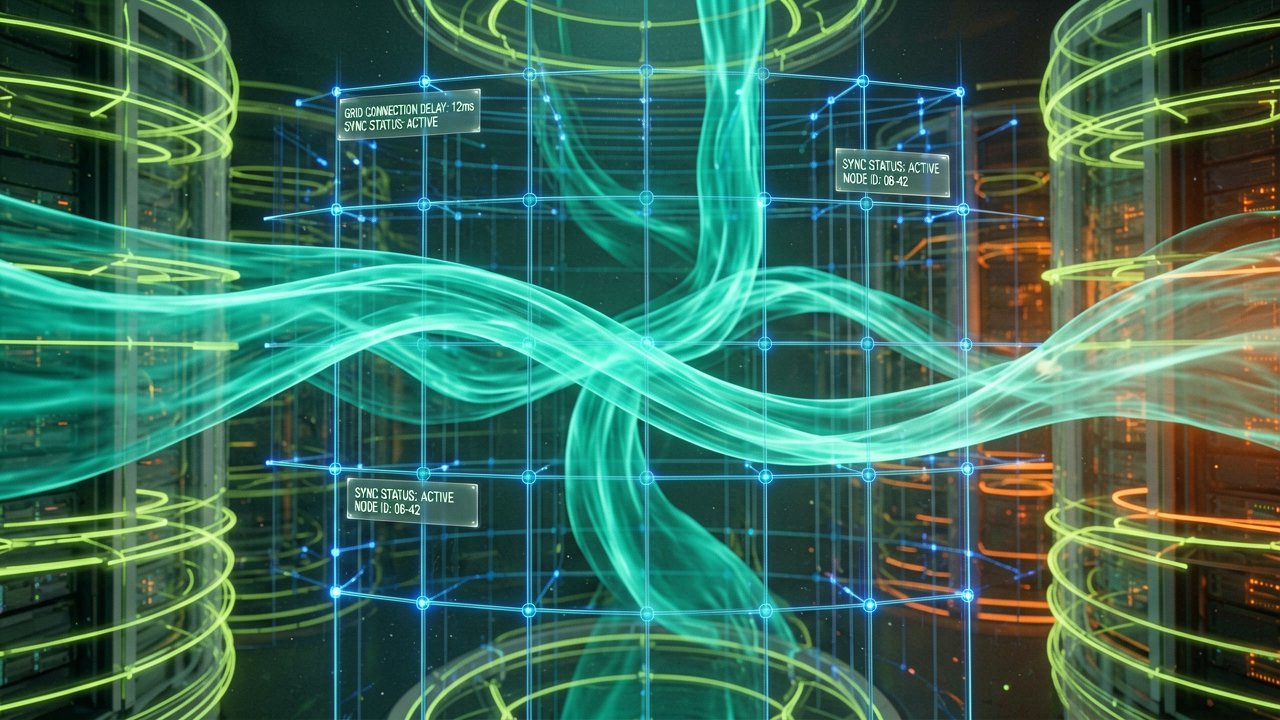
Walking the halls of the Santa Clara Convention Center for TechEx North America, you’d be forgiven for thinking you’d stumbled into a civil engineering summit rather than a software expo. The glossy talk of "agentic AI" and large language models (LLMs) hasn't vanished, but it’s been grounded by a sobering dose of physical reality. Industry veterans and C-suite leaders are increasingly sounding the alarm: the most sophisticated code in the world is useless if you can’t find a way to plug it in or keep it safe from state-sponsored prying eyes.
The narrative has shifted from "what can AI do" to "how do we keep the lights on while it does it." As enterprise AI transitions from experimental chatbots to autonomous agents integrated into core architecture, the conversation is moving toward the unglamorous but essential pillars of power, infrastructure, and security. We are entering an era where computational dominance is directly tied to a nation's electrical grid and its ability to secure a supply chain that stretches from silicon mines to high-density data centers. According to TechHQ, decision-makers are now prioritizing risk, finance, and change management over the raw novelty of the technology itself.
The New Bottleneck: Electrons Over Algorithms
Behind the Scenes: While the public fixates on the latest OpenAI or Google release, the real drama is unfolding at the municipal planning board level. For years, the tech industry operated under the assumption that compute was a virtual, infinitely scalable resource. That illusion has shattered. We’re seeing data centers in some regions facing up to seven-year wait times for grid connections, a staggering delay that threatens to stall the very innovation cycles the industry depends on. As points out, the bottleneck is no longer just about who has the best chips, but who can actually power them. This has sparked a "critical mineral supercycle" and a desperate search for energy efficiency that is reshaping the utility sector.
At TechEx, the focus on "intelligent automation" has extended into the boiler rooms of these digital cathedrals. Next-generation data centers are now being designed to self-optimize, managing cooling and workload distribution with minimal human intervention to shave off every possible kilowatt-hour of waste. Experts from the International Energy Agency (IEA) highlight that AI is emerging as a general-purpose technology comparable to electricity itself—both a consumer of massive power and a potential tool for managing it. However, the environmental cost is rising, with cooling systems alone consuming water at rates that rival the world's bottled water supply in some localities.
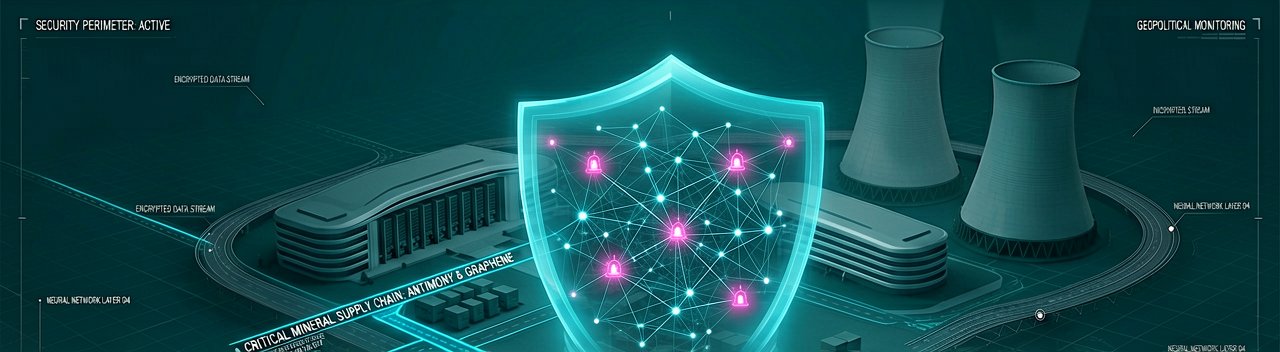
The security layer has also grown teeth, moving from simple firewall maintenance to a high-stakes game of geopolitical chess. AI infrastructure is no longer seen as neutral commercial real estate; it is strategic national infrastructure. Reports from the World Economic Forum suggest that hyperscale cloud campuses are now being treated with the same level of protection and resilience planning once reserved for oil pipelines and ports. Adversaries are already using AI to find vulnerabilities faster than human teams can patch them, leading to a cycle where 87% of organizations now view AI-related vulnerabilities as their fastest-growing cyber risk.
Stakeholders from Samsung, NVIDIA, and Schneider Electric emphasized at the event that the "vanilla" AI era is over. To move toward truly autonomous systems, companies must overhaul their data layers and governance models. It's a massive market shift where the focus has moved from the software that processes data to the physical ecosystem that fuels and protects it. As the U.S. and other nations race for AI dominance, the winner won't just be the one with the smartest engineers, but the one with the most resilient grid and the most secure physical footprint.
Ultimately, the "intelligence" in AI is becoming increasingly inseparable from the heavy machinery of the modern world. We are seeing a convergence where technology, energy policy, and national security are forced into a single, complicated room. For the CIOs and CTOs walking the Santa Clara floors, the message was clear: if you aren't thinking about your power supply and your physical security perimeter, you aren't really thinking about AI strategy.
The transition to agentic AI requires a fundamental rethink of what "uptime" means in a world where an AI agent might be making financial or operational decisions in real-time. This isn't just about preventing a website from going down; it's about ensuring the continuity of an autonomous digital workforce that relies on a constant, secure flow of electrons. The era of "move fast and break things" is being replaced by a much more cautious, infrastructure-first approach that respects the limits of the physical world.
Walking the halls of the Santa Clara Convention Center for TechEx North America, you’d be forgiven for thinking you’d stumbled into a civil engineering summit rather than a software expo. The glossy talk of "agentic AI" and large language models (LLMs) hasn't vanished, but it’s been grounded by a sobering dose of physical reality. Industry veterans and C-suite leaders are increasingly sounding the alarm: the most sophisticated code in the world is useless if you can’t find a way to plug it in or keep it safe from state-sponsored prying eyes.
The narrative has shifted from "what can AI do" to "how do we keep the lights on while it does it." As enterprise AI transitions from experimental chatbots to autonomous agents integrated into core architecture, the conversation is moving toward the unglamorous but essential pillars of power, infrastructure, and security. We are entering an era where computational dominance is directly tied to a nation's electrical grid and its ability to secure a supply chain that stretches from silicon mines to high-density data centers. According to TechHQ, decision-makers are now prioritizing risk, finance, and change management over the raw novelty of the technology itself.
The New Bottleneck: Electrons Over Algorithms
Behind the Scenes: While the public fixates on the latest OpenAI or Google release, the real drama is unfolding at the municipal planning board level. For years, the tech industry operated under the assumption that compute was a virtual, infinitely scalable resource. That illusion has shattered. We’re seeing data centers in some regions facing up to seven-year wait times for grid connections, a staggering delay that threatens to stall the very innovation cycles the industry depends on. As LinkedIn analyst Priit Värk points out, the bottleneck is no longer just about who has the best chips, but who can actually power them. This has sparked a "critical mineral supercycle" and a desperate search for energy efficiency that is reshaping the utility sector.
At TechEx, the focus on "intelligent automation" has extended into the boiler rooms of these digital cathedrals. Next-generation data centers are now being designed to self-optimize, managing cooling and workload distribution with minimal human intervention to shave off every possible kilowatt-hour of waste. Experts from the International Energy Agency (IEA) highlight that AI is emerging as a general-purpose technology comparable to electricity itself—both a consumer of massive power and a potential tool for managing it. However, the environmental cost is rising, with cooling systems alone consuming water at rates that rival the world's bottled water supply in some localities.
The security layer has also grown teeth, moving from simple firewall maintenance to a high-stakes game of geopolitical chess. AI infrastructure is no longer seen as neutral commercial real estate; it is strategic national infrastructure. Reports from the World Economic Forum suggest that hyperscale cloud campuses are now being treated with the same level of protection and resilience planning once reserved for oil pipelines and ports. Adversaries are already using AI to find vulnerabilities faster than human teams can patch them, leading to a cycle where 87% of organizations now view AI-related vulnerabilities as their fastest-growing cyber risk.
Stakeholders from Samsung, NVIDIA, and Schneider Electric emphasized at the event that the "vanilla" AI era is over. To move toward truly autonomous systems, companies must overhaul their data layers and governance models. It's a massive market shift where the focus has moved from the software that processes data to the physical ecosystem that fuels and protects it. As the U.S. and other nations race for AI dominance, the winner won't just be the one with the smartest engineers, but the one with the most resilient grid and the most secure physical footprint.
Ultimately, the "intelligence" in AI is becoming increasingly inseparable from the heavy machinery of the modern world. We are seeing a convergence where technology, energy policy, and national security are forced into a single, complicated room. For the CIOs and CTOs walking the Santa Clara floors, the message was clear: if you aren't thinking about your power supply and your physical security perimeter, you aren't really thinking about AI strategy.
The transition to agentic AI requires a fundamental rethink of what "uptime" means in a world where an AI agent might be making financial or operational decisions in real-time. This isn't just about preventing a website from going down; it's about ensuring the continuity of an autonomous digital workforce that relies on a constant, secure flow of electrons. The era of "move fast and break things" is being replaced by a much more cautious, infrastructure-first approach that respects the limits of the physical world.
The Skeptic’s Ledger: De-Risking the Hype
Reading Between the Lines: There is a glaring contradiction in the industry’s current posture: we are being sold a vision of frictionless, dematerialized intelligence while simultaneously building the most resource-intensive industrial footprint in human history. The silicon valley ethos of "software eating the world" has hit a wall made of concrete and copper. At TechEx, the bravado of AI evangelists often clashed with the grim arithmetic of the energy sector. We are witnessing a desperate pivot where tech giants, once the loudest proponents of carbon neutrality, are now quietly extending the lifespans of coal plants and gas turbines just to keep their GPU clusters humming. This suggests that the "AI Revolution" is currently a high-interest loan taken out against our environmental and municipal stability.
Furthermore, the security narrative often feels like a convenient shield for protectionism. While "securing the stack" is a legitimate technical necessity, it is also being used to justify the creation of "sovereign AI" silos that stifle the very open-source collaboration that built the industry. The measured skepticism here lies in whether we are actually making systems more secure, or simply making them more expensive and proprietary. If every nation builds its own iron-clad AI fortress, the resulting fragmentation could lead to a "digital dark age" where cross-border innovation is paralyzed by a thicket of infrastructure-level red tape and national security audits.
We should also question the projected ROI of this massive infrastructure build-out. The industry is currently in a "build it and they will come" phase, pouring billions into data centers before the actual revenue models for generative AI have fully matured for the average enterprise. There is a non-trivial risk that we are over-building for a peak that may never arrive, or at least not in the timeframe required to satisfy investors. When the dust settles, the companies left standing won't necessarily be the ones with the most clever bots, but the ones who managed to navigate the crushing overhead of maintaining a private, secure, and powered-up digital empire.
"We spent forty years trying to move everything to the 'cloud' just to realize the cloud is actually a very large, very hot building in Virginia that needs its own dedicated nuclear reactor to remind us that gravity and physics still apply to the internet."
Artūras Malašauskas is an AI Systems Integrator with 20+ years of production-grade web engineering experience. He has designed, shipped, and scaled enterprise Python/PHP systems for logistics, SaaS, and public-sector clients. For the past year, he has focused exclusively on AI integrations: deploying open-source LLMs, building generative media pipelines (image, audio, video), and engineering multi-agent workflows for real production environments. His standard: reproducibility, security, cost-efficient inference—no vaporware. He documents and evaluates emerging AI tooling, separating verified capabilities from marketing noise. Technical editor at: muza-ai.eu, ai-verslas.lt, ai-naujinos.lt Connect on LinkedIn
Comments