Meskernel’s New LDL-T Sensor: A Millimeter-Perfect Powerhouse in a Thumb-Sized Package
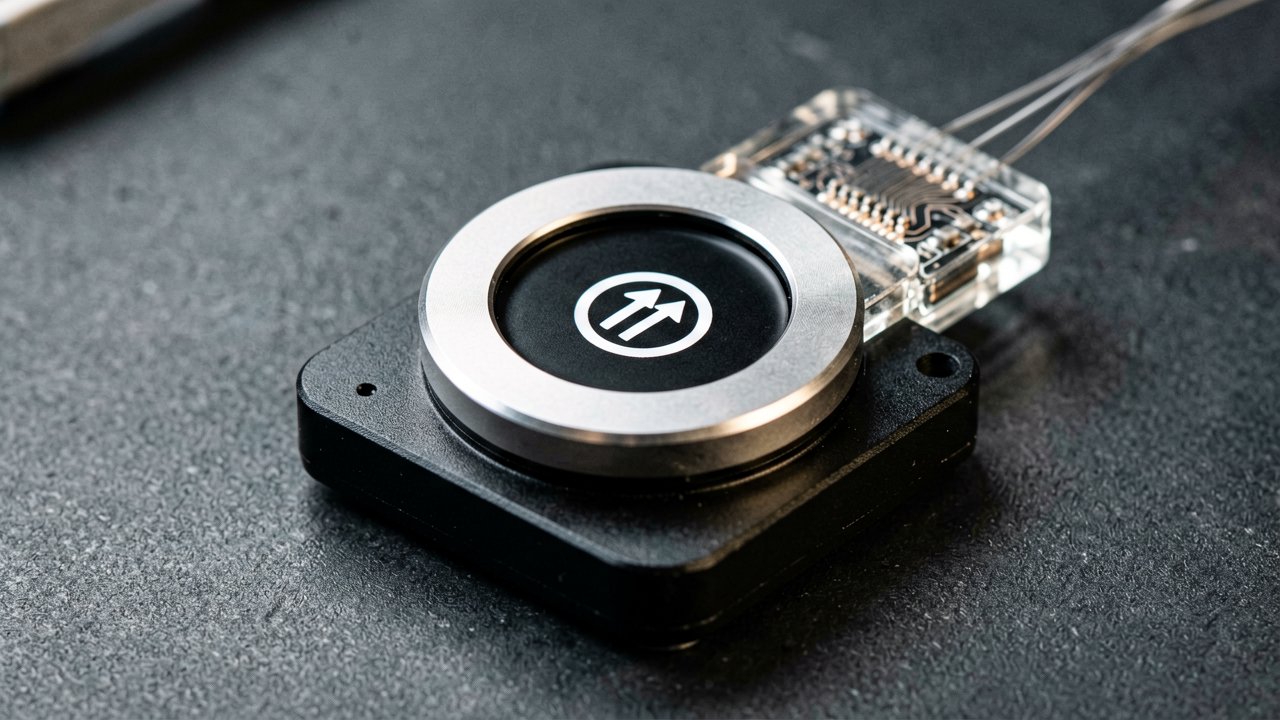
Meskernel just pulled the curtain back on its latest piece of hardware, and if you’ve been following the steady miniaturization of industrial tech, the LDL-T High-Precision Laser Distance Sensor is going to look very familiar yet surprisingly capable. It’s a module that clearly targets the "everything everywhere" school of engineering, where high-stakes accuracy needs to fit into the kind of cramped housings you'd find in a drone or a robotic gripper. Despite weighing in at a measly 2 to 3 grams—roughly the weight of a standard paperclip—the LDL-T doesn't skimp on the heavy lifting.
Under the hood, the sensor leans on phase-shift measurement technology to nail a typical accuracy of ±1mm across a range that stretches up to 80 meters. It's a significant leap for a device this size; usually, you’d expect to trade off significant range for this level of precision. According to the product breakdown from Meskernel, the module operates with a frequency that can be customized up to 100Hz, though it typically hums along at a 30Hz sampling rate for real-time data acquisition.
What really makes this interesting for the DIY and professional crowds alike is the sheer versatility of the I/O. We’re talking TTL, RS232, RS485, and even optional Bluetooth connectivity, which effectively bridges the gap between a rugged factory floor and a hobbyist’s workbench. Whether it's guiding an Automated Guided Vehicle (AGV) through a tight warehouse aisle or providing height verification for smart logistics, the LDL-T Laser Distance Sensor is built to play nice with standard platforms like Arduino and Raspberry Pi.
Precision Engineering Meets Practical Versatility
The "industrial-grade" label often gets slapped on anything with a metal casing, but Meskernel is backing it up here with a focus on stability in varying temperatures—operating comfortably from 0°C to 40°C. The use of a Class II eye-safe laser (620-690nm red or 510-550nm green) means it’s usable in consumer-facing environments without requiring specialized safety protocols. It’s the kind of reliable, low-power component that simplifies the "how do I measure this?" part of a project so engineers can focus on the "what do I do with the data?" part.
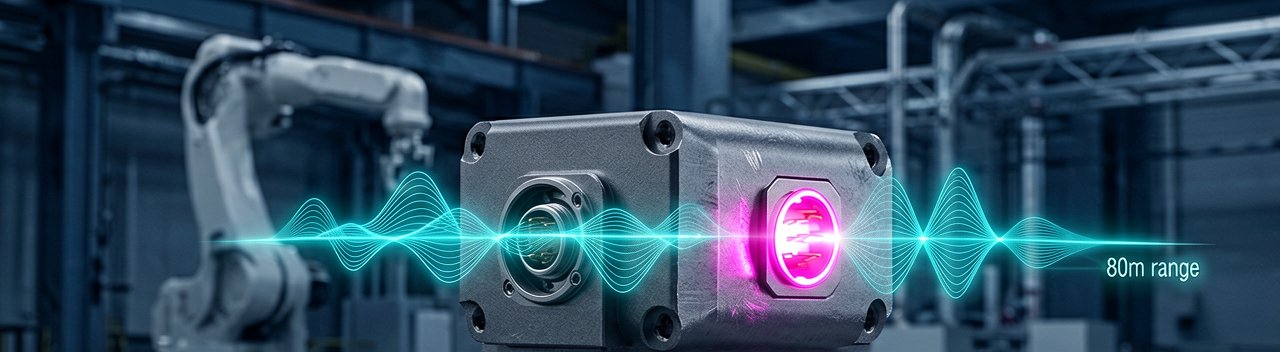
Looking at the broader portfolio, Meskernel is positioning the LDL-T as the middle-ground champion for those who need more precision than a standard ToF sensor but don't want the bulk of a long-range pulse ranger. Details on the LDL-T Precision Module suggest that its phase-shift engine is particularly adept at handling diverse surface textures, making it a solid bet for everything from tank level monitoring to Façade alignment in construction tech.
The Hidden Engineering Behind the LDL-T’s Performance
The real story lies in the signal processing: While most headlines fixate on the "±1mm accuracy" sticker, the actual breakthrough for Meskernel’s LDL-T is how it handles the signal-to-noise ratio in a module the size of a postage stamp. In the world of phase-shift technology, the sensor compares the phase difference between the emitted light and the reflected wave. Traditionally, this requires bulky optical isolation to prevent internal light leakage from drowning out the returning signal. Meskernel’s engineers have managed to shrink these optical paths without sacrificing thermal stability, a feat that usually requires far more expensive ceramic housing.
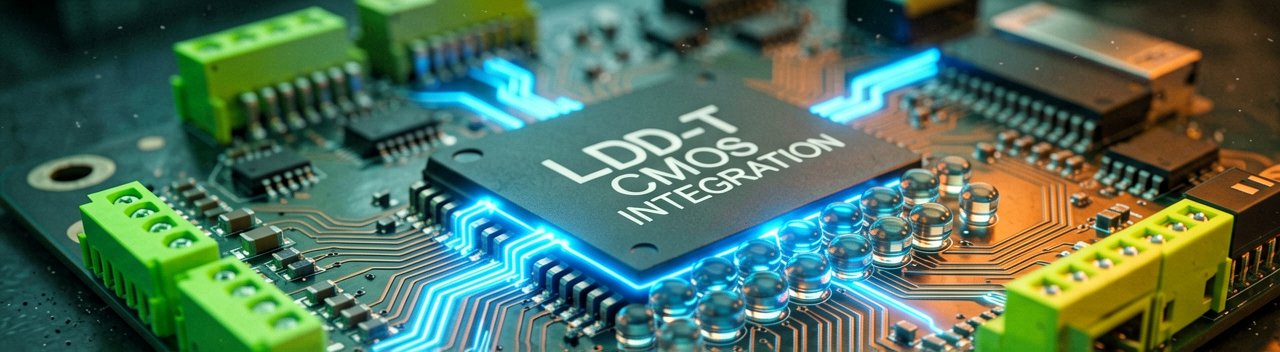
Industry veterans know that the jump from 20 meters to 80 meters in a miniature form factor isn't just about a more powerful laser; it's about the sensitivity of the receiver diode. By optimizing the CMOS integration, the LDL-T maintains high reliability even when targeting darker, less reflective surfaces that typically baffle low-cost distance modules. This nuanced capability is what separates a tool destined for a toy drone from one capable of being integrated into a high-speed industrial sorter or a precision CNC alignment system.
From a stakeholder perspective, the move toward "plug-and-play" communication protocols like TTL and RS485 reflects a shifting market demand. Integration time is the hidden cost of hardware development, and Meskernel is clearly courting the rapid prototyping sector. By ensuring compatibility with ubiquitous platforms like Raspberry Pi and Arduino right out of the box, they are lowering the barrier to entry for small-scale automation firms that previously couldn't afford the R&D time to interface with proprietary industrial sensors.
Historically, high-precision measurement was the exclusive playground of heavy-duty, expensive sensors from a few dominant European manufacturers. The entry of the LDL-T into the market signifies the democratization of millimeter-perfect data. This shift allows for the "smartification" of everyday equipment, such as grain silos or small-scale warehouse lifts, which can now be outfitted with advanced telemetry for a fraction of the previous cost. It is a classic case of high-end tech trickling down to solve mundane but critical logistical hurdles.
The environmental adaptability of the sensor also deserves a closer look. While many consumer-grade lasers fail when the ambient light gets too bright, the LDL-T’s filtering logic is designed to distinguish its own wavelength even in cluttered optical environments. This makes it a viable candidate for "cross-over" applications—tools that work just as well in the controlled environment of a laboratory as they do in the chaotic, dust-filled air of a construction site.
Ultimately, the LDL-T is more than just a measurement tool; it is a signal of where the industry is headed. The focus is no longer just on making sensors smaller, but on making them smarter and more resilient. For the engineers tasked with squeezing more functionality into tighter spaces, this module represents a significant relief from the usual trade-offs between size, range, and accuracy.
The Paradox of Miniaturized Precision
The industrial hype machine often overlooks a hard truth: just because a sensor is smaller doesn't mean the physics of its environment have shrunk along with it. While Meskernel’s LDL-T boasts a staggering ±1mm accuracy in a thumb-sized form factor, there is a fundamental tension between that precision and the realities of "industrial" deployment. In a sterile lab, 80 meters of range is a triumph of phase-shift engineering; in a vibration-heavy factory or a dusty logistics hub, maintaining that level of granularity requires mounting solutions that are often ten times the size of the sensor itself. The challenge for engineers isn't just buying the sensor, but ensuring the host machine is steady enough to capitalize on its resolution.
There is also a notable contradiction in the marketing of such modules for both "industrial" and "consumer" applications. Industrial hardware usually demands extreme longevity and high-temperature tolerance, yet the LDL-T’s operating range tops out at 40°C. In a high-density server room or near heavy machinery, ambient temperatures can easily exceed that threshold, potentially leading to thermal drift that renders that 1mm precision moot. This suggests the sensor may find its true home more in the "Prosumer" or light-automation space than in the grueling conditions of heavy manufacturing, despite its rugged aspirations.
Furthermore, the democratization of high-precision sensors brings an overlooked data problem. When every small-scale drone or DIY robot is pumping out millimeter-accurate distance readings at 100Hz, the bottleneck shifts from hardware sensing to software processing. Most low-power microcontrollers frequently paired with these modules, such as basic Arduino boards, can struggle to ingest and act upon high-frequency telemetry without significant lag. It creates a scenario where the sensor’s speed might actually outpace the logic of the systems it is meant to improve.
Projecting forward, the implication of the LDL-T’s price-to-performance ratio is a saturated market where "precision" becomes a commodity rather than a feature. If millimeter accuracy is now accessible at this scale, the competitive advantage will no longer be about who can measure the best, but who can filter the noise of a chaotic world most effectively. We are moving toward an era where the hardware is a given, and the real value lies in the proprietary algorithms that make sense of the laser’s reflection amidst the steam, dust, and vibrations of reality.
In the end, we’ve reached a point where a three-gram piece of glass and silicon can measure a football field with the precision of a jeweler—which is fantastic, provided you don't let the machine it's attached to sneeze.
Artūras Malašauskas is an AI Systems Integrator with 20+ years of production-grade web engineering experience. He has designed, shipped, and scaled enterprise Python/PHP systems for logistics, SaaS, and public-sector clients. For the past year, he has focused exclusively on AI integrations: deploying open-source LLMs, building generative media pipelines (image, audio, video), and engineering multi-agent workflows for real production environments. His standard: reproducibility, security, cost-efficient inference—no vaporware. He documents and evaluates emerging AI tooling, separating verified capabilities from marketing noise. Technical editor at: muza-ai.eu, ai-verslas.lt, ai-naujinos.lt Connect on LinkedIn
Comments