Dell’s AI Factory Just Went Into Overdrive: Why Agentic AI Is the New Enterprise North Star
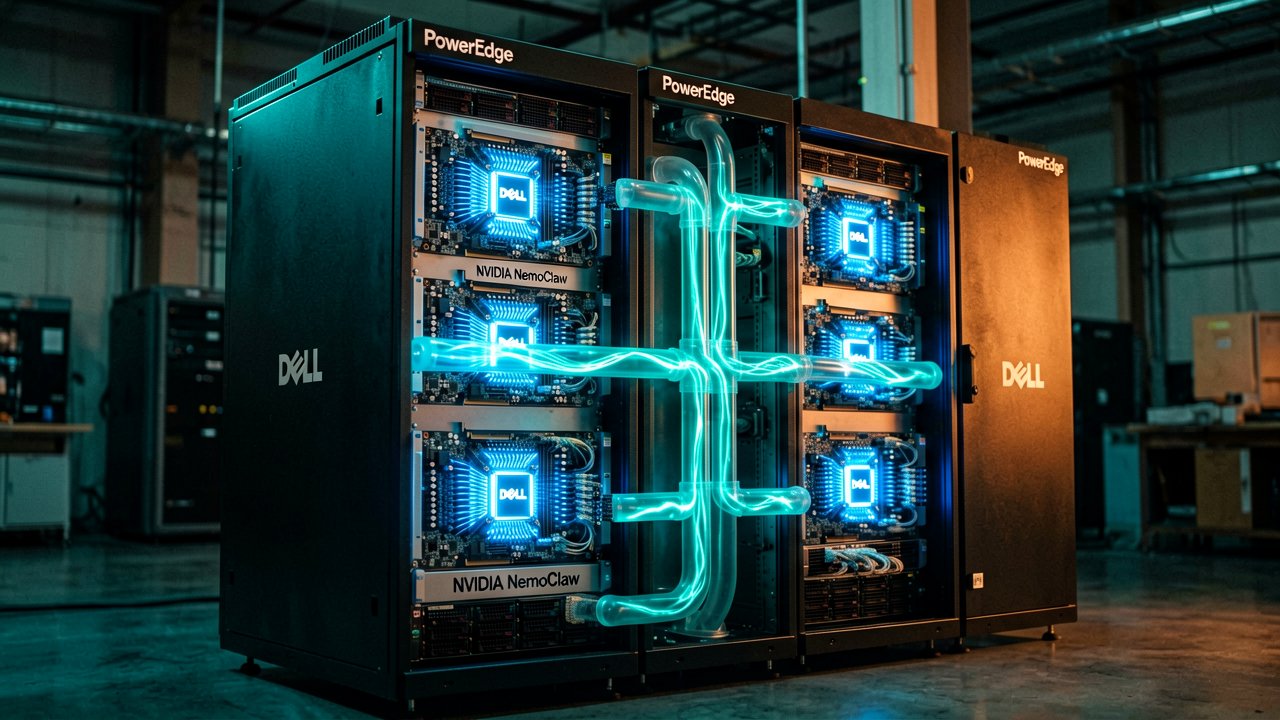
If you thought the AI hype cycle was starting to lose its luster, Dell Technologies just threw a massive bucket of high-octane fuel on the fire. At Dell Technologies World 2026, Michael Dell didn’t just talk about better chatbots; he laid out a vision where AI is no longer a tool you "use," but a digital workforce that "does." By unveiling a suite of broad upgrades to the Dell AI Factory, the company is betting the farm on "agentic AI"—autonomous systems capable of reasoning, planning, and executing multi-step workflows without a human holding their hand every step of the way.
The industry's shift from "assistive" to "agentic" is more than just semantic marketing. Dell’s latest rollout includes the new Deskside Agentic AI Solutions, a move clearly designed to wrestle control back from the unpredictable costs of the public cloud. During his keynote, executives highlighted the "sticker shock" many firms face when developers burn through billions of tokens in a single day. By bringing these heavy-duty workloads onto local infrastructure—powered by NVIDIA’s NemoClaw and Dell’s high-performance workstations—enterprises can reportedly see up to 87% savings compared to traditional cloud spend, effectively turning what was once a variable expense into a predictable, high-performance asset.
But the hardware is only half the story. Dell is doubling down on the "factory" metaphor by streamlining the entire data pipeline. New data orchestration engines and search advancements, slated for release throughout 2026, are designed to index billions of files with twelve times the speed of previous generations. This isn't just about faster searching; it’s about giving autonomous agents the high-fidelity data they need to make real-time decisions. With over 5,000 customers already on board, Dell is moving fast to ensure that when an AI agent decides to run a workflow at 3 AM, it’s doing so on a foundation of trusted, sovereign data rather than a hallucinated guess.
The Local Advantage: Deskside Power and Sovereign Data
The standout of this cycle is undoubtedly the Deskside Agentic AI platform. It’s a gutsy move that targets the "trepidation" many IT leaders feel regarding data privacy and cost. By utilizing NVIDIA's secure operations layer, Dell allows companies to build and fine-tune their own digital teammates locally. This "Sovereign AI" approach ensures that sensitive corporate IP never leaves the four walls of the office, solving one of the biggest hurdles to widespread enterprise adoption. It’s a classic Dell strategy: take a complex, expensive technology and package it into a scalable, manageable box for the boardroom.
Expanding the Ecosystem: From Google to OpenAI
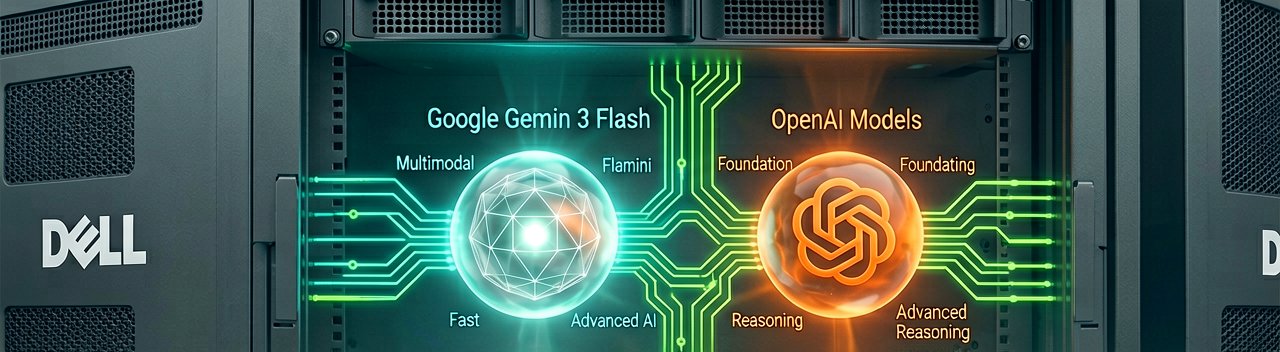
Dell isn't trying to build this future in a vacuum. The upgrades include deeper integrations with a "Who's Who" of the AI world, including Google’s Gemini 3 Flash models, OpenAI, and Palantir. By acting as the hardware backbone for these diverse software ecosystems, Dell is positioning itself as the Switzerland of the AI era. Whether an enterprise wants to deploy an agent for customer intent detection or a parallel file system for massive training runs via "Project Lightning," the goal is to provide a single, unified architecture that handles the "plumbing" so businesses can focus on the outcomes.
Behind the Scenes: The Industrialization of the Silicon Soul
The Strategic Pivot: What most surface-level reports miss is that Dell isn't just selling servers anymore; they are selling a blueprint for the "autonomous enterprise." For decades, IT departments were reactive, fixing what broke. With this latest expansion of the AI Factory, Michael Dell is betting on a proactive future where the infrastructure itself anticipates needs. This transition to agentic AI marks the end of the "experimentation phase" that defined 2024 and 2025. CIOs are no longer content with flashy demos; they are demanding a "factory" environment where AI agents can be manufactured and deployed with the same reliability as a traditional software update.
Industry veterans recall the early days of virtualization, where the goal was to maximize every ounce of hardware. We are seeing a poetic repetition here, but with a cognitive twist. The introduction of "Project Lightning" and the new parallel file systems is a direct response to the "data gravity" problem. As datasets grow to petabyte scales, moving that data to the cloud for processing becomes a logistical and financial nightmare. Dell’s play is to keep the compute as close to the data as possible, effectively turning the local data center into a high-speed lane for agentic reasoning that would otherwise choke on the latency of a standard internet connection.
From a stakeholder perspective, this isn't just about the technology; it's about the shift in power dynamics within the C-suite. The CFO, once wary of the "black hole" of AI spending, is now seeing a path toward capital expenditure predictability. By leveraging the NVIDIA and Dell integrated stack, firms can move from a high-burn OpEx model to a stable CapEx foundation. This financial pivot is arguably more important for long-term adoption than the actual FLOPS of the GPUs, as it allows for the kind of long-term planning that was impossible during the initial generative AI gold rush.
Historical context also reveals why the partnership with NVIDIA is the cornerstone of this announcement. We are witnessing the birth of a "vertical stack" that mirrors the early dominance of the Wintel era (Windows and Intel). By tightly coupling Dell’s PowerEdge hardware with NVIDIA’s NIM microservices, the two giants are creating a barrier to entry for competitors. They are essentially telling the market that while you can build an AI agent anywhere, the most efficient, secure, and cost-effective place to "grow" it is within their curated ecosystem.
There is also a subtle but significant focus on "Sovereign AI" that deserves a closer look. In an era of increasing geopolitical tension and stringent data privacy laws like GDPR and its successors, the ability to run agentic workflows locally isn't just a preference—it’s a compliance necessity. Dell’s upgrades specifically target highly regulated industries like finance and healthcare, where the idea of sending patient data or trade secrets to a third-party LLM for "reasoning" is a non-starter. By localized agentic deployment, Dell is offering a "private cloud" experience that matches the "public cloud" capability.
Ultimately, the "AI Factory" upgrades represent a maturation of the entire sector. We are moving away from general-purpose models that know a little bit about everything toward specialized agents that know everything about a specific company’s operations. Whether it's an agent that manages supply chain disruptions in real-time or one that handles complex legal discovery, the infrastructure is now in place to support these digital employees at scale. The hardware is ready, the data pipelines are greased, and the era of the autonomous enterprise has officially moved from the whiteboards of Silicon Valley to the server racks of the global enterprise.
Reading Between the Lines: The Friction in the Machine
The Reality Check: While the narrative surrounding the Dell AI Factory is one of seamless "acceleration," the road to an agentic enterprise is paved with significant integration hurdles. There is an inherent contradiction in promising a turnkey "factory" for a technology as volatile as autonomous agents. While Dell’s hardware is undoubtedly world-class, the software layer remains a fragmented frontier. Organizations are being asked to layer Dell’s orchestration over a sprawling mess of legacy systems, creating a "technical debt" trap where the cost of making old data readable for new agents might eventually eclipse the hardware savings Dell is so eager to tout.
Furthermore, the industry’s obsession with "Sovereign AI" serves as a convenient shield for what is essentially a move toward vendor lock-in. By tethering an enterprise’s agentic logic so tightly to the Dell-NVIDIA stack, companies risk becoming beholden to a proprietary ecosystem that may not play nice with the next breakthrough model emerging from an open-source lab or a rival cloud provider. The promise of "sovereignty" over one’s data is a powerful siren song, yet it often masks the reality that the keys to the kingdom are being handed over to a different set of gatekeepers.
There is also a profound "human-in-the-loop" irony at play. Dell’s vision of 24/7 autonomous digital workers assumes that the underlying corporate data is clean, labeled, and ethically sourced. In reality, most enterprise data is a chaotic swamp of duplicate spreadsheets and outdated PDFs. Deploying a high-speed agentic workforce on top of a low-fidelity data foundation doesn't just speed up productivity; it risks automating hallucinations at a scale and velocity that could devastate a brand's reputation before a human supervisor even logs in for their morning coffee.
Moreover, the environmental impact of "bringing AI home" to the local data center is often glossed over in glossy press releases. While Michael Dell highlights the efficiency of the PowerEdge XE9785L, the sheer power density required to run liquid-cooled GPU clusters is forcing many IT departments to completely overhaul their facility's power and cooling infrastructure. For many mid-sized firms, the "deskside" AI dream might be deferred once they realize their existing office wiring is more suited for a laser printer than a localized supercomputer.
Projecting forward, the true test of Dell's strategy will be its adaptability. As AI models become more efficient and "smaller" (the rise of Small Language Models or SLMs), the massive brute-force hardware Dell is currently selling may eventually face a period of diminishing returns. The company is betting that "bigger is better" for the enterprise, but the history of tech tells us that once a capability becomes commoditized, the margins shift from the iron to the intelligence. Dell must ensure its "Factory" is flexible enough to pivot when the industry inevitably shifts from heavy-duty industrialization to lightweight, ubiquitous intelligence.
Building an AI Factory is a lot like buying a high-end pasta maker for your kitchen; it’s an impressive piece of engineering that promises a revolution in efficiency, but you’ll eventually realize that the quality of the dinner still depends entirely on whether you’re feeding it artisanal flour or just a bag of old dust from the back of the pantry.
Artūras Malašauskas is an AI Systems Integrator with 20+ years of production-grade web engineering experience. He has designed, shipped, and scaled enterprise Python/PHP systems for logistics, SaaS, and public-sector clients. For the past year, he has focused exclusively on AI integrations: deploying open-source LLMs, building generative media pipelines (image, audio, video), and engineering multi-agent workflows for real production environments. His standard: reproducibility, security, cost-efficient inference—no vaporware. He documents and evaluates emerging AI tooling, separating verified capabilities from marketing noise. Technical editor at: muza-ai.eu, ai-verslas.lt, ai-naujinos.lt Connect on LinkedIn
Comments