Silicon Supremacy: Decoding the Zacks Spotlight on NVIDIA, Intel, AMD, and Broadcom

The semiconductor industry is currently navigating its most transformative era since the dawn of the internet, a sentiment echoed in the latest analysis from the Zacks Analyst Blog. While the market has grown accustomed to NVIDIA’s meteoric rise, the conversation is shifting toward a broader "big four" dynamic where Intel, AMD, and Broadcom are no longer just supporting characters. Investors are increasingly looking at forward-looking metrics, such as NVIDIA’s projected 118.5% year-over-year earnings growth for its upcoming Q1 fiscal 2027 report, as a barometer for the entire tech sector's health.
The landscape isn't just about raw compute power anymore; it’s about architectural efficiency and strategic diversification. Broadcom, for instance, is leveraging its custom AI chip business to eye a staggering $100 billion revenue goal by 2027, effectively carving out a niche in the ASIC market that differs from NVIDIA's GPU dominance. Meanwhile, AMD is aggressively positioning its MI350 series as a viable alternative for cost-conscious enterprises, ensuring that the AI boom remains a competitive multi-player race rather than a one-company monopoly.
Beyond the Hype: The Real Infrastructure Play
What Most Reports Miss: While the headlines focus on share price spikes, the real story lies in the physical and geopolitical bottlenecks that are quietly reshaping how these giants operate. For years, the industry operated on a globalized, "just-in-time" manufacturing model centered heavily on Taiwan. Today, we’re seeing a radical shift toward localized, "just-in-case" infrastructure. NVIDIA’s recent $5 billion strategic investment in Intel is a prime example of this "hedge and build" strategy, signaling that even the king of AI compute recognizes the need for domestic manufacturing resilience in an increasingly volatile global climate.
This shift to localized operations, often dubbed "HALO" (Hard Assets, Local Operations), is driving massive capital expenditures. In 2026 alone, the largest hyperscalers are projected to pour over $600 billion into AI infrastructure. This isn't just speculative spending; it’s a foundational upgrade of the world’s digital nervous system. Companies like Broadcom are benefiting from this by acting as the indispensable bridge between custom cloud designs and physical silicon, moving beyond general-purpose hardware to bespoke solutions for giants like Google and Meta.

From a stakeholder perspective, the tension between short-term valuation and long-term utility is reaching a boiling point. Some analysts worry about an "AI bubble," pointing to the high price-to-earnings multiples seen in names like Intel. However, seasoned reporters note that unlike the dot-com era, these companies are generating massive free cash flow and tangible products that are already modernizing workflows in healthcare, automotive, and energy. The complexity of generative AI requires a level of computational density that simply didn't exist two years ago, making these hardware upgrades a necessity rather than a luxury.
AMD’s trajectory offers perhaps the most compelling underdog narrative. By securing massive deals with the likes of Oracle and OpenAI for its Helios server racks, AMD is proving that it can compete at the highest level of scale. Their focus on the "total addressable market," which they expect to hit $1 trillion by 2030, suggests they are playing a much longer game than just chasing NVIDIA's tail. They are betting on a future where AI workloads are so diverse that no single architecture can handle them all, a strategy that resonates with enterprises looking to avoid vendor lock-in.
Ultimately, the semiconductor "big four" are no longer just chipmakers; they are the architects of the next industrial revolution. As we move deeper into 2026, the focus will likely shift from who has the fastest chip to who can most reliably power the planet's growing thirst for intelligence. Whether it’s through NVIDIA’s sheer compute dominance, Broadcom’s networking expertise, or Intel’s foundry rebirth, the silicon sector remains the most critical arena in modern finance.
Keep a close eye on the upcoming May 20 earnings calls, as they will likely dictate the market's momentum for the rest of the summer. Watch the margins particularly closely—as production complexity rises, the ability to maintain profitability while scaling Blackwell or Helios architectures will be the ultimate test of executive execution.
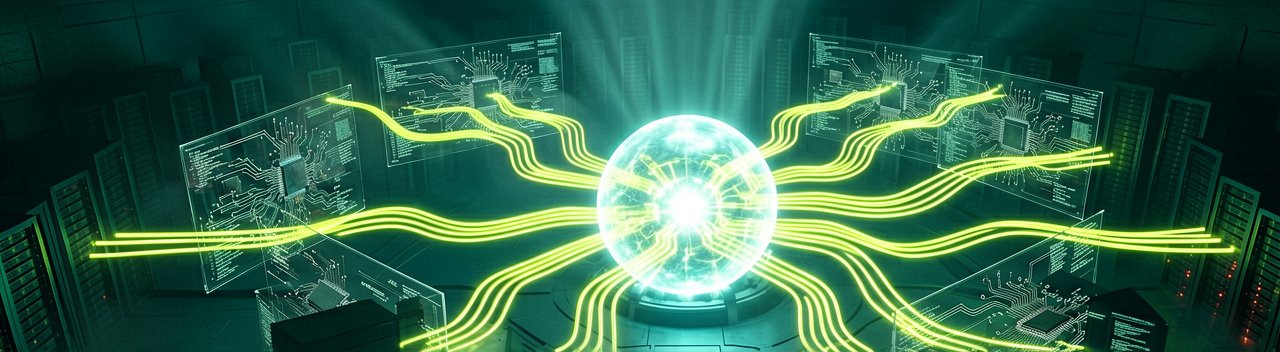
Reading Between the Lines: The Hidden Costs of Exponential Growth
Reading Between the Lines: The prevailing narrative suggests a linear path toward silicon-driven prosperity, yet the "AI or bust" mentality ignores the growing friction between theoretical demand and physical reality. While the Zacks report highlights the staggering revenue potential for the likes of NVIDIA and AMD, it glosses over the diminishing returns of scaling. We are reaching a point where the power consumption of a single AI data center can rival that of a mid-sized city, yet the global power grid is nowhere near ready for this sudden, massive load. This contradiction suggests that the next bottleneck won't be chip architecture or lithography, but the basic availability of electricity and cooling, a reality that could force a hard ceiling on the current growth projections.
Furthermore, the market's obsession with custom silicon, particularly Broadcom’s ASIC push, creates a fragmented ecosystem that might eventually stifle the very innovation it seeks to accelerate. When every major hyperscaler builds their own bespoke chip to avoid NVIDIA’s high margins, they trade flexibility for short-term cost savings. This creates a "walled garden" effect in hardware that mirrors the software silos of the early 2000s. For the seasoned investor, this should signal a looming maintenance and interoperability crisis; as these custom systems age, the cost of migrating workloads or finding talent capable of optimizing proprietary hardware will skyrocket, potentially erasing the initial efficiency gains.
Intel’s position remains the most polarizing "known unknown" in the sector. The Zacks analysis leans into the potential of their foundry business, but the skepticism among the engineering old guard remains palpable. Intel is essentially attempting to perform open-heart surgery on its business model while running a marathon, trying to transition into a world-class foundry service for its rivals while simultaneously reclaiming the performance crown. History is littered with tech giants that failed to bridge such a massive cultural and operational divide. If Intel fails to hit its 18A process milestones with absolute precision, the billions in government subsidies won't be enough to prevent a permanent shift in the balance of power toward TSMC and its partners.
Projecting into the next fiscal year, the industry faces an uncomfortable reckoning with the "replacement cycle" myth. The assumption is that enterprises will perpetually upgrade to the latest GPU or NPU at the same frantic pace seen during the initial LLM gold rush. However, corporate budgets are finite, and the pressure to prove ROI on these billion-dollar AI investments is mounting. If the software layer—the actual applications people use—doesn't start delivering clear, bottom-line results soon, the "big four" may find themselves with a massive oversupply of high-end silicon and a customer base that has suddenly decided that "good enough" is, in fact, good enough.
Building the future is expensive, but apparently, it’s nothing compared to the cost of pretending we aren't all just three power outages away from going back to using calculators and abacuses for fun.
Artūras Malašauskas is an AI Systems Integrator with 20+ years of production-grade web engineering experience. He has designed, shipped, and scaled enterprise Python/PHP systems for logistics, SaaS, and public-sector clients. For the past year, he has focused exclusively on AI integrations: deploying open-source LLMs, building generative media pipelines (image, audio, video), and engineering multi-agent workflows for real production environments. His standard: reproducibility, security, cost-efficient inference—no vaporware. He documents and evaluates emerging AI tooling, separating verified capabilities from marketing noise. Technical editor at: muza-ai.eu, ai-verslas.lt, ai-naujinos.lt Connect on LinkedIn
Comments