The Intelligence Factory: HIVE’s BUZZ Subsidiary Stakes a $3.5 Billion Claim in Toronto’s AI Future
For years, Canada has played the role of the brilliant academic who invents the world-changing tech but forgets to patent the factory. We gave the world the "Godfathers of AI," yet we’ve largely been renting our compute power from foreign hyperscalers. That narrative just hit a massive roadblock. HIVE Digital Technologies, through its high-performance computing subsidiary BUZZ HPC, has officially pulled the trigger on a CAD $3.5 billion "AI gigafactory" in the Greater Toronto Area. It’s a bold, expensive bet on "sovereign AI"—the idea that if you don’t own the iron and the electricity, you don’t really own your data or your future.
This isn't just another data center; it’s a 320-megawatt monster designed to house upwards of 100,000 GPUs at full build-out. By securing 25 contiguous acres in the Toronto-Waterloo innovation corridor, HIVE is positioning itself right between the research pedigree of the University of Toronto and the engineering muscle of Waterloo. According to reports from Yahoo Finance, the project has already cleared major power infrastructure milestones, aiming for a "go-live" date in the second half of 2027. It's the kind of scale that makes current commercial GPU clusters look like hobbyist setups.
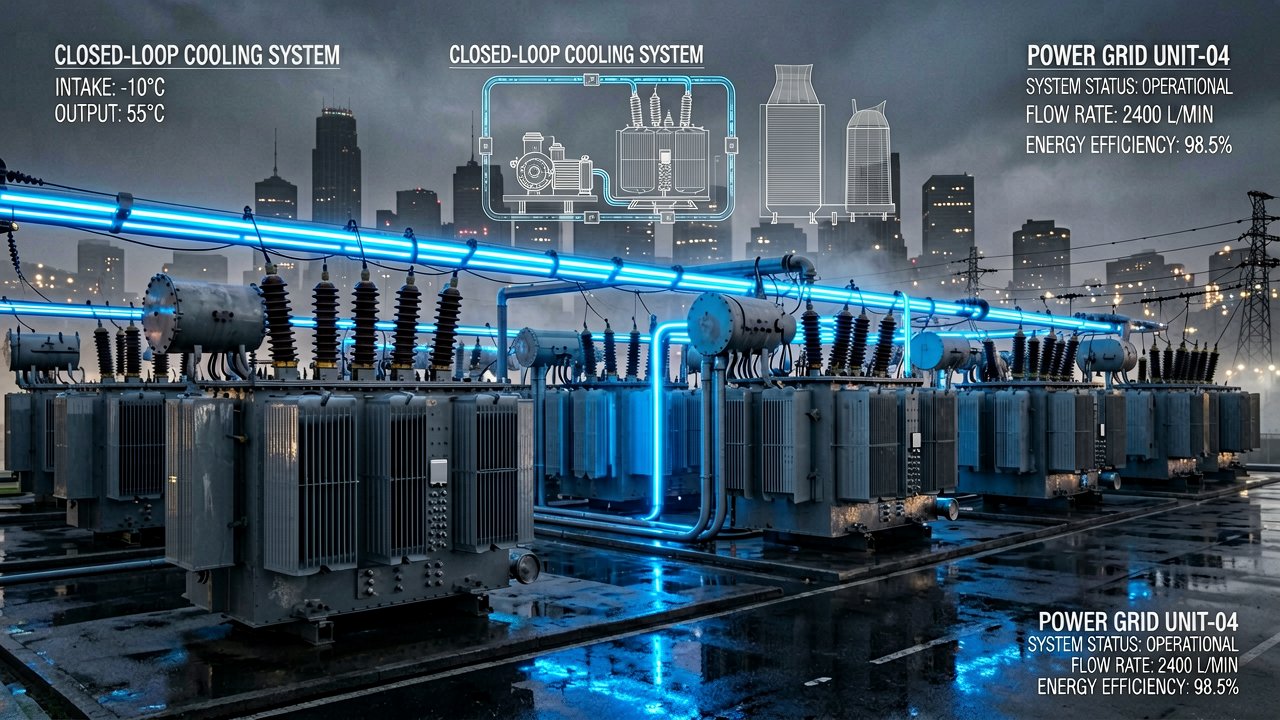
What makes this particularly interesting is the pivot from HIVE’s roots. We’re watching a company that built its reputation in the trenches of Bitcoin mining leverage that exact same "power-first" expertise to build the floorboards for the intelligence economy. As noted by Data Center Dynamics, the facility will utilize Ontario’s clean energy grid and a specialized closed-loop cooling system that uses zero water. It’s a sophisticated play that addresses both the insatiable hunger for compute and the growing scrutiny over the environmental footprint of AI. This project effectively turns "Canadian iron" into a national priority.
Building the Backbone of Sovereignty
The term "gigafactory" usually conjures images of EV batteries, but in this context, it refers to the industrial-scale conversion of raw electricity into actionable intelligence. By controlling the entire stack—from the land and the 320 MW power allocation to the vertically integrated supercomputers—BUZZ is looking to provide a domestic sanctuary for sensitive enterprise and government workloads that shouldn't cross borders. The investment is expected to create over 800 construction jobs and hundreds of high-skill permanent roles, cementing the region's status as a top-tier global tech hub.
Market Reaction and the Path to 2027
Investors aren't exactly yawning at the news. HIVE’s stock saw a significant jump following the announcement, reflecting a market that is increasingly hungry for tangible AI infrastructure plays rather than just software promises. With 5,500 GPUs already online and a global pipeline now exceeding 850 MW, the company is moving fast to bridge the gap between mining digital gold and powering the next generation of LLMs. If they hit their 2027 target, the Toronto-Waterloo corridor won't just be where AI is thought up—it’ll be where it actually lives.
The Strategy Under the Hood: Why 320 Megawatts Matters
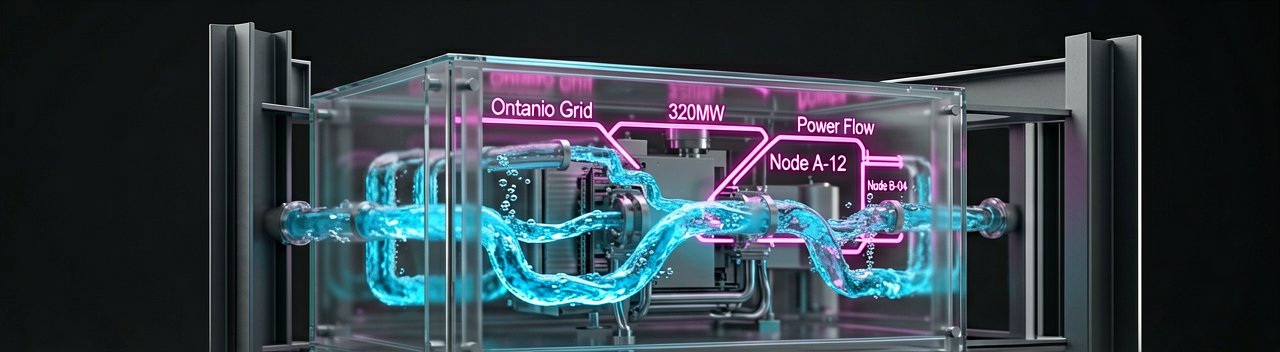
Beyond the Press Release: The real story isn't just the sheer number of GPUs; it’s the high-stakes game of power procurement in a world where electricity has become the new gold. For years, HIVE was seen as a nimble Bitcoin miner, but the BUZZ subsidiary represents a fundamental evolution into "industrialized intelligence." By locking down 320 megawatts of power capacity in the Toronto-Waterloo corridor, they aren't just building a warehouse; they are securing a rare commodity that most Silicon Valley giants are currently fighting over. This move bypasses the multi-year queues for grid interconnection that have stalled similar projects in Northern Virginia and Dublin.
From a historical perspective, Canada has a legacy of being a net exporter of raw materials while importing the finished goods made from those resources. In the digital age, that "raw material" is electricity and "finished goods" are trained AI models. Industry veterans point out that by keeping the compute local, HIVE is addressing a critical "sovereign AI" gap. According to analysis from The Globe and Mail, this facility allows Canadian startups and government agencies to process sensitive data without the latency or legal headaches of routing through U.S.-based servers. It’s a protectionist hedge wrapped in a high-tech coat.
The cooling technology mentioned in the early filings is another differentiator that seasoned tech reporters are watching closely. Traditional data centers are notorious water hogs, often consuming millions of gallons to keep servers from melting down. BUZZ is reportedly leaning into a closed-loop system that reflects a more mature, ESG-conscious approach to infrastructure. This isn't just about being "green" for the sake of optics; it’s about operational resilience. In a future where water rights may become as contested as power rights, a zero-water-consumption facility is significantly cheaper and easier to permit in high-density areas like the Greater Toronto Area.
Stakeholders in the Toronto-Waterloo tech ecosystem view this as the "missing middle" of the local economy. While we have plenty of PhDs from the Vector Institute and hungry developers from Waterloo, we’ve lacked the massive, localized compute clusters required to train foundational models from scratch. This project shifts the local value proposition from "come here for cheap talent" to "come here for world-class infrastructure." It effectively bridges the gap between theoretical research and commercial deployment, providing the physical substrate that the next generation of Canadian unicorns will need to scale without moving their operations to the United States.
Financially, the CAD $3.5 billion price tag is a staggering sum for a company of HIVE’s current market cap, which suggests a sophisticated mix of debt financing, potential government incentives, and strategic partnerships yet to be fully disclosed. As reported by CoinDesk, the transition from crypto-centric operations to AI-focused "Power-as-a-Service" is a pivot that many miners are attempting, but few have the land and power permits already in hand. This project isn't just a expansion; it's a total redefinition of HIVE’s balance sheet, trading the volatility of coin prices for the steady, high-margin revenue of enterprise compute leasing.
The 2027 timeline is aggressive, but the foundational work—the environmental assessments, the land acquisition, and the initial power agreements—is already behind them. As the structural steel begins to rise in the GTA, the conversation will likely shift from whether Canada can compete in the AI race to how quickly it can monetize the massive "intelligence factory" sitting in its own backyard. This facility stands as a monument to the idea that in the 21st century, national strength is measured in flops, watts, and the ability to keep your data under your own roof.
The Reality Check: Compute Dreams vs. Operational Gravity
Reading Between the Lines: The narrative of the "AI Gigafactory" is intoxicating, but the path from a CAD $3.5 billion announcement to a humming 320MW facility is littered with the ghosts of over-ambitious infrastructure projects. While HIVE is riding the high of the "sovereign AI" trend, we have to address the elephant in the server room: the brutal pace of hardware depreciation. By the time this facility reaches its 2027 "go-live" date, the current crop of H100s and B200s will be the middle-aged sedans of the computing world. HIVE isn't just building a building; they are entering a relentless capital expenditure treadmill where the floorboards need to be ripped out and replaced every three to four years just to stay relevant.
There is also a palpable tension between HIVE’s crypto-mining DNA and the "five-nines" reliability demanded by enterprise AI clients. Bitcoin mining is a "graceful failure" business—if the power flickers or a rack goes down, you just lose a few hashes. AI training, particularly for large language models, is notoriously fragile. A single hardware hiccup can crash a training run that has been costing thousands of dollars per hour for weeks. Transitioning from the "move fast and break things" ethos of a mining farm to the white-glove precision of a Tier 4 data center requires a cultural shift that money alone cannot buy. Skeptics are rightly watching to see if BUZZ can recruit the specialized site reliability engineering talent needed to manage such a complex beast.
Furthermore, the reliance on Ontario’s "clean energy grid" is a double-edged sword. While the province boasts a low-carbon mix, the sheer scale of 320MW is enough to strain local distribution networks and trigger political friction. As reported by The Toronto Star, the project’s massive power draw comes at a time when residential electrification and EV manufacturing are also competing for the same electrons. If the local grid requires significant taxpayer-funded upgrades to support a private data center, the "sovereign AI" honeymoon period with the public might be shorter than the construction timeline. HIVE will need to prove that the economic spillover is more than just a handful of specialized jobs and a larger tax bill for the neighbors.
Finally, there is the question of the "moat." In the cloud wars, scale is the only real protection, and while 320MW is massive by Canadian standards, it is still a fraction of the build-outs being executed by Microsoft, Google, and Amazon. HIVE’s BUZZ is effectively trying to be the "boutique luxury hotel" of high-performance computing—offering sovereignty and local proximity to a market that might still be seduced by the massive software ecosystems and credits offered by the hyperscaler incumbents. The success of this venture hinges on whether "Made in Canada" is a feature customers are actually willing to pay a premium for when the silicon itself is still coming from a factory in Taiwan.
Building a multibillion-dollar AI factory is a lot like buying a high-end supercar; the purchase price is merely the cover charge for a lifetime of eye-watering maintenance bills and the constant, nagging realization that there’s already a faster model being announced before you’ve even figured out how to put yours in gear.
Artūras Malašauskas is an AI Systems Integrator with 20+ years of production-grade web engineering experience. He has designed, shipped, and scaled enterprise Python/PHP systems for logistics, SaaS, and public-sector clients. For the past year, he has focused exclusively on AI integrations: deploying open-source LLMs, building generative media pipelines (image, audio, video), and engineering multi-agent workflows for real production environments. His standard: reproducibility, security, cost-efficient inference—no vaporware. He documents and evaluates emerging AI tooling, separating verified capabilities from marketing noise. Technical editor at: muza-ai.eu, ai-verslas.lt, ai-naujinos.lt Connect on LinkedIn
Comments