The 64TB Fortress: Why HPE is Betting Big on High-Density Iron
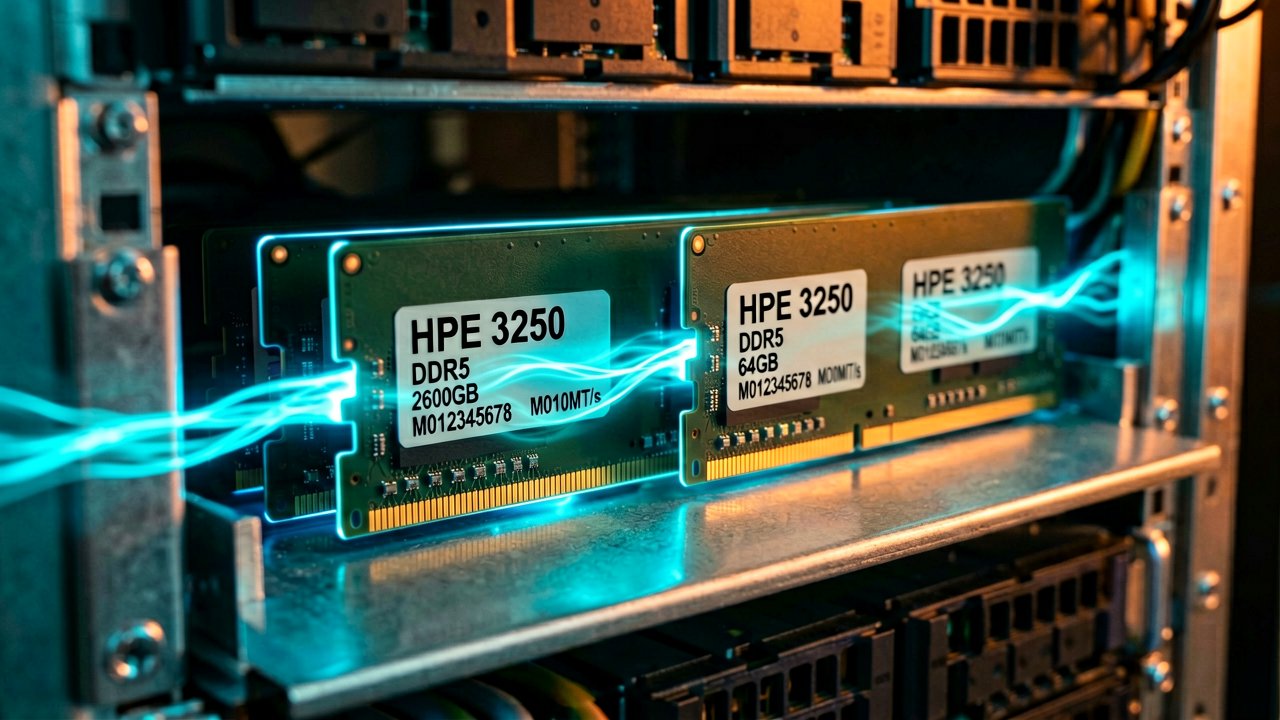
Just when you thought the world had moved entirely to distributed "scale-out" clusters, Hewlett Packard Enterprise (HPE) has dropped a massive reminder that sometimes, bigger really is better. On May 11, 2026, the tech giant officially pulled the curtain back on the HPE Compute Scale-up Server 3250, a beast of a machine designed specifically for the kind of mission-critical workloads that simply cannot afford a millisecond of lag or a moment of downtime.
At its heart, this isn't just another server refresh; it's a play for the soul of the modern enterprise. While much of the industry has spent years obsessing over "horizontal scaling"—essentially stringing together dozens of small servers—HPE is doubling down on the "scale-up" philosophy. The idea is simple: if you have a massive, complex database like SAP HANA or Oracle, it’s often faster and more efficient to keep that data in one giant bucket rather than splitting it across a network. According to HPE, this approach eliminates the "network hops" and latency that often plague distributed systems.
Under the Hood: Pure Muscle
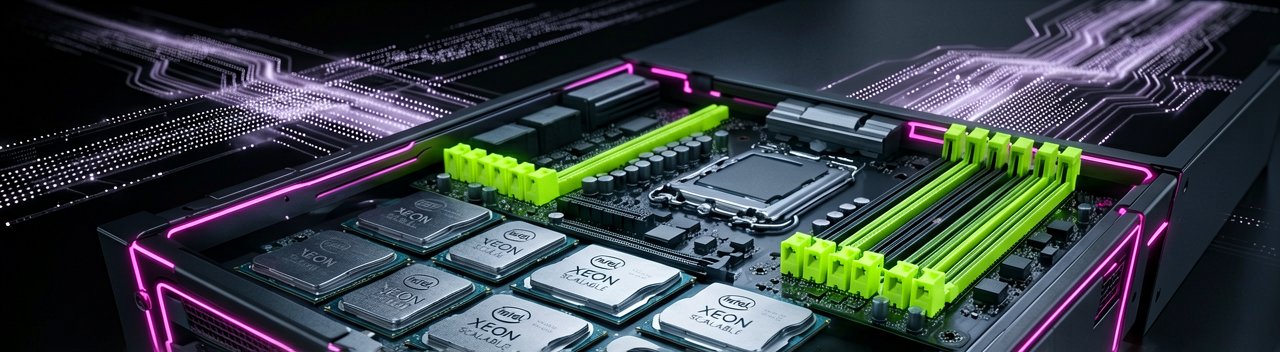
The specs for the 3250 are, frankly, a bit staggering. We're looking at a modular 5U chassis that can scale from four up to 16 6th Generation Intel Xeon Scalable processors. If you max this thing out, you’re looking at up to 1,376 cores in a single system. But the real headline isn't the cores—it's the memory. The 3250 supports an industry-first 64 terabytes of shared DDR5 memory. To put that in perspective, that’s enough room to hold the entire database of a global retail giant in-memory, allowing for real-time analytics that would take hours on traditional storage-heavy systems.
What makes this particularly clever is the modularity. You don’t have to buy a 16-socket monster on day one. You can start with a single 4-socket building block and add more as your data demands grow. It’s a "pay-as-you-grow" hardware model that feels very much in line with the cloud-like flexibility HPE is pushing through its GreenLake platform, as noted by reviewers at StorageReview.
Reliability That Doesn't Sleep
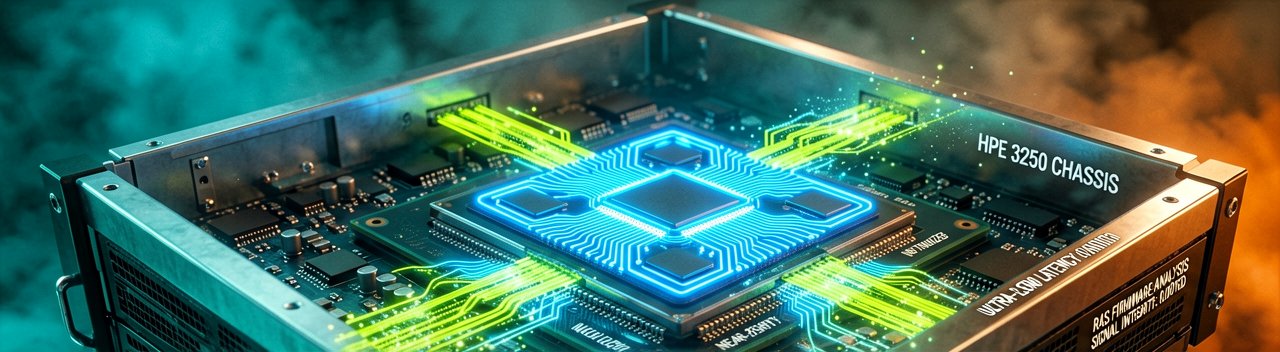
When you're running the core financial or ERP systems for a Fortune 500 company, "oops" isn't in the vocabulary. HPE has leaned heavily into what they call "Extreme RAS" (Reliability, Availability, and Serviceability). The 3250 features a "Firmware First" architecture and a specialized analysis engine. Essentially, the server is smart enough to detect and self-heal memory errors or hardware glitches before they ever reach the operating system, keeping the lights on while others would be rebooting.
Security hasn't been sidelined, either. With the HPE Silicon Root of Trust baked into the hardware, the system can verify the integrity of its own firmware. In an era where "state-sponsored" and "firmware-level" attacks are no longer just movie plots, this kind of hardware-level defense is becoming a mandatory requirement for high-stakes enterprise environments, according to SAPinsider.
Ultimately, the HPE Compute Scale-up Server 3250 isn't for everyone—your local pizza shop won't be needing 64TB of RAM anytime soon. But for the global banks, healthcare networks, and logistics titans trying to make sense of petabytes of data in real-time, this machine is a very clear signal that the "Big Iron" era isn't over; it’s just getting started.
The Quiet Resurgence of Big Iron: What most reports miss is that the HPE Compute Scale-up Server 3250 isn’t just a hardware launch; it is a strategic defensive play against the "commodity cloud" narrative. For years, the industry gospel was that any problem could be solved by throwing a thousand cheap, identical servers at it. But as AI-driven datasets and real-time ERP requirements balloon, the "tax" of moving data between those thousand servers has become a silent performance killer. By consolidating everything into a single, massive memory pool, HPE is effectively telling the enterprise world that density is the new efficiency.
Industry veterans will recognize the 3250 as the spiritual and technical successor to the legendary Superdome lineage. However, where the Superdome was often seen as a proprietary monolith, the 3250 feels more like an open ecosystem. By sticking to standard x86 architecture and Intel Xeon Scalable processors, HPE has lowered the barrier to entry. They are betting that IT directors, tired of the complexity of managing sprawling virtualized clusters, will jump at the chance to return to a "single system" management style—provided it comes with the reliability they’ve grown accustomed to.
The Latency War and the In-Memory Edge
From a stakeholder perspective, the pressure to deliver "instant" results has never been higher. CFOs are no longer satisfied with batch reports that run overnight; they want to see the impact of a global supply chain disruption on their balance sheet now. This is where the 64TB of shared memory becomes more than just a vanity stat. In a scale-out environment, a complex query has to hop across a network switch, wait for synchronization, and deal with various software bottlenecks. On the 3250, that same query stays within the high-speed processor interconnects, slicing latency from milliseconds to microseconds.
This "near-zero latency" environment is the primary reason partners like SAP have been so vocal about this release. The move toward SAP S/4HANA often forces companies to rethink their entire infrastructure stack. For a global enterprise, the risk of a botched migration is existential. By providing a certified, massively scalable environment that can grow from a modest 4-socket setup to a 16-socket powerhouse, HPE is offering a "security blanket" of sorts for the most stressful transitions in an IT department's lifecycle.
The Sustainability Paradox
Interestingly, the 3250 also addresses a growing concern among tech journalists: the environmental footprint of the data center. While a server that pulls this much power might seem like an energy hog at first glance, the counter-argument is one of "work per watt." One fully loaded 3250 can often replace a dozen or more smaller, older servers. By reducing the "overhead" power—cooling the extra chassis, powering redundant power supplies in multiple racks, and maintaining complex networking—the consolidated scale-up approach can actually lead to a lower total carbon footprint for specific high-density workloads.
Ultimately, the HPE 3250 reflects a market that is maturing past the "one size fits all" cloud phase. We are entering an era of "Right-Sized Hybridity," where the cloud handles the burstable, generic web traffic, but the core "brain" of the company lives on high-performance, scale-up iron. It’s a sophisticated, nuanced approach to computing that proves that even in an age of virtualization and containers, there is still no substitute for raw, physical horsepower when the stakes are high.
Reading Between the Lines: While HPE’s marketing team paints the 3250 as the ultimate engine for the AI era, there is a glaring contradiction in the "bigger is better" narrative that demands a skeptical look. We are being told that 64TB of shared memory is the cure for data latency, yet this launch comes at a time when the industry is increasingly obsessed with "edge" computing and decentralized data processing. If the future of data is supposedly being generated at the periphery—on factory floors and in moving vehicles—then building a massive, centralized 1,376-core monolith feels somewhat like building a state-of-the-art fortress in a world where everyone has moved to the suburbs.
The real tension lies in the hardware-software gap. HPE can provide 64TB of DDR5 memory, but the number of enterprise applications that can actually address that much memory effectively, without choking on their own management overhead, remains a remarkably short list. For SAP HANA, it’s a dream; for almost everything else, it’s an expensive insurance policy. There is a persistent risk that enterprises will over-provision these "modular" systems, buying into the 16-socket dream while their actual day-to-day CPU utilization barely justifies a high-end workstation. The modularity is a selling point, certainly, but it’s also a clever way to lock customers into a specific hardware trajectory for the next decade.
The "Scale-Up" vs. "Scale-Out" Identity Crisis
Furthermore, we have to talk about the Intel of it all. By tying the 3250 so closely to the 6th Generation Xeon Scalable processors, HPE is making a massive bet on Intel’s roadmap during a period of intense competition from ARM-based custom silicon and AMD’s aggressive EPYC gains. If Intel hits a manufacturing snag or a performance ceiling, the 3250’s value proposition could age in dog years. While the "Extreme RAS" features are designed to keep the machine running for ten years, the breakneck pace of silicon innovation might make a 2026-era server feel like a museum piece long before its power supply gives out.
There’s also the GreenLake factor to consider. HPE is increasingly pushing hardware as a service, which shifts the 3250 from a capital expense to an operational one. This is a savvy move for HPE’s balance sheet, providing predictable recurring revenue, but for the customer, it blurs the line between "owning" your infrastructure and simply renting a very heavy piece of furniture. If you’re paying for 16 sockets’ worth of capacity but only using four, the "pay-as-you-grow" promise starts to look a lot like the "pay-for-what-you-might-need-someday" reality of the old enterprise contracts we were told the cloud would kill.
In the end, the 3250 is a magnificent piece of engineering that solves a very specific, very expensive set of problems. It’s a high-performance sports car in a world increasingly filled with electric scooters. It’s faster, louder, and more capable, but you have to wonder if the roads we’re building for the future are actually designed for it to drive on. For the giants of industry, this server is a lifeline; for the rest of the market, it’s a fascinating look at how the other 1% lives—and computes.
HPE has essentially built the digital equivalent of a private jet: it’s undeniably the fastest way to get your data from Point A to Point B, provided you don’t mind the fuel bill and the fact that you need a very specific runway to land it on.
"Buying a 64-terabyte server for your 'critical workloads' is the ultimate IT power move—it’s the technical equivalent of buying a heavy-duty forklift to carry your groceries, just in case you ever decide to buy a literal ton of cheese."
Artūras Malašauskas is an AI Systems Integrator with 20+ years of production-grade web engineering experience. He has designed, shipped, and scaled enterprise Python/PHP systems for logistics, SaaS, and public-sector clients. For the past year, he has focused exclusively on AI integrations: deploying open-source LLMs, building generative media pipelines (image, audio, video), and engineering multi-agent workflows for real production environments. His standard: reproducibility, security, cost-efficient inference—no vaporware. He documents and evaluates emerging AI tooling, separating verified capabilities from marketing noise. Technical editor at: muza-ai.eu, ai-verslas.lt, ai-naujinos.lt Connect on LinkedIn
Comments