The Titan Gambit: Why realme is Betting Everything on a 10,001mAh Future
If you've been tracking the breakneck speed of the smartphone market lately, you’ll know that realme isn't exactly a brand that likes to sit still. Just as the dust begins to settle on their previous releases, the company has officially confirmed that the realme P4 Series is headed for a global stage, with Malaysia firmly on the roadmap. According to recent reports from TechNave, this isn't just a single-device drop; we’re looking at a trio of models: the P4x, the P4 Lite, and the heavy-hitting P4 Power 5G.
What makes this particularly interesting for the Malaysian market is the "Power" moniker. If history (and the latest leaks) are anything to go by, realme is doubling down on endurance. While most flagships are content with a standard 5,000mAh cell, the P4 Power 5G is rumored to be packing a staggering 10,001mAh "Titan Battery." That’s essentially a power bank with a phone attached. This move signals a clear shift in realme’s strategy—prioritizing multi-day battery life for users who are tired of living on a charging cable, as noted by industry analysts at GadgetSpecs.
Performance Meets Efficiency
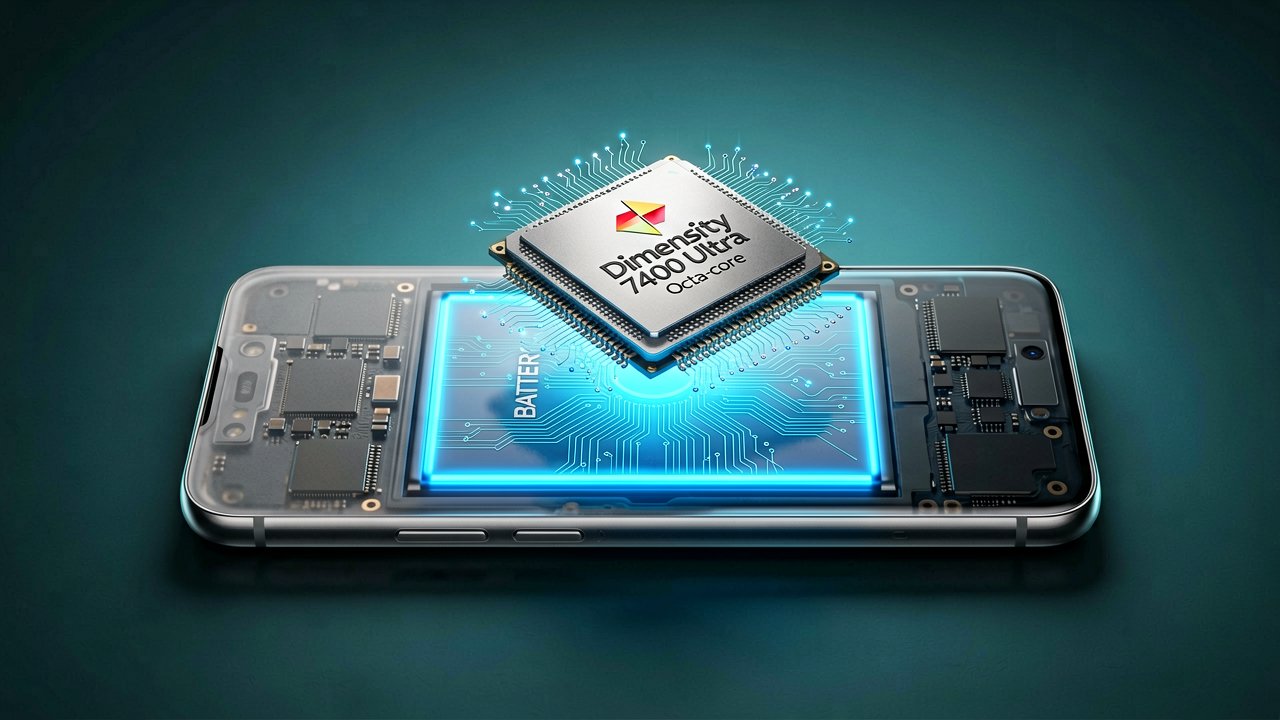
Under the hood, the P4 Series isn't just about raw capacity. The lineup is expected to utilize the MediaTek Dimensity 7400 Ultra chipset, a 4nm workhorse that balances high-speed 5G connectivity with sensible power consumption. It’s a smart play—pairing a massive battery with an efficient processor ensures that the "Titan" name isn't just marketing fluff but a legitimate promise of longevity. For the gamers out there, the inclusion of an AI Gaming Engine suggests realme is trying to smooth out those annoying frame drops during intense Mobile Legends or PUBG sessions by intelligently managing background resources.
Visually, the series seems to be leaning into a premium aesthetic that punches above its weight class. We’re hearing talk of a 144Hz HyperGlow AMOLED display on the higher-end models, capable of hitting a peak brightness that could rival some of the most expensive flagships on the market. It’s that classic realme formula: give the people a display that looks like it belongs on a phone twice the price. As detailed in the official specs from realme, the Pro variant even sports a "4D Curve+" design, which should make the device feel surprisingly slim despite the massive battery tucked inside.
In Malaysia, the P-series has traditionally been an online-exclusive affair, often sold through platforms like Shopee and Lazada to keep overhead low and prices aggressive. With the P4 Lite expected to start somewhere around the RM899 mark, realme is clearly aiming for the heart of the budget-conscious segment. It’s a crowded space, but with features like 80W fast charging and an IP69 rating for dust and water resistance, they’ve certainly brought enough hardware to the fight to make things uncomfortable for the competition.
We’re still waiting on a definitive "Save the Date" for the local Malaysian event, but given the frequency of these global announcements, it won’t be long before the official pricing and availability hit our shores. If you’re someone who values a phone that won't die before dinner—or even before the following weekend—the P4 Series is definitely one to keep an eye on. It’s shaping up to be one of the most practical, if slightly overkill, releases of the year.
Do you prioritize battery life over everything else, or is gaming performance still your number one dealbreaker for a mid-range phone?
The Strategic Pivot: What most reports miss is that the P4 Series isn't just another incremental update; it represents realme’s aggressive recalibration to dominate the "value-performance" niche that was once the undisputed playground of its closest rivals. By introducing a 10,001mAh battery, realme isn't just chasing a spec sheet record—they are addressing a specific pain point in Southeast Asian markets like Malaysia, where gig economy workers and heavy commuters rely on their devices for navigation and communication for 12 to 14 hours straight without access to a wall plug.
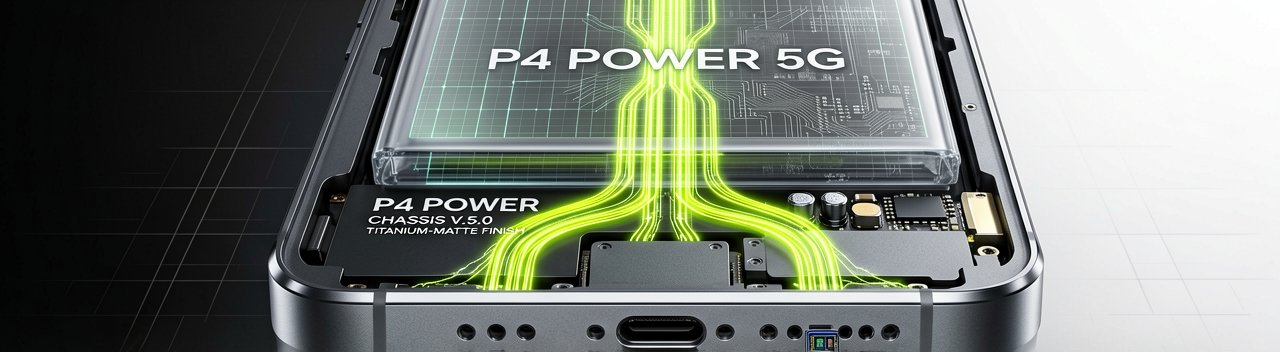
From a manufacturing standpoint, squeezing a five-digit milliampere-hour battery into a chassis that doesn't feel like a brick is a genuine engineering feat. Historically, "battery king" phones were rugged, chunky slabs relegated to niche outdoor enthusiasts. However, industry insiders suggest that realme is utilizing high-density silicon-carbon battery technology to keep the P4 Power 5G surprisingly ergonomic. This shift from traditional graphite anodes allows for more energy storage in a smaller physical footprint, a move we usually only see in ultra-premium experimental flagships.
A Calculated Local Play
The decision to prioritize Malaysia for the global rollout is no accident. The Malaysian smartphone landscape has seen a 15% year-on-year growth in the mid-range segment, with consumers becoming increasingly "spec-literate." They no longer buy on brand name alone; they want tangible durability. By securing an IP69 rating—the highest standard for water and dust resistance—realme is insulating the P4 Series against the tropical downpours and humidity that frequently lead to hardware failure in the region. It’s a "peace of mind" feature that seasoned reporters recognize as a direct response to regional environmental challenges.
Furthermore, the software side of this launch deserves a closer look. The P4 Series is expected to debut realme UI 6.0 features ahead of many older models. This includes "Fluid Cloud" interactions and deeper AI integration that isn't just about pretty photos. We're looking at AI-driven battery health management that learns your sleep cycles to trickle-charge the device, ensuring that massive 10k battery doesn't degrade after only a year of heavy use. According to supply chain whispers via GSMArena, this emphasis on "hardware longevity" is part of a broader corporate push to increase the average replacement cycle of their devices from 18 to 30 months.
Finally, we have to talk about the competitive ripple effect. By pushing these high-end specs into the P-series, realme is forcing competitors like Redmi and Poco to reconsider their upcoming roadmaps. If realme can successfully market a "Titan Battery" at a mid-range price point, the industry standard for what constitutes a "good" battery life is going to shift overnight. This isn't just a product launch; it’s an attempt to redefine the expectations of the global mid-range consumer, moving the goalposts from "lasts a day" to "lasts a weekend."
Would you consider a slightly thicker phone if it meant never having to carry a power bank again?
Reading Between the Lines: While the "Titan Battery" headlines make for great marketing copy, a seasoned observer has to wonder if realme is solving a problem or simply creating a new one. The math of a 10,001mAh battery is undeniable, but it brings up a glaring contradiction in the mid-range philosophy: the trade-off between weight and utility. If the P4 Power ends up tipping the scales like a literal paperweight, it risks alienating the very "lifestyle" users realme usually courts. We have to ask if this is a genuine leap forward or an engineering stunt to mask the fact that mobile chipsets are still struggling to find a true balance between 5G power drain and thermal efficiency.
There is also the matter of the "Lite" and "x" models. In the tech world, these suffixes are often euphemisms for "recycled components." While the P4 Power gets the headlines and the fancy silicon-carbon tech, the lower-tier siblings often end up as rebranded leftovers from the previous year’s inventory. If realme isn't careful, the P4 Series could suffer from a split personality—one model that genuinely innovates and two others that exist merely to fill retail shelf space. The success of the Malaysian launch hinges on whether these "affordable" variants can offer a cohesive experience or if they’re just riding the coattails of their "Titan" big brother.
The Fast-Charging Paradox
Then we have the 80W charging claim. On paper, it’s fast; in reality, charging a 10,001mAh cell at 80W is a bit like trying to fill an Olympic swimming pool with a garden hose. It will still take significantly longer than the 15-minute top-ups we’ve become accustomed to with 4,500mAh batteries. There’s a risk here that the user experience might actually feel slower despite the high wattage. As pointed out in a skeptical analysis by Gizmochina, realme will need to manage expectations carefully—marketing a "Power" phone is easy, but explaining why it still takes over an hour to hit 100% might be a harder sell to a generation obsessed with instant gratification.
Ultimately, the P4 Series is a high-stakes gamble on the idea that "more is more." By leaning so heavily into extreme battery specs and rugged IP69 ratings, realme is moving away from the "chic and sleek" identity they’ve spent years building. If the Malaysian market bites, we could be looking at a new era of "utilitarian chic" where we stop caring about how thin a phone is and start caring about whether it can survive a weekend in the rainforest. If it fails, the P4 Series might just go down as a curious footnote in the history of smartphone excess.
Are we finally reaching a point where hardware overkill is the only way for a brand to stand out in a saturated market?
Given the trajectory of these battery sizes, by 2030 we’ll likely be carrying bricks that can jump-start a stalled Proton Saga, yet we’ll still find a way to complain that the charger doesn’t come in the box.
"In an age where we’re told everything is getting thinner and lighter, realme has decided to give us a phone that could double as a home defense weapon—and honestly, considering how often we forget our chargers, I’m not even mad about it."
Artūras Malašauskas is an AI Systems Integrator with 20+ years of production-grade web engineering experience. He has designed, shipped, and scaled enterprise Python/PHP systems for logistics, SaaS, and public-sector clients. For the past year, he has focused exclusively on AI integrations: deploying open-source LLMs, building generative media pipelines (image, audio, video), and engineering multi-agent workflows for real production environments. His standard: reproducibility, security, cost-efficient inference—no vaporware. He documents and evaluates emerging AI tooling, separating verified capabilities from marketing noise. Technical editor at: muza-ai.eu, ai-verslas.lt, ai-naujinos.lt Connect on LinkedIn
Comments