The $14 Gamble: Is Poet Technologies a Photonic Revolution or a Meme-Stock Mirage?
If you've been hanging around the seedier corners of financial Reddit lately, you’ve probably seen the name Poet Technologies (POET) whispered with the kind of reverence usually reserved for pre-crash GameStop. Trading right around the $14 mark as of mid-May 2026, this small-cap "AI infrastructure" play has become the latest lightning rod for retail traders looking to catch a ride to the moon. But before you mortgage the house, we need to talk about whether this engine is actually fueled or just making a lot of noise.
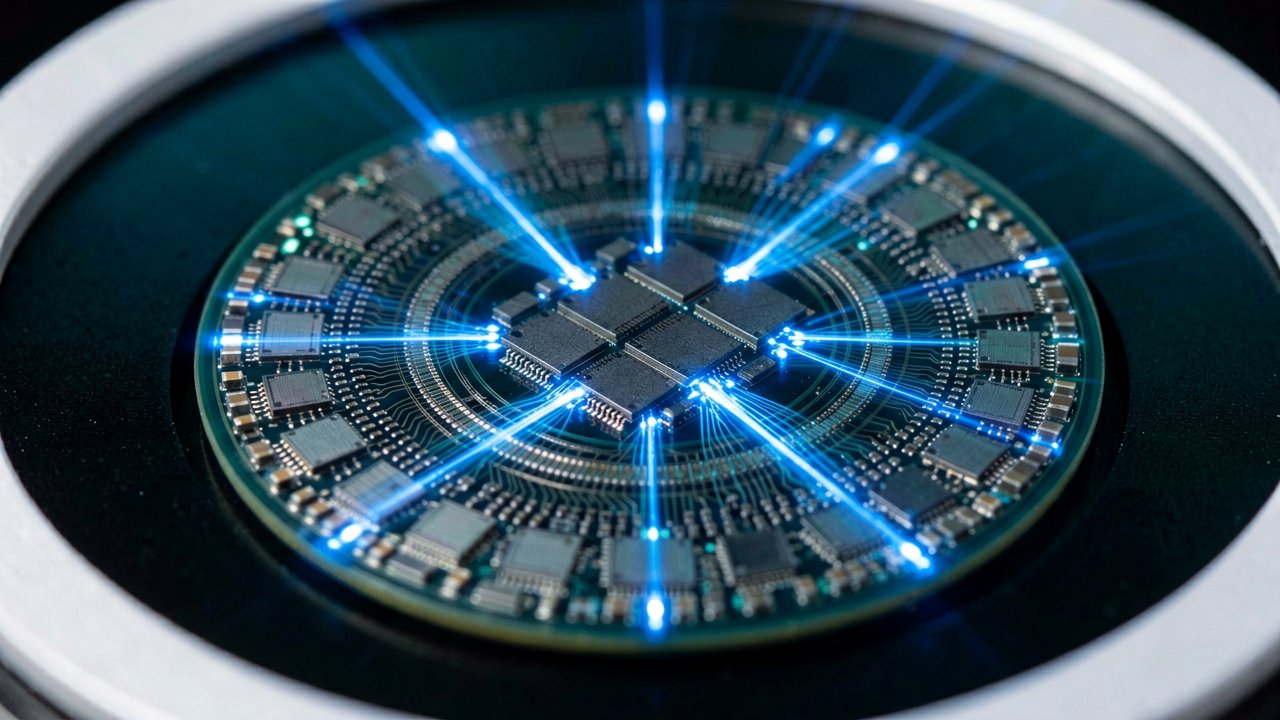
The bull case for Poet is built on a very specific, very technical niche: photonic interconnects. In plain English, they design the "pipes" that move data around AI data centers using light instead of traditional copper wires. As The Globe and Mail recently noted, the stock has surged over 100% in a month as investors bet that these light-based chips will solve the massive power-efficiency problems currently plaguing giants like Nvidia and Meta. It's a sexy story, and in a market obsessed with AI "picks and shovels," it's exactly the kind of narrative that triggers a parabolic run.
The Meme Stock Fever Dream
Let's be real, though: Poet isn't just trading on physics; it’s trading on vibes. With a microscopic revenue base and a valuation that essentially requires perfection, it has all the hallmarks of a classic meme stock. We’ve seen this movie before. Just last month, the sneaker-turned-AI-firm Allbirds—rebranded as "NewBird AI"—saw its stock jump 700% in a day before cratering just as fast, according to EP Tech Pulse. The market isn't always pricing in cash flows right now; it's pricing in buzzwords.
If you look at the charts for other AI darlings like SoundHound AI (SOUN) or C3.ai (AI), the volatility is stomach-churning. SoundHound, for instance, has been bouncing between $8 and $15 for months, currently sitting near Yahoo Finance's reported $8.41 after a massive 2025 peak. These stocks don't move in straight lines; they move in violent spasms. Poet is currently in the middle of one of those spasms, and while the "parabolic" crowd sees a launchpad, seasoned analysts at The Motley Fool warn that without a clear path to profitability, the risk of a "cratering" share price is just as high.
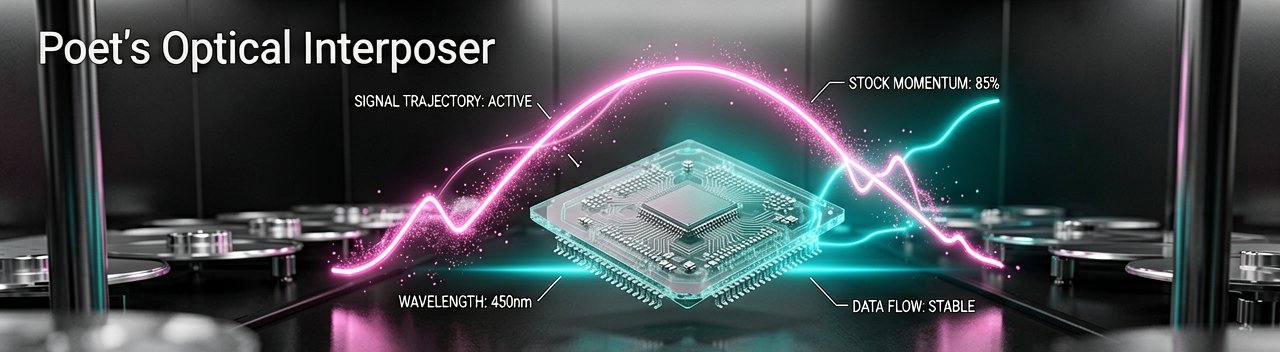
So, is Poet about to go parabolic? It certainly has the momentum and the "short squeeze" chatter to make it happen in the short term. But for anyone not looking to day-trade their way into an early ulcer, the fundamentals are still playing catch-up. It's a high-stakes game of musical chairs where the music is currently a bass-boosted AI remix. Enjoy the show, but keep your hand on the door handle.
The Quiet War Under the Floorboards: While the retail crowd is busy refreshing stock tickers and shouting into the digital void of Discord, the real story of Poet Technologies is being written in the cleanrooms of semiconductor foundries and the backrooms of Tier-1 hardware suppliers. This isn't just about a stock price hitting a psychological target; it’s about a fundamental architectural shift in how computers "think." For decades, we’ve relied on electrons moving through copper, but we’ve hit a thermal ceiling. As one veteran hardware engineer recently put it, we are trying to fire a firehose of data through a drinking straw, and the straw is starting to melt.
What a seasoned reporter looks for in these scenarios isn't the hype—it's the friction. Poet’s "Optical Interposer" platform claims to bridge the gap by integrating electronics and light on a single chip more cheaply than the competition. However, history is littered with brilliant "lab-proven" technologies that died in the "valley of death" between prototyping and mass manufacturing. According to insights shared by industry analysts at EE Times, the hurdle for any upstart in the photonics space isn't just proving the tech works, but proving they can manufacture millions of units with a 99.9% yield. If Poet misses a single production milestone, that "parabolic" trajectory could turn into a tailspin.
The Stakeholder Standoff
There is a fascinating tension brewing between Poet’s management and the institutional "smart money." On one side, you have CEO Suresh Venkatesan, a veteran of GlobalFoundries, who is playing the long game, focusing on strategic partnerships in China and North America. On the other, you have a ravenous retail base that treats every LinkedIn update like a divine prophecy. This disconnect creates a dangerous volatility. When a company becomes a "meme," it often loses the ability to raise capital quietly; every move is scrutinized by thousands of amateur sleuths, which can scare off the very conservative enterprise partners the company needs to survive.

Historical context also offers a sobering warning. We can look back at the early 2000s fiber-optic boom, where companies like JDS Uniphase saw their valuations soar to the heavens on the promise of an "all-optical" future. The tech was real, but the timing was off by a decade. As noted in retrospective market analyses from Bloomberg, the infrastructure wasn't ready to absorb the innovation. Today, the AI boom provides the demand that was missing in 2001, but the competition is also fiercer. Giants like Intel and Broadcom are pouring billions into their own silicon photonics divisions, aiming to crush niche players like Poet before they can even get to the starting line.
Ultimately, the "deep dive" reveals that Poet is a company caught between two worlds. It is a legitimate technical contender with a portfolio of over 70 patents, yet it is being traded like a digital lottery ticket. For the expert observer, the question isn't whether the stock will go parabolic—the question is whether the company can sign a definitive supply agreement with a hyperscaler like Amazon or Google before its cash reserves run dry. In the tech world, being right is important, but being right at the wrong time is the same as being wrong.
The Great Silicon Skepticism: Whenever a sub-$20 stock is described as "solving" a fundamental bottleneck of the global internet, any reporter who survived the dot-com bubble or the EV SPAC craze feels a familiar itch at the back of their skull. The assumption currently fueling the Poet Technologies narrative is that technical superiority guarantees market dominance. It doesn’t. In the semiconductor world, "better" tech is frequently steamrolled by "good enough" tech that happens to have a $500 billion balance sheet behind it. We are operating in a reality where Nvidia can essentially dictate the hardware standards of the next decade; if Poet’s interposer doesn't fit neatly into Team Green’s roadmap, it’s a brilliant paperweight.
There is also a glaring contradiction in the "meme" narrative: the retail crowd loves Poet for its disruptive potential, yet the company’s survival hinges on becoming an invisible, compliant cog in the very corporate machines the "apes" claim to distrust. Projecting forward, if Poet does manage to go parabolic, it creates a perverse incentive for the company to issue a massive secondary offering to shore up its balance sheet. We’ve seen this script with AMC and GameStop; the moment the stock price hits the stratosphere, management often hits the "sell" button to pay for the expensive R&D required to actually build the product they’ve been promising. For the late-arriving investor, that parabolic curve often looks more like a cliff.
The Hyperscaler Hurdle
Furthermore, the skepticism among institutional analysts at places like Barron's stems from the "lock-in" effect. Data center operators are notoriously risk-averse. They don't buy hardware based on a cool YouTube breakdown; they buy based on decades-long support guarantees and redundant supply chains. For Poet to break in, they don't just need a faster chip; they need to convince the world’s largest companies to gamble their AI dominance on a small-cap firm with a volatile share price. It’s a tall order that requires more than just clever physics; it requires a level of commercial diplomacy that Poet has yet to fully demonstrate on the global stage.
If we strip away the AI buzzwords and the rocket ship emojis, we are left with a high-stakes engineering firm playing a game of chicken with the laws of thermodynamics and the whims of the Nasdaq. Measured skepticism suggests that while the tech is likely legitimate, the path to a sustainable $14+ valuation is paved with execution risks that the current hype cycle is choosing to ignore. The "parabolic" dream is built on the idea that Poet is the only game in town, but in the windowless rooms of Silicon Valley, the giants are already building their own light-speed ladders.
The danger of a parabolic move is that once you’ve reached the apex, there is nowhere to go but down, and gravity is the only thing in the market that never needs a technical upgrade.
The implication for the average investor is a classic Catch-22. If the stock doesn't go parabolic, you might be holding a slow-bleeding asset for years waiting for the industry to catch up. If it does go parabolic, you’re likely participating in a speculative fever that has very little to do with the actual chips being baked in the foundry. Either way, the "moon" looks a lot more like a highly pressurized cleanroom where one mistake can vaporize a billion dollars of market cap in an afternoon.
"Investing in an AI meme stock for the 'revolutionary photonics' is a bit like buying a lottery ticket because you admire the high-quality cardstock it's printed on. It’s a lovely sentiment, but let’s not pretend it’s the primary reason you’re at the gas station at 2:00 AM."
Artūras Malašauskas is an AI Systems Integrator with 20+ years of production-grade web engineering experience. He has designed, shipped, and scaled enterprise Python/PHP systems for logistics, SaaS, and public-sector clients. For the past year, he has focused exclusively on AI integrations: deploying open-source LLMs, building generative media pipelines (image, audio, video), and engineering multi-agent workflows for real production environments. His standard: reproducibility, security, cost-efficient inference—no vaporware. He documents and evaluates emerging AI tooling, separating verified capabilities from marketing noise. Technical editor at: muza-ai.eu, ai-verslas.lt, ai-naujinos.lt Connect on LinkedIn
Comments