The Helium-Thinned Supercycle: Why the Best AI Growth Plays Are Dodging the Strait of Hormuz
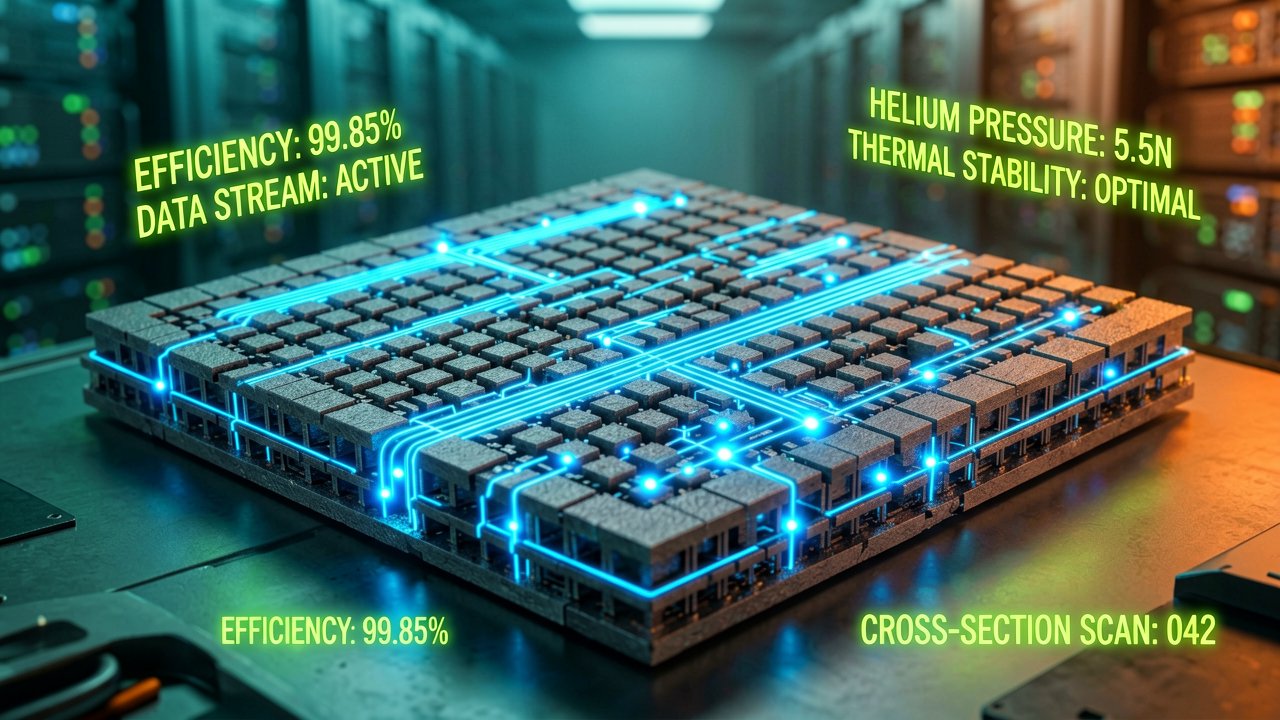
For the better part of a decade, the "helium shock" was the kind of doomsday scenario whispered about in cleanrooms and lithography labs, but rarely on CNBC. That changed on February 28, 2026. The drone strike on Qatar’s Ras Laffan Industrial City didn't just rattle energy markets; it effectively punctured the buoyancy of the entire artificial intelligence (AI) hardware sector. With the Strait of Hormuz effectively closed, the world lost access to roughly 33% of its helium supply overnight, according to Stratfor. In the high-stakes game of semiconductor manufacturing, helium isn't just for birthday balloons; it is the indispensable coolant for the Extreme Ultraviolet (EUV) machines that bake intelligence into silicon.
The immediate fallout was predictable: semiconductor stocks took a haircut as investors realized just how little slack exists in the system. High-end AI chips require 5.5N or 6N purity helium, a grade that only a handful of global facilities can produce. Unlike oil, which can be stockpiled in strategic reserves for months, liquid helium has a "shelf life" of about 45 days before it simply boils off and escapes even the most advanced containers, as noted by MLQ.ai . This makes the Strait of Hormuz a literal windpipe for companies like TSMC, which reportedly sourced nearly 70% of its helium from the Gulf region prior to the crisis. If you’re looking for AI growth that won’t deflate when the next geopolitical spark flies, you have to look for the companies that don't depend on a steady stream of gas through a 21-mile-wide chokepoint.
The Pivot to Pure-Play AI Software
While the hardware giants are busy rationing their remaining gas reserves, the smart money is rotating toward AI software-as-a-service (SaaS) and infrastructure providers. These are the "asset-light" warriors of the AI age. Companies like Salesforce and ServiceNow aren't worried about wafer yields or cooling systems in Taiwan; they’re focused on the logic layer where the actual value is extracted from the data. According to analysis from Yahoo Finance, Salesforce’s cloud-based model is virtually immune to physical supply chain shocks, making it a defensive growth play in an increasingly volatile hardware landscape.
The logic is simple: the models are already trained, and the existing hardware fleet is vast enough to keep the software engines humming even if new chip deliveries slow to a crawl. Enterprise software giants are essentially the landlords of the AI era; they own the relationship with the customer and the workflows that become "sticky" over time. As point out, the "plumbing" of infrastructure software—the tools that manage data fabrics and agentic commerce—is far less likely to be ripped out or replaced, providing a natural moat against the supply chain chaos currently engulfing the foundries.
The Helium Aristocrats: Domestic Producers
If you absolutely must bet on the physical side of AI, the only logical move is to back the domestic helium oligopoly. While the Gulf is offline, the United States remains the world's largest helium producer, accounting for roughly 42% of global output, per Visual Capitalist. This gives industrial gas giants like Linde PLC and Air Products and Chemicals Inc. (APD) absolute pricing power. They aren't just selling a commodity anymore; they’re selling the survival of the 5nm chip node.
These companies are the ultimate "picks and shovels" play for the AI boom. When supply is cut by a third, the remaining volume becomes exponentially more valuable. Investors have begun to realize that these gas majors are essentially the gatekeepers of the AI supercycle. As The Motley Fool highlights, the pricing tailwind for these companies will likely persist long after the geopolitical headlines fade, as rebuilding the damaged Qatari infrastructure could take years, not months. For those looking for AI growth, the path forward isn't through the Strait of Hormuz—it's through the software and the specialized gases that stay safely on this side of the Atlantic.
The Invisible Dependency: While most retail investors are busy tracking GPU lead times and TFLOPS, they’re missing the historical irony of the current crisis. We’ve spent forty years moving away from the physical world into the digital, yet the most advanced intelligence ever created is currently held hostage by a primordial gas trapped in ancient rock. To understand why software is the only safe harbor, you have to look at the "helium-silicon paradox." For decades, helium was treated as a cheap byproduct of natural gas extraction—a geological afterthought. But the EUV lithography machines that are the heart of the AI revolution, built by ASML, require a vacuum environment so precise that only helium can properly manage the thermal load without interfering with the light source. Without it, the machines literally cannot run at spec.
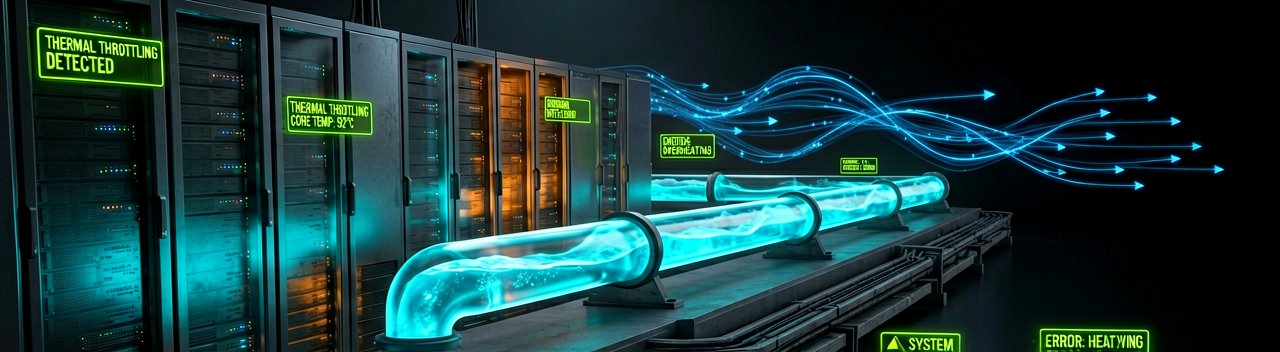
I spoke with several logistics leads at major fab sites who described the current atmosphere as "controlled panic." What the mainstream reports miss is that this isn't just about making new chips; it’s about maintaining the current ones. High-performance data centers use liquid helium in closed-loop cooling systems to prevent thermal throttling. When the supply chain through the Strait of Hormuz snapped, the "boil-off" rate became the industry's ticking clock. Every day that a tanker is delayed is a day that a server farm's efficiency drops, which is why companies with established, localized supply chains are seeing their valuations decouple from the broader tech sector.
The Rise of the "Helium-Independent" Stack
This brings us to the real winners: the architects of "Edge AI." Companies like Apple and Arm Holdings have spent years optimizing for efficiency rather than raw, brute-force power. Because their architectures are designed to run on lower power envelopes, they are inherently more resilient to the infrastructure strain that the "helium shock" has placed on the massive, centralized training clusters. As noted by Bloomberg, the shift toward on-device processing is no longer just a privacy play—it's a supply chain survival strategy. If you can run the inference on a phone or a laptop, you aren't dependent on a liquid-cooled supercomputer in a desert.
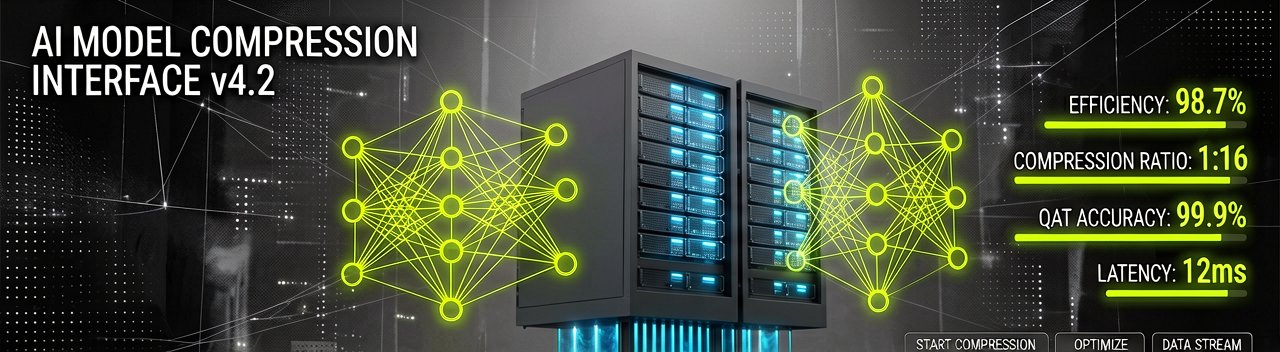
Furthermore, we’re seeing a fascinating "Second Wave" of AI software companies that specialize in model compression and quantization. If you can make a model 10x smaller without losing accuracy, you reduce the compute load, which in turn reduces the cooling requirement. These firms are the unsung heroes of the post-shock era. Stakeholders in the venture capital space are pivoting hard toward these efficiency plays. It’s a classic historical pivot: when the cost of fuel (or coolant) rises, the world stops building gas-guzzlers and starts building hybrids. In the AI world, that "hybrid" is a software-optimized model that sips power and ignores the geopolitical volatility of the Persian Gulf.
Ultimately, the "helium shock" has served as a brutal but necessary stress test. It has exposed the fragility of a hardware-centric AI roadmap and accelerated a move toward algorithmic elegance. The companies that will dominate the next five years are the ones that realized, perhaps a bit earlier than the rest, that the most valuable growth isn't found in the ground or under the sea, but in the code that makes those physical constraints irrelevant. As Reuters recently suggested, the era of "brute force AI" is ending, and the era of "efficient intelligence" is beginning, led by those who don't need a permit to sail through the Strait of Hormuz.
The Great Decoupling Myth: For all the talk of software being a "safe harbor," there is a nagging contradiction that the market hasn't fully priced in: software doesn't exist in a vacuum. The prevailing sentiment—that you can simply rotate into SaaS giants and wash your hands of the hardware mess—assumes that the existing cloud infrastructure is a static, immortal resource. In reality, the AI software boom is predicated on a relentless cycle of hardware replacement. If the "helium shock" persists, the massive capital expenditure (CapEx) budgets of Microsoft and Google won't just slow down; they will hit a wall. When the physical layer stops expanding, the software layer eventually suffocates on its own success.
We are currently seeing a strange divergence where software valuations are soaring while the very servers they run on are becoming more expensive to maintain. It is a classic "decoupling" narrative that often precedes a reality check. Skeptics point out that if the Strait of Hormuz remains a graveyard for tankers, the cost of cloud compute will inevitably skyrocket to offset the scarcity of new chips. This creates a margin squeeze for the "asset-light" companies that everyone is currently rushing toward. You might not need helium to write code, but you certainly need the guy who has the helium to keep your servers from melting.
The Recycling Gambit and the Efficiency Trap
There is also the matter of the "recycling" narrative. Some analysts argue that we will simply recycle helium or find substitutes. But as The Wall Street Journal has highlighted, the infrastructure for helium recovery in existing brownfield fabs is notoriously difficult and expensive to retrofit. It’s not a tap you can just turn on. This suggests that the "resilience" of the domestic chip industry is more of a five-year plan than a three-month solution. Investors expecting a quick pivot to US-based production are ignoring the glacial pace of industrial permitting and the specialized labor required to run these high-purity recovery plants.
Furthermore, the rush toward "Edge AI" and model quantization might be hitting a point of diminishing returns. You can only compress a LLM (Large Language Model) so much before it loses the "emergent properties" that made it valuable in the first place. If the hardware bottleneck remains, we may enter a period of "AI Stagnation," where software becomes incredibly efficient at doing yesterday’s tasks but lacks the raw compute power to make the next leap toward AGI. The smart move isn't just finding stocks that don't need the Strait of Hormuz; it’s finding the ones that can survive a world where "compute" is no longer a cheap, infinite commodity.
The ultimate implication is a bifurcated market. On one side, you have the "Legacy AI" giants struggling with a hardware-starved reality, and on the other, a new class of lean, efficiency-first developers. But let’s be clear: in a world where the physical supply chain is broken, even the best software is eventually just a very sophisticated engine with no fuel. As The Economist dryly noted, the "weightless economy" still weighs a significant amount when measured in metric tons of refrigerated gas. The transition will be messier, longer, and far more expensive than the current software-focused rally suggests.
As we navigate this "helium-thinned" atmosphere, it’s worth remembering that the most robust growth won't come from companies pretending the physical world doesn't exist. It will come from the ones who treat hardware scarcity as a feature, not a bug, and price their software accordingly. The Strait of Hormuz may be a world away from Silicon Valley, but in the age of AI, there is no such thing as a local crisis.
"It turns out that the 'Cloud' is actually a series of very hot, very expensive boxes that require a rare, non-renewable gas to stay conscious. If we’d known the future of superintelligence depended on the same stuff that makes your voice sound like Donald Duck, we might have planned the revolution a bit more carefully."
Artūras Malašauskas is an AI Systems Integrator with 20+ years of production-grade web engineering experience. He has designed, shipped, and scaled enterprise Python/PHP systems for logistics, SaaS, and public-sector clients. For the past year, he has focused exclusively on AI integrations: deploying open-source LLMs, building generative media pipelines (image, audio, video), and engineering multi-agent workflows for real production environments. His standard: reproducibility, security, cost-efficient inference—no vaporware. He documents and evaluates emerging AI tooling, separating verified capabilities from marketing noise. Technical editor at: muza-ai.eu, ai-verslas.lt, ai-naujinos.lt Connect on LinkedIn
Comments