The Shrinking Giant: Google’s High-Stakes Gamble on Lightweight AI and Smart Glass

Google I/O 2026: Chasing the Phantom of GPT-5.5
The tech world is currently obsessed with a number that doesn't officially exist yet: GPT-5.5. While OpenAI keeps its cards close to its chest, the rumor mill is churning at full speed, suggesting a model that doesn’t just iterate, but leaps. Naturally, Google isn’t about to let that shadow loom over its own backyard. As we gear up for the next Google Developer Conference, the air in Mountain View is thick with a "now or never" energy. It’s not just about keeping pace anymore; it’s about proving that Gemini can actually outrun the competition before the finish line is moved again.
The centerpiece of this year's keynote is rumored to be a massive overhaul of the Gemini family, specifically targeting what insiders are calling "hyper-efficiency." Reports from The Verge suggest that Google is pivoting away from the "bigger is better" philosophy. Instead, they're doubling down on lightweight large models (LLMs) that punch significantly above their weight class. The goal? Delivering GPT-5.5-level reasoning and multi-modal capabilities without the massive latency or compute costs usually associated with frontier models.
The Rise of the "Pocket" Intelligence
Why go small? Because that’s where the money—and the users—are. Google’s play seems to be putting high-tier intelligence directly onto consumer hardware. We’re expecting to see a new generation of "Nano" models that don't just summarize texts but handle complex, multi-step coding and logical reasoning entirely on-device. It’s a bold move. If Google can prove that a model running on a smartphone can rival the performance of a massive server-side GPT model, the landscape of mobile computing changes overnight.
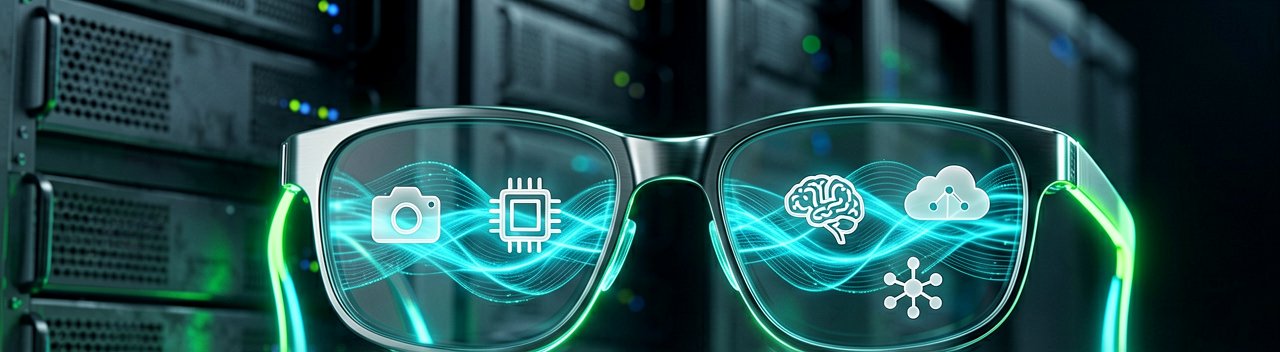
Of course, the hardware needs to keep up, which brings us to the most "sci-fi" rumor of the bunch: the return of Google AI Glasses. No, we aren’t talking about the awkward Google Glass era of 2013. Analysts at Bloomberg have hinted that Google has been fast-tracking a pair of sleek, "AI-first" spectacles. These aren't meant to replace your phone but to serve as the eyes and ears for Gemini. Imagine walking through a grocery store and having your glasses highlight ingredients that fit your diet, all powered by those new lightweight models.
Vision or Vaporware?
It’s easy to get swept up in the hype, but Google has a history of promising the moon and delivering a very nice flashlight. The skepticism is warranted. Can they truly match a theoretical GPT-5.5? OpenAI’s track record for "magic" is hard to beat. However, Google has something OpenAI doesn't: a massive, integrated ecosystem. From Android to Workspace, Google can weave AI into the fabric of daily life in a way that makes a standalone chatbot feel like a relic of the past.
As Wired points out, the real battle isn't just about benchmarks; it's about utility. If Google’s new lightweight models can actually understand the context of your life—your emails, your calendar, and what you're seeing through a pair of glasses—it won't matter if GPT-5.5 is technically "smarter" in a vacuum. Seamlessness is the new frontier. We’ll find out soon enough if Google is ready to lead that charge or if they’re still just playing catch-up in a game where the rules are rewritten every six months.
What Most Reports Miss: The Invisible Infrastructure of the Gemini Pivot
Beyond the spec sheets and the flashy stage demos lies a more calculated desperation. While the headlines are busy counting parameters, the seasoned observers in the room are watching Google’s supply chain and its internal reorganization. This isn't just another software update; it’s a fundamental shift in how Google justifies its massive "AI tax" to shareholders. For years, the company has been criticized for being too slow to deploy, paralyzed by the fear of "hallucinations" ruining its pristine search reputation. Now, the internal mandate has flipped: agility at any cost.
Industry veterans recall the 2017 "Attention is All You Need" paper—the very foundation of the current AI boom—which Google authored and then arguably squandered. There’s a palpable sense of "never again" echoing through the Googleplex. According to insiders cited by Reuters, the rush toward lightweight models isn't just about mobile convenience; it's a defensive play against the skyrocketing costs of NVIDIA H100 clusters. If Google can achieve GPT-5.5 parity using 40% less compute, they don't just win on performance—they win on the balance sheet.
The Stakeholder Tightrope
The push for AI glasses represents a second chance at a legacy that nearly died on the vine. When Google Glass first launched, it was a social pariah, dubbed "glassholes" by a public not yet ready for ubiquitous cameras. Today, the cultural climate has shifted. With Meta’s recent success in the smart-eyewear space, Google’s leadership is betting that the public’s thirst for "integrated intelligence" will outweigh lingering privacy jitters. However, the engineering hurdle is immense: fitting a battery and a cooling system into a frame that doesn't look like a prop from a 1980s cyberpunk flick.
Software developers are the other critical piece of this puzzle. Google knows that a model is only as good as the apps built upon it. By releasing these lightweight models with robust APIs, they are essentially trying to "bribe" the developer community back from the OpenAI ecosystem. The pitch is simple: "Build with us, and your app will run natively on 3 billion Android devices with zero latency." It’s a compelling argument that TechCrunch notes could stall OpenAI’s momentum in the mobile app space.
A Historical Reckoning
This conference serves as a referendum on Sundar Pichai’s "AI-first" vision established nearly a decade ago. We are seeing a convergence of Google’s disparate tribes—DeepMind, the Android team, and the hardware wing—finally pulling in the same direction. In previous years, these departments often felt like separate fiefdoms, sometimes even competing against one another. The looming threat of a "GPT-5.5" has acted as a unifying force, forcing a level of cross-departmental collaboration that was previously unheard of in the company’s sprawling bureaucracy.
Ultimately, the "deep dive" reveals that Google isn't just fighting for a higher benchmark score; they are fighting to remain the primary interface through which we interact with the digital world. If they lose the "AI assistant" war, they lose the gateway to search, and with it, their primary engine of wealth. The lightweight models and the glasses aren't just gadgets; they are the new front lines in a war of attrition where the prize is nothing less than the future of the internet itself.
Reading Between the Lines: The Efficiency Paradox
There is a certain irony in Google’s sudden pivot toward "lightweight" brilliance. For years, the industry’s gospel was that scaling—more data, more power, more parameters—was the only path to emergent intelligence. Now, Google is effectively trying to convince us that they can shrink a cathedral into a keychain without losing the architecture. It raises a glaring contradiction: if GPT-5.5-level reasoning can truly be achieved on-device with a fraction of the weight, it suggests the massive, power-hungry clusters of the last three years were less of a technical necessity and more of an expensive lack of imagination.
We should also be wary of the "parity" narrative. In the tech world, "Performance on Par with..." is often a marketing euphemism for "not quite as good, but much cheaper." While Google’s new models may mirror the logic of a GPT-5.5 in controlled benchmarks, the real-world friction of a mobile processor thermal-throttling during a complex task is a reality no keynote demo can fully replicate. The skepticism here isn't about Google's talent, but about the laws of physics and the current state of battery technology.
The Ghost of Privacy Past
Then there is the matter of the glasses. Google’s attempt to re-enter the face-worn wearable market is a bold bet that our collective memory of the "Glass" backlash has faded. They are banking on the idea that we’ve become so accustomed to being watched by Ring doorbells and TikTok algorithms that a camera on a friend’s bridge is no longer a dealbreaker. But there is a tension here that Google hasn't quite resolved: for AI glasses to be truly helpful, they must be "always-on" and "always-processing."
This creates a data-mining goldmine that makes traditional Search look like a hobby. If Gemini is literally seeing what you see to provide "contextual help," the line between a personal assistant and a corporate spy becomes non-existent. Stakeholders at Financial Times have already pointed out that the regulatory hurdles in the EU alone could turn these glasses into a regional luxury rather than a global revolution. Google’s biggest challenge isn't the silicon; it's the social contract.
Finally, we have to consider the "developer fatigue" factor. Google has a notorious habit of launching, rebranding, and then killing platforms (RIP Stadia, Google+, and the dozen messaging apps before them). Asking developers to optimize specifically for a new "Nano" architecture while the OpenAI and Meta ecosystems are already humming is a big ask. If Google can't prove this hardware has a shelf life longer than a fiscal quarter, the lightweight revolution might end up being light on actual content.
"In the end, we’re being promised a future where our glasses are smarter than our fifth-grade teachers and our phones can out-think a supercomputer—all while we mostly use them to find better ways to skip the line at a coffee shop that doesn't take digital payments anyway."
Artūras Malašauskas is an AI Systems Integrator with 20+ years of production-grade web engineering experience. He has designed, shipped, and scaled enterprise Python/PHP systems for logistics, SaaS, and public-sector clients. For the past year, he has focused exclusively on AI integrations: deploying open-source LLMs, building generative media pipelines (image, audio, video), and engineering multi-agent workflows for real production environments. His standard: reproducibility, security, cost-efficient inference—no vaporware. He documents and evaluates emerging AI tooling, separating verified capabilities from marketing noise. Technical editor at: muza-ai.eu, ai-verslas.lt, ai-naujinos.lt Connect on LinkedIn
Comments