The Great Escape: How ETRI is Scaling the AI Memory Wall

Shattering the Ceiling: How ETRI is Rewriting the AI Playbook
For years, the AI industry has been sprinting toward a brick wall, and it isn’t about raw processing power. We’ve got the GPUs; what we don’t have is a way to feed them data fast enough. This "memory wall"—the growing chasm between how fast a chip can think and how slowly it can grab information from its storage—has threatened to stall the development of next-generation Large Language Models (LLMs). However, researchers at the Newswise-reported Electronics and Telecommunications Research Institute (ETRI) in South Korea claim to have finally found a sledgehammer heavy enough to break through.
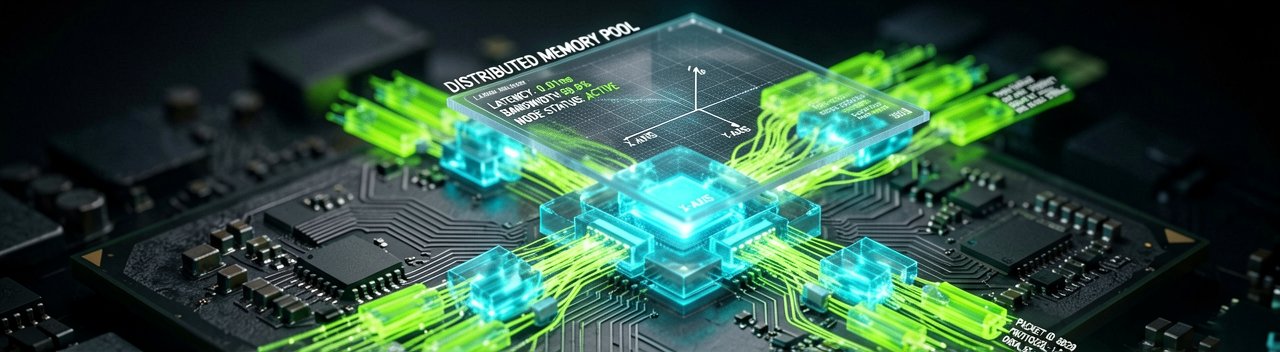
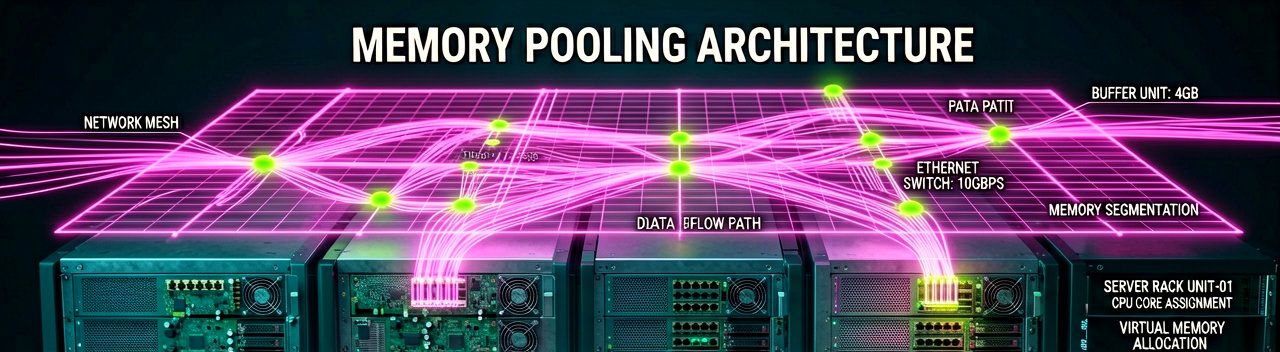
The breakthrough centers on a technology called OmniExtend, which fundamentally changes how we think about server memory. In a traditional setup, if a GPU runs out of its local, high-speed memory, the whole training process hits a snag or crashes with the dreaded "out-of-memory" error. ETRI’s solution? Don't just rely on the memory inside one box. By using an Ethernet-based memory expansion node and a custom transfer engine, they’ve managed to pool memory across multiple devices in real-time. It’s essentially turning a room full of individual servers into one giant, shared brain.
The Ethernet Miracle: Faster, Cheaper, Scalable
What makes this particularly spicy for the tech world is the choice of Ethernet. While specialized, expensive interconnects have been the go-to for high-end AI clusters, ETRI’s use of standard Ethernet protocols means this isn't just a lab experiment for the elite—it's a scalable solution for the masses. According to reports from CHOSUNBIZ, this approach allows for faster and significantly cheaper AI training by linking GPU memories into a single, massive pool. It’s the difference between having five small buckets of water and one Olympic-sized swimming pool.
The numbers back up the hype. In actual LLM workload tests, ETRI confirmed that when memory was expanded using their Ethernet-based architecture, performance recovered by more than twofold in environments that previously suffered from severe shortages. Essentially, they’ve proved that you can maintain top-tier processing speeds even when you don't have enough local memory on hand, provided you can "borrow" it from a neighbor instantly. This is a massive win for sustainability and cost-efficiency in data centers that are currently struggling under the weight of AI's massive resource demands.
Beyond the Wall: A New Era for AI Infrastructure
This isn’t just about making ChatGPT a bit smarter; it’s about the underlying "AI Highway" that South Korea is building toward 2030. As highlighted by Donga Science, this research is a cornerstone of a national strategy to integrate data, computing, and networks into a singular, seamless system. By moving away from the closed, proprietary structures that currently dominate the market, ETRI is opening the door for a more diverse ecosystem of hardware and software.
Looking ahead, the implications are vast. We’re talking about 100-billion-parameter models being trained more smoothly and the potential for "scale-across" technology that treats data centers in different regions as a single infrastructure. By solving the memory bottleneck today, ETRI is effectively clearing the road for the hyper-scale AI models of tomorrow. It’s a bold move that suggests the future of AI isn't just about who has the fastest chip, but who has the smartest way to connect them.
Behind the Scenes: The Invisible Friction of AI Scaling
The Silicon Gilded Cage: What most mainstream headlines gloss over is that the "Memory Wall" isn't just a technical hurdle; it’s a massive financial gatekeeper. Up until now, if you wanted to train a trillion-parameter model, you were forced into a high-stakes marriage with proprietary hardware ecosystems. You didn't just buy a chip; you bought into a closed-loop architecture where the interconnects—the "cables" and protocols—cost as much as the silicon itself. ETRI’s pivot to Ethernet isn't just about speed; it’s an act of architectural rebellion that seeks to democratize the very pipes through which AI intelligence flows.
Historically, the industry tried to solve memory shortages by simply stuffing more HBM (High Bandwidth Memory) onto the GPU die. But we’ve hit a physical limit. HBM is expensive, difficult to manufacture, and takes up precious real estate on the chip. By offloading that burden to an external, Ethernet-connected memory node, ETRI is effectively decoupling "thinking power" from "retention capacity." This allows data center architects to scale memory independently of the number of GPUs, a move that seasoned system engineers have been dreaming of for a decade.
The Latency Gamble and the Protocol Breakthrough
Critics of Ethernet-based expansion have long pointed to one fatal flaw: latency. Ethernet was designed for reliability over vast networks, not for the nanosecond-precision required by a GPU heart rate. However, the team at ETRI didn't just plug in a standard router. They’ve implemented a low-latency transfer engine that bypasses the traditional "bottlenecked" software stacks. By optimizing how data packets are addressed and retrieved across the fabric, they’ve managed to trick the GPU into thinking the remote memory is sitting right next to it on the motherboard.
This breakthrough shifts the conversation from "how much memory can we fit on a chip" to "how efficiently can we network the memory we already have." Industry veterans note that this mirrors the transition the storage world made years ago from local hard drives to Storage Area Networks (SANs). ETRI is essentially creating a "Memory Area Network," allowing a pool of RAM to be dynamically allocated to whichever GPU is currently doing the heavy lifting. In a multi-tenant data center, this kind of resource fluidity is the difference between a profitable operation and a power-hungry money pit.
Stakeholder Stakes: A Shift in Global Power
From a geopolitical perspective, this move by a South Korean flagship institute is a clear signal to the global market. While the world remains hyper-focused on the "chip wars" and export controls, ETRI is focusing on the *infrastructure* that makes those chips useful. If South Korea can standardize an Ethernet-based memory expansion protocol, they could potentially reduce the global reliance on specialized, proprietary interconnect technologies that currently give a handful of Silicon Valley giants a stranglehold on the AI supply chain.
The road ahead isn't without its potholes, though. To see widespread adoption, ETRI will need to convince the broader software ecosystem—the PyTorches and TensorFlows of the world—to natively support this distributed memory architecture. But the incentive is there. As models grow and the cost of "standard" AI training clusters spirals into the billions, the industry is desperate for a relief valve. ETRI has just handed them a map to the exit.
Reading Between the Lines: The Hype vs. The Hard Silicon
The Reality Check: While it’s tempting to frame ETRI’s breakthrough as the ultimate "NVIDIA-killer," we need to temper the techno-optimism with a healthy dose of skepticism. The "Memory Wall" is less of a single brick barrier and more of a shifting swamp. ETRI’s use of OmniExtend and Ethernet is brilliant for capacity, but capacity is only half the battle in the high-stakes world of AI training. In the brutal arena of micro-second synchronization, any "expanded" memory—no matter how clever the transfer engine—still faces the laws of physics. Moving data across a network, even a high-speed one, introduces "jitter" that local on-chip HBM simply doesn't have to deal with.
There is also a glaring contradiction in the industry’s push for decentralization. While ETRI is building bridges between servers to create a "shared brain," the giants of the industry are doing the exact opposite, moving toward "monolithic" systems-on-a-wafer. There is a fundamental tension here: do we scale by making one massive, expensive chip, or by stitchng together a thousand cheap ones? ETRI is betting on the latter, but this assumes that software developers are willing to trade the simplicity of a single-memory space for the complexity of managing a distributed "Memory Area Network." History shows that programmers are notoriously lazy; they will always prefer the path of least resistance, even if it costs a premium.
The Economic Mirage of "Cheap" Ethernet
Furthermore, the narrative that Ethernet will democratize AI training assumes that the bottleneck is purely hardware. It ignores the massive moat of proprietary software libraries. Even if you have a perfectly pooled memory system, if the underlying AI kernels aren't optimized to "know" where that memory lives, the hardware becomes a very expensive paperweight. ETRI’s solution is technically elegant, but its success depends on a massive "if": if the open-source community can provide a software layer that rivals the highly-tuned, black-box performance of proprietary stacks.
Finally, we have to look at the power bill. The more we move data back and forth across a network—even an efficient one—the more energy we burn. In an era where data centers are being scrutinized for their carbon footprint, "borrowing" memory from a server three racks away might solve a memory shortage but create a thermal nightmare. ETRI has given us a fascinating blueprint for a more modular future, but until we see these Ethernet-linked clusters outperforming traditional stacks in the wild, it remains a very promising "maybe" in a world that demands a "definitely."
"We’ve spent forty years trying to make computers smaller, only to realize that the only way to make them smarter is to turn the entire data center into one giant, overheating motherboard. At this rate, by 2040, 'upgrading your RAM' will involve a construction crew and a new zip code."
Artūras Malašauskas is an AI Systems Integrator with 20+ years of production-grade web engineering experience. He has designed, shipped, and scaled enterprise Python/PHP systems for logistics, SaaS, and public-sector clients. For the past year, he has focused exclusively on AI integrations: deploying open-source LLMs, building generative media pipelines (image, audio, video), and engineering multi-agent workflows for real production environments. His standard: reproducibility, security, cost-efficient inference—no vaporware. He documents and evaluates emerging AI tooling, separating verified capabilities from marketing noise. Technical editor at: muza-ai.eu, ai-verslas.lt, ai-naujinos.lt Connect on LinkedIn
Comments