Silicon Underdog: How Weilan Tech’s BabyAlpha A3 Is Rebuilding the Robotics Brain
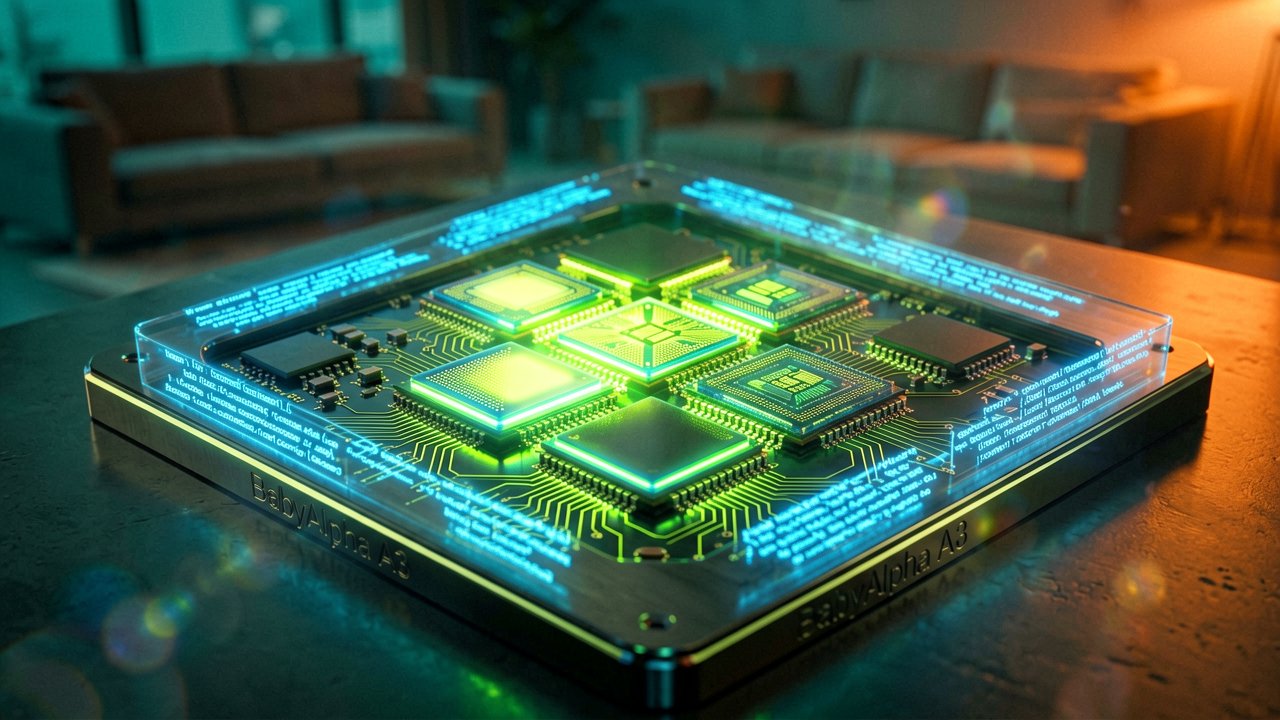
Just when we thought Nvidia’s grip on the robotics brain trust was unshakable, a Chinese startup called Weilan Tech has decided to flip the script. The company just pulled the silk off the BabyAlpha A3, a consumer-grade quadruped robot that doesn't just look like a high-tech cartoon pup—it carries a computing architecture designed to make industry titans sweat. According to early reports from Pandaily , this pint-sized powerhouse claims to deliver ten times the computing efficiency of the current industry standard, all while coming in at a fraction of the cost of Nvidia’s flagship hardware.
A Six-Chip "Brain" Cluster
The secret sauce behind the A3 isn't a single, massive processor. Instead, Weilan has pioneered what they call an "Edge-side Mixed Heterogeneous Computing Cluster." It’s a mouthful, but the logic is sound: why have one chip do everything when you can have a specialized team? The A3 utilizes six distinct chips—including two 5nm chips and two 3D-stacked chips—totaling 22 CPU cores. By splitting duties like perception, decision-making, and motor control across this cluster, the robot manages real-time coordination that rivals much more expensive enterprise systems.
For those keeping score at home, the financial implications are staggering. Weilan is reportedly pricing this tech at roughly $300, which is less than one-tenth the price tag of Nvidia’s Jetson Thor T5000, a beast that typically retails for around $3,000. It’s a bold play that aims to democratize high-level robotics, moving it out of research labs and into the average living room without sacrificing the "smarts" required for complex movement.
Visionary Performance on Four Legs
Beyond the raw processing power, the A3 is packing a massive 66-megapixel vision system. This isn't just for taking high-res photos of your shoes; it’s the backbone of a sophisticated spatial awareness suite. Combined with 360-degree lidar and infrared vision, as detailed on Weilan's Official Site, the robot can navigate complex environments, dodge obstacles, and even recognize family members with eerie precision. It’s a clear evolution from their earlier A2 series, which already featured GPT-4o integration for "meaningful" conversations.

Physically, the A3 isn't a slouch either. It can clock speeds of 3.5 meters per second and tackle 45-degree slopes. While previous generations of the AlphaDog series actually broke world records for speed, the A3 focuses on refining that athleticism for home safety. It includes hidden joints and "millisecond-level" safety braking to ensure that its high-performance hardware doesn't accidentally pinch a curious toddler or a real-life pet.
The Long Game: Data and Humanoids
So, why build an ultra-efficient robot dog? Weilan’s strategy is much bigger than just selling high-tech toys. By putting 25,000 units (and counting) into homes, they are essentially creating a massive, real-world data collection network. This data is the fuel for training "embodied intelligence" models—the kind of AI that understands how to move through a human world. The ultimate goal, as shared by founder Liu Weichao, is to use these learnings to eventually drive the cost of humanoid robots down below the $1,500 mark.
The BabyAlpha A3 is scheduled for a formal launch in Q3 2026. Whether it truly "dethrones" Nvidia remains to be seen—Silicon Valley rarely sits still—but for now, Weilan has certainly proven that you don't need a $3,000 chip to give a robot a soul and a very capable brain.
Will the BabyAlpha A3's decentralized chip architecture become the new standard for consumer robotics, or can Nvidia's all-in-one Jetson ecosystem maintain its lead through software dominance?
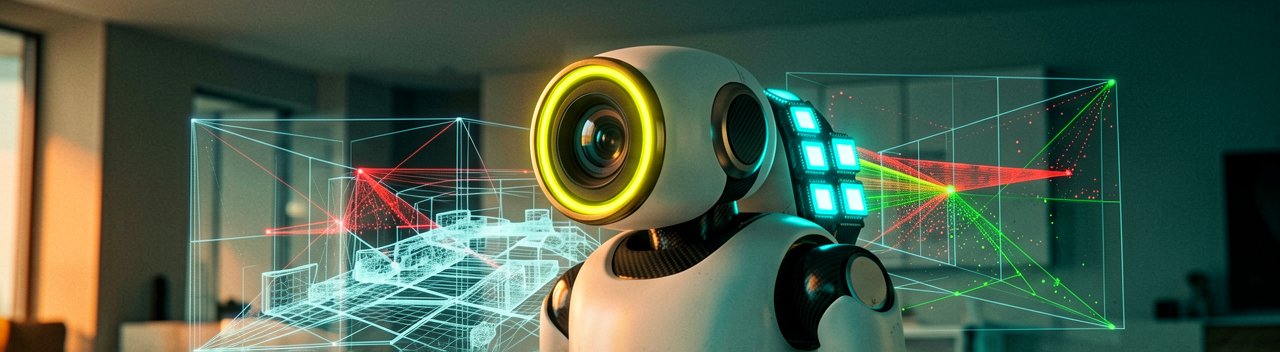
The High-Stakes Gamble Behind the Hardware: While the headlines focus on the eye-popping computing ratios, what most reports miss is the sheer audacity of Weilan’s supply chain pivot. By moving away from the monolithic "superchip" philosophy that has governed the industry since the dawn of the GPU era, Weilan isn't just building a robot; they are staging a coup against the silicon monopolies. This "six-chip cluster" approach is a classic example of engineering around a bottleneck—using heterogeneous computing to squeeze enterprise performance out of consumer-grade components that are easier to source and harder to sanction.
The "Data-Pet" Trojan Horse
To the casual observer, the BabyAlpha A3 looks like a high-end toy designed to mimic a Shiba Inu, but seasoned tech analysts see it as a sophisticated data-gathering node. Weilan’s strategy mirrors the early days of Tesla; they are putting hardware in the wild to train their neural networks on the unpredictability of human homes. Every time an A3 navigates around a discarded laundry basket or identifies a sleeping cat, it feeds a massive repository of "long-tail" edge cases that simulation labs simply cannot replicate. This is the "embodied AI" gold rush, where the winner isn't the one with the fastest chip, but the one with the most diverse physical training data.
Historically, the quadruped market was divided between the hyper-expensive, industrial-grade machines like Boston Dynamics’ Spot and the fragile, underpowered hobbyist kits found on enthusiast forums. Weilan is threading a needle that many thought impossible: creating a "prosumer" tier. By integrating GPT-4o into the communicative layer of the A3, they’ve bridged the gap between a tool and a companion. This emotional hook is vital; it ensures the robot stays powered on and active in the home, providing the constant stream of interaction data necessary to refine their next-generation humanoid models.
The Geopolitical Ripple Effect
We cannot ignore the subtext of the "Nvidia Throne" comparison. In an era where high-end AI chips are becoming geopolitical bargaining chips, Weilan’s ability to achieve 10x efficiency via architectural cleverness rather than raw transistor count is a significant signal. It suggests a future where the robotics industry might decouple from the "bigger is better" hardware arms race. If a startup can deliver "good enough" autonomy for $300, the barrier to entry for domestic robotics evaporates, potentially leading to a market saturation we haven't seen since the smartphone explosion of 2010.
However, the road to Q3 2026 is paved with skepticism. Skeptics point out that while decentralized computing is efficient, the software overhead to manage six disparate chips without latency issues is a nightmare to maintain. Weilan’s engineers are essentially betting that their "Mixed Heterogeneous" software stack is robust enough to handle the chaos of a real-world environment. If they pull it off, the A3 won't just be a success story for Weilan; it will be the blueprint for a new era of affordable, high-intelligence machines that don't require a Silicon Valley pedigree to function.
As Weilan marches toward a $1,500 humanoid future, will their "distributed brain" strategy prove more resilient than the centralized power of traditional tech giants?
Reading Between the Lines: For all the talk of "Nvidia-slaying" specs and tenfold efficiency, there is a massive elephant in the room that tech journalists often ignore: the distinction between theoretical peak performance and real-world reliability. Weilan is making a gargantuan claim by pitting a $300 distributed chip cluster against a $3,000 Jetson Thor. While the math might work on a spreadsheet for specific perception tasks, hardware is only as good as the software glue holding it together. Managing a "heterogeneous cluster" of six chips requires a level of developer optimization that often becomes a nightmare of latency and bugs when translated from the lab to the living room.
The Efficiency Paradox
There is a recurring contradiction in the "cheap but smart" robotics narrative. High-level autonomy—the kind that allows a robot to truly understand and interact with a human environment—demands massive power draw. Weilan’s claim of 10x efficiency suggests they’ve found a "magic bullet" in task-specific chip allocation. However, if this were purely a matter of architectural cleverness, why hasn't the rest of the industry, fueled by billions in R&D, moved in this direction? The skepticism stems from whether Weilan is sacrificing the "generalizability" of their AI to hit these price points. If the A3 is hard-coded to excel at dog-like movement but stumbles when tasked with more complex, unmapped cognitive reasoning, the "Nvidia-killer" label becomes more of a marketing flourish than a technical reality.
Furthermore, the projection of a $1,500 humanoid robot based on these findings feels like a leap of faith. Quadruped movement is a solved problem; bipedal balance in a dynamic human environment is an entirely different beast of physics and computation. By anchoring their future to the A3’s success, Weilan is betting that scale and data can overcome the fundamental physical limitations of low-cost hardware. The danger here is that they might end up with 25,000 "smart" toys that provide great data for navigating floors, but very little insight into how a humanoid should safely pick up a glass of water without shattering it.
Market Friction and the Open Ecosystem
Nvidia’s "throne" isn't just built on silicon; it’s built on CUDA—the software ecosystem that every AI developer already knows how to use. For Weilan to truly disrupt this, they need more than just a cheaper dog; they need an ecosystem that developers actually want to build on. History is littered with technically superior hardware that died because the developer tools were too opaque or the proprietary stack was too restrictive. If Weilan keeps their "distributed brain" as a closed-source black box, they risk becoming a hardware curiosity rather than the industry-standard platform they clearly aspire to be.
Ultimately, the BabyAlpha A3 represents a fascinating experiment in "good enough" robotics. If it can handle 80% of what a high-end robot does at 10% of the price, it will undoubtedly win the consumer market. But as we’ve seen with everything from VR headsets to smart assistants, the transition from "impressive tech demo" to "indispensable household utility" is a chasm that price alone cannot bridge. Measured skepticism suggests we wait to see if those 22 CPU cores can actually keep up with a toddler and a Golden Retriever simultaneously before we start printing Nvidia’s obituary.
It turns out that teaching a robot to outcompute a workstation is actually easier than teaching it not to trip over a stray Lego—proving once again that in the world of robotics, the smartest brain is still no match for the dumbest floor.
Artūras Malašauskas is an AI Systems Integrator with 20+ years of production-grade web engineering experience. He has designed, shipped, and scaled enterprise Python/PHP systems for logistics, SaaS, and public-sector clients. For the past year, he has focused exclusively on AI integrations: deploying open-source LLMs, building generative media pipelines (image, audio, video), and engineering multi-agent workflows for real production environments. His standard: reproducibility, security, cost-efficient inference—no vaporware. He documents and evaluates emerging AI tooling, separating verified capabilities from marketing noise. Technical editor at: muza-ai.eu, ai-verslas.lt, ai-naujinos.lt Connect on LinkedIn
Comments