The $13 AI Pivot: Why Nokia’s Alliance with Nvidia and Anduril Is a Game Changer
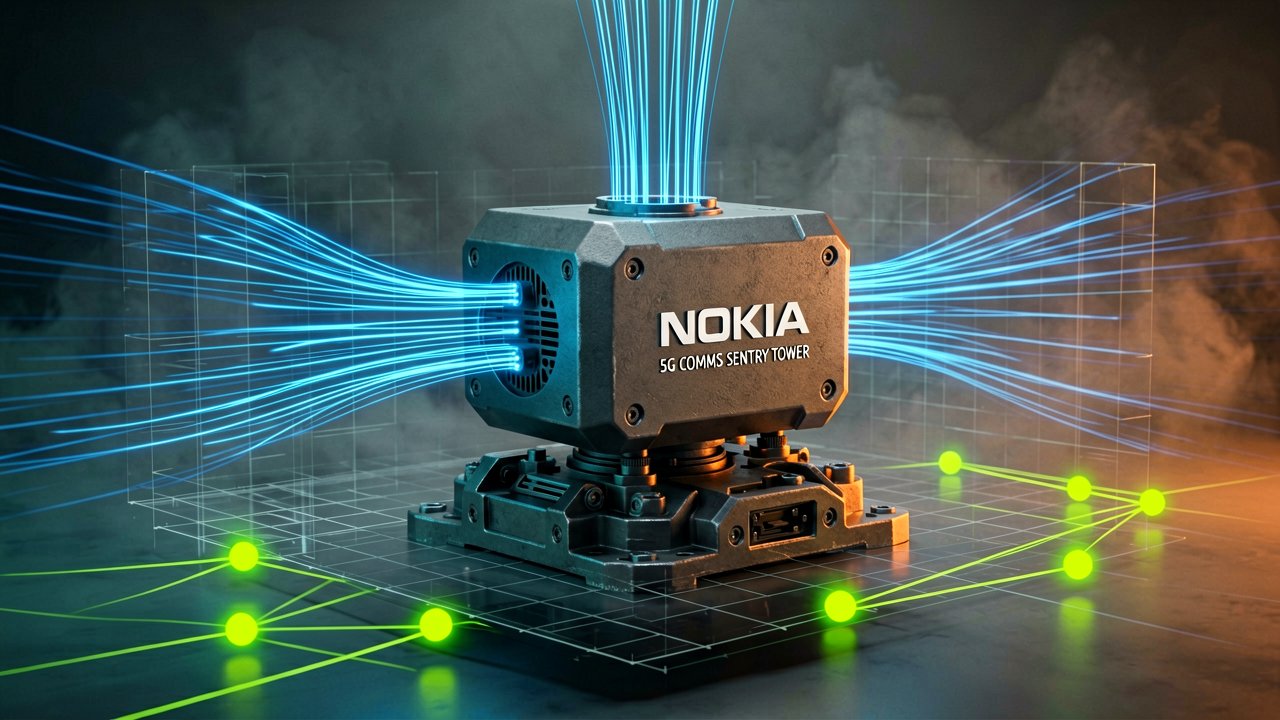
If you’ve been paying attention to the frantic pulse of the AI markets lately, you know the name of the game isn't just who has the best chips—it’s about who’s building the most critical infrastructure to run them. While retail investors continue to chase the giants, a far more interesting story is unfolding at the intersection of telecommunications and defense. Nokia (NYSE: NOK), the Finnish icon once defined by indestructible flip phones, has quietly reinvented itself as an AI-native powerhouse. Trading at roughly $13 per share as of mid-May 2026, the stock recently hit a 16-year high, and the catalysts are coming from two of the most influential names in tech: Nvidia and Anduril Industries.
The Nvidia Connection: Not Just a Customer, a Blueprint
The fuel for Nokia’s sudden vertical climb can be traced back to its deep-rooted partnership with Nvidia. This isn’t a simple supplier relationship; it’s a co-development pact aimed at revolutionizing how mobile networks handle the massive data loads required by generative AI. By integrating Nvidia’s GPU-powered platforms directly into its Radio Access Network (RAN) portfolio, Nokia is essentially turning the world’s cell towers into distributed AI data centers. According to AOL, this "AI-RAN" architecture doesn't just optimize spectrum usage—it allows AI applications to move to the "edge," powering everything from autonomous vehicles to real-time industrial robotics without the latency of traditional server farms.
Investors should note that Nvidia isn't just providing the silicon. The green-logoed giant has historically placed its bets on companies that solve "impossible" infrastructure hurdles. By backing Nokia’s vision for 5G-Advanced and 6G systems, Nvidia is betting that the next frontier of AI distribution isn't in a climate-controlled room in Santa Clara, but in the connectivity mesh that covers the globe. This stamp of approval has granted Nokia a level of tech-sector "cred" it hasn't enjoyed since the late 90s, and the market is finally starting to price in that pivot.
The Anduril Partnership: AI Goes Tactical
If the Nvidia deal provides the brain, the partnership with Anduril provides the shield. Anduril Industries, the Palmer Luckey-led defense tech disruptor recently valued at a staggering $61 billion after a massive $5 billion funding round, is on a mission to modernize military hardware with AI. As reported by The New York Times, Anduril is aggressively scaling its autonomous platforms, and those platforms need secure, high-speed, and low-latency communication to function in contested environments.
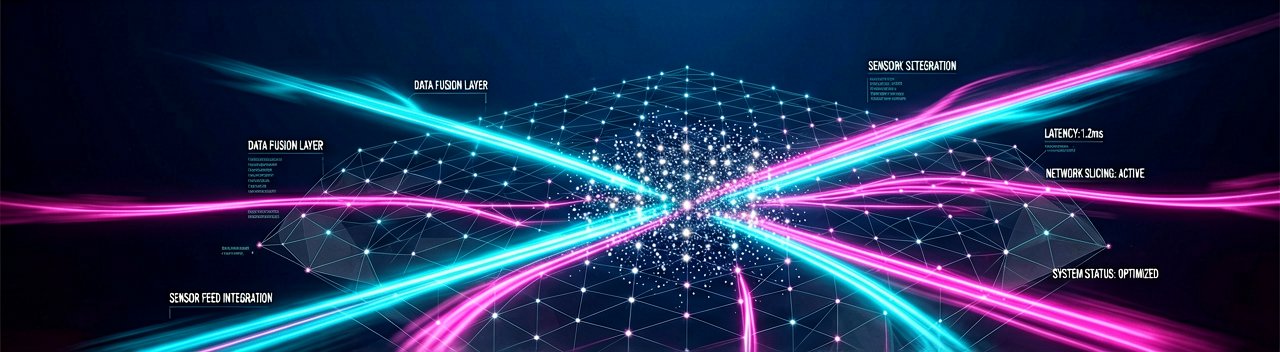
This is where Nokia steps in. The two companies have co-developed the 5G Comms Sentry Tower (CST), a modular platform that merges Nokia’s private 5G hardware with Anduril’s Lattice software. It’s a marriage of telecom reliability and defense-grade AI. For investors, this partnership is a massive de-risking event. Defense contracts are notoriously "sticky" and offer long-term revenue streams that are largely insulated from the boom-and-bust cycles of consumer tech. By becoming a foundational part of Anduril’s ecosystem, Nokia is securing a seat at the table for the next decade of national security innovation.
Why the $13 Price Point Matters
Despite the stock more than doubling in 2026, Nokia remains an accessible "under-the-radar" play compared to the triple-digit prices of its peers. Financial analysts at The Motley Fool have pointed out that while the company's valuation has expanded, it’s supported by measurable progress in AI-driven demand and strong quarterly results. We aren't looking at a "meme stock" fueled by thin air; we’re looking at a legacy firm that has successfully navigated the most difficult pivot in its history.
What investors need to know is that the $13 price tag represents a window. As hyperscalers continue to pour hundreds of billions into AI infrastructure, the need for Nokia’s specialized, secure networking becomes less of a luxury and more of a requirement. Between the sovereign governments demanding AI-enabled defense protocols and the commercial shift toward 6G, the tailwinds here are secular, not cyclical. If you missed the initial Nvidia surge, keeping an eye on the infrastructure players like Nokia might be your second chance at the AI revolution.
Will the AI-RAN transition become the global standard for 6G connectivity by 2028?
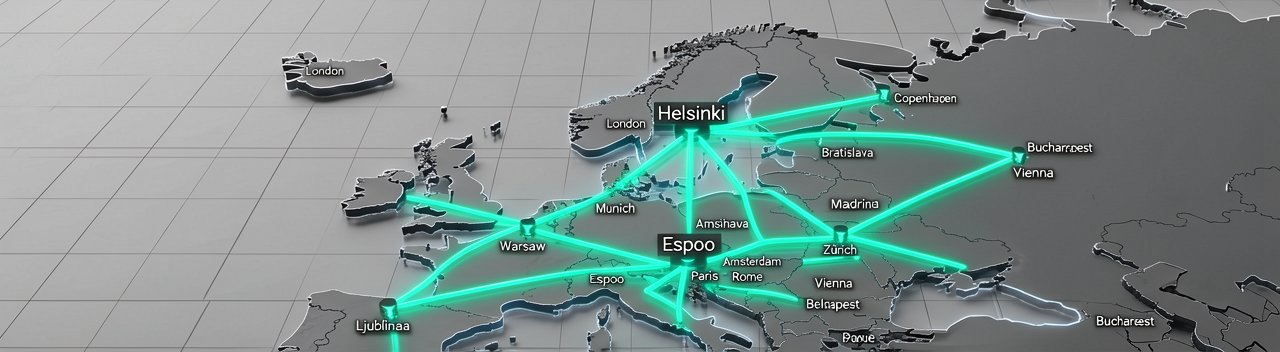
What Most Reports Miss: While the headline-grabbing partnership with Anduril paints a picture of futuristic drone swarms and high-tech defense, the real "secret sauce" of Nokia’s resurgence lies in a gritty, technical pivot known as "Open RAN" (Radio Access Network). For decades, telecom was a closed shop; if you bought Nokia hardware, you were locked into Nokia software. By breaking those walls down and embracing an open architecture, Nokia has effectively turned its hardware into a blank canvas for Nvidia’s AI algorithms. This move was a massive gamble that many industry purists thought would cannibalize their margins, but instead, it has made them the preferred partner for Silicon Valley giants who demand flexibility over proprietary lock-in.
The "Lattice" Integration: More Than Just a Signal
To understand why Anduril chose Nokia over competitors like Ericsson or Huawei, you have to look at how Anduril’s "Lattice" operating system functions. Lattice is designed to ingest data from thousands of sensors—drones, cameras, and thermal imagers—and fuse them into a single "god’s-eye view" for commanders. This requires a network that doesn't just pass data through like a dumb pipe but understands the priority of that data. Nokia’s recent firmware updates, co-engineered with Nvidia, allow the network to "slice" itself in real-time, dedicating ultra-secure bandwidth to a critical drone feed while deprioritizing less urgent telemetry. This isn't just connectivity; it’s cognitive networking.
Historically, Nokia has been viewed as the "safe, slow" European incumbent. However, inside their Espoo headquarters, the culture has shifted toward a "fail fast" mentality reminiscent of a startup. This shift was largely driven by the realization that 5G, in its basic form, had become a commodity. To survive, they had to move up the value chain into software-defined infrastructure. According to insiders, the collaboration with Nvidia was the catalyst that forced Nokia’s engineering teams to stop thinking like hardware manufacturers and start thinking like AI developers.
Sovereign AI: The Geopolitical Ace in the Hole
There is also a significant geopolitical subtext that savvy investors should watch. As "Sovereign AI"—the movement by nations to build their own AI infrastructure to avoid dependence on US or Chinese clouds—gains momentum, Nokia finds itself in a unique position. Being a European firm with a clean security record makes them the "neutral" choice for governments in the Middle East and Southeast Asia who want Nvidia-grade power without the political baggage often associated with other tech superpowers.
The Anduril deal serves as a high-stakes proof of concept for this. If Nokia can provide the backbone for the most advanced autonomous defense systems in the world, then managing a smart city in Singapore or an automated port in Rotterdam is a walk in the park. The market is currently valuing Nokia as a telecom company, but the Nvidia-Anduril axis suggests it should be valued as an AI-infrastructure play. That valuation gap is exactly what has institutional desks quietly accumulating shares while the $13 price point remains on the board.
Is the market's current valuation of Nokia failing to account for its pivot from a hardware vendor to a high-margin AI software partner?
Reading Between the Lines: The euphoria surrounding Nokia’s double-act with Nvidia and Anduril is intoxicating, but a seasoned observer has to ask: are we looking at a genuine structural transformation or just a very expensive facelift? The "Nokia as an AI Stock" narrative is a convenient one for a company that has spent the last decade fighting a losing battle against commoditization. While the $13 price point feels like a bargain compared to Nvidia’s vertical trajectory, it is worth remembering that Nokia’s balance sheet is still tethered to the capital-intensive world of physical infrastructure. Unlike a pure-play software company, Nokia can’t just scale at the click of a button; every "AI-native" cell tower requires real-world steel, copper, and permitting.
The Integration Bottleneck
There is also the "Anduril factor" to consider. Palmer Luckey’s firm moves at the speed of Silicon Valley, while the telecom industry moves at the speed of government regulators and multi-year rollout cycles. The friction between these two cultures could be substantial. If the 5G Comms Sentry Tower fails to gain rapid adoption within the Department of Defense—a customer notorious for its "valley of death" where promising prototypes go to die—Nokia may find itself holding the bag on R&D costs that don't translate to the bottom line as quickly as the current hype suggests.
Furthermore, the Nvidia "backing" is often misinterpreted by the retail crowd as a direct equity stake or a guaranteed lifeline. In reality, Nvidia is platform-agnostic; they want their chips in everything. If Ericsson or a dark-horse competitor from the Open RAN space manages to offer a more efficient implementation of AI at the edge, Nvidia’s loyalty will shift to whoever is moving the most silicon. Nokia’s moat isn't built on exclusive access to Nvidia’s tech, but on its ability to execute better than its rivals—a feat that has been hit-or-miss for the Finnish firm in the recent past.
The Valuation Paradox
Skeptics will also point to the "legacy discount" that has plagued Nokia for years. Even with high-margin software deals, the market remains wary of the high overhead and pension liabilities that come with a century-old industrial giant. To truly sustain this $13 breakout and push toward the $20 mark, Nokia needs to prove that these partnerships aren't just high-profile pilot programs, but the foundation of a new, recurring revenue model. Until we see "AI-as-a-Service" making up a double-digit percentage of their quarterly earnings, the risk of a "buy the rumor, sell the news" event remains a persistent shadow over this rally.
Investing in a legacy tech turnaround is a bit like buying your dad a pair of trendy sneakers: he looks remarkably faster in the photos, but you’re still never quite sure if he’s actually going to start training for that marathon or if he's just going to wear them to the hardware store.
Artūras Malašauskas is an AI Systems Integrator with 20+ years of production-grade web engineering experience. He has designed, shipped, and scaled enterprise Python/PHP systems for logistics, SaaS, and public-sector clients. For the past year, he has focused exclusively on AI integrations: deploying open-source LLMs, building generative media pipelines (image, audio, video), and engineering multi-agent workflows for real production environments. His standard: reproducibility, security, cost-efficient inference—no vaporware. He documents and evaluates emerging AI tooling, separating verified capabilities from marketing noise. Technical editor at: muza-ai.eu, ai-verslas.lt, ai-naujinos.lt Connect on LinkedIn
Comments