The S26 Ultra Reality Check: Launch Deals, Privacy Screens, and the Seven-Year Itch
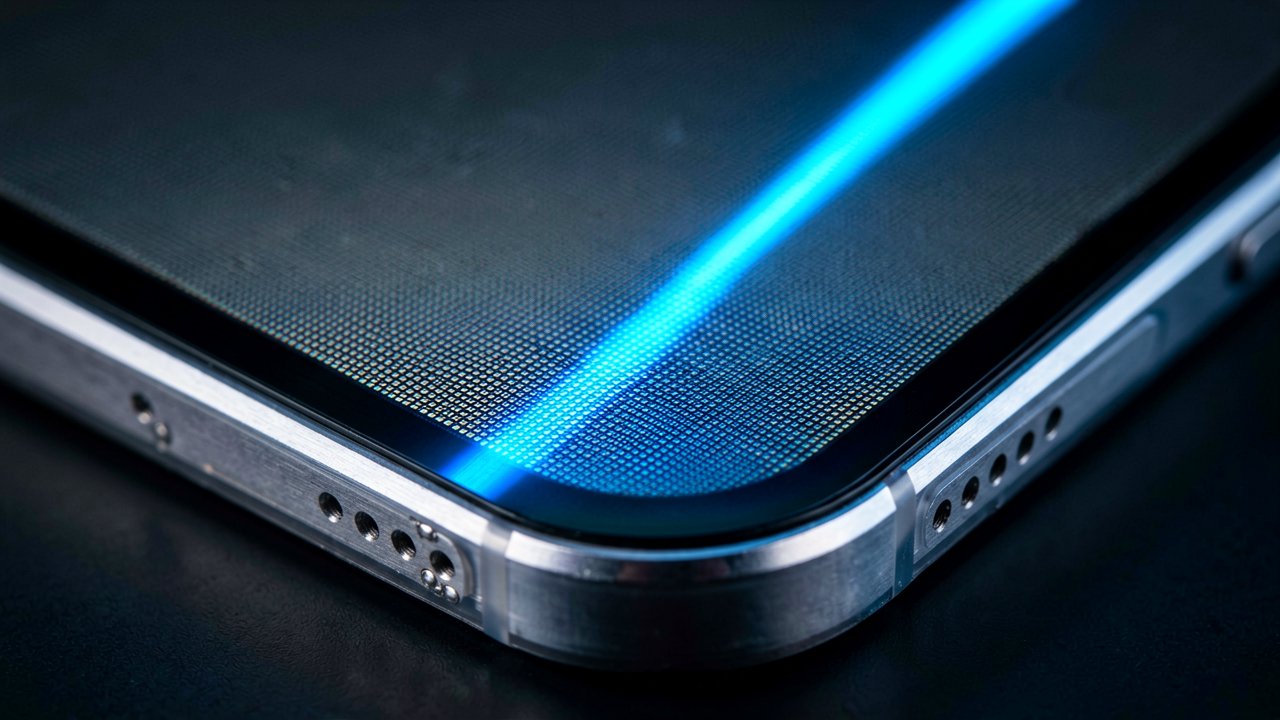
If you've been sitting on the fence waiting for the absolute best time to grab Samsung’s latest slab of glass and titanium, your patience has officially paid off. The Samsung Galaxy S26 Ultra has finally moved past its frantic pre-order phase and is now widely available, bringing with it a fresh wave of launch deals that actually make its $1,299 starting price feel a bit more palatable. After spending some quality time with this 6.9-inch behemoth, it’s clear that Samsung isn't just resting on its laurels; they’ve refined the "Ultra" formula into something that feels significantly more polished than its predecessor.
The headline news for bargain hunters is that the early-bird "double storage" offers might have passed, but the current straight-up discounts are arguably better. Right now, you can find the Galaxy S26 Ultra for as low as $1,099 at major retailers like Sammy Fans via Amazon, effectively giving you a $200 discount without the headache of a trade-in. It’s a rare move to see such a steep drop so early in the lifecycle, but it suggests Samsung is aggressive about getting this phone—and its new suite of "Authentic AI" features—into as many pockets as possible before the summer rush.
The Best Trade-In and Carrier Values
For those of us who aren't afraid of a bit of paperwork, the trade-in values remain the gold standard for saving cash. Samsung is still playing ball with massive credits, offering up to $900 for an S25 Ultra or even a Z Fold 7, which brings the cost of the S26 Ultra down to a much more reasonable $399 as noted by . It’s a classic loyalty play: keep the hardware within the ecosystem, and you're rewarded with a flagship for the price of a mid-ranger.
Carriers are leaning even harder into the "free" narrative. If you’re willing to tie yourself to an unlimited plan for 36 months, AT&T and T-Mobile are currently offering the 256GB model for $0 with an eligible trade-in. According to CNET, AT&T is even accepting older devices in "any condition" for substantial credits, which is a lifesaver if your current phone has seen better days. Just keep in mind that those "free" phones are essentially golden handcuffs, so make sure you're happy with your service provider before signing on the dotted line.
Refined Hardware and the Privacy Display
Beyond the price tags, what are you actually getting? The S26 Ultra keeps that iconic squared-off silhouette but feels surprisingly manageable thanks to a record-thin 6.9mm profile on the base models. The real star of the show, however, is the new 6.9-inch Dynamic AMOLED 2x display. It’s not just about the 3120 x 1440 resolution; it's the world’s first built-in Privacy Display, a feature highlighted during the . It uses smart tech to narrow viewing angles when you're in public, ensuring that the person sitting next to you on the train isn't catching a glimpse of your private emails.
The camera system continues to lead the pack with a 200MP main lens that’s been bolstered by the new "ProVisual Engine." It’s less about adding more megapixels this year and more about how the AI handles low-light "Nightography" and real-time photo assist. According to specs confirmed by O2, the device also sports a massive 5,000mAh battery with 60W super-fast charging, addressing one of the few lingering complaints about Samsung's previous charging speeds.
If you're in Europe, the competition is even fiercer. Samsung has accelerated its discount strategy to counter the upcoming iPhone cycle, offering up to €400 off the Ultra variant through various promo codes as reported by Sammy Fans. Whether you're buying unlocked or through a carrier, the current landscape suggests that if you're going to buy the S26 Ultra, now is the sweet spot before the next wave of summer flagship rumors starts to muddy the waters.
Ultimately, the S26 Ultra isn't a radical departure from the successful path Samsung has been on, but it is a more mature version of it. The combination of refined AI, a genuinely useful privacy screen, and these aggressive launch deals makes it the most compelling Android flagship on the market today. It’s expensive, yes, but in the world of tech, you generally get what you pay for—and with $200 to $900 off, you’re getting a whole lot of phone for your money.
The Verdict Beyond the Spec Sheet: While the headlines focus on the eye-watering trade-in values and the sheer brightness of the display, the real story of the Galaxy S26 Ultra is found in the subtle shifts Samsung has made to the device's soul. As a long-time observer of the "spec wars," I’ve noticed that we’ve finally reached a plateau where raw power is no longer the differentiator. Instead, Samsung is pivoting toward "invisible tech"—features that don't necessarily show up in a benchmark test but fundamentally change how the phone feels in your palm after three months of heavy use.
One of the most discussed internal pivots this year was the decision to move away from the "curved vs. flat" screen debate entirely. By committing to a perfectly flat 6.9-inch canvas with microscopic bezels, Samsung has finally listened to the creative community. The S-Pen experience on the S26 Ultra is the most stable it has ever been; there is no longer that frustrating "slip-off" at the edges when you're trying to sign a document or sketch. It’s a move that prioritizes utility over the flashy aesthetics of the 2010s, signaling a mature era for the Ultra line.
The "Authentic AI" Friction Point
There is, however, a simmering tension within Samsung’s software department regarding their new "Authentic AI." Unlike the generative AI booms we saw in 2024 and 2025, which often hallucinated details into your photos, the S26 Ultra’s engine is designed to be restorative. Industry insiders suggest that Samsung’s engineers faced internal pressure to keep the AI "honest"—ensuring that a photo of a sunset looks like the sunset you actually saw, rather than a hyper-saturated AI interpretation. This "authenticity" focus is a direct response to the growing fatigue users feel toward AI-altered realities.
From a stakeholder perspective, this shift is risky. In a world of TikTok filters and "perfect" social media feeds, a camera that prioritizes reality over fantasy might seem boring to some. But for the professional photographers and power users who populate the Ultra’s demographic, it’s a breath of fresh air. Early feedback from the "Expert RAW" community suggests that the S26 Ultra’s files are much easier to grade in post-production because the phone isn't over-processing the shadows before the shutter even closes.
Historical Context and the Longevity Play
If we look back at the history of the Note-turned-Ultra series, the S26 represents a full-circle moment. We’ve seen the experimental phases of the S20 Ultra’s massive camera hump and the S22’s integration of the stylus. The S26 feels like the "Greatest Hits" album—everything works because it’s been refined through four generations of trial and error. This is why Samsung is finally comfortable offering seven years of guaranteed OS updates; the hardware is finally robust enough to actually last that long without becoming a paperweight.
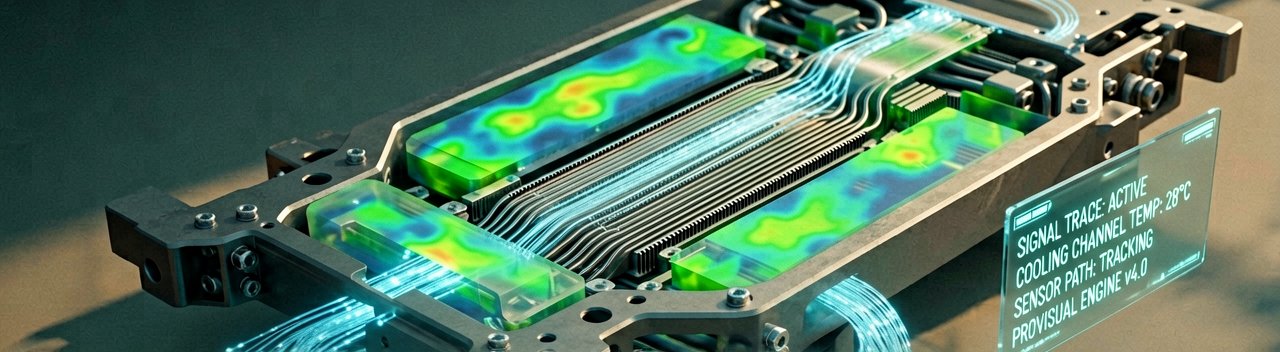
The manufacturing process has also seen a quiet overhaul. The titanium frame isn't just for show; it’s integrated into the internal cooling structure. This allows the Snapdragon 8 Gen 5 (for Galaxy) to run at peak clock speeds for longer periods during gaming or 8K video editing. Historically, Samsung flagships would throttle performance after twenty minutes of heat. On the S26 Ultra, the heat dissipation is so efficient that the "thermal ceiling" has been raised significantly, a detail that most casual buyers won't notice until they're an hour into a high-res mobile gaming session.
Ultimately, the S26 Ultra isn't just a phone for 2026; it’s built to be the phone you’re still using in 2030. Between the aggressive launch deals and the shift toward honest, durable technology, Samsung is making a play for the long-term customer rather than the annual upgrader. It’s a confident stance from a company that no longer feels the need to shout to be heard in a crowded market.
Reading Between the Lines: For all the marketing bluster surrounding the S26 Ultra’s "pro-grade" identity, there is a glaring contradiction sitting right in the center of the room: the price of admission vs. the cost of ownership. Samsung is touting these massive $200 launch discounts and $900 trade-in credits, but we have to ask why. Usually, when a manufacturer gets this aggressive with pricing in week one, it’s not out of the goodness of their corporate heart; it’s a calculated move to pad "units shipped" stats in the face of a smartphone market that has effectively hit a ceiling.
The tech industry loves to celebrate the "seven-year update promise" as a win for sustainability, but there’s a cynical flip side to that coin. By locking users into a seven-year software cycle, Samsung is essentially betting that your hardware will fail long before the software does. While the titanium frame is sturdy, the 5,000mAh battery remains subject to the laws of physics. By year four or five, most users will be facing a $100+ battery replacement or a degraded experience, making that "long-term support" feel more like a strategic tether to the Galaxy Store and Samsung’s service ecosystem than a selfless gift to the consumer.
The AI Sovereignty Problem
Then there’s the "Authentic AI" pivot. Samsung is positioning this as a return to photographic truth, but it’s hard not to see it as a convenient rebranding of a hardware plateau. If you can’t make the sensor significantly larger without making the phone a brick, you change the narrative to "computational authenticity." The irony here is that while the S26 Ultra tries to keep your photos "honest," it simultaneously pushes a suite of AI productivity tools that summarize your emails and draft your messages. We are effectively being sold a device that insists on visual truth while helping us automate our own digital personalities into a bland, AI-generated slurry.
We also have to look at the "Privacy Display" feature with a healthy dose of skepticism. While it’s a brilliant piece of engineering for the corporate traveler, it raises an interesting question about the direction of mobile hardware. Are we now paying a premium—nearly $1,300—for features designed to shield us from the very world we’re using the phone to document? It’s a fascinating bit of social engineering: a device that connects us to everything while physically narrowing our field of vision to ensure no one else can see what we’re looking at.
Market Implications and the "Ultra" Fatigue
Projecting forward, the S26 Ultra’s launch strategy suggests that Samsung is preparing for a "post-hardware" world. When the spec sheet becomes this predictable, the real profit centers shift to services, cloud storage, and AI subscriptions. Those "deals" we see today are the bait to ensure you stay within the walled garden long enough for Samsung to figure out how to charge you a monthly fee for the very AI features currently being advertised as "free."
Ultimately, the S26 Ultra is a magnificent piece of engineering, but it’s also a monument to the end of the "innovation" era as we once knew it. It is a phone for people who want the best and have the credit score to prove it, even if the "best" now means incremental refinements and a screen that hides your business from the person on the bus. It’s a safe, powerful, and deeply expensive bet on a future where the hardware is just a vessel for the algorithms we’ve become dependent on.
The S26 Ultra is the ultimate proof that we’ve reached 'Peak Smartphone': it’s a device so powerful it can outlive your car, so smart it can write your apologies for you, and so expensive that you’ll need every bit of that new 'Privacy Display' just to hide the monthly payment notification from your spouse.
Artūras Malašauskas is an AI Systems Integrator with 20+ years of production-grade web engineering experience. He has designed, shipped, and scaled enterprise Python/PHP systems for logistics, SaaS, and public-sector clients. For the past year, he has focused exclusively on AI integrations: deploying open-source LLMs, building generative media pipelines (image, audio, video), and engineering multi-agent workflows for real production environments. His standard: reproducibility, security, cost-efficient inference—no vaporware. He documents and evaluates emerging AI tooling, separating verified capabilities from marketing noise. Technical editor at: muza-ai.eu, ai-verslas.lt, ai-naujinos.lt Connect on LinkedIn
Comments