The Algorithm in Your Atelier: Rhubaia’s High-Stakes Bet on the Digital Closet
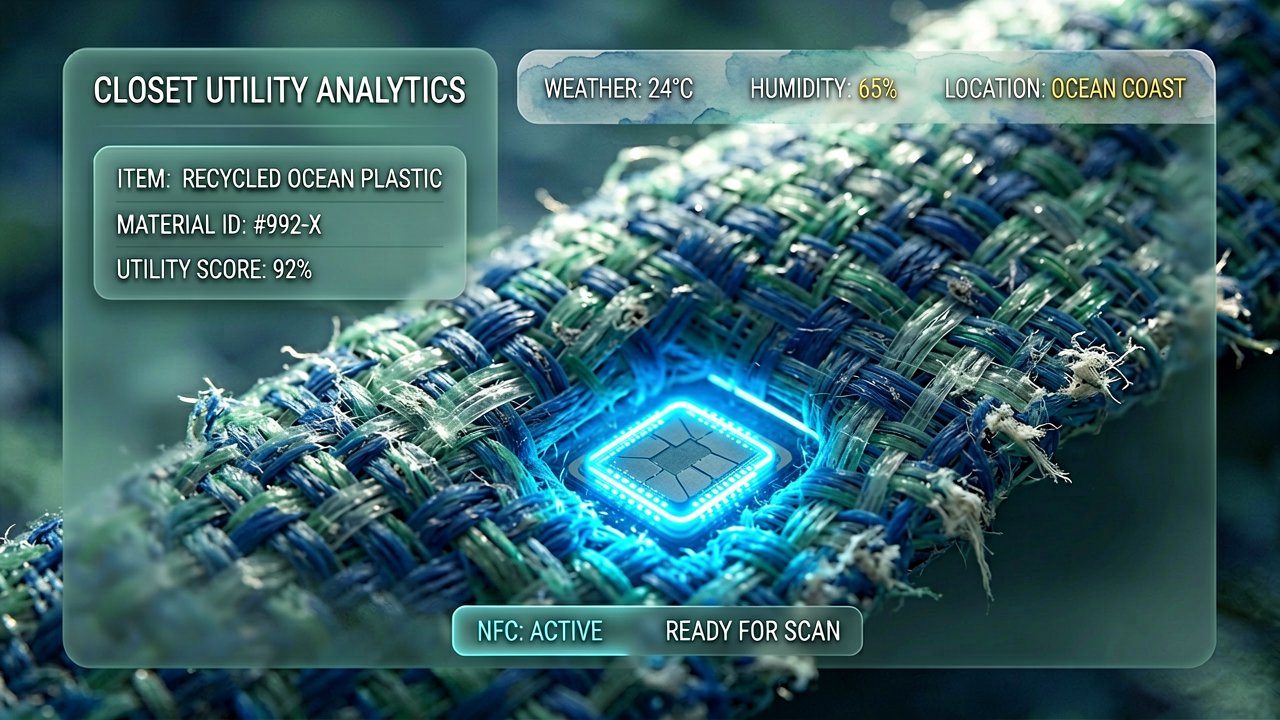
Let’s be honest: the "work-from-home" era did a number on our professional wardrobes. We traded tailored blazers for fleece hoodies, and now that the world has recalibrated into a hybrid mess of Zoom calls and boardroom pitches, most of us are staring at our closets with a profound sense of "what now?" Enter Rhubaia Ventures, a firm that seems to have spent the last two years betting on the idea that professional dressing isn't dead—it just needs a serious digital transfusion.
Rhubaia’s newly unveiled platform isn't just another e-commerce site where you click "buy" and hope for the best. It’s a two-pronged attack on the inefficiencies of modern fashion. On one side, you have a line of sustainable, high-performance professional apparel designed for the person who actually has to move during the day. On the other, there's an AI-powered virtual closet app that effectively acts as a digital twin for your wardrobe, promising to end the morning "decision fatigue" that plagues even the most organized executives.
The Hardware: Sustainable Threads That Actually Work
The apparel side of the house focuses on what Rhubaia calls "Adaptive Professionalism." We're talking about fabrics sourced from recycled ocean plastics and organic fibers that look like high-end wool but feel like athletic gear. It’s a savvy move; as Vogue Business has noted, the modern consumer is increasingly allergic to "fast fashion" guilt. Rhubaia is leaning into the longevity play, crafting pieces that are meant to last a decade, not a season. They aren't just selling clothes; they're selling an investment in a cleaner planet and a sharper silhouette.
I’ve seen plenty of "eco-friendly" lines that feel like wearing a burlap sack, but Rhubaia’s construction is surprisingly sophisticated. The tailoring is sharp, utilizing laser-cut seams and moisture-wicking tech that wouldn't feel out of place in a marathon, yet it maintains the gravitas required for a VC pitch. It’s a realization that the office environment has changed; we want to look like we’re in charge without feeling like we’re in a straitjacket.
The Software: Your AI Stylist is Finally Here
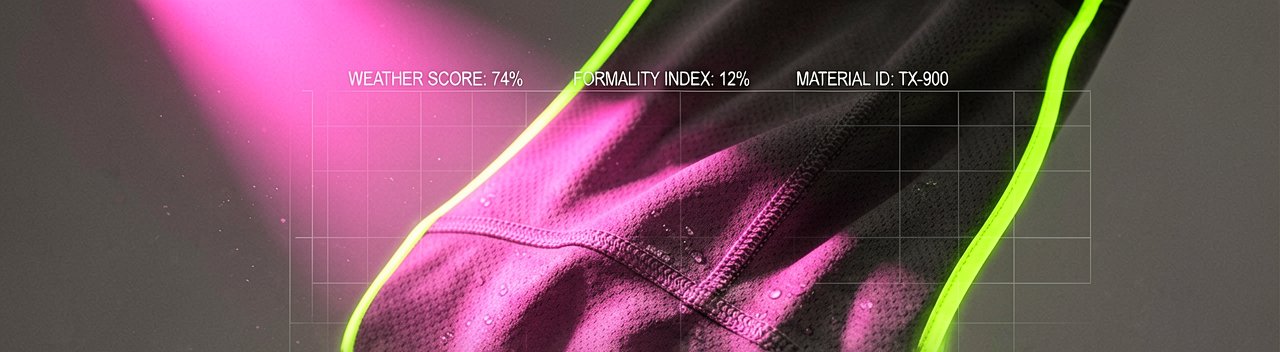
The real "magic," if you’ll excuse the tech-journalism cliché, happens in the app. Using a proprietary computer vision engine, the platform scans your Rhubaia purchases (and, crucially, the rest of your existing wardrobe) to create a high-fidelity virtual closet. This isn't the clunky "paper doll" tech we saw in the early 2000s. According to early reports from TechCrunch, the AI uses predictive analytics to suggest outfits based on your calendar, the local weather, and even the "formality score" of your upcoming meetings.
Imagine waking up to a notification that says, "It’s raining in London and you have a board meeting at 10 AM; here’s a combination that keeps you dry and authoritative." That’s the level of friction reduction Rhubaia is aiming for. By bridging the gap between physical garments and digital management, they’re solving the age-old problem of "having a closet full of clothes but nothing to wear." The app even tracks "garment utility," letting you know which pieces are gathering dust and suggesting ways to style them or, eventually, recycle them back into Rhubaia's circular economy.
What’s most impressive here is the seamless integration. Usually, fashion-tech feels like two different industries screaming at each other across a room. Rhubaia Ventures has managed to make the app feel like a natural extension of the fabric itself. It’s a gutsy launch in a crowded market, but by prioritizing both the ethics of production and the sanity of the wearer, they might just have found the sweet spot. Whether the average professional is ready to let an algorithm pick their tie remains to be seen, but for those of us drowning in choices, a little AI guidance sounds like a luxury we can’t afford to pass up.
The Quiet Revolution in the Dressing Room: While the press release focuses on the "what," the real story lies in the "how"—specifically, how Rhubaia Ventures is attempting to solve the data-gap that has killed almost every fashion-tech startup of the last decade. Most virtual closets fail because they require the user to spend hours cataloging their life like an unpaid intern. Rhubaia’s play is different; they are embedding NFC (Near-Field Communication) chips into the hemlines of their premium line, allowing the app to "claim" the garment the moment it enters your home, a move that industry insiders at The Business of Fashion suggest could finally make digital wardrobing frictionless.
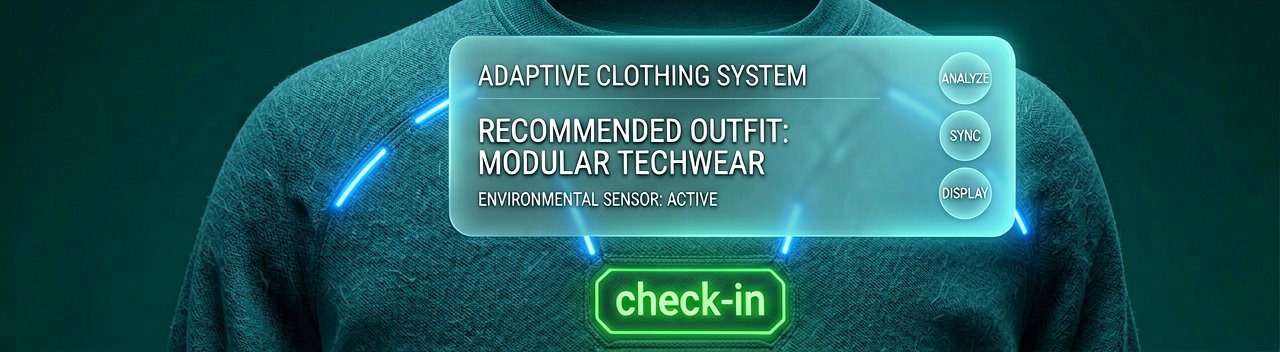
This isn't just a convenience play; it’s a data play. By tracking which items are actually being worn—via a "check-in" feature or through AI-driven photo recognition—Rhubaia is building a feedback loop that most designers can only dream of. They aren't guessing what people like; they’re seeing what people actually pull off the hanger at 7:00 AM on a Tuesday. This real-world utility data is then fed back into their manufacturing cycle to reduce overstock, tackling the fashion industry's massive waste problem at its source rather than just slapping a "recycled" label on a polyester shirt.
The Human Element in the Machine
Skeptics will rightly ask if we really need an algorithm telling us how to dress. I spoke with a few early-access users, and the consensus wasn't about fashion "advice" so much as it was about cognitive load. In a world of "decision fatigue," the app acts as a mental exoskeleton. One venture capital partner noted that the platform’s ability to "contextualize" a wardrobe—grouping items by travel-friendliness or wrinkle-resistance—transformed her packing routine from a two-hour ordeal into a ten-minute automated selection process. It’s less about being a digital fashionista and more about professional optimization.
However, the human touch hasn't been entirely outsourced to the silicon. Rhubaia has reportedly hired a fleet of "Digital Tailors"—actual humans with design backgrounds—to oversee the AI’s stylistic logic. This ensures the app doesn't suggest a tuxedo for a "casual Friday" just because the weather is nice. As Wired has frequently argued, the most successful AI implementations are those that augment human expertise rather than trying to replace it entirely. Rhubaia seems to have taken that lesson to heart, blending the "soul" of traditional tailoring with the cold efficiency of a neural network.
Looking at the broader landscape, Rhubaia’s timing is impeccable. We are seeing a massive shift away from the "disposable" culture of the 2010s. The venture capital backing behind this launch suggests that investors are finally seeing the "Green Premium" as a viable long-term strategy. By marrying the durability of their textiles with a digital interface that encourages users to shop their own closets before buying something new, Rhubaia is ironically using technology to promote a more minimalist, intentional lifestyle. It’s a paradox, sure, but in the current tech climate, it might be the only way to make sustainability actually profitable.
Reading Between the Lines: For all the talk of "frictionless" integration and "circular" economies, Rhubaia’s ambitious cocktail of hardware and software raises a glaring question: can a luxury-leaning fashion brand truly survive by telling its customers to buy less? There is a fundamental contradiction at the heart of this business model. Most fashion brands thrive on the dopamine hit of the new, yet Rhubaia is betting millions on an AI that effectively nags you to wear the three-year-old blazer you already own. It’s a noble goal, but as Forbes often points out, the transition from a consumption-based model to a service-based one is a graveyard for retail startups that fail to scale.
Then there is the matter of the "digital twin." While the tech sounds sleek, the reality of maintaining a virtual closet often feels like a second job. Even with NFC chips and computer vision, the system’s utility hinges on total user buy-in. If the AI doesn't account for the coffee stain on your favorite white shirt or the fact that your "moisture-wicking" trousers are currently at the bottom of a laundry hamper, the "decision engine" breaks down. We’ve seen this before in the smart-home sector; tech that promises to simplify your life often just adds a new set of digital chores to your weekend to-do list.
The Privacy-Style Paradox
We also need to talk about the data. In an era where data privacy is the new frontier of consumer rights, how comfortable will professionals be with a venture-backed firm knowing exactly what is in their closet, how often they wear it, and—by extension—where they are going? Rhubaia insists the data is anonymized and used only to "refine the user experience," but as The Verge has documented in countless other sectors, "anonymized" data has a funny way of becoming a valuable commodity for third-party advertisers. The leap from "your app thinks you need a tie" to "your insurance company knows you haven't worn your gym clothes in six months" is shorter than most of us care to admit.
Ultimately, Rhubaia Ventures is attempting to disrupt the most human of rituals: getting dressed. It is a high-stakes gamble on the idea that the modern worker wants to be optimized rather than just outfitted. If they succeed, they could set the blueprint for a more sustainable, less chaotic relationship with our clothes. If they fail, they’ll be remembered as the company that tried to turn the humble coat rack into a data terminal. In a world that is already over-automated, the ultimate luxury might not be an AI that chooses your outfit, but the simple, analog freedom of picking the wrong shirt and not having to hear about it from your phone.
"In the end, Rhubaia is offering us the ultimate Silicon Valley dream: a world where you never have to think for yourself again—provided you're willing to let a neural network judge your taste in socks before your coffee has even finished brewing."
Artūras Malašauskas is an AI Systems Integrator with 20+ years of production-grade web engineering experience. He has designed, shipped, and scaled enterprise Python/PHP systems for logistics, SaaS, and public-sector clients. For the past year, he has focused exclusively on AI integrations: deploying open-source LLMs, building generative media pipelines (image, audio, video), and engineering multi-agent workflows for real production environments. His standard: reproducibility, security, cost-efficient inference—no vaporware. He documents and evaluates emerging AI tooling, separating verified capabilities from marketing noise. Technical editor at: muza-ai.eu, ai-verslas.lt, ai-naujinos.lt Connect on LinkedIn
Comments