Nvidia’s High-Stakes Gamble: The Vera-Rubin Roadmap vs. the $40 Billion China Wall
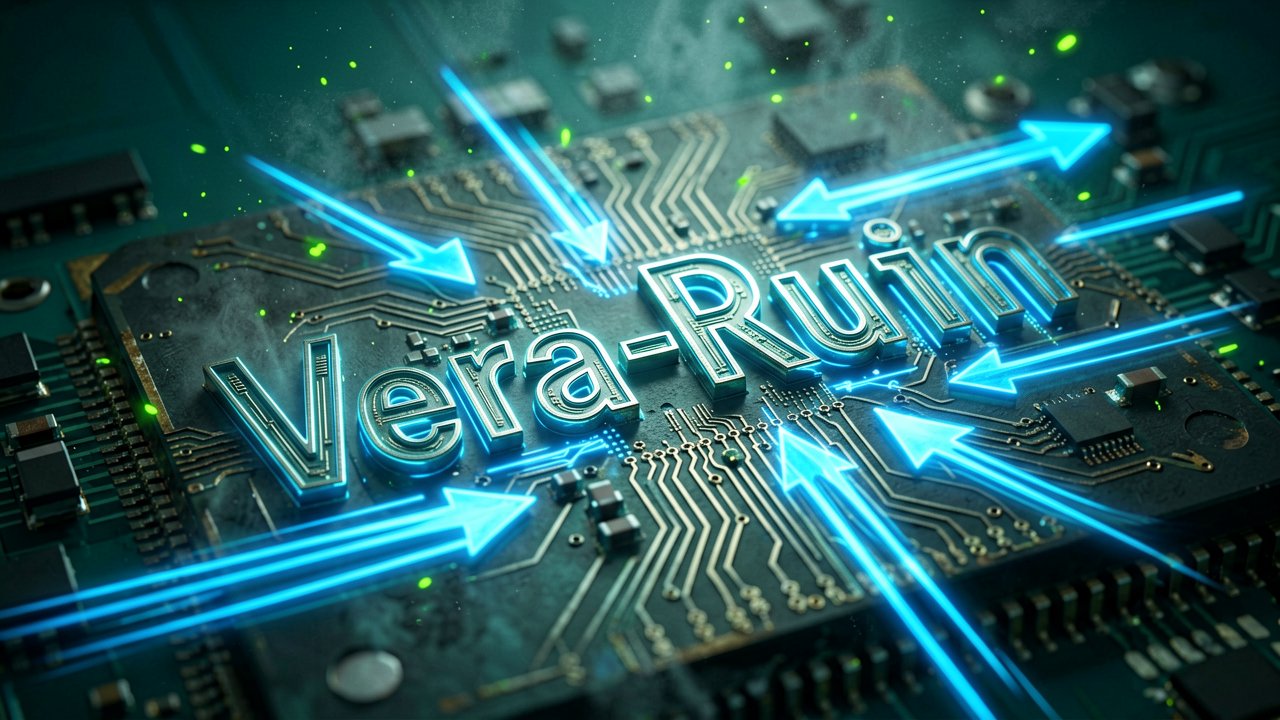
If you’ve been following the semiconductor soap opera lately, you know that Jensen Huang doesn’t do "slow." Just as the industry is still catching its collective breath from the Blackwell launch, Nvidia is already pulling back the curtain on its next act: the Vera-Rubin platform. Named after the pioneering astrophysicist who confirmed the existence of dark matter, this new roadmap isn't just a spec bump; it’s a full-throttle sprint into the "Agentic AI" era, where chips don't just process data—they reason through it. According to NVIDIA News, the Vera-Rubin platform is designed to be a generational leap, integrating a custom Vera CPU with the Rubin GPU to deliver a staggering 100 petaflops of AI performance in a single compute board.
But while the engineering teams in Santa Clara are popping champagne over 3nm process nodes and HBM4 memory, the bean counters are staring at a much grimmer map. Specifically, a map of China. The geopolitical tug-of-war between Washington and Beijing has shifted from a light shove to a full-blown wall, and Nvidia is caught right in the middle. Recent reports suggest that intensified U.S. export controls and Beijing's own push for "technological sovereignty" are threatening to wipe as much as $40 billion in potential sales off the table. It’s a classic case of the unstoppable force of innovation meeting the immovable object of international trade policy, as noted by Ad-Hoc News.
The Rubin Revolution: More Than Just More FLOPS
Let’s talk silicon for a second. The Rubin architecture, slated for a H2 2026 rollout, is where Nvidia officially transitions from being a "GPU company" to a "data center factory" architect. By ditching the traditional two-year cycle for an aggressive annual cadence, Huang is effectively telling competitors they’re already behind. The Rubin R200 GPU is expected to pack 336 billion transistors and feature 288GB of HBM4 memory—delivering 22TB/s of bandwidth. As Spheron Network highlights, that’s more than double the memory bandwidth of the current Blackwell generation, a necessity for the "test-time scaling" that next-gen models like Claude and GPT-5 will likely demand.
The "Vera" half of the equation is equally ambitious. It’s a custom Arm-based CPU with 88 "Olympus" cores, designed to sit right next to the GPU and share data over a 1.8 TB/s NVLink chip-to-chip connection. This isn't just about raw speed; it’s about efficiency. The goal is to reduce the "cost per token"—the literal price of an AI’s thought—by a factor of ten. For companies like Microsoft and CoreWeave, who are already lining up for these "AI superfactories," the math is simple: Rubin allows them to train larger models with four times fewer GPUs than they’d need today, as reported by NVIDIA Investor Relations.

The $40 Billion Elephant in the Room
However, you can’t talk about Nvidia’s future without talking about the massive hole being dug in its balance sheet by the China export ban. Historically, China accounted for roughly 20-25% of Nvidia’s data center revenue. But as the U.S. Commerce Department tightens the screws, even "nerfed" chips like the H20—specifically designed to stay under the regulatory performance ceiling—are being blocked or facing immense pressure. Analysts are now warning that the combination of canceled orders and Beijing’s directive for domestic firms to "buy local" could cost Nvidia up to $40 billion in long-term revenue, according to IG UK.
The situation has become so precarious that Jensen Huang recently joined a high-level diplomatic trip to Beijing, reportedly to seek clarity on whether Chinese AI developers will ever be allowed to officially buy advanced accelerators like the H200 again. As suggests, even when the U.S. gives a green light, Beijing is increasingly hesitant, fearing that a reliance on American silicon will leave them vulnerable to future "kill switches." This stalemate has created a thriving "gray market" for smuggled chips, but for a multi-trillion-dollar company like Nvidia, back-alley deals aren't a sustainable business model.
Ultimately, Nvidia is betting that the sheer power of Vera-Rubin will make it indispensable. The hope is that the rest of the world’s thirst for "Agentic AI" will grow fast enough to outpace the losses in the East. It’s a high-stakes gamble: can you lose your biggest single market and still remain the most valuable company on Earth? If the 3.5x boost in training performance and 5x boost in inference promised by the Rubin platform holds true, Nvidia might just prove that in the AI race, the only thing more powerful than politics is the platform that powers the mind.
Will the "Rubin Era" be enough to offset the geopolitical cooling of the Chinese market?
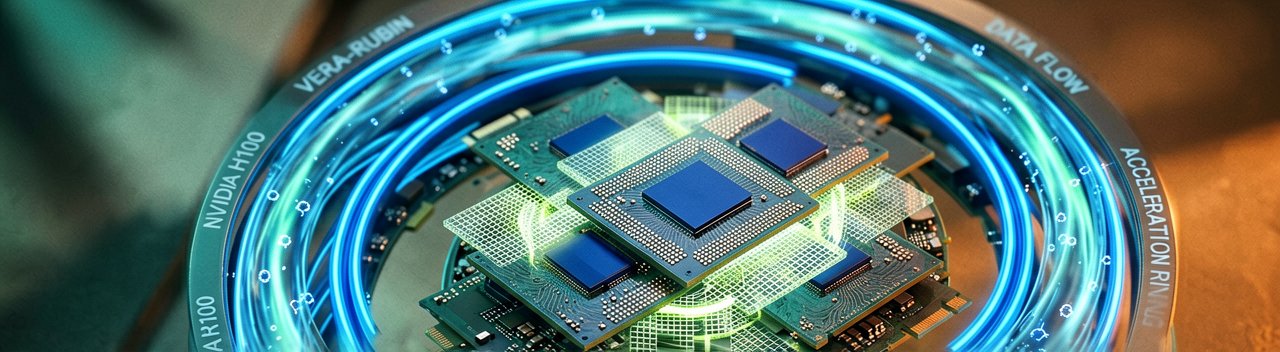
Behind the Silicon Curtain: To understand why the Vera-Rubin roadmap is such a high-stakes pivot, you have to look past the marketing deck and into the increasingly frantic logistics of the global supply chain. For years, Nvidia’s playbook was about selling the "best chip." But as Jensen Huang’s recent maneuvers suggest, the game has shifted to selling the "only ecosystem." The Vera-Rubin platform isn't just a hardware refresh; it’s an insurance policy against a fragmenting world. By tying the custom Vera CPU so tightly to the Rubin GPU via the proprietary NVLink interconnect, Nvidia is effectively building a walled garden that is nearly impossible for competitors like AMD or Intel to bridge, even if they manage to match Nvidia’s raw FLOPS.
Industry insiders are quietly noting that the $40 billion China headwind isn't just about lost sales—it’s about the loss of a massive feedback loop. For a decade, Chinese tech giants like Alibaba and Tencent were the "beta testers" for Nvidia’s most ambitious architectures. They pushed the hardware to its breaking point in ways that provided invaluable telemetry for the next generation. Without that scale of deployment in the East, Nvidia is forced to rely more heavily on its "Magnificent Seven" partners in the West, as reported by Ad-Hoc News. This creates a dangerous concentration of power where a single procurement shift from Microsoft or Meta could cause more volatility than any export ban ever could.
The "Sovereign AI" Pivot
What most dry financial reports miss is Huang’s strategic shift toward "Sovereign AI." Recognizing that the China market is effectively on life support, Nvidia has been aggressively courting nation-states like Japan, France, and Singapore. The pitch is simple: "You don't want to rely on American or Chinese clouds; you need your own AI infrastructure." The Vera-Rubin platform is the ultimate bait for this strategy. Its massive memory capacity allows smaller nations to run highly localized models that reflect their specific languages and cultural nuances without needing a 100,000-GPU cluster. This "boutique supercomputing" model is Nvidia’s attempt to recoup that $40 billion by diversifying across twenty smaller markets instead of one giant one.
However, the ghost of Moore’s Law still haunts the production line. Moving to a one-year release cycle puts immense pressure on TSMC, Nvidia’s sole foundry partner. The Rubin architecture’s reliance on HBM4 memory—a technology that is still in its infancy and plagued by low yields—means that even if the demand is there, the supply might not be. Analysts at Spheron Network point out that any hiccup in the 3nm or HBM4 ramp-up could leave Nvidia with a "paper launch" while Chinese rivals like Huawei’s Ascend division continue to iterate on older, more stable nodes. It’s a race against physics as much as it is against politics.
There is also the human element: the "Vera" in Vera-Rubin. By naming the platform after Vera Rubin, Nvidia is making a calculated branding move to frame AI not as a corporate tool, but as a scientific instrument for the "dark matter" of data. This high-minded rhetoric serves a practical purpose. It helps Nvidia maintain its "cool factor" among the world’s top engineers who are increasingly skeptical of Big Tech’s motives. In a talent war where the best AI researchers can command seven-figure salaries, being the company that builds the "telescope for the mind" is a powerful recruiting tool that transcends mere stock options.
As we head into the next fiscal year, the tension is palpable. Nvidia is attempting a mid-air engine swap—transitioning to a whole new architecture while navigating a geopolitical minefield. If Rubin succeeds, the $40 billion loss in China will look like a rounding error in the history books. If it falters, or if the "Agentic AI" bubble shows even the slightest sign of deflating, that China-shaped hole in the balance sheet will suddenly look like a bottomless pit. The roadmap is set, the silicon is taped out, and the world is watching to see if Jensen Huang can beat the house one more time.
Is Nvidia's pivot to "Sovereign AI" enough to bridge the massive revenue gap left by the Great Firewall?
Reading Between the Lines: There is a growing cognitive dissonance between Nvidia’s astronomical valuation and the reality of its shrinking geographic footprint. We are being asked to believe two contradictory things at once: that China is a vital, irreplaceable market whose loss threatens $40 billion in revenue, yet also that Nvidia’s "annual cadence" of innovation is so overwhelming that such a loss is merely a speed bump. This "speed bump" is the size of a small country’s GDP, and the math only works if the rest of the world’s appetite for compute remains not just high, but insatiable and exponential. In the tech world, exponential curves have a nasty habit of turning into S-curves exactly when you can least afford it.
The skepticism begins with the "Agentic AI" narrative that Vera-Rubin is built to serve. While the Blackwell generation was sold on the promise of better chatbots, Rubin is being marketed as the foundation for autonomous digital workers. But if the enterprise world realizes that these "agents" are prone to the same hallucinations as their predecessors, the ROI for a $100-billion data center upgrade starts to look shaky. As noted by NVIDIA Investor Relations, the performance gains are massive, but hardware efficiency is a double-edged sword: if a Rubin chip is five times more efficient at inference, a customer might actually need fewer chips to do the same job, potentially cannibalizing the very sales growth Nvidia needs to offset the China vacuum.
The Yield Gap and the Geopolitical Paradox
Furthermore, we have to look at the "innovation tax" being levied by the U.S. government. By forcing Nvidia to design crippled versions of its silicon for the Chinese market, Washington is inadvertently funding a crash course in hardware optimization for Nvidia’s competitors. When Chinese firms can’t buy raw power, they innovate on software and interconnect efficiency—areas where the U.S. has historically held a lead. According to IG UK, this forced scarcity is creating a "Darwinian" environment in the East that could produce a leaner, meaner competitor to the Rubin architecture by the time the decade is out.
Then there is the sheer physical limit of the power grid. Every Vera-Rubin rack will consume power at a rate that makes modern data centers look like pocket calculators. While the specs on the NVIDIA News portal look revolutionary, they assume a world where utility companies can simply flip a switch and provide gigawatts of green energy on demand. The contradiction is clear: Nvidia is building a Ferrari for a world that is still struggling to pave the roads and find enough gas. If the infrastructure can't keep up with the roadmap, the "Vera-Rubin era" might be remembered less as a scientific revolution and more as a monument to over-engineering in an age of scarcity.
Ultimately, the $40 billion question isn't just about whether China will buy the chips, but whether the West can afford to keep buying them at this pace. If the Vera-Rubin launch doesn't immediately translate into visible, bottom-line profits for the Fortune 500, the "headwinds" won't just be coming from Beijing—they'll be coming from Wall Street. Nvidia is currently sprinting toward a finish line that keeps moving, fueled by the hope that the "next big thing" is always just one 3nm wafer away.
Is Nvidia innovating its way into a corner where the only customer capable of buying its products is the AI it helped create?
"In the current geopolitical climate, Jensen Huang is essentially trying to sell the world a warp-drive engine while the two biggest superpowers are arguing over who gets to hold the keys to the garage. At this rate, the only thing more sophisticated than a Vera-Rubin GPU will be the legal team required to actually ship one across a border."
Artūras Malašauskas is an AI Systems Integrator with 20+ years of production-grade web engineering experience. He has designed, shipped, and scaled enterprise Python/PHP systems for logistics, SaaS, and public-sector clients. For the past year, he has focused exclusively on AI integrations: deploying open-source LLMs, building generative media pipelines (image, audio, video), and engineering multi-agent workflows for real production environments. His standard: reproducibility, security, cost-efficient inference—no vaporware. He documents and evaluates emerging AI tooling, separating verified capabilities from marketing noise. Technical editor at: muza-ai.eu, ai-verslas.lt, ai-naujinos.lt Connect on LinkedIn
Comments