The $1.75 Trillion Orbital Gambit: How SpaceX’s IPO Redefines the AI Infrastructure Race
The Orbiting Goldmine: Why SpaceX’s $1.75 Trillion Debut Is an AI Play in Disguise
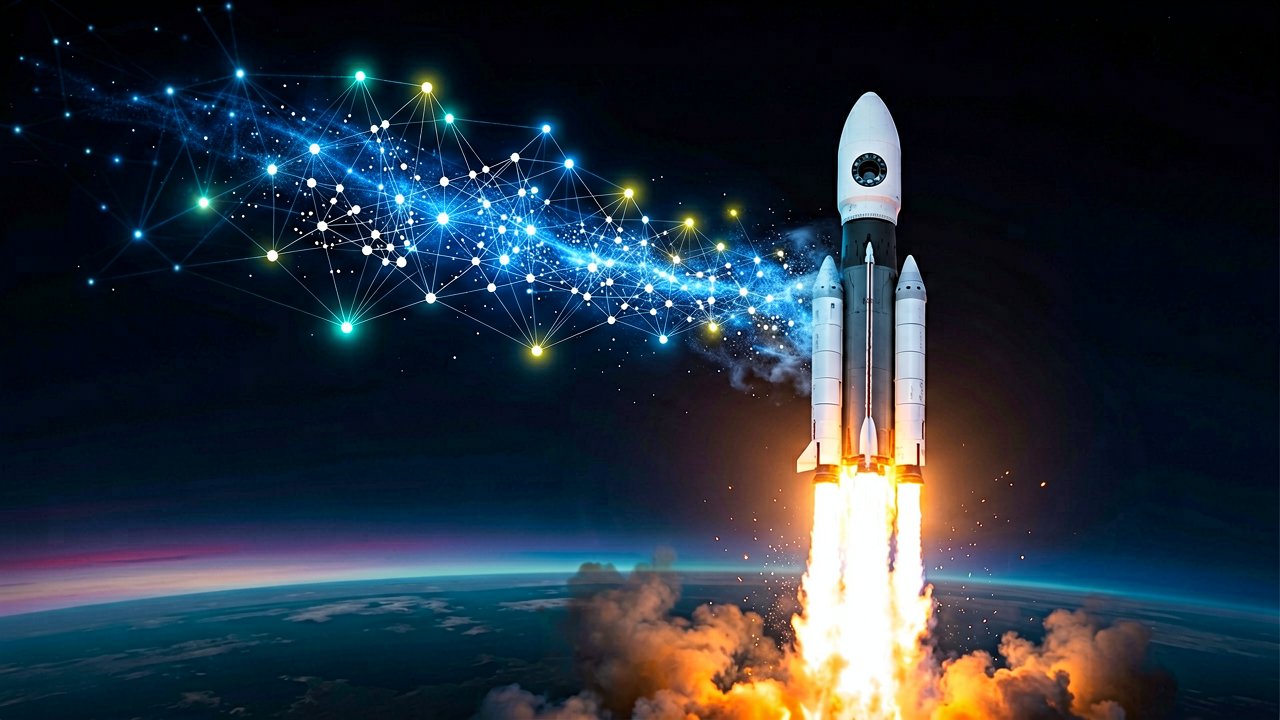
If you’ve been paying attention to the whispers on Wall Street, you know the SpaceX IPO isn't just about rockets anymore. With a confidential S-1 filing reportedly targeting a staggering $1.75 trillion valuation, Elon Musk is preparing to shatter every record in the book, according to reports from Reuters . But here’s the real kicker: this isn't merely a "space" company hitting the public markets; it’s the birth of a dominant AI infrastructure play. By merging with xAI earlier this year, SpaceX has effectively repositioned itself as a vertically integrated powerhouse capable of hosting massive AI data centers where cooling is free and solar power is infinite.
For those of us watching the secondary effects, the "SpaceX ripple" is going to be massive. While everyone scrambles for a piece of the $75 billion raise expected in June, the smart money is looking at the existing AI titans that are already woven into the SpaceX ecosystem. We aren’t just talking about vendors; we’re talking about strategic partners and major shareholders whose balance sheets are about to get a rocket-fueled makeover. If SpaceX hits that $1.75 trillion mark, the re-valuation of its partners could be the sleeper trade of 2026.
1. Alphabet: The $87 Billion Silent Partner
It’s easy to forget that Google’s parent company, Alphabet, was one of the early believers. Back in 2015, they led a $1 billion funding round for SpaceX, securing a stake that has since ballooned in value. At a $1.75 trillion IPO price, analysts at The Globe and Mail estimate that Alphabet’s position could be worth approximately $87.5 billion. For a company already seeing triple-digit growth in its AI cloud business, this sudden influx of liquidity—or even just the mark-to-market gain—is a massive catalyst for its own AI ambitions.
Alphabet isn't just sitting on a pile of shares, though. Their "Project Suncatcher" initiative is already exploring orbital compute, a field where SpaceX’s Starlink is the undisputed infrastructure king. As SpaceX pivots toward becoming an orbital AI data center provider, Alphabet stands as both a preferred customer and a primary beneficiary of the technical synergies. While the market often overlooks Alphabet's venture portfolio, the SpaceX IPO makes that "Other Bets" column impossible to ignore. It’s a rare case where a tech giant gets to play both the landlord and the tenant in the next frontier of AI.
2. Nvidia: The Engine Room of the Final Frontier
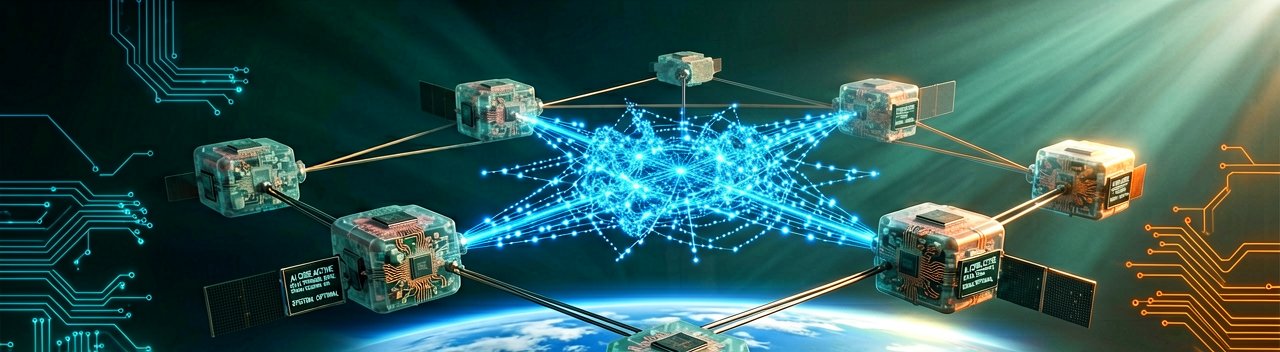
You can't talk about AI without Nvidia, and you certainly can’t talk about orbital data centers without them either. SpaceX’s plan to launch a constellation of up to one million satellites—effectively a planetary-scale supercomputer—requires the kind of specialized silicon that only Jensen Huang’s team can provide. In fact, Nvidia recently unveiled the "Vera Rubin Space-1" module, a space-grade AI chip designed specifically for the harsh, power-constrained environments of orbit, as reported by CNBC.
The relationship here is symbiotic. SpaceX provides the ride and the vacuum-cooled environment, while Nvidia provides the brains. With SpaceX reportedly leveraging over 220,000 Nvidia GPUs for its upcoming orbital clusters in partnership with Anthropic, the demand for "space-hardened" chips is no longer a niche curiosity; it’s a high-margin growth engine. When SpaceX goes public, it won't just be a win for Musk; it will be a validation of Nvidia’s strategy to take AI off-planet to solve the power and cooling bottlenecks currently stifling data centers on Earth. If you think the "AI trade" is crowded now, wait until it moves into low Earth orbit.
What Most Reports Miss: The Orbital Data Sovereignty Play
While the headlines are obsessed with the sheer scale of the $1.75 trillion valuation, seasoned observers know the real story isn't just about the money—it’s about the geographic and political independence of AI compute. By moving massive data centers into orbit, SpaceX isn't just solving a cooling problem; it's creating a "data haven" that exists outside traditional national jurisdictions. This is the "hidden" logic behind the xAI merger. Musk isn't just building a rocket company; he’s building a sovereign cloud that can process sensitive AI workloads without the latency or regulatory bottlenecks of terrestrial fiber networks.
For Alphabet and Nvidia, this shift represents a fundamental change in how they view their "moats." Alphabet’s stake in SpaceX is more than a passive investment; it’s a strategic insurance policy against the physical limitations of Earth-bound data centers. We’ve seen Google struggle with the massive energy demands of its Gemini models, often clashing with local power grids and water usage regulations. By backing SpaceX, Alphabet is essentially betting on a future where the most intensive "training runs" happen in the vacuum of space, powered by 24/7 unshielded solar radiation. It’s a vision that sounds like science fiction until you realize the hardware is already being flight-tested.

The stakeholder perspective inside SpaceX is equally fascinating. Sources close to the company suggest that the drive toward an IPO is less about cashing out and more about funding the "Interplanetary Backbone"—a massive communication and compute network that will eventually link Earth and Mars. For Nvidia, this represents a multi-decade sales cycle. They aren't just selling chips for a single refresh cycle; they are helping define the architecture of a multi-planetary internet. This isn't just another server rack in a warehouse in Virginia; this is about GPUs that can survive cosmic radiation and operate for years without human maintenance.
Historical context is key here. If we look back at the early days of the commercial internet, the big winners weren't necessarily the ones who built the first websites, but the ones who owned the switches and the cables. SpaceX is building the "switches" of the next century, but they are doing it with AI-native architecture from the ground up. This gives partners like Nvidia a first-mover advantage that is virtually impossible for competitors like Intel or AMD to bridge, simply because the flight-heritage and validation required for space-grade AI hardware take years to achieve.
Ultimately, the SpaceX IPO will be remembered as the moment the AI industry realized it had outgrown the planet. The synergy between Musk’s xAI, Alphabet’s cloud expertise, and Nvidia’s silicon dominance creates a trifecta that could monopolize high-end compute for the next decade. While retail investors might be looking at the launch cadence of the Starship, the real analysts are looking at the telemetry data coming from the orbital servers. The future of AI isn't just in the cloud; it’s in the stars, and the gatekeepers are already in position.
Reading Between the Lines: The Gravity of Trillion-Dollar Expectations
Before we crown Musk the king of the cosmos, we need to address the elephant in the orbital room: the "Musk Premium" is currently doing a lot of heavy lifting. A $1.75 trillion valuation isn't just a number; it’s an assumption of perfection. For SpaceX to justify this price tag, it must successfully pivot from a launch provider to a high-margin AI service powerhouse without a single catastrophic failure in its unproven orbital compute stack. Wall Street is pricing this as a fait accompli, but the technical debt of running GPUs in a high-radiation vacuum is a hurdle that even Nvidia’s best engineers haven't fully cleared in a long-term production environment.
There is also a glaring contradiction in the "sovereign data" narrative. While the idea of a jurisdictional haven sounds appealing to AI developers tired of EU regulations or US congressional hearings, the reality is that SpaceX remains a US-based defense contractor. The Pentagon, which relies on Starshield for secure communications, is unlikely to let Musk turn his satellite constellation into a "wild west" for unregulated AI compute. The friction between Musk’s libertarian digital ambitions and his role as a vital cog in the military-industrial complex is a collision waiting to happen, and it could easily cap the "limitless" growth investors are currently chasing.
Furthermore, we have to look at the Alphabet "win" with a skeptical eye. While an $87 billion windfall looks great on a balance sheet, it also highlights a strategic failure. Why is Google, a pioneer in both AI and hardware, relying on a third-party rocket company to secure its future infrastructure? The fact that Alphabet’s best AI play might be its minority stake in a competitor's company speaks volumes about the internal bureaucracy that has slowed Google’s own hardware initiatives. This IPO might provide a liquidity boost, but it also cements Alphabet’s position as a passenger on Musk’s ship rather than the captain of its own destiny.
Finally, there is the risk of the "AI Bubble" meeting the "Space Bubble." If the current enthusiasm for generative AI cools—or if the Starship program hits a multi-year regulatory or technical snag—the deleveraging will be brutal. We are looking at a house of cards built on the highest of tech. If Nvidia’s space-grade chips don't yield the performance gains promised, or if Starlink’s bandwidth is throttled by the sheer volume of AI data traffic, the $1.75 trillion valuation will look less like a launchpad and more like a reentry burn without a heat shield.
"Investing in a space-based AI monopoly is essentially betting that the laws of physics will be more cooperative than the laws of the SEC—and frankly, given the choice between a vacuum and a courtroom, the vacuum usually has less friction."
Artūras Malašauskas is an AI Systems Integrator with 20+ years of production-grade web engineering experience. He has designed, shipped, and scaled enterprise Python/PHP systems for logistics, SaaS, and public-sector clients. For the past year, he has focused exclusively on AI integrations: deploying open-source LLMs, building generative media pipelines (image, audio, video), and engineering multi-agent workflows for real production environments. His standard: reproducibility, security, cost-efficient inference—no vaporware. He documents and evaluates emerging AI tooling, separating verified capabilities from marketing noise. Technical editor at: muza-ai.eu, ai-verslas.lt, ai-naujinos.lt Connect on LinkedIn
Comments