Silicon in the Shadows of the Himalayas: AnK’s Bold Bet on Nepal’s AI Future
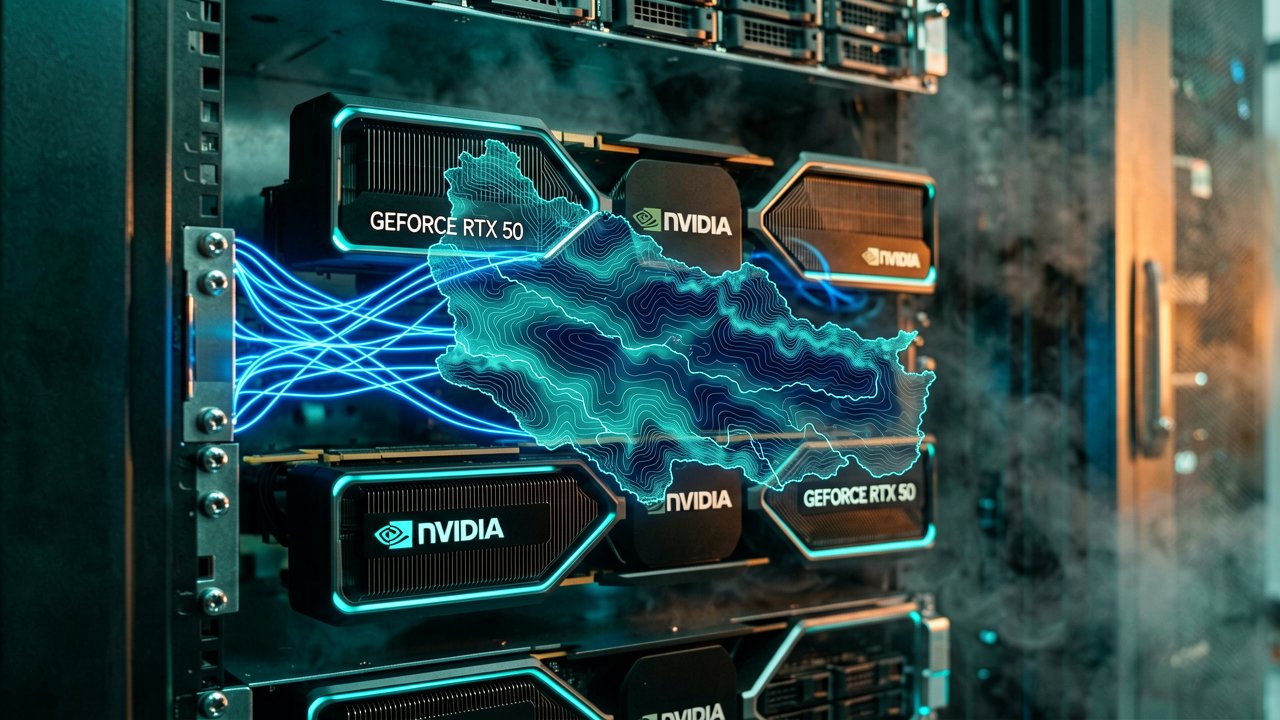
For years, the story of Nepal’s tech scene has been one of immense potential hamstrung by a frustrating lack of hardware. Local developers, brilliant as they are, have often found themselves hitting a computational ceiling, forced to outsource their heavy lifting to expensive foreign cloud providers or settle for agonizingly slow local rigs. That narrative shifted this week as AnK officially flipped the switch on a new high-powered GPU infrastructure, specifically designed to give Nepal’s AI startups and students the muscle they need to compete on a global stage, as reported by TechPana .
The move isn't just about sticking some shiny cards in a rack; it's a strategic play to keep local talent from "infrastructure drain." Founded by Amit Regmi and Akio Tanaka, AnK is leveraging a background in heavy-duty mechanical engineering simulations—the kind of work that usually requires a supercomputer or a very patient engineer—to build out a local "GPU-as-a-service" platform. According to 24 Ghanta Nepal , the startup has deployed a fleet of high-end hardware, including NVIDIA’s powerhouse RTX 5090 and 5080 units, supported by a 70TB storage backbone and dedicated power infrastructure to handle the country's notorious grid fluctuations.
Leveling the Playing Field for Startups
For a startup in Kathmandu, renting time on a local cluster is a game-changer. Until now, if you wanted to train a large language model or run complex surrogate models, you’d likely be paying US dollars to AWS or Azure—a steep price for any early-stage venture. AnK's new setup allows these companies to access high-performance computing via dedicated virtual machines from nothing more than a standard laptop. It’s a democratization of power that Regmi believes is essential for Nepal to stop exporting raw electricity and start exporting "digital value," a sentiment echoed by industry observers on LinkedIn .
The infrastructure is already proving its worth in-house. AnK has been developing "surrogate models"—AI systems that can predict the results of expensive mechanical simulations in a fraction of the time. They’ve even showcased a Mechanical Engineering Design Agent (MEDA) capable of turning text prompts into 3D designs, a project that recently made waves at the ASME conference in the U.S. By opening this infrastructure to the public, they're essentially inviting the rest of the ecosystem to build similarly ambitious tools without the upfront hardware headache.
A Boost for the Next Generation
It’s not just the founders who stand to gain. University students, often the first to feel the pinch of limited resources, now have a pathway to professional-grade research. From dental automation systems to rocket-engine simulations like those being tested by local groups like Mach24 Orbitals (who recently joined NVIDIA's Inception Program ), the barrier to entry for high-stakes engineering has been significantly lowered. By providing hourly and monthly rental plans, AnK is making "supercomputing" as accessible as a monthly Netflix sub.
Looking ahead, the road is still steep. Maintaining high-uptime infrastructure in a region with infrastructure challenges requires more than just money; it requires the kind of 40 kVA inverters and specialized thermal management that AnK has already baked into their Rs 20 million local investment. But if this project scales—and if the government follows through on its National AI Center plans—Nepal might finally stop being a country that just "has potential" and start being one that powers the next generation of AI innovation.
The Quiet Revolution in Kathmandu’s Basements: What most reports miss is that this isn’t just a hardware upgrade; it’s a localized rebellion against the "latency tax." For years, Nepali developers working on real-time AI applications faced a grueling choice: deal with the 200ms round-trip delay to servers in Singapore or Ohio, or try to run models on consumer-grade laptops that would thermal-throttle within minutes. AnK’s move to place NVIDIA’s flagship silicon physically within the valley effectively erases that lag, turning a frustrating development cycle into a fluid, creative process that feels "native" for the first time.
Industry veterans recall a time, not too long ago, when the idea of hosting a high-density compute cluster in Nepal was laughed off as a pipe dream due to the "load-shedding" legacy. The historical context here is vital: Nepal’s tech sector grew up in an era of unpredictable power, forcing a generation of coders to become masters of efficiency and offline-first development. By investing heavily in a 40 kVA power backup system and dedicated cooling, AnK isn't just buying GPUs; they are building a fortress of stability that honors that resilient history while finally moving past its limitations.
The "Sovereign AI" Argument
There is also a nuanced geopolitical layer to this infrastructure. As the global conversation shifts toward "Sovereign AI"—the idea that nations should own the compute and data that define their digital culture—AnK is positioning Nepal to be more than just a consumer of Western or Chinese models. When local startups can train models on local datasets without that data ever leaving the country's borders, it builds a level of digital trust and security that foreign cloud providers simply cannot offer to a nascent tech ecosystem.
Stakeholders in the local venture space are watching closely. The consensus among Kathmandu’s "angel" investors is that this lowers the "burn rate" for AI-heavy startups. Previously, a significant chunk of seed funding would immediately leak out of the country to pay for AWS credits. Now, that capital can stay within the local economy, supporting local engineers and further R&D. It’s a closed-loop system that transforms hardware into a catalyst for broader economic retention, a perspective highlighted by local tech advocates at TechPana.
Finally, we have to look at the "NVIDIA Inception" effect. With groups like Mach24 Orbitals gaining international recognition, there is a growing appetite for what Amit Regmi calls "surrogate modeling." This isn't just about chatbots; it’s about using AI to simulate fluid dynamics for hydropower dams or structural integrity for Himalayan infrastructure. By providing the "shovels" for this gold rush, AnK is betting that Nepal’s future isn't just in software outsourcing, but in high-stakes, hardware-accelerated engineering that addresses the unique physical challenges of the region.
The Bottleneck Beyond the Silicon: While the arrival of local RTX 50-series clusters is a celebratory milestone, we must temper the "silicon savior" narrative with a dose of operational reality. High-end GPUs are only as fast as the pipelines feeding them, and in Nepal, the "data bottleneck" remains the elephant in the room. It is one thing to have the compute power to train a massive model; it is quite another to have the high-speed, low-latency domestic fiber backbone and the clean, structured datasets required to make that training meaningful. Without a parallel leap in data infrastructure, these GPUs risk becoming very expensive space heaters for underutilized VRAM.
There is also a palpable tension between the "AI for all" mission and the cold math of hardware depreciation. NVIDIA’s latest architecture isn't just power-hungry; it’s notoriously susceptible to the kind of micro-fluctuations in power quality that even the best industrial inverters struggle to smooth out entirely. AnK is essentially running a high-stakes experiment in hardware longevity within a challenging environment. If the cost of maintenance and the "Nepal premium" on replacement parts drive rental prices too close to international cloud rates, the local advantage evaporates—leaving startups right back where they started, clutching their credit cards for US-based services.
The Skill Gap Contradiction
Furthermore, we have to address the contradiction of "infrastructure before education." We are handing the keys to a Ferrari to an ecosystem that has largely been practicing on go-karts. While the hardware barrier has been lowered, the "talent ceiling" is the next looming crisis. There is a very real risk that this high-powered infrastructure will be primarily used for basic tasks or crypto-adjacent ventures rather than the high-level surrogate modeling AnK envisions. Projections for a "Digital Nepal" often overlook that hardware doesn't generate innovation; it merely permits it. The real metric of success for AnK won’t be their uptime stats, but whether they can foster a curriculum that teaches local devs how to actually saturate these cards.
Measured skepticism also suggests that the government’s role remains the ultimate wildcard. While private players like AnK are putting skin in the game, the lack of a cohesive regulatory framework for AI and data sovereignty in Nepal creates a "gray zone." If the state suddenly pivots on data localization or fails to address the high import duties on specialized tech components, the scalability of local GPU farms could be choked out before they reach maturity. The leap from a single successful cluster to a national AI powerhouse requires a policy tailwind that has yet to fully materialize beyond optimistic budget speeches.
"Building an AI powerhouse in the shadows of the Himalayas is a bit like trying to run a five-star kitchen on a camping stove; you’ve finally got the chef-grade copper pans, now we just have to hope the gas line doesn't flicker right when the soufflé is rising."
Artūras Malašauskas is an AI Systems Integrator with 20+ years of production-grade web engineering experience. He has designed, shipped, and scaled enterprise Python/PHP systems for logistics, SaaS, and public-sector clients. For the past year, he has focused exclusively on AI integrations: deploying open-source LLMs, building generative media pipelines (image, audio, video), and engineering multi-agent workflows for real production environments. His standard: reproducibility, security, cost-efficient inference—no vaporware. He documents and evaluates emerging AI tooling, separating verified capabilities from marketing noise. Technical editor at: muza-ai.eu, ai-verslas.lt, ai-naujinos.lt Connect on LinkedIn
Comments