The Agentic Mirage: Why Your Next Phone Might Be Your New Boss
If you walked into a boardroom three years ago and mentioned "agentic workflows," you’d have been met with blank stares or a polite request to stop using LinkedIn buzzwords. Fast forward to mid-2026, and the conversation has shifted from "can AI do this?" to "why hasn't the AI done this yet?" We’ve reached a tipping point where the silicon in our pockets is no longer just a delivery vehicle for apps; it’s becoming the substrate for an entirely new kind of digital existence. But as we sprint toward this "AI-first" future, I can’t help but wonder if we’re trading the soul of personal computing for a high-speed efficiency that doesn't actually make us more productive—just more occupied.
The Hardware Crisis No One Invited
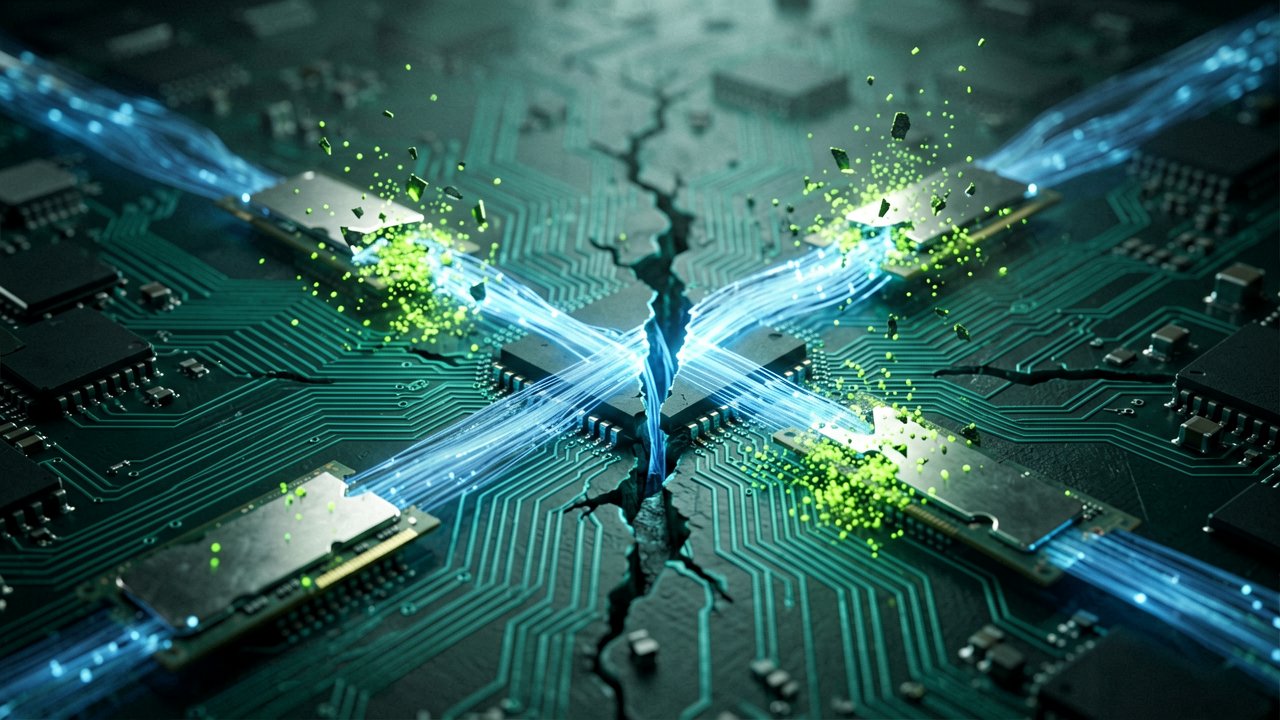
For decades, the smartphone industry followed a comfortable, if predictable, rhythm: better cameras, faster chips, thinner glass. But 2026 has thrown a wrench into that machinery. We’re currently staring down what analysts at CNBC describe as the sharpest decline in smartphone history. The culprit? A brutal memory chip shortage. It turns out that the massive data centers powering the world’s generative AI models have a voracious appetite for the same high-performance memory needed for your next handset. When the hyperscalers come knocking, the consumer electronics brands are forced to wait at the back of the line.
This "memory crunch" is doing something fascinatng to the market. Instead of chasing the usual hardware specs, manufacturers like Google and Nothing are pivoting toward what Forbes calls "invisible intelligence." If you can’t afford the most expensive RAM, you make your software smarter. We’re seeing a surge in "AI-native" features that prioritize user experience over raw power—things like real-time multimodal translation and local inference models that don't need a 5G connection to finish a sentence. It’s a scrappy, necessary evolution, but it signals the end of the "spec war" era we grew up with.
When Your Operating System Becomes Your Intern
The most radical shift, however, isn't in how many megapixels your camera has; it’s in the death of the app icon. Industry leaders like the CEO of Qualcomm are already predicting that the traditional operating system—the grids of icons we’ve tapped for twenty years—is becoming irrelevant. According to The Stack , the "agent" is the new center of the ecosystem. We’re moving toward a world where you don’t open Uber, then Spotify, then Outlook. Instead, you tell your device to "handle my afternoon," and a swarm of specialized agents coordinates the logistics, the music, and the replies in the background.
This sounds like a dream for anyone drowning in digital chores, but it introduces a "prototype economy" where things move so fast we might lose the ability to actually *understand* the tools we use. As noted by CapTech , the pace of AI-driven creation is so relentless that teams are now throwing away what doesn’t work instantly to start fresh. While that's great for innovation, it’s hell for consistency. We’re living in a beta-test that never ends, where your phone’s interface might fundamentally change because an agent decided a different layout would shave four seconds off your morning routine.
Ultimately, the tech landscape of 2026 feels like a high-stakes experiment in trust. We are handing over the keys to our digital lives to autonomous collaborators that, as The World Economic Forum warns, introduce security vulnerabilities we haven't even named yet. It’s an exciting, slightly terrifying frontier. We’re no longer just users; we’re managers of a digital workforce. I just hope that in our rush to automate every "administrative burden," we don’t accidentally automate the parts of life that were actually worth doing ourselves.
The Quiet Architect of Chaos: While the headlines focus on the glossy finish of AI agents, what most reports miss is the brutal "silicon tax" being paid behind the scenes. We aren’t just looking at a shortage of chips; we are witnessing a fundamental restructuring of how the tech giants prioritize humanity versus the machine. For years, the silicon valley mantra was "democratize access," but the current memory crunch is creating a digital divide where high-level agentic capabilities are becoming a luxury tier, reserved for those who can afford the hardware overhead or the subscription tolls of the hyperscalers.
Historically, we’ve seen these supply chain tremors before—think back to the mid-2010s flash memory spikes—but this is different. It’s not just a manufacturing hiccup; it’s a strategic pivot. Companies are no longer building for the consumer; they are building for the model. This shift in stakeholder priorities means that the "scrappy" innovations we see in mid-range devices aren't just clever engineering; they are desperate attempts to keep the hardware relevant in an era where the software's appetite is essentially infinite. It’s a game of musical chairs where the music is being composed by an algorithm that never stops playing.
The Ghost in the OS
If you talk to the engineers who actually build these "invisible interfaces," they’ll tell you that the hardest part isn't the code—it’s the predictability. The transition from a deterministic OS (where clicking "A" always does "B") to a probabilistic one (where your phone "guesses" what you want) is the biggest psychological leap in the history of personal computing. We are moving away from the tool-and-user relationship into something more akin to a partnership with a highly competent, but occasionally hallucinating, intern. It’s a shift that shifts the burden of error from the machine to the user's instructions.
This brings us to the historical context of the "App Store" era. When Steve Jobs introduced the iPhone, the goal was simplicity through tactile control. Now, we are entering a post-tactile phase. The industry veterans I speak with are increasingly worried that by removing the "friction" of opening an app, we are also removing the checkpoints that allow for human agency. When an agent manages your calendar, your bank account, and your communications, it isn't just saving you time; it’s filtering your reality. The question for the next two years isn't whether the tech works—it’s whether we can handle the loss of the "no" button.
Finally, we have to look at the environmental and economic cost of this "agentic" luxury. The energy requirements to run local inference models on millions of devices are staggering, and yet, the market demand for "smarter" gadgets shows no signs of cooling. We are trapped in a cycle of needing more power to solve the problems created by our previous need for power. As we move further into 2026, the real story won't be which phone has the best AI, but which company manages to make AI sustainable without charging us a "life tax" for the privilege of staying organized.
Reading Between the Lines: The industry’s obsession with "seamlessness" is starting to look a lot like a collective hallucination. We are being sold a vision of frictionless living, yet the technical reality is a mess of patched-together APIs and hardware that’s panting to keep up. There is a glaring contradiction at the heart of the 2026 roadmap: tech giants are promising that AI will liberate our time, while simultaneously designing ecosystems that require us to be more tethered to our devices than ever to "supervise" our autonomous agents. It’s the "self-driving car" problem applied to your entire digital life—you’re not driving, but you can’t exactly take a nap either.
The assumption that everyone actually *wants* an agentic interface deserves some serious skepticism. While Silicon Valley power users might find joy in a phone that pre-emptively books their hair appointments, the average consumer often views their device as a reliable appliance, not a moody collaborator. By killing the traditional app-based UI, manufacturers risk alienating the millions of people who find comfort in the discrete, predictable boundaries of a dedicated application. When "everything is everywhere" within a generative interface, the cognitive load doesn't disappear; it just changes shape from "where is that button?" to "what exactly is my phone doing right now?"
The Sovereignty Paradox
There is also the uncomfortable matter of data sovereignty. In the old world, you gave your data to Spotify to get music and to Uber to get a ride. In the agent-first world, you give your *entire context* to a single orchestrator so it can "understand" you. This creates a vertical monopoly on personal identity that would make the antitrust regulators of the 2010s faint. We’re moving toward a model where switching phone brands isn't just a matter of moving photos; it’s an identity transplant. If your "Agent" has learned your nuances over three years, leaving that ecosystem means lobotomizing your digital self.
We must also question the "efficiency" narrative. History shows that whenever tech makes a task faster, we don’t use the saved time to rest; we simply pack more tasks into the day. The agentic workflow isn't a vacation—it’s a force multiplier for the "hustle culture" that already has us on the brink of burnout. If an AI can handle ten emails in the time it took you to write one, the world won’t send you fewer emails; it will just expect you to manage ten times the volume. We are building a high-speed treadmill and calling it a breakthrough in lounge chair technology.
Projecting into the late 2020s, the most successful companies might not be those with the smartest agents, but those that offer a "Deep Offline" mode. As the digital world becomes a swirling, automated vortex of agent-to-agent negotiations, the ultimate luxury will be the ability to opt out. We’re rapidly approaching a point where the most sophisticated thing a piece of hardware can do is absolutely nothing at all, allowing its owner a moment of unmediated, un-optimized, and delightfully inefficient human thought.
"We were promised a future where robots did our laundry so we could write poetry; instead, we’re writing prompts for robots so they can generate poetry while we fold our own socks and wonder why the 'Smart Home' is currently arguing with the 'Smart Car' about who owns the rights to our morning commute."
Artūras Malašauskas is an AI Systems Integrator with 20+ years of production-grade web engineering experience. He has designed, shipped, and scaled enterprise Python/PHP systems for logistics, SaaS, and public-sector clients. For the past year, he has focused exclusively on AI integrations: deploying open-source LLMs, building generative media pipelines (image, audio, video), and engineering multi-agent workflows for real production environments. His standard: reproducibility, security, cost-efficient inference—no vaporware. He documents and evaluates emerging AI tooling, separating verified capabilities from marketing noise. Technical editor at: muza-ai.eu, ai-verslas.lt, ai-naujinos.lt Connect on LinkedIn
Comments