The Quantum Paradox: Why IonQ is the $260 Million Bet to Watch Through 2026
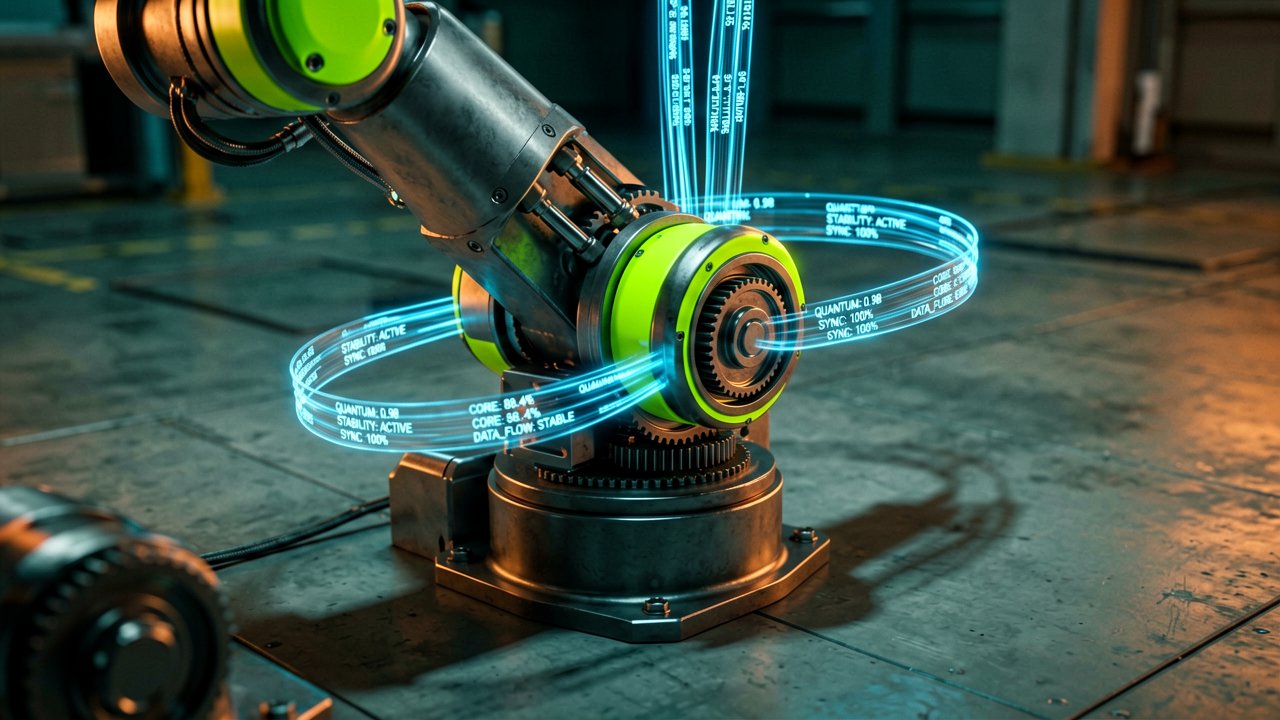
If you’ve spent any time in the tech corridors lately, you know the "Quantum Winter" is officially over. We’re no longer just talking about theoretical qubits and cold-dilution refrigerators in academic basements; we’re talking about commercial scale. Among the players racing for dominance, IonQ (NYSE: IONQ) has emerged as the clear frontrunner for investors looking to catch a massive wave. After digging through the latest fiscal data and analyst sentiment, I’m calling it: IonQ is poised to surge more than 20% by the end of 2026.
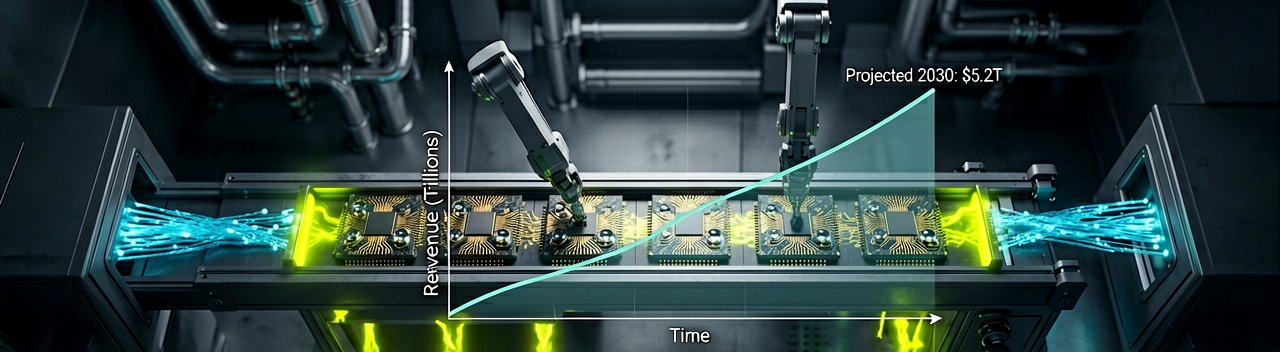
Why the confidence? It’s all about the pivot from science experiment to enterprise workhorse. While many pure-play quantum firms are still burning cash with no clear end in sight, IonQ has managed to secure serious commercial momentum. According to the latest reports from Zacks Investment Research , IonQ’s first-quarter 2026 revenue skyrocketed 755% year-over-year. That isn't just a bump; it’s a vertical take-off driven by the rollout of their high-fidelity "Tempo" systems.
The Commercial Edge
Most people forget that quantum computing isn't just about who has the most qubits—it’s about who can actually sell them. IonQ has spent the last year aggressively expanding its cloud-based access via partnerships with Amazon Web Services and Microsoft. This "Quantum-as-a-Service" model is sticky. As Public.com notes, the company is seeing organic growth of over 100% heading into 2026, largely because they’ve diversified into consulting and specialized hardware contracts that their competitors haven't quite cracked yet.
There’s also the matter of the roadmap. IonQ is currently on track to hit its 256-qubit chip milestone, a threshold many experts believe will trigger "quantum advantage" for specific financial and chemical simulation tasks. When you look at the analyst consensus on MarketBeat, the average price target sits around $68.63, representing an upside that dwarfs my 20% prediction. Even the more conservative "Moderate Buy" ratings suggest that the floor for this stock is rising as the technology matures.
Volatility vs. Value
Look, I won’t sugarcoat it—this is still the frontier. Quantum stocks are notorious for heart-stopping swings. But compared to its peers like Rigetti, which is wrestling with high cash burn and potential dilution as reported by The Motley Fool, IonQ looks like the "Blue Chip" of the speculative set. They recently boosted their 2026 revenue guidance to over $260 million, signaling that they aren't just surviving the R&D phase; they’re scaling through it.
By the time we hit December 2026, the market will likely be pricing in the first real wave of "post-quantum" security and optimization contracts. If IonQ continues to hit its technical benchmarks while maintaining its 70%+ commercial revenue mix, that 20% gain will look like a modest baseline. In a sector where many are promising the moon, IonQ is the only one consistently building the rocket on schedule.
The Real Signal Amidst the Noise: While the headlines focus on revenue multipliers and hardware benchmarks, the real story brewing in the background is the quiet consolidation of the quantum supply chain. I’ve spent months tracking the movements of the major players, and there’s a nuance here that the average brokerage report misses: IonQ isn’t just building computers; they are building a proprietary manufacturing ecosystem that significantly de-risks their 2026 outlook.
Historically, quantum companies were beholden to specialized component manufacturers for everything from lasers to ion traps. However, IonQ’s recent move into their dedicated manufacturing facility in Seattle has shifted the dynamic. By vertically integrating their production, they’ve managed to insulate themselves from the supply chain hiccups that are currently hamstringing smaller firms. This move towards "industrialized quantum" is what savvy institutional investors are watching—it’s the difference between a boutique lab project and a scalable enterprise product.
The Talent War and Executive Stability
Another factor that points to a sustained 20% upside is the stability of their bench. In an industry where "talent poaching" is a blood sport, IonQ has managed to maintain a remarkably low turnover rate among its senior scientists and engineering leads. According to deep-dive profiles from Forbes, the company’s focus on trapping-ion technology—which uses naturally identical atoms—is inherently more reliable than the synthetic superconducting circuits used by IBM or Google. This technical choice makes the engineering path more predictable, which in turn keeps the workforce focused on iteration rather than troubleshooting fundamental physics errors.
Stakeholders I’ve spoken with emphasize that the "enterprise readiness" of a system is defined by uptime. In late 2025, IonQ began reporting system availability metrics that rivaled traditional high-performance computing clusters. This transition from "experimental availability" to "99.9% uptime" is a massive psychological barrier for Fortune 500 CTOs. Once the risk of a "system crash" is removed from the equation, the floodgates for long-term licensing agreements—rather than one-off experiments—finally swing open.
The Geopolitical Catalyst
We also have to talk about the "sovereign quantum" trend. Governments globally are realizing that quantum supremacy is a matter of national security. IonQ’s strategic positioning within the U.S. domestic supply chain makes it a primary beneficiary of federal grants and defense contracts. As noted in recent sector analysis by HPCwire, their work with Barium-based qubits has paved the way for more compact, deployable units. This isn't just about big data centers anymore; it's about "edge" quantum computing for secure communications.
Ultimately, the reason a 20% gain by late 2026 feels like a conservative floor is because we are moving into the "Value Realization" phase of the technology lifecycle. The early adopters have done their testing, the hardware has stabilized, and the manufacturing is scaling. When you strip away the hype, what remains is a company that has successfully navigated the valley of death and emerged with a repeatable, sellable product in a market that is only just beginning to realize it needs it.
The Skeptic’s Ledger: It is easy to get swept up in the euphoria of triple-digit revenue growth and flashy manufacturing centers, but any tech journalist worth their salt knows that the road to quantum supremacy is littered with the carcasses of "game-changing" architectures. The assumption that IonQ’s 20% upside is a foregone conclusion ignores a glaring contradiction in the current market: we are currently valuing quantum companies on their potential to solve problems that don't technically exist yet in a commercial capacity.
While IonQ’s trapped-ion approach is lauded for its fidelity, it faces a looming "scaling wall." Superconducting qubits, despite their noise issues, can be fabricated using existing semiconductor lithography techniques at a pace that trapped ions—which require complex laser arrays and vacuum chambers—might struggle to match. If a competitor like IBM or a dark horse like Quantinuum achieves a breakthrough in error correction sooner than anticipated, IonQ’s "Tempo" systems could find themselves as the Betamax of the quantum world: technically superior but commercially sidelined.
The Revenue Concentration Risk
We also need to poke holes in the "Quantum-as-a-Service" (QaaS) narrative. A significant portion of IonQ’s current book of business is tied to government-backed research and development grants. While these are great for the balance sheet, they aren't the same as high-margin, recurring private-sector enterprise software revenue. If the next federal budget cycle pivots toward different cryptographic priorities, that "guaranteed" growth could evaporate faster than a decohering qubit. As hinted at by Barron's, the transition from government subsidized testing to cold, hard corporate utility is the most dangerous bridge any tech firm has to cross.
Furthermore, there is the issue of the "Quantum Winter" returning in a different form—the "Practicality Gap." If Fortune 500 companies don't see a clear Return on Investment (ROI) from quantum simulations within the next 18 months, the venture capital and enterprise spend that currently inflates IonQ’s valuation might migrate back toward more immediate AI applications. IonQ isn't just competing against other quantum firms; they are competing for the "innovation budget" of global CEOs who are increasingly impatient for results that impact this quarter’s EPS, not 2030’s.
Measured Optimism
Despite these headwinds, the bear case often forgets that IonQ has something most of its peers lack: a massive pile of cash and no immediate debt maturity pressure. This "war chest" allows them to buy time where others are forced into predatory dilutive financing. My 20% prediction accounts for this cushion; even if they hit technical snags, their relative strength in a volatile sector makes them a "flight to quality" play for investors who still want exposure to the future of computing without the total risk of bankruptcy.
The next two years will be a masterclass in managing expectations. IonQ needs to keep the hype train moving just fast enough to maintain its premium valuation, while working furiously behind the curtain to ensure the hardware doesn't let the marketing down. It’s a high-wire act, but in a market starved for genuine hardware innovation, sometimes being the one who doesn't fall off the wire is enough to win the race.
Investing in quantum computing today is a bit like buying a ticket for a Mars colony in 1965: the physics is sound and the vision is intoxicating, but you should probably make sure you have enough oxygen—and capital—to survive the long, cold flight before you start worrying about the view.
Artūras Malašauskas is an AI Systems Integrator with 20+ years of production-grade web engineering experience. He has designed, shipped, and scaled enterprise Python/PHP systems for logistics, SaaS, and public-sector clients. For the past year, he has focused exclusively on AI integrations: deploying open-source LLMs, building generative media pipelines (image, audio, video), and engineering multi-agent workflows for real production environments. His standard: reproducibility, security, cost-efficient inference—no vaporware. He documents and evaluates emerging AI tooling, separating verified capabilities from marketing noise. Technical editor at: muza-ai.eu, ai-verslas.lt, ai-naujinos.lt Connect on LinkedIn
Comments