The Dual-Lens Pivot: DJI Redefines Portable Cinematography at Cannes
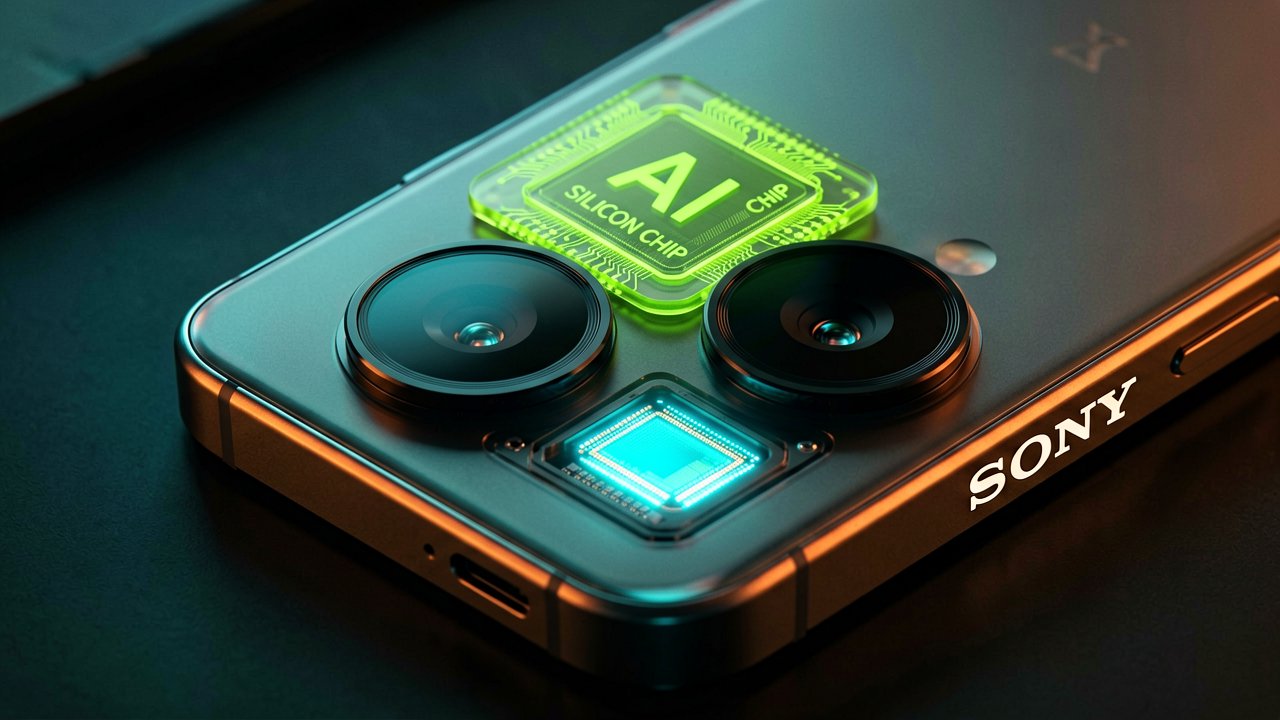
Cannes has always been about the spectacle of the big screen, but this year, the biggest buzz in the Palais wasn't about a three-hour indie epic. It was about something that fits in your jacket pocket. DJI just dropped a bombshell with the unveiling of the Osmo Pocket 4P, a dual-lens cinematic powerhouse that feels like the company finally stopped playing it safe with the "vlogger" tag and decided to take a serious swing at Hollywood's B-roll dominance.
Double the Glass, Double the Drama
The headline act here is obviously that dual-lens configuration. While we’ve seen multi-camera setups on smartphones for years, seeing it on a stabilized three-axis gimbal changes the math entirely. The 4P pairs a 1-inch main sensor with a secondary telephoto lens, allowing for seamless focal length switching that doesn't look like a digital crop job. According to early hands-on reports from The Verge, the transition between lenses is fluid enough to maintain the cinematic "flow" that single-lens gimbals usually lack.
It’s a gutsy move. Adding a second lens assembly to a device this small usually means sacrificing thermal performance or battery life. Yet, DJI seems to have cracked the code by using a new magnesium-alloy housing that doubles as a heat sink. It’s an elegant solution to a problem that has plagued the Pocket series since its inception. You can tell they’ve been listening to the pros who complained about the Pocket 3's tendency to get a bit toasty during long 4K sessions.
Cinematic Ambition in Your Palm
But let’s talk about the "P" in 4P. It stands for "Pro," and for once, that isn't just marketing fluff. The camera introduces a native 10-bit D-Log M color profile across both lenses, ensuring that your wide shots and your tight close-ups actually match in the color grade. Industry analysts at DPReview have noted that this consistency is exactly what was missing for shooters who wanted to integrate the Pocket into a professional workflow alongside larger rigs like the Ronin 4D.
The inclusion of a physical ND filter slot that accommodates both lenses simultaneously is another "why didn't they do this sooner?" moment. No more fumbling with magnetic circles every time you want to keep your shutter speed at that sweet 180-degree rule. It’s these small, ergonomic tweaks that reveal DJI’s true intent: they want this to be the "B-cam" of choice for every cinematographer at Cannes, not just a toy for TikTokers.
The AI Elephant in the Room
Of course, it wouldn't be a 2026 tech launch without a healthy dose of "intelligence." The Osmo Pocket 4P features a revamped ActiveTrack 7.0, which DJI claims can distinguish between a human subject and a background extra even in the chaotic, high-contrast environments of a red carpet. The processing power required for this kind of real-time depth mapping is significant, and it’s likely why we’re seeing a slight bump in the handle size to accommodate a beefier chipset.
Critics might argue that we’re reaching the limit of what a handheld gimbal can actually do. After all, if the AI is doing the tracking and the dual lenses are handling the framing, is the "operator" even operating anymore? But standing there on the Croisette, watching creators whip this thing around with the speed of a smartphone but the output of a cinema rig, those philosophical questions feel a bit secondary to the results.
Final Thoughts from the Croisette
The Osmo Pocket 4P isn't just an incremental update; it’s a statement of intent. By launching at a film festival rather than a tech trade show, DJI is signaling that they no longer view themselves as just a drone company or a peripheral maker. They’re a camera company, period. As reported by TechRadar, the device is expected to hit shelves late next month, and if the early excitement is any indication, it’s going to be a very busy summer for gear rental houses.
Is it perfect? Probably not. The price point is creeping dangerously close to entry-level mirrorless territory, and the vertical-to-horizontal screen flip—while iconic—still feels like a mechanical point of failure waiting to happen. But for the filmmaker who needs to move fast and stay invisible, there is simply nothing else on the market that offers this much optical flexibility in a package this small. DJI didn't just bring a camera to Cannes; they brought a challenge to the status quo.
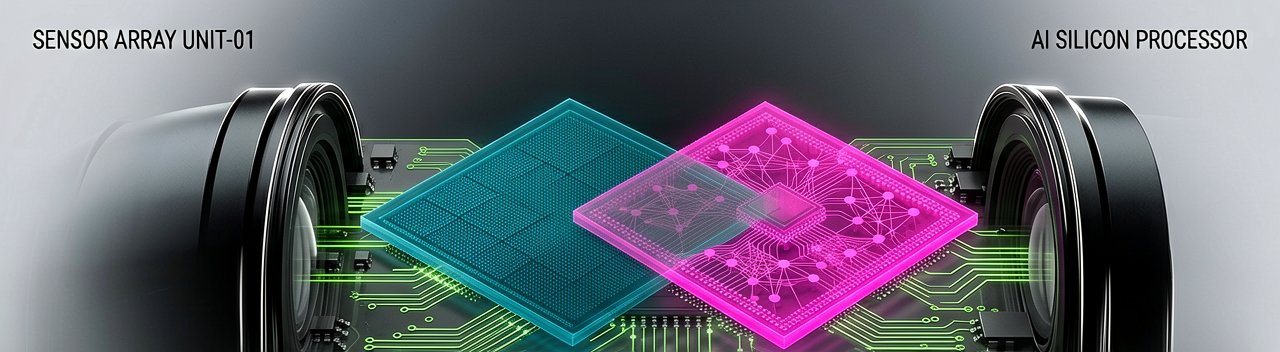
The Real Disruptor Under the Hood: While the flashy dual-lens setup is grabbing the headlines, the real story for those of us who have spent years lugging heavy rigs across festival floors is the subtle shift in DJI’s internal architecture. For the first time, we’re seeing a dedicated neural processing unit (NPU) that isn't just borrowed from their drone flight controllers. This is a bespoke silicon effort designed to handle high-bitrate video and complex autofocus tracking simultaneously without turning the device into a hand-warmer, a feat of engineering that signals DJI’s transition into a true silicon heavyweight.
A Legacy of Shrinking the Set
To understand why the 4P matters, you have to look back at the original Osmo Pocket. Back then, it was a novelty—a stabilized "toy" that struggled in low light and felt like a fragile piece of kit. Fast forward to the Cannes reveal, and the evolution is staggering. We’ve gone from a niche vlogging tool to a device that seasoned directors are genuinely considering for "guerrilla" shots where a full-sized Alexa or RED would simply be too conspicuous. It’s the culmination of a decade-long quest to democratize stabilized cinematography, moving it from the heavy vest of a Steadicam operator into the palm of a hand.
Talking to some of the veteran cinematographers at the beachside pavilions, there’s a palpable sense of "if you can’t beat ‘em, join ‘em." One DP mentioned that the ability to grab a 70mm-equivalent tight shot on a gimbal without changing lenses or rebalancing a rig is a "day-saver" on tight schedules. Historically, those tight shots on small gimbals were achieved via digital zoom, which effectively trashed the image quality. By sticking a secondary physical lens in there, DJI has addressed the single biggest technical hurdle that kept the Pocket series out of professional "A-cam" conversations.
The Ergonomics of Speed
What most reports miss is the subtle redesign of the control interface. The 4P introduces a haptic scroll wheel that feels far more mechanical than previous iterations, offering the kind of tactile feedback you’d expect from a high-end follow-focus system. According to insights from CineD, this allows for manual iris control that doesn't require looking at the screen—a small detail, but one that speaks volumes to the professional crowd. It’s clear DJI spent as much time on the "feel" of the camera as they did on the optics.
There is also the matter of the ecosystem. The 4P isn't launching in a vacuum; it’s arriving with a suite of "Pro" accessories that utilize a new high-speed data port at the base. We’re talking about external SSD recording and even a direct XLR audio module. This transforms the 4P from a standalone camera into the brain of a modular cinema system. It’s a strategy reminiscent of the early RED Digital Cinema days—start with a powerful sensor and build a cage of professional utility around it.
The Stakeholder Gamble
From a market perspective, DJI is playing a high-stakes game. By pushing the "Pro" narrative so hard, they risk alienating the casual users who made the Pocket 3 a viral success. However, the move suggests DJI believes the "influencer" market has matured. The creators of today are no longer satisfied with "good enough" smartphone footage; they want the "Cannes Look," and they want it without a five-person crew. Industry watchers at Bloomberg have noted that this pivot toward high-end hardware allows DJI to maintain premium margins even as the drone market faces increasing regulatory pressure.
Ultimately, the Osmo Pocket 4P represents a bridge. It bridges the gap between the spontaneity of a smartphone and the intentionality of a cinema camera. As the sun sets over the Mediterranean, it’s hard not to feel that we’re witnessing a permanent shift in the hierarchy of filmmaking tools. The best camera is no longer just the one you have with you—it’s the one that lets you shoot a feature film between meetings.
The Reality Check Behind the Hype: For all the champagne-soaked enthusiasm at Cannes, there is a nagging contradiction at the heart of the Osmo Pocket 4P: DJI is selling a "pro" tool that relies almost entirely on relinquishing control to an algorithm. We are told this is a cinematic breakthrough, yet the more the device automates focus, tracking, and lens switching, the further it drifts from the tactile, intentional craftsmanship that defines the very "cinema" it claims to emulate. It’s a brilliant piece of engineering, but we have to ask if we’re actually making better films or just making it easier to produce high-end wallpaper.
The Hidden Cost of Convenience
The dual-lens system is a triumph of miniaturization, but it introduces a physical paradox. By cramming two distinct optical paths into a gimbal head that is barely larger than its predecessor, DJI is fighting the laws of physics. While early previews from PetaPixel laud the sharpness, seasoned shooters will be watching for the inevitable trade-offs in edge distortion and chromatic aberration that usually plague ultra-compact multi-lens arrays. There’s a reason cinema glass is usually the size of a grapefruit, and no amount of NPU-driven "computational photography" can entirely replicate the character of a true anamorphic lens.
Furthermore, the move toward internal magnesium heat-sinking suggests that the 4P is pushing its hardware to the absolute thermal limit. It’s one thing to shoot a two-minute clip for social media; it’s quite another to rely on this as a B-cam for an eight-hour production day in the Mediterranean sun. If the 4P ends up throttling its bitrate thirty minutes into a shoot, its "Pro" moniker will quickly become a liability. DJI has a history of stellar first-generation tech that requires a "v2" to iron out the real-world kinks, and the 4P feels like it’s dancing right on that edge.
Market Saturation and the Creator Paradox
Then there is the economic reality. At its projected price point, the Pocket 4P is no longer an impulse buy for the aspiring YouTuber. It’s entering a crowded arena where it competes with used Sony FX3s and Blackmagic 6Ks—cameras that offer interchangeable lenses and industry-standard mounting. DJI is betting that "pocketability" is worth more than "flexibility." While the data from The Verge suggests a growing appetite for all-in-one rigs, we may be reaching a point where the hardware is outstripping the actual needs of its primary audience.
If everyone at Cannes is suddenly shooting with the same 4P "look," the device risks becoming a victim of its own success. When cinematic quality becomes a commodity that can be bought for under a thousand dollars and operated by a novice, the aesthetic value of that look inevitably depreciates. The irony is that by making cinema accessible to everyone, DJI might be making it harder for any single creator to actually stand out. We’re moving into an era of "perfect" footage that feels increasingly soulless.
"It’s a magnificent piece of kit that proves you can now fit a Hollywood studio in your pocket—just don't be surprised when you realize your pocket still doesn't come with a decent scriptwriter or a craft services table."
Artūras Malašauskas is an AI Systems Integrator with 20+ years of production-grade web engineering experience. He has designed, shipped, and scaled enterprise Python/PHP systems for logistics, SaaS, and public-sector clients. For the past year, he has focused exclusively on AI integrations: deploying open-source LLMs, building generative media pipelines (image, audio, video), and engineering multi-agent workflows for real production environments. His standard: reproducibility, security, cost-efficient inference—no vaporware. He documents and evaluates emerging AI tooling, separating verified capabilities from marketing noise. Technical editor at: muza-ai.eu, ai-verslas.lt, ai-naujinos.lt Connect on LinkedIn
Comments